Find the Best Septic Tank Inspection Companies for Your Business
No obligation • Fast responses • Nationwide coverage

Why you can trust Septic Spot
Septic Spot is a leading United States resource for understanding and comparing septic services. Our editors review providers using consistent criteria and verify key business details. Listings and scores are independent, and companies cannot pay to influence our content.
Search providers near you
Best Septic Tank Inspection Companies in Iowa Ranked
A septic tank inspection is a professional assessment of your private sewage disposal system's condition and functionality. In Iowa, these evaluations are not just a good idea-they are often a legal requirement, especially when buying or selling a property. A thorough inspection helps identify potential failures, protects your investment, and safeguards local water quality. This guide explains Iowa's specific rules, what an inspection entails, and how to connect with certified local professionals to ensure your system is compliant and operating safely.
Certified Septic Service
2121 Rodeo Ave, Monroe, IA 50170
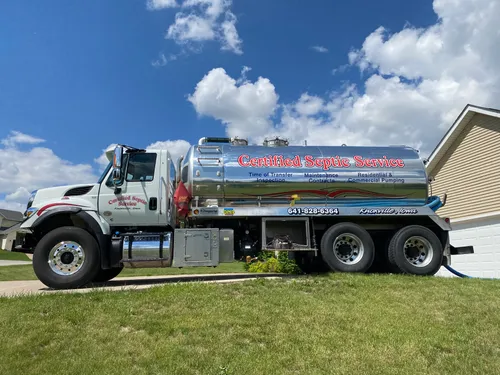
Certified Septic Service provides a wide range of septic services for residential and commercial clients in Des Moines, IA. Their offerings include septic tank pumping, septic tank inspections, time of transfer inspections, septic system repairs, and maintenance contracts. The company is certified by the Iowa DNR and has been serving Central Iowa since 2009. They cover multiple counties and cities in the region, including Polk, Jasper, and Monroe counties. While certified for septic installations since 2018, this service is currently not available. Certified Septic Service relocated to Monroe, IA in 2023 and continues to support the local community with their expertise.
Septic Services Of Iowa
Cedar Rapids, IA
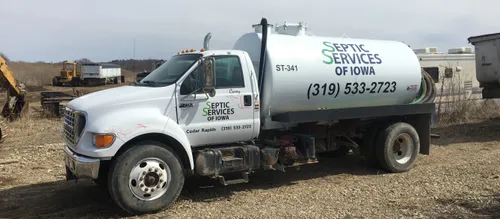
Septic Services Of Iowa is a septic tank pumping, inspection, repair, and installation company based in Cedar Rapids, IA. They provide services including septic system inspections required by Iowa's Time of Transfer program, excavation work such as septic tank replacement and water line repairs, and regular septic tank pumping to maintain system longevity. The company is certified by the Iowa Onsite Waste Water Association and the National Environmental Health Association, ensuring compliance with state standards. Their services help protect public health and the environment by addressing failing or illegal septic systems.

Ken-Way Sewer Service Inc
Cedar Rapids, IA
Ken-Way Sewer Service Inc is a septic tank pumping and inspection company based in Cedar Rapids, IA. They provide residential and commercial sewer and drain cleaning services, including water jetting and septic tank pumping. With over 50 years of experience, Ken-Way Sewer Service Inc is equipped to handle complex drain problems efficiently. The company is locally owned and family operated, emphasizing integrity and professionalism in their work.
Understanding Iowa's Time of Transfer Inspection Law
Iowa state law (SF261) mandates that all private sewage disposal systems (PSDS) be inspected by a certified professional prior to the sale or deed transfer of a property. This is commonly known as the "Time of Transfer" inspection requirement. The primary goal is to identify failing or substandard systems that could discharge untreated wastewater, contaminating groundwater, surface water, or drain tiles.
- When It's Required: The inspection is required upon the sale or transfer of any home or building served by a septic system.
- Key Exceptions: Properties with new construction that have a valid operating permit, or those where a system has recently been replaced, may be exempt from this specific transfer inspection.
- Consequences of Failure: If a system fails the inspection, the law requires it to be upgraded or replaced to meet current Iowa Department of Natural Resources (DNR) standards before the property transfer can be completed 1.
This law is enforced at the local level by county health departments, which also issue permits for new installations and major repairs.
Who Can Perform a Certified Inspection in Iowa?
Not just any contractor can sign off on a Time of Transfer inspection. To ensure consistency and expertise, Iowa requires inspectors to be certified by the Iowa DNR. These certified inspectors follow a standardized procedure and use an official worksheet to document their findings, ensuring the inspection meets the regulatory standards outlined in 567 IAC Chapter 69.
When searching for an inspector, always verify their Iowa DNR certification. Your local county environmental health department can often provide a list of certified inspectors operating in your area.
What Does a Comprehensive Septic Inspection Involve?
A proper septic system evaluation in Iowa goes beyond a simple visual check. A DNR-certified inspector will typically follow a multi-step process to assess the entire system's health.
- Record Review & Site Evaluation: The inspector will review any available system records and assess the property for signs of system failure, such as soggy ground or sewage odors in the drain field area.
- Tank Pumping & Inspection: A core component of the inspection is pumping out the septic tank. This allows the inspector to:
- Examine the tank's structural integrity for cracks, leaks, or corrosion.
- Check inlet and outlet baffles to ensure they are intact and functioning.
- Measure scum and sludge layers to determine if the tank is due for routine pumping.
- Verify that the tank meets design standards, which generally require a minimum of two compartments for improved treatment 2.
- Drain Field Assessment: The inspector will evaluate the soil absorption field (drain field) for signs of hydraulic failure, such as surfacing effluent or overly saturated soil.
- System Function Check: They may run water through the household plumbing to check for backups and assess the flow from the tank to the drain field.
- Official Report: Finally, the inspector completes the standardized worksheet, classifying the system as "Satisfactory," "Needs Maintenance," or "Unsatisfactory." This official report is submitted to the relevant local authority and provided to the property owner 3.
Find the perfect septic tank inspection companies for your needs
Get personalized recommendations and expert advice
Costs of Septic Inspections in Iowa
The cost of a septic inspection in Iowa can vary based on the system's size, complexity, and location. For a standard Time of Transfer inspection, homeowners can generally expect to pay between $200 and $900, with an average cost around $550 4. This fee often includes the cost of pumping the tank, which is a necessary part of the inspection process.
More detailed inspections for large homes, complex systems, or those requiring additional investigation (like a camera scan of lines) can cost $1,000 or more, sometimes up to $1,300 5 6. While this may seem like a significant expense, it is minor compared to the cost of repairing or replacing a failed septic system, which can run into the tens of thousands of dollars.
Routine Maintenance vs. Mandatory Inspections
While Time of Transfer inspections are legally required, proactive routine maintenance is crucial for the long-term health of your system.
- Mandatory (Time of Transfer): Required by law only when selling or transferring property 7 8.
- Recommended (Routine Maintenance): The U.S. Environmental Protection Agency and industry experts recommend having your septic tank pumped and inspected every 3 to 5 years, depending on household size, tank capacity, and usage 9. Regular maintenance can prevent catastrophic failures, extend your system's lifespan, and is always a wise investment.
Permits for Installation, Repair, and Special Cases
Beyond inspections, Iowa regulates system installation and modification.
- Installation/Repair Permits: Any new septic system installation or substantial repair requires a permit from your local county health department 10.
- NPDES Permit #4: Iowa has specific rules for systems that discharge treated wastewater directly to surface water (like a stream or ditch). These systems must obtain a General Permit #4 from the Iowa DNR, which involves more stringent monitoring and reporting requirements 11.
Frequently asked questions
Sources
Footnotes
-
Private Sewage Disposal and Septage - Iowa DNR - https://www.iowadnr.gov/environmental-protection/water-quality/private-sewage-disposal-and-septage ↩
-
Iowa Administrative Bulletin Component Document - https://www.legis.iowa.gov/docs/aco/bulletincontent/09-04-2024.Regulatory%20Analysis_1724100640986.pdf ↩
-
Frequently Asked Questions about Septic System Inspections - https://mononacountyiowa.gov/files/environmental_health_zoning/septic_system_inspections_faqs_idnr_17810.pdf ↩
-
Septic Systems - Environmental Health - Wapello County - https://www.wapellocounty.org/environmental_health/septic_systems/ ↩
-
How Much Does a Septic Inspection Cost? [2026 Data] - Angie's List - https://www.angi.com/articles/septic-inspection-cost.htm ↩
-
How Often Should You Pump Your Septic Tank: 3 Factors Solved - https://www.frasiers.com/blog/sewage-tank-pump-frequency/ ↩
-
Time of Transfer | Department of Natural Resources - Iowa DNR - https://www.iowadnr.gov/environmental-protection/water-quality/private-sewage-disposal-and-septage/time-transfer ↩
-
Iowa's Time of Transfer Inspection Program | Dubuque County, IA - https://www.dubuquecountyiowa.gov/225/Time-of-Transfer-Program ↩
-
How to Care for Your Septic System | US EPA - https://www.epa.gov/septic/how-care-your-septic-system ↩
-
Johnson County Public Health Private Sewage Disposal System ... - https://johnsoncountyiowa.gov/sites/default/files/2021-10/JCWASTEWATER_REGS%202020-Final.pdf ↩
-
General Permit 4 | Department of Natural Resources - Iowa DNR - https://www.iowadnr.gov/environmental-protection/water-quality/private-sewage-disposal-and-septage/general-permit-4 ↩