Find the Best Septic Tank Inspection Companies for Your Business
No obligation • Fast responses • Nationwide coverage

Why you can trust Septic Spot
Septic Spot is a leading United States resource for understanding and comparing septic services. Our editors review providers using consistent criteria and verify key business details. Listings and scores are independent, and companies cannot pay to influence our content.
Search providers near you
Top Septic Tank Inspection Companies in Cedar Rapids, Iowa Ranked
A septic tank inspection is a professional assessment of your onsite wastewater system's condition and functionality. In Cedar Rapids, these evaluations are not just a good idea-they are a legal requirement for most property sales. Understanding the process and local rules helps protect your investment, ensure environmental safety, and avoid costly surprises. This guide provides the essential information for homeowners and buyers to find qualified local professionals for this critical service.
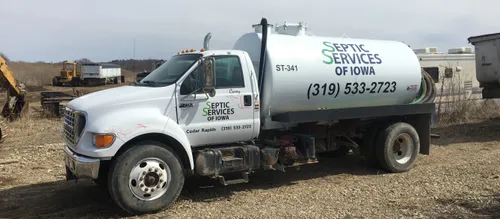
Septic Services Of Iowa
Cedar Rapids, IA
Septic Services Of Iowa is a septic tank pumping, inspection, repair, and installation company based in Cedar Rapids, IA. They provide services including septic system inspections required by Iowa's Time of Transfer program, excavation work such as septic tank replacement and water line repairs, and regular septic tank pumping to maintain system longevity. The company is certified by the Iowa Onsite Waste Water Association and the National Environmental Health Association, ensuring compliance with state standards. Their services help protect public health and the environment by addressing failing or illegal septic systems.

Ken-Way Sewer Service Inc
Cedar Rapids, IA
Ken-Way Sewer Service Inc is a septic tank pumping and inspection company based in Cedar Rapids, IA. They provide residential and commercial sewer and drain cleaning services, including water jetting and septic tank pumping. With over 50 years of experience, Ken-Way Sewer Service Inc is equipped to handle complex drain problems efficiently. The company is locally owned and family operated, emphasizing integrity and professionalism in their work.
Why Septic System Inspections Are Crucial in Linn County
For the roughly one in four Iowa homes relying on a private septic system, regular maintenance is key to public health and environmental protection. In Cedar Rapids and throughout Linn County, the stakes are even higher due to specific state and local regulations. A failing system can contaminate groundwater, create unsanitary conditions, and lead to significant financial liability. An inspection by a certified professional is the only way to get a definitive report on your system's health, which is especially vital during real estate transactions.
The most common trigger for an inspection in Cedar Rapids is the sale of a property. Iowa's "Time of Transfer" rule mandates that any home or building served by a septic system must have that system inspected by a state-certified inspector before the sale or deed transfer is finalized. This law, enforced locally by the Linn County Public Health Department, ensures buyers are informed and that sub-standard systems are addressed.
Understanding Iowa's Time of Transfer Inspection Rule
The Time of Transfer (ToT) inspection is a non-negotiable part of buying or selling a home with a septic system in Cedar Rapids. The rule exists to prevent the transfer of properties with malfunctioning wastewater systems, which pose a risk to human health and Iowa's waterways.
Key Requirements of the Rule:
- Certified Inspector: The evaluation must be performed by an inspector certified by the Iowa Department of Natural Resources (DNR) 1.
- Inspection Validity: Once completed and filed, the inspection report is valid for two years2. If a property is listed, sells, and closes within that two-year window, a new inspection is typically not required.
- Reporting: The inspector is responsible for submitting the standardized inspection report to both the Iowa DNR and the Linn County Health Department.
- System Standards: The inspection determines if the system is "standard" (functioning properly) or "sub-standard." A system found to be sub-standard-for example, one that is failing or provides inadequate treatment-must be repaired or replaced to meet current standards before the property transfer can proceed3.
The Step-by-Step Septic Inspection Process
Knowing what to expect during a septic system evaluation can make the process smoother. A thorough inspection involves several key stages conducted by the certified professional.
- Hiring and Preparation: Your first step is to hire a DNR-certified septic inspector. They will typically ask for any available records about the system's age, design, and past maintenance. It's helpful if the seller can provide the location of the tank and drain field.
- Locating and Pumping: The inspector will locate the septic tank and distribution box. In nearly all cases for a proper inspection, the tank must be pumped out by a licensed septic pumper. This is a separate service but is almost always done concurrently. Pumping is essential to allow the inspector to examine the tank's interior walls, inlet/outlet baffles, and structural integrity for cracks or leaks4.
- Comprehensive System Evaluation: With the tank empty, the inspector checks for hydraulic failure, sludge and scum levels, and baffle condition. They will also assess the drain field (soil absorption area) for signs of failure, such as surfacing sewage, soggy ground, or overly lush grass. They may run water through the system to check for backups or slow drainage5.
- Reporting and Filing: After the evaluation, the inspector completes the official Iowa DNR Time of Transfer inspection form. They will provide a copy to the homeowner and are responsible for filing it with the required county and state authorities 6.
Find the perfect septic tank inspection companies for your needs
Get personalized recommendations and expert advice
What Does a Septic Inspection Cost in Cedar Rapids?
The cost of a septic inspection in Cedar Rapids is not a single flat fee. It is generally composed of two main service charges: the inspection itself and the required tank pumping. Prices can vary based on the size of the tank, its accessibility, and the contractor.
- Inspection Fee: The fee for the certified inspection itself typically ranges from $300 to $600 7. Factors that can increase cost include the need for deep excavation to locate buried tank lids or the complexity of the system.
- Pumping Fee: Pumping the tank is a separate line item, usually costing between $290 and $560 in the Cedar Rapids area, with the national average around $4238. The final pump-out cost depends primarily on tank capacity (e.g., 1,000-gallon vs. 1,500-gallon).
- Potential Repair Costs: If the inspection reveals problems, repair costs can vary widely. Minor repairs like replacing a baffle may cost around $1,000. However, if the drain field has failed and the system requires replacement, homeowners should be prepared for costs ranging from $5,000 to $12,000 or more, depending on soil conditions and system type9 10.
Maintaining Your System Between Inspections
While a formal inspection is legally required at time of transfer, proactive maintenance is the best way to ensure system longevity and avoid failure. For Cedar Rapids homeowners, good stewardship includes:
- Regular Pumping: The Iowa DNR recommends pumping your septic tank every 3 to 5 years, depending on household size and usage. This prevents solids from overflowing into the drain field.
- Water Conservation: Reducing overall water use eases the load on your system. Fix leaks, install efficient fixtures, and spread out laundry loads.
- Mindful Flushing: Only human waste and toilet paper should go down the drain. Avoid flushing wipes (even "flushable" ones), feminine hygiene products, cooking grease, and chemicals.
- Protect the Drain Field: Never park vehicles or build structures over the drain field. Keep roof drains, sump pumps, and other surface water away from the area.
Finding a Certified Professional in Cedar Rapids
For a Time of Transfer inspection, you must hire a professional certified by the Iowa DNR. The Linn County Public Health Department is an excellent resource for understanding local procedures and may maintain lists of registered contractors11. You can also verify a contractor's certification status directly with the Iowa DNR's Private Sewage Disposal Program12. When contacting providers, ask for proof of DNR certification, a detailed estimate that breaks out inspection and pumping fees, and their process for filing the report with the county.
Frequently asked questions
Sources
Footnotes
-
arc 9467c environmental protection commission[567] - https://www.legis.iowa.gov/docs/aco/arc/9467C.pdf ↩
-
Time of Transfer Information | Story County, IA - Official Website - https://www.storycountyiowa.gov/631/Time-of-Transfer-Information ↩
-
Time of Transfer Information (PDF) - Muscatine County, Iowa - https://www.muscatinecountyiowa.gov/DocumentCenter/View/1334/Time-of-Transfer-Information-PDF ↩
-
Iowa Time of Transfer Septic Inspections - Roto Rooter - https://www.rotorooterofames.com/services/iowa-time-of-transfer-septic-inspections ↩
-
Frequently Asked Questions about Septic System Inspections - https://mononacountyiowa.gov/files/environmental_health_zoning/septic_system_inspections_faqs_idnr_17810.pdf ↩
-
Iowa Time of Transfer Septic Inspection - Realtor Josh Dicks - https://www.joshdicksrealty.com/time-of-transfer-septic-inspection-iowa/ ↩
-
Septic Tank Inspection Cost: Here's The 2026 Average - https://ibuyer.com/blog/how-much-is-a-septic-tank-inspection/ ↩
-
Septic Tank Pumping Cost: Guide & Pricing in 2025 - Splash Plumbing - https://www.splashplumbing.com/how-much-does-it-cost-to-pump-septic-tank-understanding-pricing-and-factors-involved/ ↩
-
How Much Does a Septic Inspection Cost? [2026 Data] | Angi - https://www.angi.com/articles/septic-inspection-cost.htm ↩
-
Septic System Inspections: A Step-by-Step How-To Guide - https://westcoastsanitationinc.com/septic-inspection-service/ ↩
-
water Wells AND SEPTIC systems | Linn County, IA - https://www.linncountyiowa.gov/1605/Wells-Septic ↩
-
Private Sewage Disposal and Septage - Iowa DNR - https://www.iowadnr.gov/environmental-protection/water-quality/private-sewage-disposal-and-septage ↩