Find the Best Septic Tank Inspection Companies for Your Business
No obligation • Fast responses • Nationwide coverage

Why you can trust Septic Spot
Septic Spot is a leading United States resource for understanding and comparing septic services. Our editors review providers using consistent criteria and verify key business details. Listings and scores are independent, and companies cannot pay to influence our content.
Search providers near you
Top Septic Tank Inspection Companies in Boise, Idaho Ranked
A septic tank inspection is a critical evaluation of your onsite wastewater system's health and functionality. In Boise, where many homes rely on these private systems, regular assessments are essential for protecting your property value, ensuring public health, and complying with local regulations. This guide helps you understand the inspection process, local requirements, and how to connect with qualified septic professionals in the Treasure Valley to maintain your system effectively.
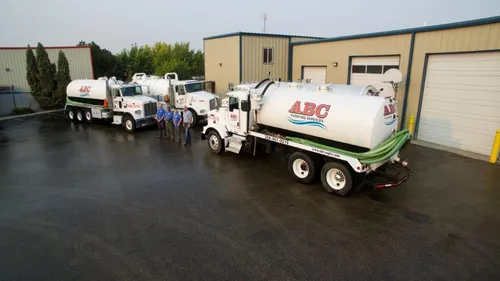
ABC Pumping Service
281 N Baltic Pl, Meridian, ID 83642
ABC Pumping Service is a septic tank and system specialist based in Boise, ID, serving Meridian and surrounding areas. They provide a range of services including septic tank pumping, inspection, repair, installation, drain field repair, and pump maintenance. With over 30 years of experience, ABC Pumping Service is familiar with both old and new septic systems and offers 24/7 emergency services. One notable capability is their expertise in repairing damaged drain fields to prevent septic system failure. They also install and maintain advanced wastewater treatment systems such as ETPS units, serving both residential and commercial clients.
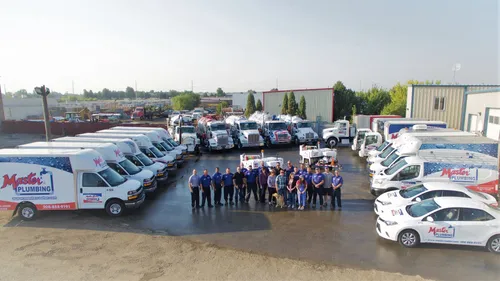
Master Plumbing
9446 W Fairview Ave Suite B, Boise, ID 83704
Master Plumbing is a septic tank pumping, inspection, and installation company based in Boise, ID. They serve homeowners throughout Southwest Idaho, offering a range of plumbing services including septic system installation, maintenance, and advanced wastewater treatment solutions such as the Extended Treatment Package System (ETPS) using BioMicrobics FAST Technology. With over 140 years of combined experience, Master Plumbing employs certified journeyman plumbers who are knowledgeable in meeting Idaho Department of Environmental Quality requirements. The company also provides 24/7 emergency plumbing services to address urgent needs at any time.
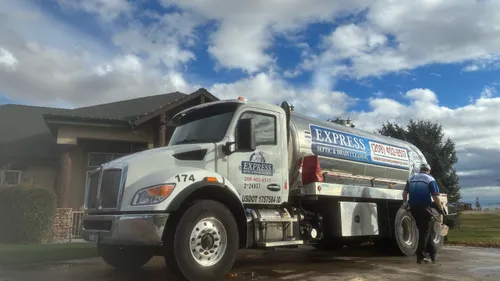
Express Septic & Drain Cleaning
3206 Airport Rd, Nampa, ID 83687
Express Septic & Drain Cleaning is a locally owned company serving Meridian, ID, and the greater Treasure Valley area. Since 2006, they have provided septic tank pumping, inspection, testing, and riser installation services. Their team also offers comprehensive drain cleaning solutions to address various plumbing needs. The company emphasizes professional, clean, and efficient service, with trained and background-checked technicians who provide updates throughout the service process.
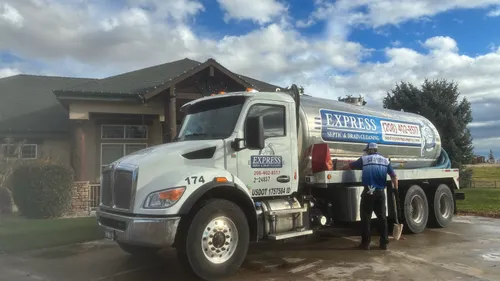
Express Septic & Drain Cleaning
6003 W Overland Rd l107, Boise, ID 83709
Express Septic & Drain Cleaning is a septic tank pumping and inspection company serving Boise, ID, and the greater Treasure Valley area including Nampa and surrounding communities. Established in 2006, the locally owned business offers septic tank location, pumping, inspection, testing, and riser installation services. They also provide comprehensive drain cleaning solutions to address various plumbing needs. The company emphasizes professional, clean, and efficient service while keeping customers informed with automatic updates and technician details.
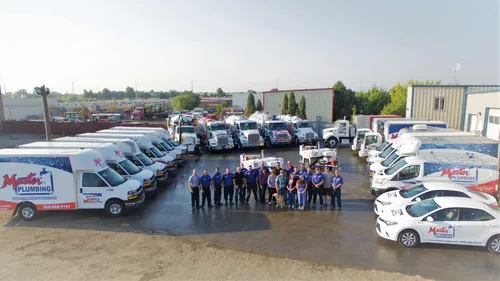
Master Plumbing
393 W State St c, Eagle, ID 83616
Master Plumbing is a septic tank pumping, inspection, and installation contractor serving Boise, ID. They offer a full range of plumbing services including septic system installation, maintenance, and advanced wastewater treatment solutions such as BioMicrobics FAST Technology and Extended Treatment Package Systems (ETPS) for challenging soil conditions. With over 140 years of combined experience, their certified journeyman plumbers provide knowledgeable and customized solutions. Master Plumbing also offers 24/7 emergency plumbing services to address urgent needs at any time.
Why Septic System Inspections Are Crucial in Ada County
For Boise homeowners, the septic system is an out-of-sight but vital component of the property. Unlike a municipal sewer connection, you are solely responsible for its maintenance and repair. A professional septic system evaluation can identify minor issues before they become catastrophic failures, such as drain field saturation or sewage backups into your home. Regular inspections are a cornerstone of preventative care, saving you thousands of dollars in potential excavation and replacement costs while safeguarding local groundwater from contamination1 2.
Local health districts, including Central District Health (CDH) which oversees Ada County, mandate inspections for certain activities like property transfers, system repairs, or expansions. Even outside of these requirements, a proactive inspection schedule is a wise investment in your home's infrastructure.
Understanding the Septic Inspection Process
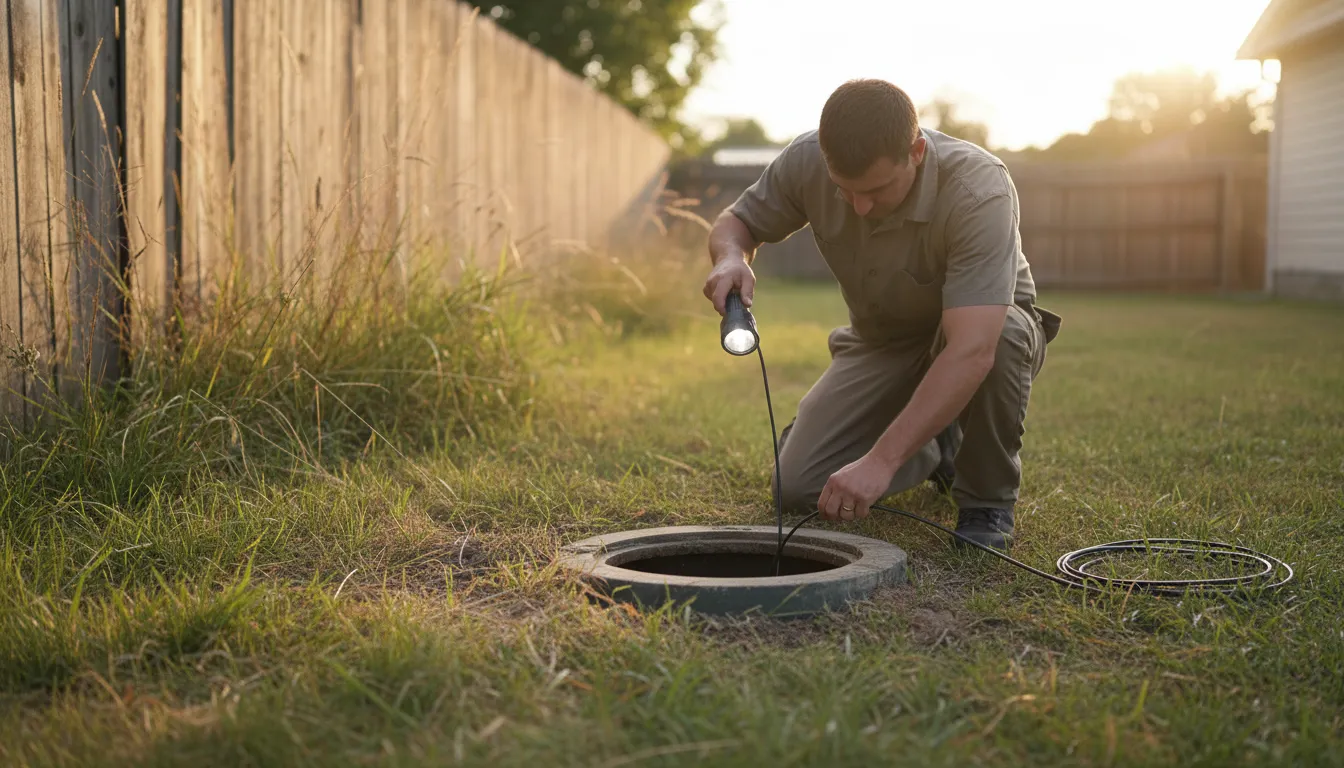
A comprehensive septic tank check involves more than just looking at the tank. Licensed professionals follow a systematic approach to evaluate the entire system. Here's what you can typically expect during a thorough assessment:
1. Locating and Uncovering System Components The inspector will first locate the septic tank and distribution box, if accessible. This may involve probing the yard or referencing property records. The manhole covers are then carefully uncovered to provide access for internal inspection.
2. Internal Tank Inspection This is the core of the evaluation. The inspector will:
- Check Inlet and Outlet Baffles/Tees: These critical components prevent solids from exiting the tank and entering the drain field. The inspector verifies they are intact and properly secured 3.
- Measure Scum and Sludge Layers: Using specialized tools, the inspector measures the depth of the floating scum layer and the accumulated sludge at the tank's bottom. These measurements determine the tank's fullness and calculate the pumping frequency needed 4.
- Assess Tank Structure: The tank's interior is checked for cracks, corrosion (in metal tanks), or signs of structural failure.
3. Drain Field and Soil Absorption Evaluation The inspector will examine the drain field area for telltale signs of failure. This includes looking for surfacing effluent, overly lush or soggy grass, and unpleasant odors. They may also check the distribution box for even flow to all drain field lines.
4. System Function and Flow Test In some inspections, particularly for real estate transactions, a flow test may be performed. This involves running water through household fixtures to observe how the system accepts and disperses the inflow, checking for slow drainage or backups.
Find the perfect septic tank inspection companies for your needs
Get personalized recommendations and expert advice
Local Regulations and Permit Requirements
Septic systems in Boise and Ada County are regulated by Central District Health (CDH). Understanding these rules is key for any homeowner.
- Permits Are Required: You must obtain a permit from CDH for any new septic system installation, major repair, or expansion of an existing system.
- Site Evaluation: For new systems or certain repairs, a CDH Health Inspector typically conducts a site evaluation. This often requires digging a 10-foot deep test hole to assess soil conditions and determine the appropriate system type and size.
- Typical System Size: A standard 1,000-gallon tank is common for a 3-4 bedroom home in the area, but the final size and design depend entirely on the soil evaluation and household water usage.
- Licensed Professionals: All pumping, inspection, and installation work should be performed by licensed and bonded septic professionals to ensure it meets health district standards5 6.
Costs Associated with Septic Inspections and Permits
Costs can vary based on the company, the size of your system, and the inspection's comprehensiveness. However, understanding the fee structure from local health districts provides a helpful baseline.
- Health District Permit Fees (CDH): As of recent data, a permit for a new septic system is approximately $878. A permit for a repair (without a new test hole) is about $439. A simple transfer permit for an existing system during a property sale is around $947.
- Professional Inspection & Pumping Costs: These are set by individual service providers. A typical service call that includes a basic inspection, pumping the tank, and cleaning might range significantly. Always get detailed quotes that break down inspection fees, pumping costs per gallon, and any charges for locating or uncovering the tank.
Maintaining Your Septic System Between Inspections
A professional evaluation gives you a snapshot of your system's health, but daily maintenance determines its long-term performance. Follow these guidelines to keep your system functioning optimally between inspections:
- Pump Regularly: The single most important maintenance task is having the tank pumped. In Boise, the general guideline is every 3 to 5 years, but this depends heavily on household size and water usage. Your inspector will provide a recommended schedule based on sludge and scum measurements 8.
- Conserve Water: Spread out laundry loads, fix leaky faucets, and install high-efficiency fixtures. Overloading the system with too much water at once can flush solids into the drain field.
- Mind What You Flush: Your system contains living bacteria that break down waste. Avoid flushing anything that can harm this ecosystem or clog the system.
- Never Flush: Grease, cooking oils, "flushable" wipes, feminine hygiene products, diapers, cigarettes, or chemicals like paint thinner and pesticides.
- Minimize Use: Garbage disposals significantly increase solid waste. Use them sparingly and consider composting food scraps instead.
- Protect the Drain Field: Never drive, park, or build structures (like sheds or patios) over your drain field. Keep heavy landscaping, trees, and shrubs with deep roots away from the area to prevent pipe damage.
Signs You Need a Septic Inspection Immediately
Don't wait for a scheduled check if you notice any of these red flags:
- Foul odors around the tank or drain field.
- Sewage backing up into household drains or toilets.
- Gurgling sounds in your plumbing.
- Standing water or spongy, bright green grass over the drain field.
- Slow-draining sinks, showers, or tubs.
If you observe any of these issues, contact a licensed septic professional for an inspection as soon as possible to diagnose and address the problem.
Frequently asked questions
Sources
Footnotes
-
A Homeowner's Guide to Septic Systems - https://idahopublichealth.com/environmental/septicsystems/474190-septic_homeowners_guide.pdf ↩
-
A Homeowner's Guide to Septic Systems - Central District Health - https://cdh.idaho.gov/wp-content/uploads/2023/10/Homeowners-Guide-to-Septic-Systems.pdf ↩
-
IDAHO SEPTIC PUMPERS TECHNICAL GUIDANCE ... - https://www2.deq.idaho.gov/admin/LEIA/api/document/download/23934 ↩
-
Septic Inspections Boise, Idaho - https://boiseidahoplumber.com/services/septic/septic-inspections ↩
-
Septic - Eastern Idaho Public Health - https://eiph.id.gov/environmental-health/septic/ ↩
-
Septic and Septage - Idaho Department of Environmental Quality - https://www.deq.idaho.gov/water-quality/wastewater/septic-and-septage/ ↩
-
Septic Applications, Fees & Resources - Central District Health - https://cdh.idaho.gov/environmental-health/water-wastewater-septic/septic-applications-fees-resources/ ↩
-
Homeowner Installer Manual - https://idahopublichealth.com/environmental/septicsystems/New-Sewer-Installers-Manual.pdf ↩