Find the Best Septic Tank Inspection Companies for Your Business
No obligation • Fast responses • Nationwide coverage

Why you can trust Septic Spot
Septic Spot is a leading United States resource for understanding and comparing septic services. Our editors review providers using consistent criteria and verify key business details. Listings and scores are independent, and companies cannot pay to influence our content.
Search providers near you
Top Septic Tank Inspection Companies in Lafayette, Louisiana Ranked
A septic tank inspection is a critical evaluation of your onsite wastewater system's health and functionality. In Lafayette, where many homes rely on these private systems, regular checkups are not just a good idea-they're a legal requirement to protect public health and the local environment. This guide explains what a septic system inspection entails, why it's essential for Lafayette homeowners, and how you can find qualified local professionals to perform this vital service.
Marcus Cortez Services LLC
Lafayette, LA
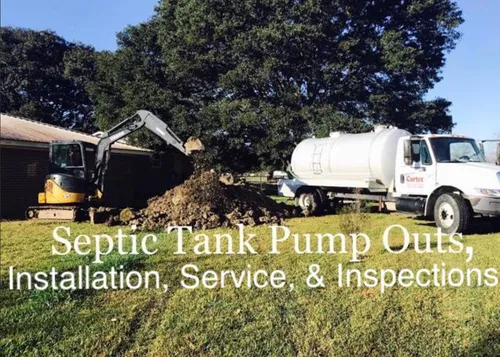
Marcus Cortez Services LLC is a family-owned company providing septic and sewer installations, repairs, and maintenance in Lafayette, LA, and the wider Acadiana area. Established in 2015, they offer a range of services including septic tank pumping, system inspections, and new septic system installations. Their team is experienced in handling various septic and sewer needs with a personalized approach to each property. Marcus Cortez Services LLC serves multiple locations around Lafayette, ensuring septic systems function efficiently and reliably.
OCR Sewer & Groundwork LLC
1124 Cecil Watkins Rd, Arnaudville, LA 70512
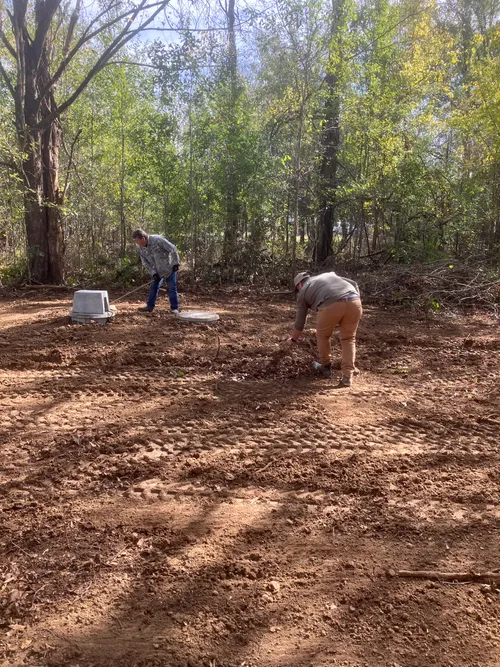
OCR Sewer & Groundwork LLC is a septic tank inspection and repair company based in Lafayette, LA. They provide services including septic pump repair or replacement, drain field repair or replacement, and lift station installations. The company is licensed to service most makes and models and also offers sump pump replacement, aerator rebuild or replacement, and field line replacement.

D & M Septic Tanks
1733 W Mills Ave, Breaux Bridge, LA 70517
D & M Septic Tanks is a family-owned business based near Lafayette, LA, offering septic tank pumping, inspection, installation, and repair services. They serve multiple parishes including St. Martin, Lafayette, Acadia, Vermillion, St. Landry, and Iberia. With over 40 years of experience, the company provides comprehensive septic system maintenance and emergency repair services to help prevent blockages and address common septic issues. Their capabilities include septic tank pump outs and installations, backed by an ironclad labor warranty.
Why Septic System Inspections Are Mandatory in Lafayette
In Lafayette Parish, your septic system is your responsibility for its entire lifespan. The Lafayette Consolidated Government and the Louisiana Department of Health (LDH) have established clear rules to ensure these systems are properly maintained. A key part of this maintenance is a formal septic system evaluation, which is legally required at least every six years 1. Furthermore, pumping by a licensed hauler is mandated at least every eight years, though more frequent pumping every 3-5 years is often recommended to prevent system failure.
The consequences of neglecting this duty are severe. Failing to maintain your system can lead to backups into your home, foul odors, and the illegal discharge of untreated sewage into the environment-which is a punishable offense 2. The ultimate cost of neglect is often a full system replacement, which in Louisiana can range from $2,000 to $15,000 or more. A routine inspection is a small investment that can identify minor issues before they become catastrophic, expensive problems.
What a Professional Septic Inspection Covers
A comprehensive septic tank assessment in Lafayette goes beyond just looking at the tank. Licensed professionals follow a detailed process to evaluate every component of your onsite wastewater treatment system.
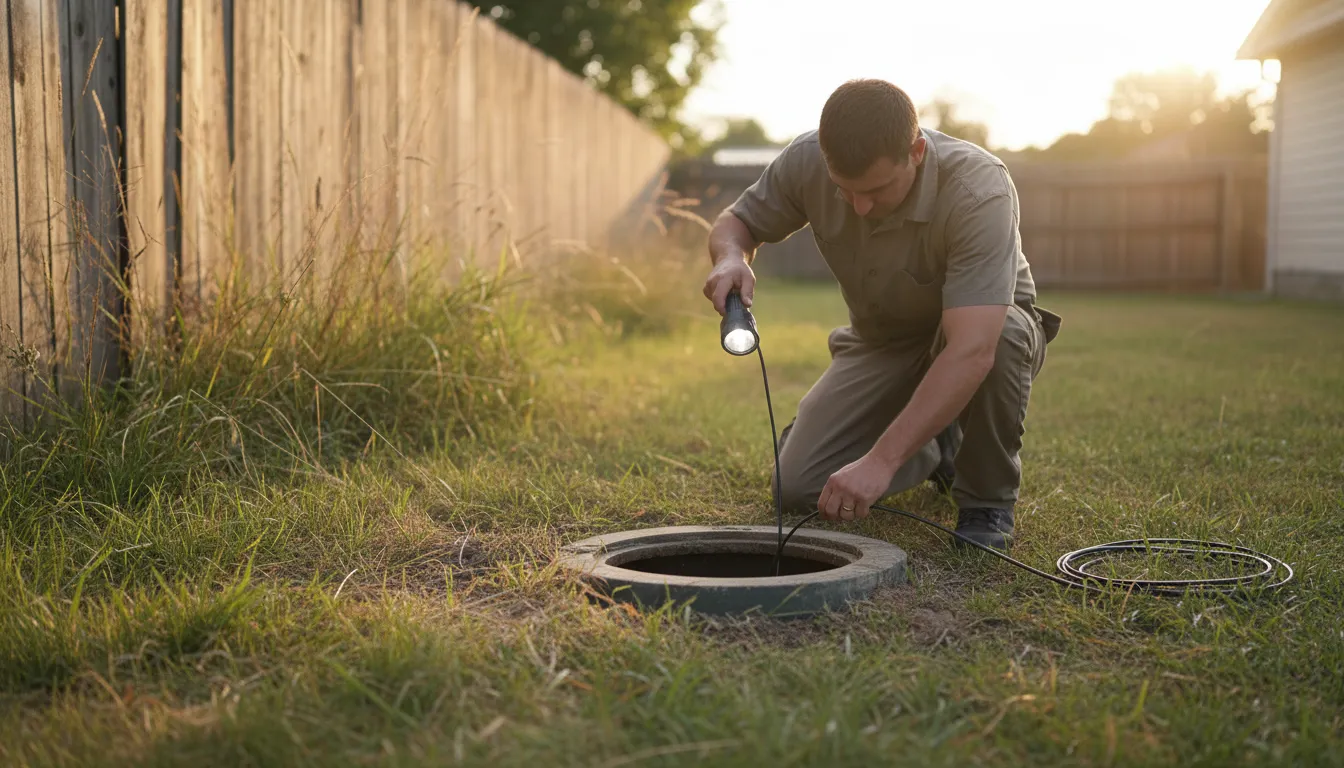
Initial Steps: Access and Observation The inspector will first locate and uncover all access ports to your tank and distribution box. This step itself can reveal issues, such as damaged lids or roots blocking access. They will note the age and general condition of visible components.
Internal Tank Evaluation This is the core of the inspection. The professional will:
- Check Structural Integrity: Look for cracks, leaks, or corrosion in the tank walls, which could allow sewage to escape or groundwater to seep in.
- Inspect Baffles and Outlets: Ensure the inlet and outlet baffles (or tees) are intact and functioning. Damaged baffles can allow solids to flow into and clog the drain field.
- Measure Scum and Sludge Levels: Using specialized tools, they measure the layer of floating scum and the accumulated sludge at the bottom. If the combined depth of these layers exceeds one-third of the tank's liquid depth, pumping is immediately required 3.
- Check Liquid Levels: Abnormal water levels can indicate a blockage in the inlet pipe, a failing drain field, or a leak in the tank itself.
For Mechanical/Aerobic Systems Many systems in Louisiana, especially in areas with poor soil drainage, are aerobic treatment units (ATUs) that use an aerator, blower, and motor. For these systems, the inspection is more involved 4. The inspector will:
- Test the aerator and blower to ensure they are providing adequate oxygen.
- Check all electrical connections, controls, and alarm systems.
- Verify that the disinfection component (if present) is operating correctly.
Drain Field Assessment While a full drain field inspection may involve additional probing, a standard check includes looking for signs of failure. The inspector will check the area above your drain field for soggy soil, standing effluent, or unusually lush grass-all indicators that the field is saturated and not properly absorbing treated wastewater.
Find the perfect septic tank inspection companies for your needs
Get personalized recommendations and expert advice
Understanding Inspection Frequency and Pumping
The state's minimum requirements are a baseline. Several factors may necessitate more frequent septic tank checkups and pumping in Lafayette:
- Household Size: More people generate more wastewater and solids, filling the tank faster.
- Tank Size: Older homes may have smaller tanks that require more frequent service.
- Garbage Disposal Use: Using a garbage disposal significantly increases the solid waste entering the tank.
- System Type: As noted, mechanical aerobic systems have electrical and mechanical parts that require more frequent monitoring-often annually-as per LDH guidelines5 6.
A professional can recommend a service schedule tailored to your specific household and system. The pumping process itself, which often accompanies an inspection, involves a licensed hauler using a vacuum truck to remove all liquid and solid waste from the tank, a process that typically takes 30 to 60 minutes7.
The Cost of Inspection vs. The Cost of Neglect
The typical cost for a combined septic tank inspection and pumping in the Lafayette area ranges from $100 to $400. This fee covers the professional's expertise, time, and reporting. When you consider the potential costs associated with a failing system, this service is remarkably cost-effective.
Compare that routine expense to:
- Drain Field Repair: $1,500 - $10,000+
- Complete System Replacement: $2,000 - $15,000+8
- Fines for Illegal Discharge: Variable but significant.
- Property Value Impact: A failed septic system can halt a home sale.
Investing in a regular inspection provides peace of mind and protects your property's value. It creates a documented history of maintenance, which is invaluable if you decide to sell your home.
Choosing a Qualified Inspector in Lafayette
Not all service providers are equal. When selecting a professional for your septic system evaluation, ensure they are:
- Licensed: They must hold appropriate licensing from the state of Louisiana for wastewater system work and hauling.
- Insured: This protects you from liability in case of accidents on your property.
- Experienced with Local Systems: Lafayette's soil conditions and common system types (like aerobic units) require specific knowledge.
- Transparent: They should provide a clear report of their findings, including sludge/scum measurements, component conditions, and any recommendations for repair or future service.
A thorough inspector will educate you on your system's operation and provide a written record of the service, which you should keep for your own files and for compliance purposes.
Frequently asked questions
Sources
Footnotes
-
Louisiana Administrative Code - https://ldh.la.gov/assets/oph/Center-EH/sanitarian/onsitewastewater/8145.pdf ↩
-
51 PUBLIC HEALTH―SANITARY CODE Part XIII. Sewage ... - https://ldh.la.gov/assets/oph/Center-EH/sanitarian/onsitewastewater/StudyMaterialOSWWInstWk.pdf ↩
-
DIY Septic Tank Inspections - Flohawks - https://flohawks.com/diy-septic-tank-inspections-a-step-by-step-guide/ ↩
-
Septic Tank Services | Voted Best Plumbers In Lafayette, LA | Hargrave's Plumbing, A Licensed & Insured Plumbing Contractor In Acadiana - https://www.hargravesplumbing.com/services/septic-tank-services/ ↩
-
Onsite Sewage Treatment System Maintenance, Health and ... - https://www.deq.louisiana.gov/assets/docs/Enviroschool/EnviroschoolOnsiteSewage-web.pdf ↩
-
Onsite Wastewater Program | Louisiana Department of Health - https://ldh.la.gov/bureau-of-sanitarian-services/wastewater ↩
-
What to Expect from Septic Tank Pumping in Lafayette - https://www.sandssewersystemsla.com/what-to-expect-from-septic-tank-pumping-in-lafayette ↩
-
Home Sewage Treatment Systems - https://www.lafayettela.gov/public-works/home-sewer-treatment-systems ↩