Find the Best Septic Tank Inspection Companies for Your Business
No obligation • Fast responses • Nationwide coverage

Why you can trust Septic Spot
Septic Spot is a leading United States resource for understanding and comparing septic services. Our editors review providers using consistent criteria and verify key business details. Listings and scores are independent, and companies cannot pay to influence our content.
Search providers near you
Top Septic Tank Inspection Companies in Eagan, Minnesota Ranked
A septic tank inspection is a critical evaluation of your onsite wastewater treatment system, conducted by a licensed professional to ensure it is functioning safely and legally. For Eagan homeowners, these assessments are not just a good idea-they are a mandatory requirement under Minnesota and Dakota County regulations, designed to protect public health and local groundwater. This guide explains what a septic system inspection entails, why it's essential for your property, and how you can connect with qualified, local inspectors to schedule your necessary service.
Alto Sewer Service - MN Drain Cleaning Company
1019 Concord St N, South St Paul, MN 55075
Alto Sewer Service - MN Drain Cleaning Company is based in Minneapolis, MN, providing commercial and residential septic tank pumping and inspection services. Established in 1965, the company offers a range of services including water jetting, video inspections, pipe locating, steam thawing, and septic maintenance. They serve the Twin Cities Metro area with expertise in handling clogged plumbing and septic system needs. Alto Sewer Service operates 24 hours a day, 364 days a year, offering after-hours availability for urgent situations.
Alto Sewer & Drain Cleaning Services
Minneapolis, MN
Alto Sewer & Drain Cleaning Services is a full-service company based in Minneapolis, MN, specializing in septic tank pumping, inspection, and comprehensive drain and sewer cleaning. They offer services such as hydro-jetting, video inspections to diagnose pipe issues, commercial pumping, and frozen pipe thawing. Their licensed and bonded septic maintenance supports subsurface sewage treatment systems. Alto Sewer focuses on preventing blockages and maintaining system longevity through routine cleaning and professional care.
Why Septic Inspections Are Mandatory in Eagan
Eagan, like all of Dakota County, operates under stringent rules set by the Minnesota Pollution Control Agency (MPCA) to manage Subsurface Sewage Treatment Systems (SSTS). The primary goal is to prevent untreated wastewater from contaminating soil and groundwater, which is a shared resource. Consequently, the city and county enforce regular maintenance inspections.
- Three-Year Requirement: State law mandates that every septic system be inspected by a licensed professional at least once every three years 1.
- Property Transfer: An inspection is almost always required when selling a home. A compliant system is often a contingency for closing.
- New System Verification: After a new septic system is installed, an "as-built" inspection verifies it was constructed according to the approved design 2.
Failing to comply with these schedules can result in enforcement actions from Dakota County Environmental Services and can complicate or prevent a real estate transaction.
What a Professional Inspector Checks
A comprehensive septic system evaluation is a detailed process that goes beyond just looking at the tank. A licensed inspector will follow a systematic approach to assess the entire system's health.
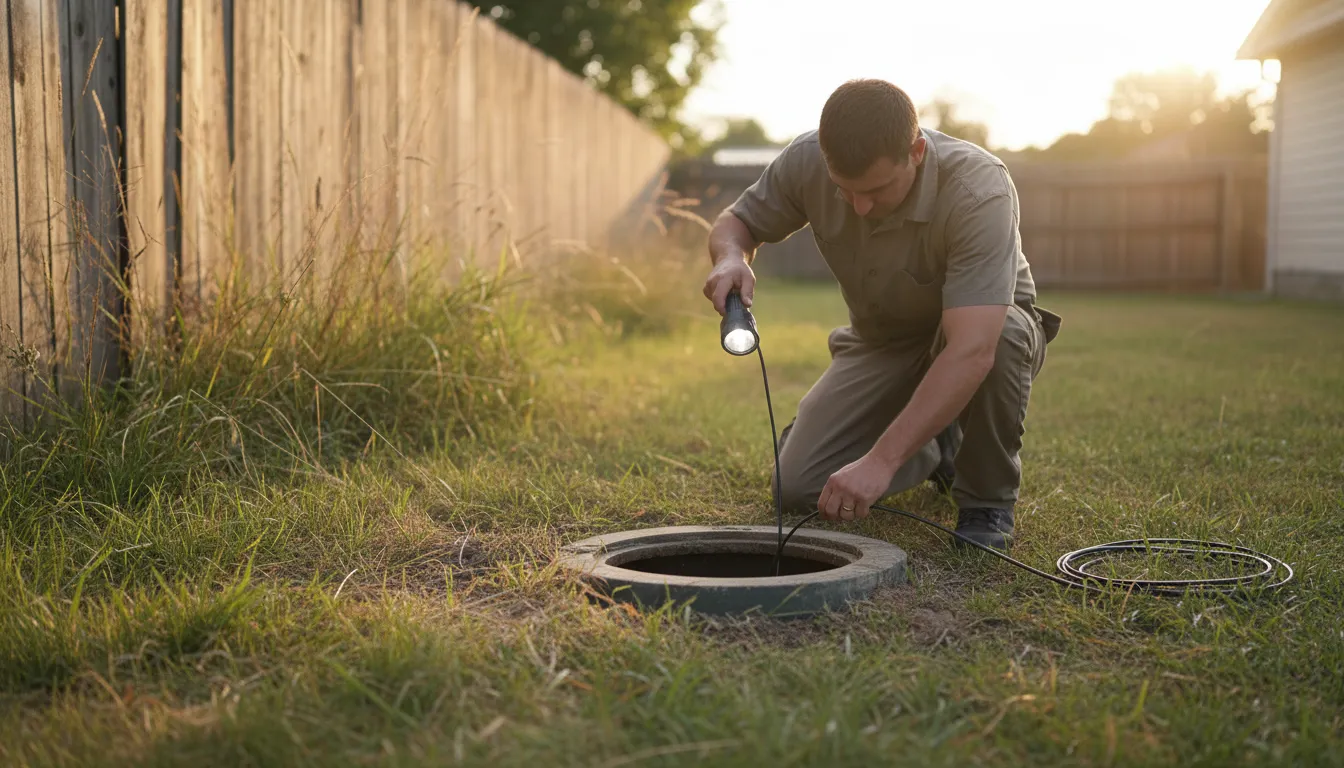
1. Locating and Uncovering the System The inspection begins by locating all components: the tank, distribution box, and drainfield. The inspector will then dig to uncover the tank's manhole and inspection ports, which are crucial for internal examination.
2. Internal Tank Assessment This is the core of the inspection. The professional will measure two key layers:
- Scum Layer: The floating layer of fats, oils, and greases at the top of the tank.
- Sludge Layer: The accumulated solids that settle at the bottom. The thickness of these layers determines if the tank needs immediate pumping. They will also check:
- Baffles: The inlet and outlet baffles are inspected to ensure they are intact. Broken baffles allow solids to escape into the drainfield, causing clogs and costly failures 3 4.
- Structural Integrity: The tank walls and seams are checked for cracks, leaks, or signs of deterioration.
3. Drainfield and Overall Function The inspector will examine the drainfield area for surfacing sewage, overly lush grass, or soggy soil-all signs of a failing system. They will also check the plumbing from the house to the tank for leaks and ensure the overall hydraulic function of the system is sound.
Understanding Inspection and Pumping Costs
The cost for these necessary services in the Eagan area can vary based on your system's size, accessibility, and condition.
- Septic Inspection Cost: A standard inspection typically ranges from $100 to $1,000. The lower end covers a basic visual and measurement check, while the higher end includes more comprehensive evaluations like a flow test or a detailed report for real estate transactions 5.
- Septic Pumping Cost: If the inspection reveals the sludge and scum layers are too deep, pumping will be recommended. The average cost to pump a septic tank in our region is between $300 and $600, though it can range from $200 to over $1,200 for very large or difficult-to-access tanks 6 7.
Remember, pumping is a separate service from an inspection, though they are often performed together for convenience and efficiency. The cost of preventative pumping is minor compared to the expense of repairing or replacing a failed drainfield.
Find the perfect septic tank inspection companies for your needs
Get personalized recommendations and expert advice
The Critical Role of MPCA Licensing
In Minnesota, all individuals who design, install, inspect, maintain, or pump septic systems must be licensed by the MPCA. This is non-negotiable. Hiring a licensed professional ensures:
- The inspection meets all legal requirements for your three-year certification or property transfer.
- The work is performed to state standards, protecting your system's warranty.
- You receive accurate documentation (a Maintenance Report Form) that can be filed with the county. Always verify a provider's MPCA license number before hiring them for any septic service.
Maintaining Your System Between Inspections
A professional inspection every three years is the cornerstone of system care, but homeowner diligence between visits is equally important. Proper maintenance extends the life of your system and prevents emergencies.
- Conserve Water: Spread out laundry loads and fix leaky faucets to avoid overloading the drainfield.
- Mind What You Flush: Only human waste and toilet paper should go down the drain. Avoid chemicals, grease, coffee grounds, and "flushable" wipes, which clog systems 8.
- Protect the Drainfield: Never park vehicles or build structures over the drainfield. Keep rainwater drainage systems and sump pumps directed away from it.
- Keep Records: Maintain a file of all inspection reports, pumping receipts, and system diagrams.
Navigating Local Ordinances in Dakota County
While state law sets the minimum standard, local counties can have stricter rules. Dakota County Environmental Services is the local authority that enforces septic system regulations 9. It is your responsibility as a homeowner to:
- Know your specific inspection due date.
- Ensure your inspector files the completed report with the County.
- Address any compliance issues or upgrade requirements they identify. For the most current and specific local ordinances, always check directly with Dakota County Environmental Services 10.
Frequently asked questions
Sources
Footnotes
-
Septic System Inspection Requirements in Minnesota - https://nsglc.olemiss.edu/Advisory/misc/pdfs/septic-in-mn.pdf ↩
-
Local septic system programs | Minnesota Pollution Control Agency - https://www.pca.state.mn.us/business-with-us/local-septic-system-programs ↩
-
SSTS service and maintenance - Minnesota Pollution Control Agency - https://www.pca.state.mn.us/business-with-us/ssts-service-and-maintenance ↩
-
Keep your septic system healthy - Minnesota Pollution Control Agency - https://www.pca.state.mn.us/news-and-stories/keep-your-septic-system-healthy ↩
-
Septic System Cost Estimate: A Complete Breakdown - Land Perc - https://landperc.com/septic-system-cost-estimate/ ↩
-
Septic Tank Pumping Cost: Guide & Pricing in 2025 - Splash Plumbing - https://www.splashplumbing.com/how-much-does-it-cost-to-pump-septic-tank-understanding-pricing-and-factors-involved/ ↩
-
Understanding the Average Cost to Pump a Septic Tank - https://www.scorpionsepticservices.com/blog/understanding-the-average-cost-to-pump-a-septic-tank ↩
-
Frequent Questions on Septic Systems | US EPA - https://www.epa.gov/septic/frequent-questions-septic-systems ↩
-
Septic Systems | Dakota County - http://www.co.dakota.mn.us/Environment/WaterResources/SepticSystem/Pages/default.aspx ↩
-
Septic systems | Minnesota Pollution Control Agency - https://www.pca.state.mn.us/business-with-us/septic-systems ↩