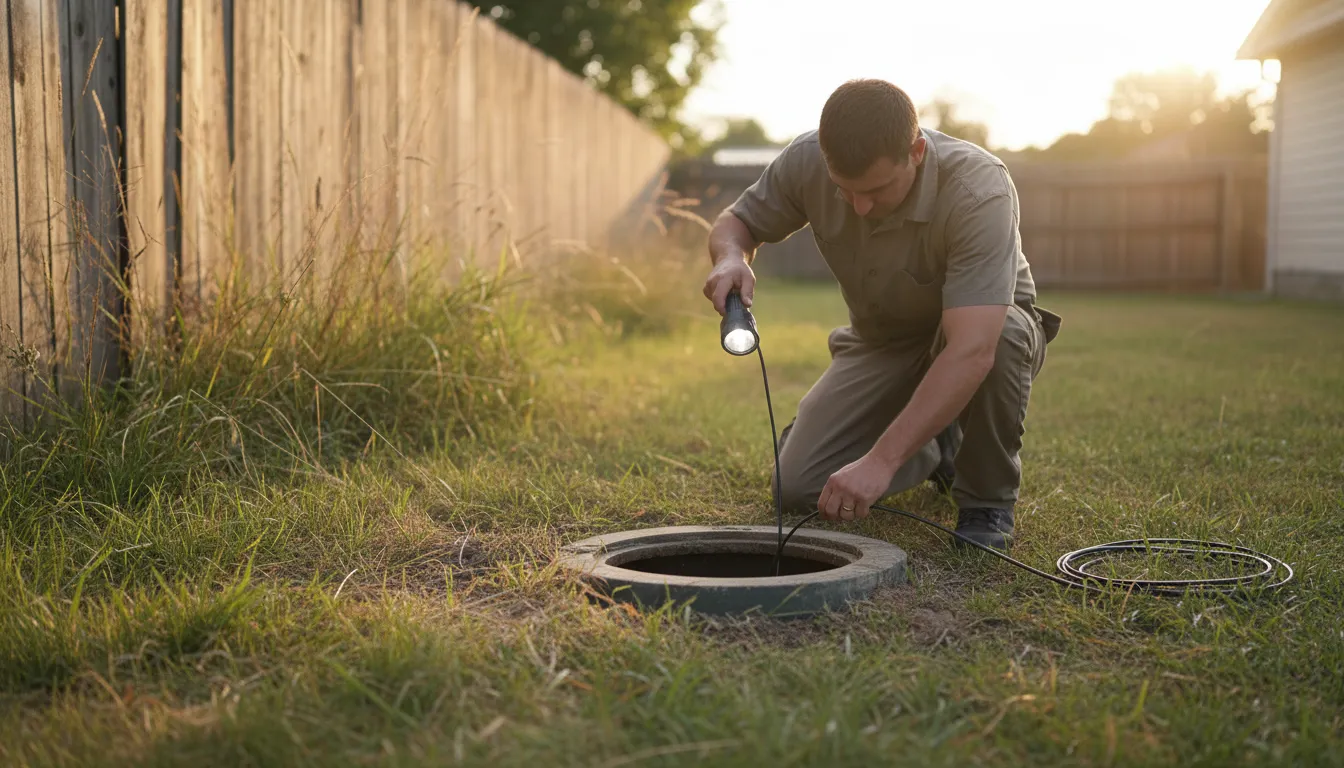
Find the Best Septic Tank Inspection Companies for Your Business
No obligation • Fast responses • Nationwide coverage

Why you can trust Septic Spot
Septic Spot is a leading United States resource for understanding and comparing septic services. Our editors review providers using consistent criteria and verify key business details. Listings and scores are independent, and companies cannot pay to influence our content.
Search providers near you
Top Septic Tank Inspection Companies in Maple Grove, Minnesota Ranked
A septic tank inspection is a professional assessment of your home's Subsurface Sewage Treatment System (SSTS) to ensure it is functioning safely and in compliance with state and local regulations. In Maple Grove, these evaluations are critical for protecting public health, preventing groundwater contamination, and avoiding costly system failures. This guide will help you understand the local requirements, the inspection process, and how to find qualified professionals to maintain your system.
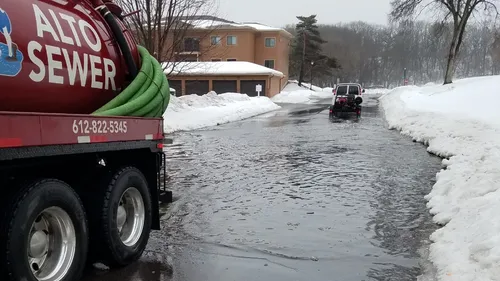
Alto Sewer Service - MN Drain Cleaning Company
1019 Concord St N, South St Paul, MN 55075
Alto Sewer Service - MN Drain Cleaning Company is based in Minneapolis, MN, providing commercial and residential septic tank pumping and inspection services. Established in 1965, the company offers a range of services including water jetting, video inspections, pipe locating, steam thawing, and septic maintenance. They serve the Twin Cities Metro area with expertise in handling clogged plumbing and septic system needs. Alto Sewer Service operates 24 hours a day, 364 days a year, offering after-hours availability for urgent situations.
Alto Sewer & Drain Cleaning Services
Minneapolis, MN
Alto Sewer & Drain Cleaning Services is a full-service company based in Minneapolis, MN, specializing in septic tank pumping, inspection, and comprehensive drain and sewer cleaning. They offer services such as hydro-jetting, video inspections to diagnose pipe issues, commercial pumping, and frozen pipe thawing. Their licensed and bonded septic maintenance supports subsurface sewage treatment systems. Alto Sewer focuses on preventing blockages and maintaining system longevity through routine cleaning and professional care.
Understanding Septic System Regulations in Maple Grove
In Maple Grove, all septic systems are regulated as Subsurface Sewage Treatment Systems (SSTS) under Minnesota Pollution Control Agency (MPCA) rules, specifically Chapters 7080-7083. The city enforces additional ordinances to ensure these systems do not pose a threat to public health or the environment. A key requirement is that every SSTS must be pumped and inspected at least once every three years. This mandatory maintenance schedule is designed to catch problems early, such as high sludge levels or component failures, before they lead to a full system malfunction.
Beyond routine upkeep, a septic system evaluation is legally required in several specific situations:
- Property Transfer: Before selling a home with a septic system.
- New Construction: When building a home that requires a new SSTS.
- System Replacement: As part of the permitting process for installing a new drainfield or tank.
- Permit Applications: For any significant repair or alteration to the existing system 1 2.
The goal of these regulatory inspections is to detect "imminent threats to public health or groundwater," ensuring every system in Maple Grove operates as intended 3.
The Septic Inspection Process: What to Expect
A comprehensive septic tank assessment in Maple Grove is a multi-step process performed by a licensed professional. It involves more than just looking into the tank; it's a full system diagnostic.
1. Locating and Exposing the System The first step is often locating the tank and drainfield, especially if you don't have a record of your "as-built" system diagram. Inspectors may use probing tools. For a proper inspection, the tank lid must be exposed. Many professionals recommend installing permanent risers with secure lids from the tank to the ground surface. This makes future inspections and pumping much easier, safer, and less costly 4 5.
2. Pumping the Tank For a thorough inspection, the tank must be pumped out by a licensed maintenance provider. This allows the inspector to clearly see the tank's interior walls, inlet and outlet pipes, and baffles without obstruction. Pumping is a separate service from the inspection itself but is a necessary precursor to a complete evaluation.
3. Checking Structural Integrity Once empty, the inspector checks for cracks, leaks, or corrosion in the tank walls and at the joints where risers connect. They also inspect the baffles (or tees) at the inlet and outlet pipes. These components are crucial for preventing solids from flowing out into the drainfield. Damaged or missing baffles are a common cause of system failure.
4. Inspecting System Components For systems with pumps, the inspection includes testing the pump, float switches, and any alarm systems. The inspector will also check the effluent screen, if present, which provides an additional layer of protection for the drainfield by filtering solids 6.
5. Evaluating the Drainfield The final, and perhaps most critical, part of the inspection is evaluating the drainfield (or soil treatment area). The inspector looks for any signs of failure, such as:
- Surfacing sewage or effluent
- Unusually lush or soggy grass over the field
- Foul odors
- Slow-draining fixtures in the house This evaluation determines whether the soil is adequately treating the wastewater before it re-enters the groundwater.
Find the perfect septic tank inspection companies for your needs
Get personalized recommendations and expert advice
Costs Associated with Septic Inspections and Maintenance
Understanding the potential costs helps homeowners budget for this essential home maintenance. In Maple Grove, fees are broken down into two main categories: city permit fees and service provider charges.
City of Maple Grove Permit and Inspection Fees The city charges separate fees for various septic-related permits. Notably, there is a specific "Septic system inspection fee" set at $153. Other common permit fees include:
- System Repair Permit: Starting at $204
- New System Installation Permit: Ranging from $413 to $736 or more, depending on system type and complexity
- System Abandonment Permit: $101 7
Service Provider Costs These are the costs you pay directly to the licensed septic professional for their work.
- Tank Pumping: This typically costs between $200 and $1,200+ in the Maple Grove area. The wide range depends on tank size (e.g., 1,000-gallon vs. 1,500-gallon), accessibility (whether risers are installed), and the company's rates. The national average is around $423 8 9.
- Professional Inspection: When bundled with pumping, the inspection service itself may have an additional cost. Some companies offer package deals. For a detailed breakdown of inspection and repair costs in the Twin Cities metro, local providers can offer specific quotes.
- Annual Budget: Given the three-year pumping/inspection mandate and potential for minor repairs, septic professionals often recommend homeowners budget $300 to $500 per year for ongoing septic system maintenance 10.
Finding a Qualified Inspector in Maple Grove
Not just any contractor can perform a regulatory septic inspection in Minnesota. It is essential to hire a professional who is properly licensed and registered.
MPCA Licensing is Mandatory For an inspection to be valid for permit applications or property transfer, it must be conducted by a licensed SSTS Inspector who is registered with the Minnesota Pollution Control Agency 11. These inspectors have undergone specific training and certification to evaluate systems according to state code.
How to Verify Credentials You can ask the service provider for their MPCA license number. The MPCA also maintains resources to help homeowners find qualified maintenance providers and inspectors in their area 12. Always confirm that the professional you hire carries the appropriate insurance and is familiar with local Maple Grove and Washington County regulations.
The Value of a Thorough Inspection While it may seem like an expense, a professional septic system inspection is an investment. It can identify small, fixable issues-like a failing baffle or a faulty pump switch-before they escalate into a catastrophic drainfield failure, which can cost tens of thousands of dollars to replace. It also provides peace of mind that your system is protecting your family's health and our local water resources.
Maintaining Your System Between Inspections
A successful inspection starts with good daily habits. You can extend the life of your septic system and avoid problems by:
- Conserving water to avoid hydraulically overloading the system.
- Avoiding flushing anything besides human waste and toilet paper (no wipes, feminine products, or grease).
- Keeping heavy vehicles and structures off the drainfield area.
- Directing rainwater drainage from roofs and driveways away from the septic tank and drainfield. Following these practices helps ensure your system will be in good condition when your mandatory three-year inspection rolls around 13.
Frequently asked questions
Sources
Footnotes
-
Septic Systems (SSTS) | Maplewood, MN - https://maplewoodmn.gov/947/Septic-Systems-SSTS ↩
-
Septic System Inspection Requirements in Minnesota - https://nsglc.olemiss.edu/Advisory/misc/pdfs/septic-in-mn.pdf ↩
-
SSTS inspections - Minnesota Pollution Control Agency - https://www.pca.state.mn.us/business-with-us/ssts-inspections ↩
-
SSTS service and maintenance - Minnesota Pollution Control Agency - https://www.pca.state.mn.us/business-with-us/ssts-service-and-maintenance ↩
-
Compliance inspections for subsurface sewage treatment systems - https://www.pca.state.mn.us/sites/default/files/wq-wwists4-39.pdf ↩
-
Septic System Regulation in Minnesota - Barna, Guzy & Steffen - https://www.bgs.com/blog/2013/09/16/the-septic-system-quagmire-septic-system-regulation-in-minnesota/ ↩
-
2023 SEPTIC PERMIT APPLICATION PUBLIC HEALTH - https://www.maplegrovemn.gov/DocumentCenter/View/128 ↩
-
Septic Tank Pumping Cost: Guide & Pricing in 2025 - Splash Plumbing - https://www.splashplumbing.com/how-much-does-it-cost-to-pump-septic-tank-understanding-pricing-and-factors-involved/ ↩
-
Understanding the Average Cost to Pump a Septic Tank - https://www.scorpionsepticservices.com/blog/understanding-the-average-cost-to-pump-a-septic-tank ↩
-
Septic Inspection and Repair in Bloomington, MN - https://mikesseptic.com/2025/07/understanding-the-costs-septic-inspection-and-repair-in-bloomington-mn/ ↩
-
Septic system and plumbing regulations - https://www.pca.state.mn.us/sites/default/files/wq-wwists4-43.pdf ↩
-
Washington County Regulations - https://spaar.com/wp-content/uploads/2021/01/Regulations-Washington-County.pdf ↩
-
Keep your septic system healthy - Minnesota Pollution Control Agency - https://www.pca.state.mn.us/news-and-stories/keep-your-septic-system-healthy ↩