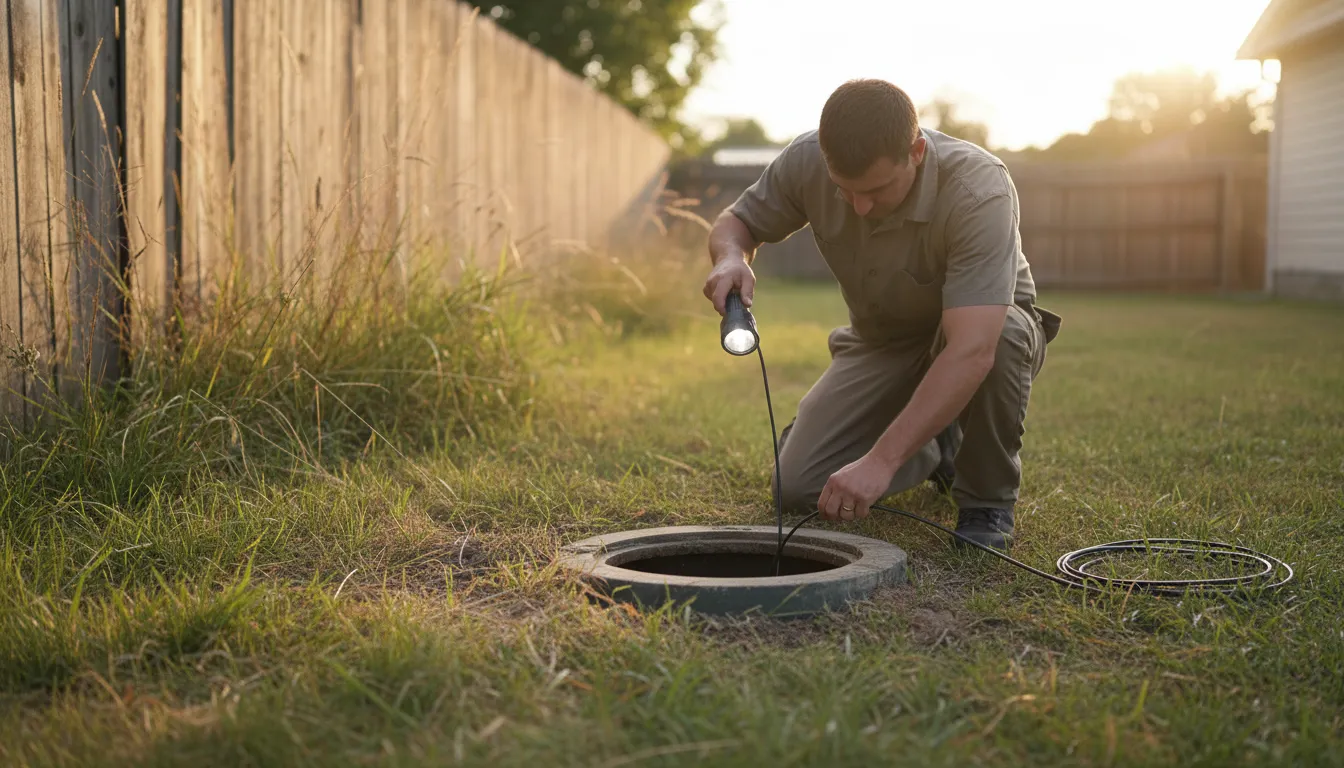
Find the Best Septic Tank Inspection Companies for Your Business
No obligation • Fast responses • Nationwide coverage

Why you can trust Septic Spot
Septic Spot is a leading United States resource for understanding and comparing septic services. Our editors review providers using consistent criteria and verify key business details. Listings and scores are independent, and companies cannot pay to influence our content.
Search providers near you
Top Septic Tank Inspection Companies in Eugene, Oregon Ranked
A septic system inspection is a critical evaluation of your home's private wastewater treatment system. For homeowners in Eugene, understanding the condition of your septic tank and drain field is essential for protecting your property value, ensuring public health, and preventing costly environmental damage. This guide will help you understand the process, local requirements, and how to find qualified professionals to assess your system's health.
Loose Deuce Septic & Tank Services
Eugene, OR
Loose Deuce Septic & Tank Services is a family-owned company providing septic tank pumping, inspection, and maintenance in Eugene, OR. They serve Eugene and nearby communities including Junction City, Springfield, Goshen, Pleasant Hill, and Creswell. Their services include septic system maintenance, septic tank inspections, and RV tank pumping, using state-of-the-art equipment to help prolong the life of septic systems. The company is certified with the Oregon DEQ and offers thorough documentation and communication throughout their work.
SOS Septic Pumping LLC
Eugene, OR
SOS Septic Pumping LLC is a family-owned septic service provider based in Eugene, OR, serving Lane, Linn, Benton, and Douglas Counties. They offer a range of septic system services including pumping, inspection, cleaning, maintenance, and coordination of repairs through trusted partners. Their licensed and insured team focuses on routine maintenance to prevent system failures and environmental issues, ensuring septic systems operate efficiently and comply with local regulations. With local expertise and a commitment to community health, SOS Septic Pumping supports both residential and commercial clients in maintaining their septic systems.
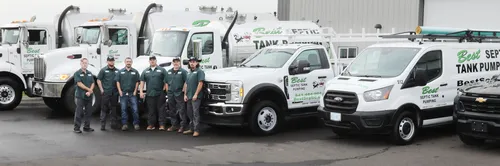
Best Septic Tank Pumping
3555 Marcola Rd, Springfield, OR 97477
Best Septic Tank Pumping is a full-service septic company serving Eugene, OR, and surrounding areas including Springfield, Salem, and Florence. They offer a wide range of septic services such as routine maintenance, septic tank pumping, inspections, repairs, and installations. Their fleet includes vacuum trucks ranging from 1,000 to 4,200 gallons, enabling efficient pumping and thorough cleaning of septic tanks. The company is family-owned and emphasizes personalized service and attention to detail. They provide 24-hour emergency septic services to address urgent needs promptly.
Why Septic System Evaluations Matter in Eugene
In Lane County, where many homes rely on onsite wastewater systems instead of municipal sewer lines, regular septic assessments are a key part of responsible homeownership. The Oregon Department of Environmental Quality (DEQ) and Lane County Land Management Division oversee regulations to protect groundwater and surface water from contamination. A failing system can lead to sewage backing up into your home, polluting local waterways like the Willamette River, or creating unhealthy conditions in your yard. Proactive inspections help you catch minor issues before they become major, expensive repairs or a public health nuisance.
Local Regulations and Inspection Requirements
While Oregon state law does not mandate annual inspections for all systems, specific situations require a professional septic system evaluation.
- Property Transfers: A septic inspection is almost always a standard part of a real estate transaction in Eugene. Lenders and buyers require a clear report on the system's condition before closing 1.
- System Permitting: If you are applying for a permit to repair, replace, or install a new septic system through Lane County, an evaluation of the existing system and soil conditions (via test pits) is a necessary step 2 3.
- Recommended Schedule: Even outside of a sale, experts strongly recommend having your septic tank inspected every 1 to 3 years, depending on usage and system age 4. Regular checks are the most cost-effective way to manage your system's longevity.
What Does a Professional Septic Inspection Involve?
A comprehensive septic system check is a multi-step process conducted by a certified professional. It goes far beyond just looking at the tank.
1. System Location and Access
The inspector will first locate your septic tank and drain field, often using county records ("as-builts") and probing tools. They will then excavate to uncover the tank's access lids. If your lids are buried deep, they may recommend installing risers (at an additional cost) for safer, easier future access 5.
2. Tank Interior Evaluation
This is the core of the inspection. The inspector will:
- Measure Sludge and Scum: Using specialized tools, they measure the depth of the sludge layer at the bottom and the scum layer at the top. This determines if the tank needs immediate pumping.
- Check Structural Integrity: They look for cracks, leaks, or corrosion in the tank walls, baffles, and lids. Damaged baffles can allow solids to escape into the drain field, causing premature failure 6.
- Assess Liquid Levels: The inspector checks the effluent level to ensure it's at the proper height for flowing into the drain field. An abnormally high level can indicate a blockage or drain field problem 7.
3. Drain Field Assessment
The inspector examines the area above and around your leach field for signs of failure, which include:
- Soggy, saturated soil or standing wastewater on the surface.
- Unusually lush, green grass over the field area.
- Foul odors emanating from the yard.
4. Reporting and Recommendations
After the evaluation, you should receive a detailed written report outlining the system's condition, any issues found, and recommended actions-such as immediate pumping, minor repairs, or further investigation 8.
Find the perfect septic tank inspection companies for your needs
Get personalized recommendations and expert advice
Understanding Costs for Septic Inspections in Eugene
Pricing for septic services in Eugene depends on the scope of work and your tank's size and accessibility.
- Inspection Only: A standard visual and operational inspection typically costs between $300 and $600+ 9.
- Pumping/Cleaning: If the inspection reveals the tank is full, pumping is necessary and costs an additional $300 to $700+, varying with tank size (e.g., 1,000-gallon vs. 1,500-gallon) and the volume of solids 10 11.
- Combined Service: Many providers offer a bundled "inspection and pumping" service, which can provide better overall value than scheduling them separately 12.
- Additional Work: Installing access risers, performing a dye test, or digging additional test pits will add to the total cost.
Choosing a Qualified Septic Inspector in Lane County
Not every plumber is qualified to perform a thorough septic system evaluation. For your protection, always hire a licensed professional. In Oregon, this means a DEQ-certified maintenance provider, septic installer, or licensed pumper 13. These professionals have the specific training and certification required by the state to properly evaluate onsite wastewater systems and understand local Lane County codes.
Maintaining Your System After the Inspection
An inspection provides a snapshot of your system's health. To protect your investment, follow the inspector's maintenance advice, which will likely include:
- Regular Pumping: Typically needed every 3-5 years, but the inspection will give you a precise schedule based on actual sludge accumulation.
- Water Conservation: Reducing water flow into the system extends its life.
- Mindful Flushing: Only human waste and toilet paper should go into a septic system. Avoid chemicals, grease, wipes, and other solids.
- Protecting the Drain Field: Never drive or park over it, and keep rainwater drainage systems directed away from the area.
Frequently asked questions
Sources
Footnotes
-
Real Estate Sales - Well Water Program - Oregon State University - https://wellwater.oregonstate.edu/well-water/real-estate-sales ↩
-
Test Pit Information - Lane County - https://www.lanecountyor.gov/government/county_departments/public_works/land_management_division/on-_site_wastewater/test_pit_information ↩
-
Residential Septic Permitting - Oregon.gov - https://www.oregon.gov/deq/residential/pages/residentialseptic.aspx ↩
-
Frequent Questions on Septic Systems | US EPA - https://www.epa.gov/septic/frequent-questions-septic-systems ↩
-
What to Expect from a Septic Inspection - https://www.wrenvironmental.com/blog/2023/may/what-to-expect-from-a-septic-inspection/ ↩
-
Septic Inspection Process: What Homeowners Should Know | LunsPro - https://www.lunspro.com/vlog/the-septic-system-inspection-process-what-homeowners-should-know ↩
-
Septic Inspection In Eugene, OR: Your Essential Guide - Utatlan - https://utatlan.minegocio-go.com/global-register/septic-inspection-in-eugene-or-your-essential-guide-1767646591 ↩
-
Septic Inspection In Eugene, OR: Your Complete Guide - Utatlan - https://utatlan.minegocio-go.com/global-register/septic-inspection-in-eugene-or-your-complete-guide-1767646591 ↩
-
Septic Inspection In Eugene, Oregon: Your Ultimate Guide - Kerusso - https://ftp.kerusso.com/royal-network/septic-inspection-in-eugene-oregon-your-ultimate-guide-1767646591 ↩
-
Septic Systems Oregon Coast Guide for Homeowners - Audra Powell - https://audrascoasthomes.com/blog/septic-systems-and-sewer-lines-what-every-oregon-coast-homeowner-should-know ↩
-
What Does a Septic Inspection Entail? - https://www.homelight.com/blog/septic-inspection/ ↩
-
OAR 340-071-0220 - Standard Subsurface Systems - https://oregon.public.law/rules/oar_340-071-0220 ↩
-
About Septic Systems : Residential Resources - Oregon.gov - https://www.oregon.gov/deq/residential/pages/onsite-about.aspx ↩