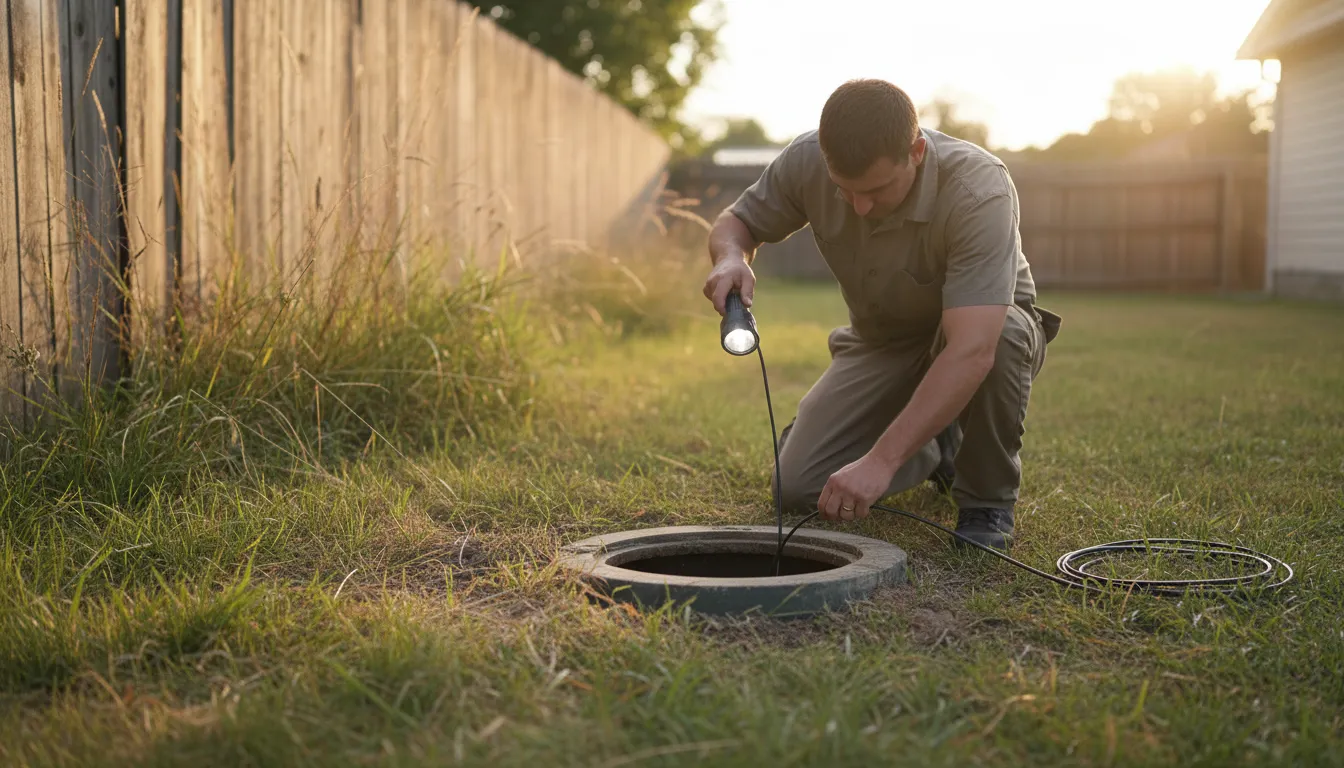
Find the Best Septic Tank Inspection Companies for Your Business
No obligation • Fast responses • Nationwide coverage

Why you can trust Septic Spot
Septic Spot is a leading United States resource for understanding and comparing septic services. Our editors review providers using consistent criteria and verify key business details. Listings and scores are independent, and companies cannot pay to influence our content.
Search providers near you
Top Septic Tank Inspection Companies in East Providence, Rhode Island Ranked
A professional septic tank inspection is a critical evaluation of your onsite wastewater treatment system's health and functionality. For homeowners in East Providence, these assessments are essential for protecting your property value, ensuring environmental safety, and complying with state and local regulations. Whether you're preparing for a real estate transaction, following a recommended maintenance schedule, or troubleshooting potential issues, understanding the inspection process helps you find qualified local professionals to conduct this vital service.
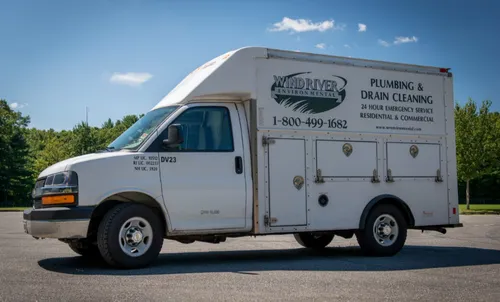
Wind River Environmental of Johnston, RI
141 Shun Pike, Johnston, RI 02919
Wind River Environmental of Johnston, RI provides septic tank pumping, inspection, and repair services in Providence, RI. Serving residential, commercial, and municipal clients, the company offers tailored solutions that comply with local codes and regulations. With a history dating back to 1946, Wind River Environmental brings decades of experience and a broad resource network to handle projects of varying complexity. The company is available 24/7 to address urgent septic and wastewater needs.
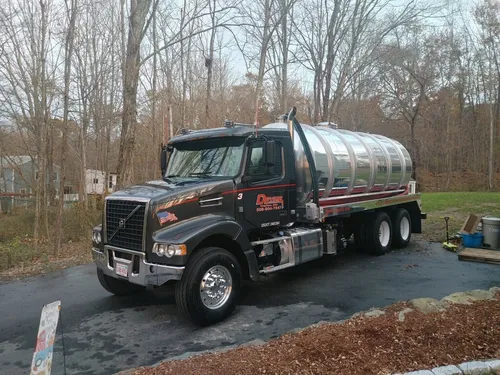
Devine Septic LLC
Providence, RI
Devine Septic LLC is a septic tank inspection and repair company serving Providence, RI. With over 10 years of experience, they offer services including septic system maintenance, emergency repairs, and Title V inspections required for home sales in Massachusetts. They focus on educating customers about septic system operation to help prevent issues and maintain efficient performance.

A & D Sanitation.
223 Hinchey Ln, Somerset, MA 02726
A & D Sanitation provides septic tank pumping, inspection, and repair services in Providence, RI. The company handles septic system maintenance including pumping, line snaking to clear blockages, and basic repairs such as installing filters, risers, and covers. They also offer yearly bacteria treatments and inspections required for Rhode Island point-of-sale ISDS. Their services include maintaining cesspool tight tanks and providing tank seals and jetting.

Croome Sanitation Inc
26 Hillside Ave, Rehoboth, MA 02769
Croome Sanitation Inc is a family-owned septic service company serving Providence, RI, and the surrounding areas of Southeast Massachusetts and Rhode Island. Established in 1962, the company offers a wide range of septic system services including pumping, Title 5 inspections, sewer camera diagnostics, pump station maintenance, and excavation work. Their expertise extends to wastewater treatment systems, providing comprehensive care to maintain system health and compliance with local regulations. Croome Sanitation also offers same-day and emergency services to address urgent septic needs.
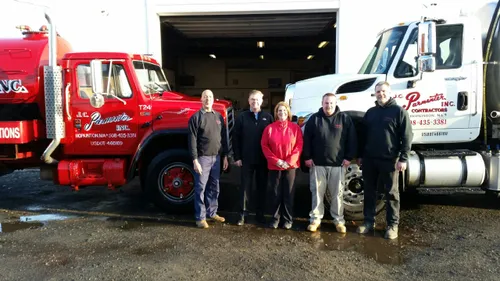
John C Parmenter Inc.
85 Hayden Rowe St, Hopkinton, MA 01748
John C Parmenter Inc. is a septic service company based in Worcester, MA, with over 100 years of experience. They offer septic tank pumping, repair, Title 5 inspections, and full septic system installations. The company serves Hopkinton and surrounding towns, handling everything from routine maintenance to new construction septic projects. Their licensed inspectors provide comprehensive Title 5 reports, and they also offer emergency septic services.
Understanding Rhode Island's Septic System Regulations
In Rhode Island, septic systems are formally known as Individual Sewage Disposal Systems (ISDS) or Onsite Wastewater Treatment Systems (OWTS). The Rhode Island Department of Environmental Management (RIDEM) sets the statewide framework, but local municipalities like East Providence may have additional ordinances. While RIDEM does not mandate routine inspections for all conventional systems, it strongly recommends professional evaluations every 2 to 5 years.
The most stringent requirement involves property transfers. Rhode Island General Laws Section 23-19.15 mandates a full system inspection by a licensed inspector within 12 months of a sale to obtain a mandatory Certificate of Compliance 1. Without this certificate, a real estate transaction cannot be completed. Furthermore, the state's Cesspool Act requires that any cesspool be removed from service within one year of a property transfer, or immediately if it is within 200 feet of coastal shoreline features or public wells 2.
What a Comprehensive Septic Inspection Involves
A standard septic system evaluation in East Providence is a detailed process that typically takes 2 to 4 hours 3. It goes far beyond a simple look at the tank and provides a complete health check for your entire wastewater treatment system.
Pre-Inspection Preparation: To ensure a smooth and accurate inspection, homeowners should locate all system components-including the tank, distribution box, and leach field-and gather any available records of previous service, pumping, or repairs.
Initial Site Evaluation: The licensed inspector begins by walking the property to identify surface indicators of system failure. This includes checking for unpleasant odors, soggy ground or ponding wastewater, and unusually lush, green vegetation over the drain field area 4.
Tank Assessment: This is the core of the inspection.
- Excavation & Access: The inspector uncovers and opens the tank's access covers.
- Structural Integrity: The tank is examined for cracks, corrosion, or other signs of structural compromise.
- Sludge and Scum Measurement: Using specialized tools, the inspector measures the depth of the sludge layer at the bottom and the scum layer at the top. Rhode Island regulations state that if the combined thickness of these layers exceeds 35% of the tank's liquid depth, a pump-out is required before the inspection can be finalized 5 6.
- Component Check: The inlet and outlet baffles (or tees) are inspected to ensure they are intact and functioning properly. Liquid levels are also checked to confirm proper flow 7 8.
Distribution Box and Leach Field Inspection:
- The distribution box (D-box), which directs effluent from the tank to the leach field lines, is inspected to verify that flow is even and that there is no backflow into the tank 9.
- The leach field itself is evaluated. Inspectors may use push cameras to visually assess the condition of the perforated pipes or perform a hydraulic load test to determine if the soil is properly accepting and filtering the effluent 10.
Final Report: Upon completion, you receive a comprehensive written report detailing the inspector's findings, the system's condition, and any required actions. If the inspection is for a real estate transfer, this report is submitted to the local town office as part of the Certificate of Compliance application 11.
Find the perfect septic tank inspection companies for your needs
Get personalized recommendations and expert advice
Types of Inspections and Associated Costs
The scope and cost of your septic system evaluation in East Providence depend on its purpose and your system's type. Below is a general guide to common service types and their estimated price ranges, though actual quotes from local providers may vary based on specific site conditions.
| Service Type | Estimated Cost | Typical Frequency or Context |
|---|---|---|
| Basic Maintenance Inspection | $300 - $400 | Recommended every 2-5 years for conventional systems |
| Real Estate Transfer Inspection | $450 - $550 | Required within 12 months of a property sale |
| Advanced System Evaluation | $550 - $700 | Legally required annual inspection for advanced treatment units |
| Routine Pumping (if needed) | $250 - $500 | Every 3-5 years, or when sludge/scum exceeds 35% of tank depth |
| Conventional System Replacement | $10,000 - $18,000 | Necessary upon system failure |
| Advanced System Replacement | $23,000 - $32,000 | Necessary upon system failure |
Note on Advanced Systems: If your property uses an advanced treatment unit (ATU), state law requires you to maintain an active service contract with a qualified professional as a condition of the system's RIDEM approval 12. These systems typically require more frequent, often annual, inspections and specialized servicing.
Proactive Maintenance for East Providence Homeowners
Regular inspections are one part of a responsible maintenance plan. Proper care extends the life of your system and helps avoid costly emergencies.
- Pump Regularly: The single most important maintenance task is pumping the tank. Frequency depends on household size and tank capacity. For example, a 1,000-gallon tank serving a family of four typically needs pumping every 2.5 to 3 years 13. Your inspector will provide a recommended schedule based on their measurements.
- Conserve Water: Reducing overall water use prevents hydraulic overload. Spread out laundry loads throughout the week instead of having a single "laundry day," and fix leaky faucets and toilets promptly.
- Mind What You Flush: Only human waste and toilet paper should go into the system. Avoid flushing wipes (even "flushable" ones), feminine hygiene products, cooking grease, and chemicals. Do not use septic system additives, as they can harm the bacterial ecosystem and potentially damage components 14 15.
- Protect the Drain Field: Never drive or park vehicles on the leach field, as compaction destroys the soil's ability to treat wastewater. Avoid planting trees or shrubs with deep roots nearby, and do not build structures, patios, or pools over the field 16.
Recognizing Signs You Need an Inspection Sooner
Don't wait for a scheduled check or a property sale if you notice warning signs. Contact a licensed septic inspector in East Providence if you observe:
- Sewage odors indoors or near the tank/drain field.
- Gurgling sounds in household drains.
- Slow-draining sinks, tubs, or toilets.
- Standing water or soggy, bright green grass over the leach field.
- Sewage backing up into household drains.
Addressing these issues quickly can mean the difference between a minor repair and a full system replacement.
Frequently asked questions
Sources
Footnotes
-
Do I Need a Septic Inspection to Sell My House: Rhode Island - https://www.rockhouseconstruction.com/do-i-need-a-septic-inspection-to-sell-my-house-rhode-island ↩
-
Septic & Onsite Wastewater Treatment Systems - https://dem.ri.gov/environmental-protection-bureau/water-resources/permitting/septic-onsite-wastewater-treatment-owts ↩
-
Rhode Island Septic Inspections: What's Included - https://www.rockhouseconstruction.com/rhode-island-septic-inspections-whats-included ↩
-
Septic & Onsite Wastewater Treatment Systems - https://dem.ri.gov/environmental-protection-bureau/water-resources/permitting/septic-onsite-wastewater-treatment-owts ↩
-
Rhode Island Septic Inspection Requirements: What to Know - https://www.rockhouseconstruction.com/rhode-island-septic-inspection-requirements-what-to-know ↩
-
Guidance for the Inspection of On-site Sewage Disposal Systems - https://www.mass.gov/guides/guidance-for-the-inspection-of-on-site-sewage-disposal-systems ↩
-
Rhode Island Septic Inspections: What's Included - https://www.rockhouseconstruction.com/rhode-island-septic-inspections-whats-included ↩
-
Septic Inspection Service in Rhode Island - https://sherwoodinspection.com/septic-inspection-rhode-island/ ↩
-
Septic System Inspections in Rhode Island | SewerMan - https://sewerman.com/ri/services/oil-to-gas-conversions/ ↩
-
1st Main inspection - The University of Rhode Island - https://web.uri.edu/owt/wp-content/uploads/sites/2062/1st-Main-inspection-FS.pdf ↩
-
Do I Need a Septic Inspection to Sell My House: Rhode Island - https://www.rockhouseconstruction.com/do-i-need-a-septic-inspection-to-sell-my-house-rhode-island ↩
-
Obtaining a Permit for a New Home's Septic System - https://dem.ri.gov/sites/g/files/xkgbur861/files/programs/benviron/water/permits/isds/pdfs/newhomfs.pdf ↩
-
How Often Should You Pump Your Septic Tank: 3 Factors Solved - https://www.frasiers.com/blog/sewage-tank-pump-frequency/ ↩
-
SepticSmart Homeowners | Rhode Island Department of ... - https://dem.ri.gov/environmental-protection-bureau/water-resources/permitting/septic-smart-home ↩
-
RI Septic System Maintenance Recommendations - https://fostersurvey.com/ri-septic-system-maintenance-recommendations/ ↩
-
Septic Systems | Rhode Island Department of Environmental ... - https://dem.ri.gov/ri-stormwater-solutions/take-action/simple-steps/septic-systems.php ↩