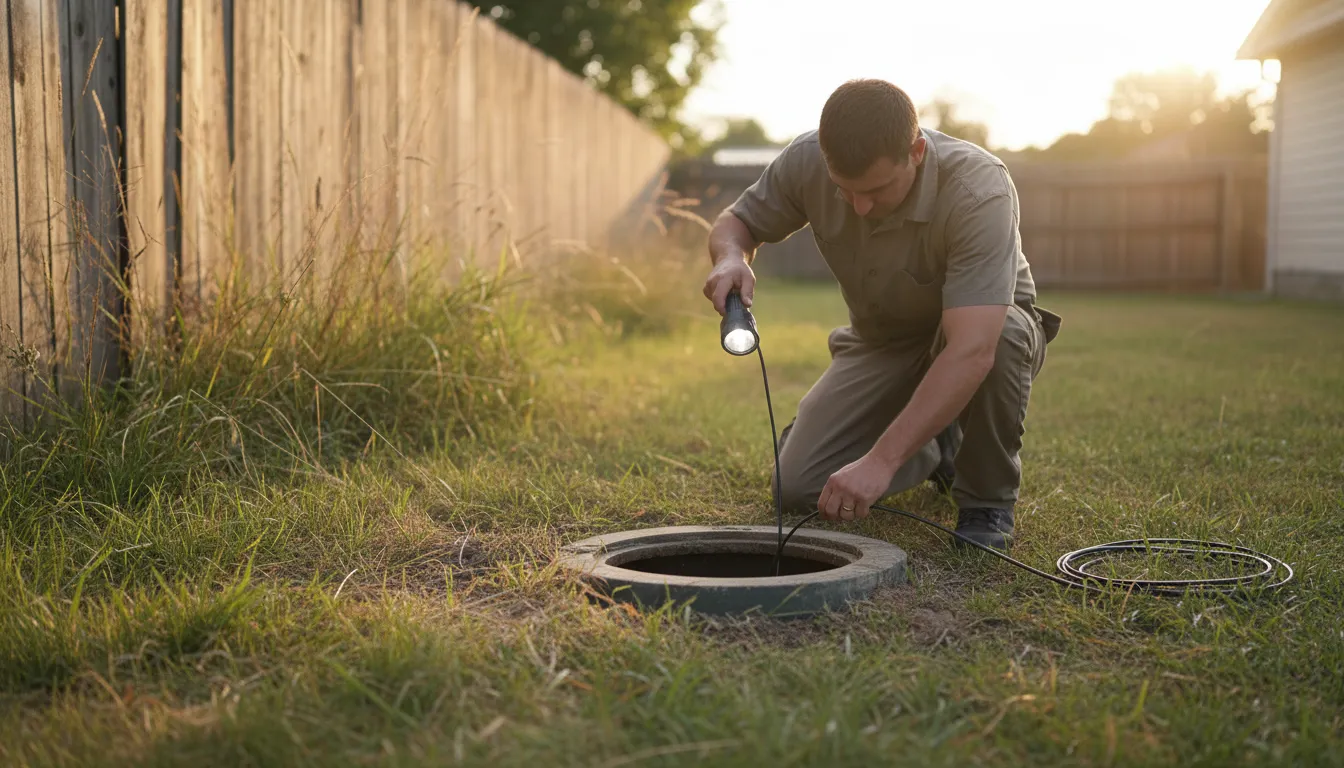
Find the Best Septic Tank Inspection Companies for Your Business
No obligation • Fast responses • Nationwide coverage

Why you can trust Septic Spot
Septic Spot is a leading United States resource for understanding and comparing septic services. Our editors review providers using consistent criteria and verify key business details. Listings and scores are independent, and companies cannot pay to influence our content.
Search providers near you
Top Septic Tank Inspection Companies in Draper, Utah Ranked
A septic tank inspection is a vital evaluation of your onsite wastewater system's health and functionality. This professional assessment matters because a failing system can pose serious health risks, cause environmental damage, and lead to costly property damage. For homeowners in Draper, understanding the local requirements and finding a qualified professional is key to maintaining compliance and protecting your investment.

A-1 Septic
851 N 900 W, Orem, UT 84057
A-1 Septic is a septic tank pumping, inspection, and repair company serving Provo, UT, and the surrounding Utah County area. With over 60 years of experience, they offer a wide range of septic services including tank pumping, locating, inspections, maintenance, riser installations, and troubleshooting. Their capabilities also extend to wastewater system services such as holding tank pumping, lift station maintenance, and compliant wastewater disposal. The company operates six days a week and provides emergency services on Sundays.
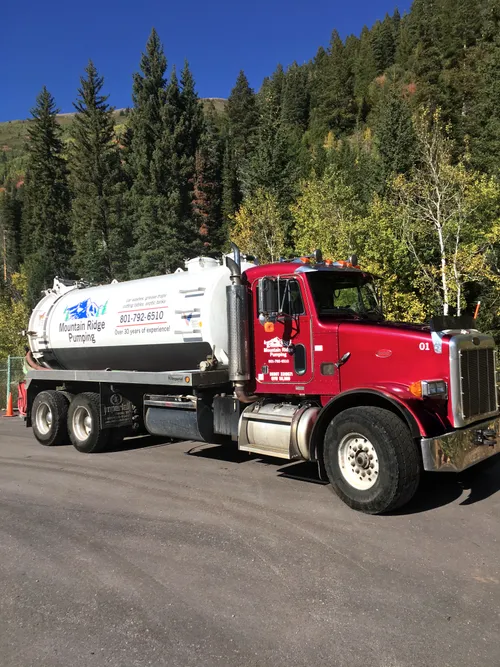
Mountain Ridge Pumping
Salt Lake City, UT
Mountain Ridge Pumping is a licensed and insured company based in Salt Lake City, UT, specializing in septic tank pumping and inspection services for both commercial and residential clients. With over 30 years of experience, they handle non-hazardous liquid waste removal from various sources including septic tanks, car wash pits, storm drains, and lift stations. The company emphasizes proper waste disposal and environmental responsibility by working with reputable waste treatment facilities.
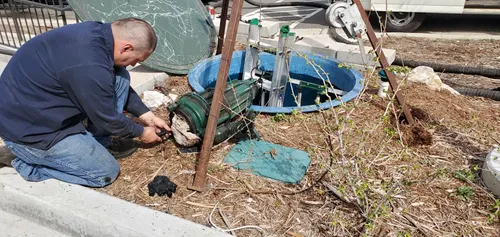
A&B Sewer & Drain Cleaning
1061 Major St, Salt Lake City, UT 84111
A&B Sewer & Drain Cleaning is a licensed, bonded, and insured company based in Salt Lake City, UT. They provide plumbing, sewer, and septic tank services for residential, commercial, and infrastructure clients. Their offerings include septic tank pumping, inspections, drain cleaning, water main replacement, and full video inspection services. The company serves both Utah and Nevada and is available around the clock for emergency plumbing needs.
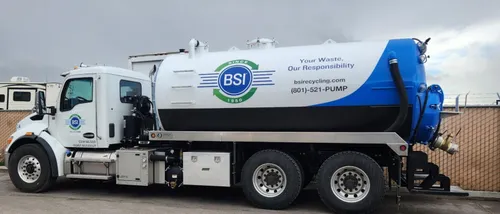
Beck's Sanitation
543 Iron Rose Pl, Salt Lake City, UT 84104
Beck's Sanitation is a family-owned sanitation company serving Salt Lake City, UT, with over 70 years of experience. They provide septic tank pumping and inspection along with grease trap cleaning, cooking oil recycling, storm drain maintenance, and wastewater management. Their services include commercial pumping and eco-friendly waste disposal, ensuring regulatory compliance and environmental safety. Beck's Sanitation also offers emergency clean-outs and routine maintenance to prevent blockages and flooding, supporting local businesses with reliable sanitation solutions.
Why Septic System Inspections Are Critical in Draper
In Draper, as in much of Salt Lake County, homes outside the municipal sewer network rely on private septic systems. These systems are regulated by the Salt Lake County Health Department, which sets standards for their installation, maintenance, and inspection. Regular septic system evaluations are not just a good idea-they are often a legal necessity during property sales, new construction, or major renovations. An inspection provides a clear snapshot of your system's condition, helping you avoid the unpleasant and expensive surprises of a backup or drain field failure.
What Triggers a Required Inspection?
Knowing when you need a professional assessment can save you from compliance headaches. In Draper, several common events mandate a formal septic system inspection:
- Property Transfer: A "re-certification" inspection is frequently required when selling a home. The health department often requests proof of a pumping within the last five years as part of this process 1.
- New Construction or Expansion: Any new home build or significant addition that increases the number of bedrooms will require a new system permit and inspection.
- System Alteration or Repair: Modifying an existing system, such as repairing a drain field or replacing a tank, triggers an inspection to ensure it meets current codes.
- Routine Maintenance: While not always legally mandated on a strict schedule for existing owners, the EPA and local health officials recommend inspections every 1 to 3 years to catch problems early.
The Professional Inspection Process: A Step-by-Step Look
A comprehensive septic tank inspection in Draper goes far beyond just looking at the tank. A certified professional follows a detailed checklist to evaluate the entire wastewater treatment system.
1. Record Review & System Location The inspector will start by asking for your maintenance records, particularly the dates of the last few pumpings. They will then locate and expose the tank lid and distribution box, which may involve digging if risers are not installed.
2. Tank Integrity & Component Check The inspector assesses the tank itself for structural soundness, checking for cracks, leaks, or signs of corrosion. Critical components like the inlet and outlet baffles (or tees) are examined to ensure they are intact and functioning properly, as damaged baffles can allow solids to escape into the drain field.
3. Sludge and Scum Measurement This is a core part of the inspection. Using specialized tools, the inspector measures the depth of the sludge layer at the bottom of the tank and the floating scum layer at the top. If the sludge is too high or the scum is within 3 inches of the outlet baffle, pumping is immediately needed to prevent system failure 2.
4. Drain Field Assessment The evaluation extends to the leach field. The inspector looks for telltale signs of failure, such as standing water, overly lush grass, or foul odors emanating from the soil. They will also check that the distribution box is level and flowing evenly to all drain field lines.
5. Final Reporting & Recommendations After the evaluation, you should receive a detailed report outlining the system's condition, any issues found (like a failing baffle or high sludge level), and clear recommendations for maintenance or repair to bring the system into compliance with Utah Administrative Code R317-4-14 3.
Find the perfect septic tank inspection companies for your needs
Get personalized recommendations and expert advice
Understanding Local Regulations and System Standards
Draper homeowners must adhere to regulations set by the Salt Lake County Health Department and the State of Utah. Key standards include:
- Permitting: The county permits systems with a daily wastewater flow of 5,000 gallons or less.
- Minimum Capacity: A standard system must have a minimum 1,000-gallon tank for a home with up to three bedrooms. Tank size must increase with additional bedrooms to handle the increased load 4 5.
- System Compliance: All systems must function properly and be sited according to local regulations regarding setbacks from wells, property lines, and waterways 6.
Keeping detailed records of every inspection, pumping, and repair is crucial. This logbook is often the first thing requested by health officials during a property transfer or compliance check 7.
Common Costs Associated with Inspection and Maintenance
While prices can vary based on the provider, tank size, and system complexity, homeowners in the Draper area can expect the following general price ranges based on regional data 8 9:
- Septic Tank Inspection: Typically between $200 and $500 for a standard comprehensive inspection.
- Septic Tank Pumping: Often costs between $300 and $600, heavily dependent on tank capacity (e.g., 1,000-gallon vs. 1,500-gallon).
- Tank Riser Installation: Adding risers (which provide easy access to the tank lid for future service) can range from $300 to $600.
- Permit Fees: Fees for new system installation or major upgrades vary but can start around $575 or more 10.
Investing in an inspection can ultimately save money by identifying small problems before they escalate into major drain field replacements, which can cost tens of thousands of dollars.
Choosing a Qualified Service Provider in Draper
Not all septic service companies are equal. For an inspection that will satisfy health department requirements, it's essential to hire a qualified professional. Look for providers who:
- Hold current wastewater certification from the State of Utah 11.
- Are familiar with Salt Lake County Health Department protocols and paperwork.
- Provide detailed, written reports with photos and measurements.
- Can clearly explain their findings and the relevant sections of the Utah Administrative Code.
A proper inspection is a diagnostic tool that empowers you as a homeowner. It provides the knowledge needed to schedule timely pumping, plan for repairs, and ensure your system operates safely for years to come, protecting your family, your property, and the local environment.
Frequently asked questions
Sources
Footnotes
-
Septic Systems: permitting, re-certifications and how to care for your system. - https://tooelehealth.org/septic-tanks-wastewater/ ↩
-
A 3-Step Checklist for Septic Tank Inspection - AAA Pumping Services - https://www.aaapumpingservice.net/a-3-step-checklist-for-septic-tank-inspection ↩
-
Utah Admin. Code R317-4-14 - Appendices - Law.Cornell.Edu - https://www.law.cornell.edu/regulations/utah/Utah-Admin-Code-R317-4-14 ↩
-
DAR File No. 39821 - Utah Administrative Rules - https://rules.utah.gov/publicat/bulletin/2015/20151101/39821.htm ↩
-
TriCounty Health Department TCHD-WW-0317 Wastewater Regulation - https://www.utah.gov/pmn/files/938461.pdf ↩
-
Septic & Onsite Wastewater Systems - Waste - Salt Lake County - https://www.saltlakecounty.gov/health/waste/septic/ ↩
-
Homeowners Guide to Septic Systems Brochure - Alpine, UT - https://www.alpineut.gov/DocumentCenter/View/136/Private-Septic-System-Care-PDF ↩
-
Frequent Questions on Septic Systems | US EPA - https://www.epa.gov/septic/frequent-questions-septic-systems ↩
-
Septic Pumping Cost by State: 2024 Complete Price Guide - https://wastedoor.com/article/septic-pumping-cost-by-state ↩
-
SEPTIC SYSTEM APPLICATION CHECKLIST v03-2023 - https://swuhealth.org/wp-content/uploads/2023/03/SEPTIC-SYSTEM-APPLICATION-CHECKLIST_2023-03.pdf ↩
-
Wastewater Certification Permit Guide - https://deq.utah.gov/permits/permit-guide/wastewater-certification-permit-guide ↩