Find the Best Septic Tank Inspection Companies for Your Business
No obligation • Fast responses • Nationwide coverage

Why you can trust Septic Spot
Septic Spot is a leading United States resource for understanding and comparing septic services. Our editors review providers using consistent criteria and verify key business details. Listings and scores are independent, and companies cannot pay to influence our content.
Search providers near you
Top Septic Tank Inspection Companies in Provo, Utah Ranked
A septic tank inspection is a professional assessment of your onsite wastewater system's condition and functionality. In Provo, these evaluations are crucial for protecting your property value, ensuring public health, and complying with local regulations, particularly during real estate transactions. This guide helps you understand the inspection process, local requirements, and how to find qualified professionals to assess your system.

Why Septic System Inspections Matter in Provo
For homes not connected to Provo's municipal sewer lines, a properly functioning septic system is essential. A failing system can lead to costly repairs, environmental contamination, and health hazards. In Utah County, the local health department enforces strict standards for onsite wastewater systems, making a professional septic evaluation a key part of responsible homeownership 1 2. Regular inspections can identify minor issues before they become major failures, saving you thousands of dollars and protecting Utah Lake's watershed.
Beyond preventative maintenance, a septic system assessment is often a mandatory step in the home buying or selling process. Lenders and title companies typically require a clean inspection report to finalize a sale. Ensuring your system passes inspection protects your investment and provides peace of mind for all parties involved.
Local Rules and Certification Requirements
Septic inspections in Provo and throughout Utah County are governed by state standards, specifically Utah Administrative Code R317-4. The Utah County Health Department is the local authority that enforces these rules. A critical point for homeowners is that anyone performing a formal septic system inspection for compliance or real estate purposes must be certified by the Utah Department of Environmental Quality 3.
This certification ensures the inspector understands state design requirements, such as minimum tank capacities. For example, a system serving a standard 3-bedroom home requires a minimum 1,000-gallon tank, while a 4-bedroom home needs at least 1,250 gallons 4. Using a certified professional guarantees the inspection report will be accepted by the health department for official records, which is often necessary for permit approvals or property transfers 5.
What a Professional Inspection Involves
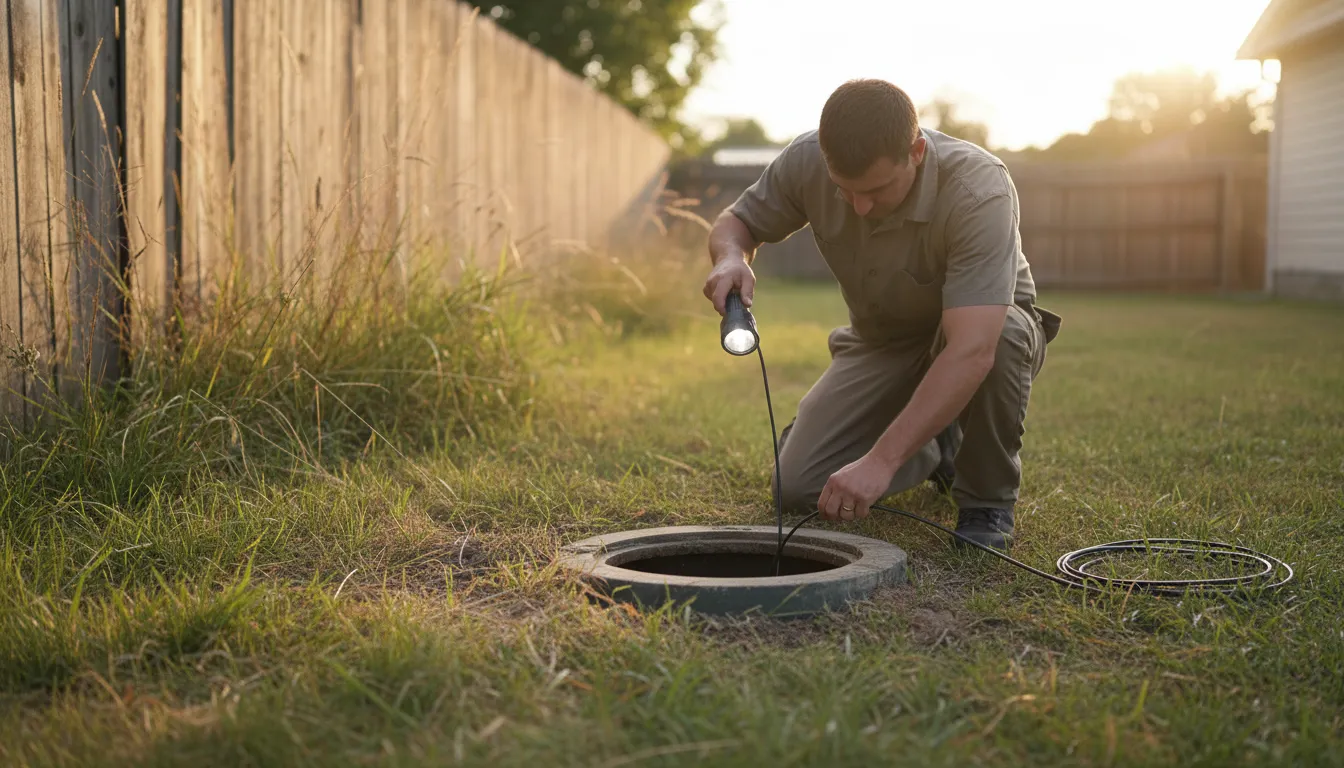
A comprehensive septic tank inspection is a multi-step process that goes far beyond just looking at the tank. Here's what you can expect a certified inspector to do:
Record Review & Site Evaluation: The process begins with reviewing any available system permits, "as-built" diagrams, and maintenance history. The inspector will also evaluate the property's topography and look for potential issues like nearby wells or surface water 6.
Locating & Opening the System: The inspector must locate the septic tank, distribution box, and drainfield. All tank access risers (or the lid itself) will be opened. This step can be challenging if risers are not installed or the system location is unknown 7.
Tank Interior Assessment: This is the core of the inspection. The inspector will check the liquid level to ensure it's at the proper height for outflow to the drainfield. They will then measure the thickness of the scum layer (floating solids) and the sludge layer (settled solids) at the bottom of the tank. These measurements determine if the tank needs immediate pumping 8. The inspector also examines critical components like inlet and outlet baffles or tees, and the effluent filter (if present), for damage or blockages 9.
Drainfield Examination: The inspector assesses the soil absorption area (drainfield) for signs of failure. This includes looking for surfacing sewage, soggy ground, or unusually lush and green vegetation over the field lines, which can indicate effluent is not properly percolating into the soil 10.
Functional Flow Test: In some cases, especially for real estate inspections, the inspector may perform a flow test by running water through household fixtures to verify the system can handle a load and that drainage from the house to the tank is functioning correctly.
Find the perfect septic tank inspection companies for your needs
Get personalized recommendations and expert advice
Understanding Inspection and Pumping Costs
The cost of a septic inspection in Provo varies based on the depth of the evaluation and whether pumping is included. It's important to get detailed quotes from certified providers.
- Basic Visual Inspection: A standard inspection that includes locating the tank, checking liquid levels, and measuring sludge/scum typically ranges from $200 to $500. This type of check is useful for routine maintenance but may not satisfy all real estate requirements.
- Full Inspection with Pumping: The most thorough option involves pumping the tank to allow for a complete internal examination of all components. This service usually costs between $500 and $900 or more 11 12. The pumping fee itself generally adds $250 to $500+, depending on your tank's size (common 1,000-2,000 gallon tanks) and how easy it is for trucks to access the site 13 14.
- Additional Factors: Costs can increase if the tank is deep, risers need to be installed, the system location is unknown and requires probing, or if a more detailed hydraulic load test or dye test is needed for the drainfield.
When to Schedule a Septic Evaluation
Don't wait for a problem to arise. Proactive scheduling is key to system health and regulatory compliance.
- During Real Estate Transactions: This is the most common trigger. An inspection is highly recommended for buyers and is often required by lenders or county officials before a sale is finalized 15.
- Routine Maintenance: The U.S. Environmental Protection Agency recommends having your system inspected at least every three years, even if it doesn't yet need pumping. This helps catch small issues early.
- Before Major Home Additions: If you plan to add bedrooms or increase your home's water usage, you must verify your existing system has the capacity to handle the additional load. An inspection and review by the health department are necessary first steps.
- Signs of Trouble: Schedule an inspection immediately if you notice warning signs like slow drains, sewage backups, foul odors indoors or near the tank, or soggy, bright green grass over the drainfield.
Choosing a Certified Inspector in Provo
Selecting the right professional is critical. Always verify that the inspector or company holds current certification from the Utah Department of Environmental Quality. Ask for their certification number and confirm they are familiar with Utah County Health Department submission procedures. A reputable inspector will provide a detailed written report outlining their findings, including sludge/scum measurements, component conditions, and any recommendations for repair or pumping. Be wary of quotes that seem unusually low, as they may not include a comprehensive evaluation or certified reporting.
Frequently asked questions
Sources
Footnotes
-
Frequent Questions on Septic Systems | US EPA - https://www.epa.gov/septic/frequent-questions-septic-systems ↩
-
Wastewater Certification Permit Guide - https://deq.utah.gov/permits/permit-guide/wastewater-certification-permit-guide ↩
-
R317.4: ONSITE WASTEWATER SYSTEMS - https://uwrl.usu.edu/files/pdf/owt/rf317004march21.pdf ↩
-
Utah Admin. Code R317-4-6 - Design Requirements - https://www.law.cornell.edu/regulations/utah/Utah-Admin-Code-R317-4-6 ↩
-
HEALTH REGULATION #12 WASTEWATER DISPOSAL - Utah.gov - https://www.utah.gov/pmn/files/522143.pdf ↩
-
SEPTIC SYSTEM APPLICATION CHECKLIST - https://swuhealth.org/wp-content/uploads/2022/02/SEPTIC-SYSTEM-APPLICATION-CHECKLIST-v012022.pdf ↩
-
What to Expect from a Septic Inspection - https://www.wrenvironmental.com/blog/2023/may/what-to-expect-from-a-septic-inspection/ ↩
-
Septic System Inspections - InterNACHI® - https://www.nachi.org/inspecting-septic-systems.htm ↩
-
Inspection of Septic Systems | Oklahoma State University - https://extension.okstate.edu/fact-sheets/inspection-of-septic-systems.html ↩
-
DIY vs Professional Septic Inspections: Do You Need Pro Help? - https://www.sterlingsepticandplumbing.com/blog/diy-vs-pro-septic-inspections/ ↩
-
How Much Does a Septic Inspection Cost? [2026 Data] - Angie's List - https://www.angi.com/articles/septic-inspection-cost.htm ↩
-
2026 Septic Inspection Costs | Tank, System, & Title 5 - https://homeguide.com/costs/septic-tank-inspection-cost ↩
-
2026 Septic Inspection Costs | Tank, System, & Title 5 - https://homeguide.com/costs/septic-tank-inspection-cost ↩
-
How Often Should You Pump Your Septic Tank: 3 Factors Solved - https://www.frasiers.com/blog/sewage-tank-pump-frequency/ ↩
-
What Is a Septic Inspection? Everything Homeowners Need to Know - https://www.redfin.com/blog/what-you-need-to-know-about-septic-inspections/ ↩