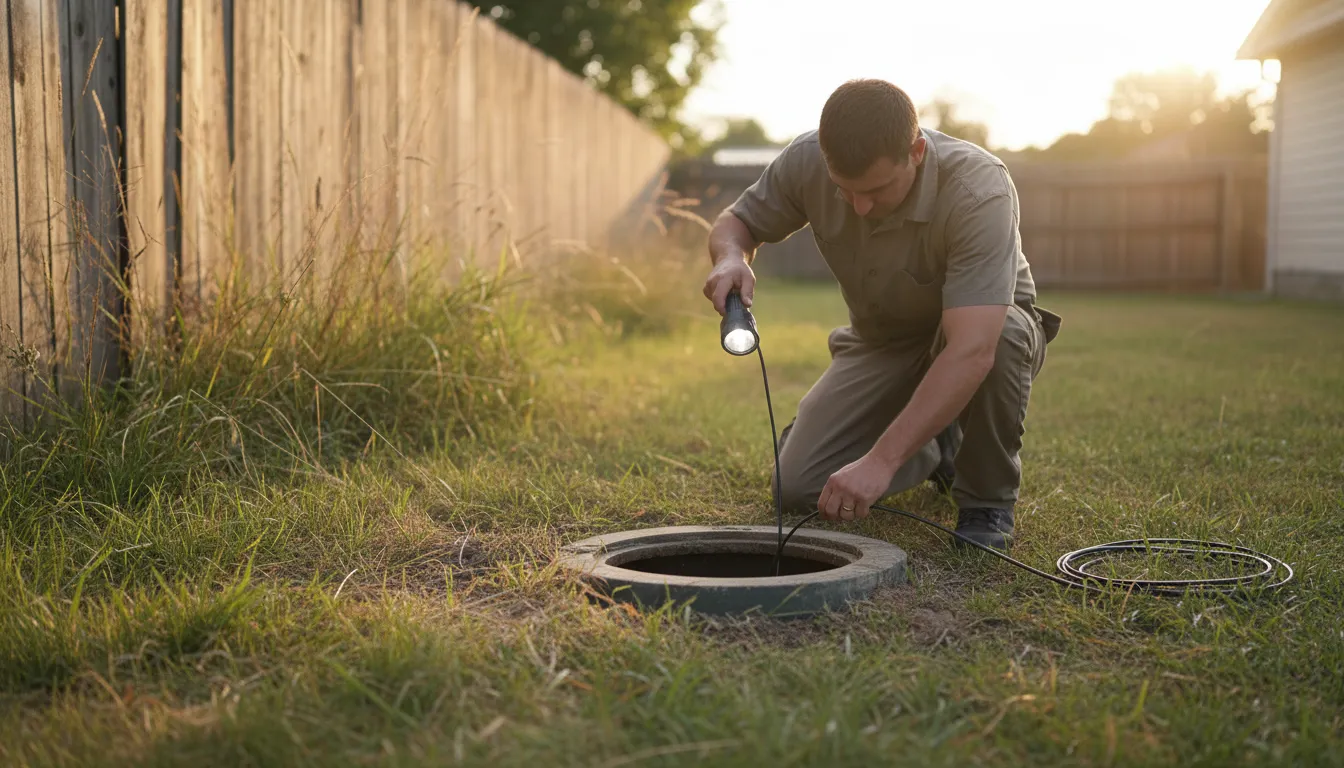
Find the Best Septic Tank Inspection Companies for Your Business
No obligation • Fast responses • Nationwide coverage

Why you can trust Septic Spot
Septic Spot is a leading United States resource for understanding and comparing septic services. Our editors review providers using consistent criteria and verify key business details. Listings and scores are independent, and companies cannot pay to influence our content.
Search providers near you
Top Septic Tank Inspection Companies in Eagle Mountain, Utah Ranked
A septic tank inspection is a professional evaluation of your onsite wastewater system's condition and functionality. This process is crucial for protecting your property value, ensuring public health, and complying with local regulations in Eagle Mountain. Whether you're buying a home, maintaining your system, or addressing a suspected problem, understanding the inspection process helps you find qualified local professionals to assess your septic tank and drainfield.

A-1 Septic
851 N 900 W, Orem, UT 84057
A-1 Septic is a septic tank pumping, inspection, and repair company serving Provo, UT, and the surrounding Utah County area. With over 60 years of experience, they offer a wide range of septic services including tank pumping, locating, inspections, maintenance, riser installations, and troubleshooting. Their capabilities also extend to wastewater system services such as holding tank pumping, lift station maintenance, and compliant wastewater disposal. The company operates six days a week and provides emergency services on Sundays.
Mountain Ridge Pumping
Salt Lake City, UT
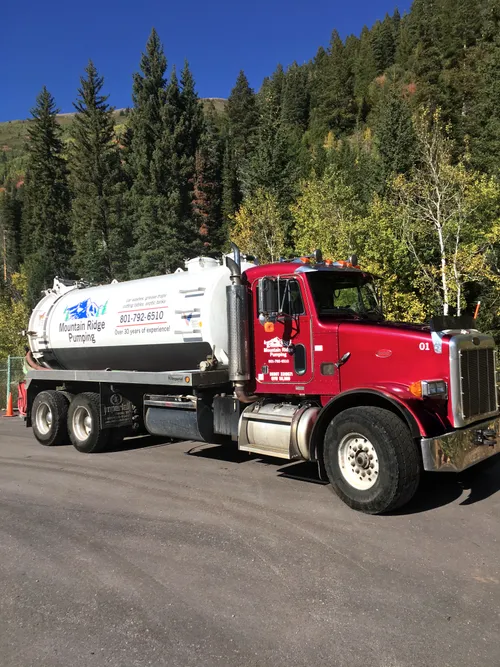
Mountain Ridge Pumping is a licensed and insured company based in Salt Lake City, UT, specializing in septic tank pumping and inspection services for both commercial and residential clients. With over 30 years of experience, they handle non-hazardous liquid waste removal from various sources including septic tanks, car wash pits, storm drains, and lift stations. The company emphasizes proper waste disposal and environmental responsibility by working with reputable waste treatment facilities.
Why Septic System Inspections Are Required in Eagle Mountain
In Eagle Mountain, septic systems are regulated by the Utah County Health Department under state rules 1. Regular evaluations are not just a good idea-they are often mandated. Inspections are typically required during property transfers, when a new system is installed, or if a failure is suspected 2. Furthermore, the U.S. Environmental Protection Agency recommends systems be inspected every 1-3 years by a certified professional 3. This regular check-up is your first line of defense against system failure, which can lead to costly repairs, environmental contamination, and health hazards.
Staying compliant means understanding local constraints. In Utah County, septic systems are generally permitted on lots that are 300 feet or more from existing sewer lines, provided they are not located within a water source protection zone. An official system assessment is a key part of the permitting process for new installations and major repairs.
What a Certified Professional Checks During an Inspection
A licensed septic inspector in Eagle Mountain will follow the Utah Administrative Code (R317-4) to conduct a thorough evaluation 4. This isn't just a quick look; it's a detailed process designed to assess every critical component of your wastewater system.
Initial System Location: The inspector first works to locate and expose the tank, distribution box, and drainfield. Knowing the exact layout is essential for a proper assessment.
Tank Interior Evaluation: The core of the septic tank analysis involves measuring the scum and sludge layers. State guidelines specify that a pump-out is needed if the sludge and scum combined occupy 40% or more of the tank's liquid volume, or if the scum layer is within 3 inches of the outlet tee 5. The inspector also checks the inlet and outlet baffles for damage or blockages that could impede flow.
Functional & Drainfield Testing: To check hydraulic function, the inspector may run water in the home to ensure the system is accepting sewage without backups. The drainfield is then carefully examined for signs of failure, such as surfacing sewage, unusually lush vegetation, or persistent wet spots, which indicate that the soil is no longer properly absorbing treated effluent.
Reporting: Finally, a detailed report is provided, documenting the system's condition, any issues found, and recommended actions. This report is vital for real estate transactions and for planning maintenance.
Understanding Inspection Costs and Related Services
The cost of a septic system evaluation in Eagle Mountain varies based on the scope. A basic inspection typically ranges from $200 to $500 6. A more comprehensive inspection, often required for real estate transactions and including a detailed report, can cost between $500 and $900+ 7 8.
It's important to note that if the inspection reveals a full tank, pumping is a separate service. Septic tank pumping in the area generally costs an additional $300 to $600 or more, depending on tank size and accessibility 9 10. Many homeowners choose to combine an inspection with a routine pump-out for efficiency.
Find the perfect septic tank inspection companies for your needs
Get personalized recommendations and expert advice
Maintenance Guidelines to Keep Your System Healthy
Regular inspections are one part of a proactive maintenance plan. The EPA recommends pumping your septic tank every 3-5 years for an average household, though this frequency can vary based on usage and tank size. Don't forget about components like the septic tank effluent filter, which requires frequent cleaning to prevent clogs 11.
For homeowners planning a new installation, Utah has specific capacity guidelines. A new tank must have a minimum capacity of 1,000 gallons for a 3-bedroom home, 1,250 gallons for 4 bedrooms, with an additional 250 gallons required for each extra bedroom 12. Adhering to these standards during installation helps ensure long-term system reliability.
Legal and Environmental Responsibilities
Homeowners in Eagle Mountain have a legal responsibility to maintain their septic systems and prevent illegal discharges. Dumping septic waste anywhere other than an approved treatment facility is illegal and subject to significant fines 13. The TriCounty Health Department enforces wastewater regulations to protect groundwater and public health 14.
A professional inspection helps you fulfill this duty by identifying problems before they lead to a system failure or environmental violation. Keeping your system in good working order protects your investment and your community.
Finding a Qualified Inspector in Eagle Mountain
When searching for a septic tank evaluator, always verify their certification. In Utah, individuals performing these services must be certified by the state 15. Look for providers with experience in Eagle Mountain and Utah County, as they will be familiar with local soil conditions, regulations, and common system types. A reputable professional will be transparent about their inspection process, pricing, and the specifics of what their report will include.
Frequently asked questions
Sources
Footnotes
-
Chapter 13.35 SEPTIC AND WASTEWATER DISPOSAL SYSTEMS - https://www.codepublishing.com/UT/EagleMountain/html/EagleMountain13/EagleMountain1335.html ↩
-
Chapter 13.35 SEPTIC AND WASTEWATER DISPOSAL SYSTEMS - https://www.codepublishing.com/UT/EagleMountain/html/EagleMountain13/EagleMountain1335.html ↩
-
Frequent Questions on Septic Systems | US EPA - https://www.epa.gov/septic/frequent-questions-septic-systems ↩
-
Utah Admin. Code R317-4-3 - General Standards, Prohibitions, Requirements, and Enforcement - https://www.law.cornell.edu/regulations/utah/Utah-Admin-Code-R317-4-3 ↩
-
What to Expect from a Septic Inspection - Wind River Environmental - https://www.wrenvironmental.com/blog/2023/may/what-to-expect-from-a-septic-inspection/ ↩
-
2026 Septic Inspection Costs | Tank, System, & Title 5 - https://homeguide.com/costs/septic-tank-inspection-cost ↩
-
Utah Admin. Code R317-4-14 - Appendices - Law.Cornell.Edu - https://www.law.cornell.edu/regulations/utah/Utah-Admin-Code-R317-4-14 ↩
-
What Is the Role of Septic Tank Inspection in Real Estate - https://www.houzeo.com/blog/septic-tank-inspection/ ↩
-
How Much Does a Septic Inspection Cost? [2026 Data] - Angie's List - https://www.angi.com/articles/septic-inspection-cost.htm ↩
-
NC SEPTIC LAW - https://www.elitehomeinspectionsnc.com/nc-septic-law ↩
-
How to Maintain Your Septic System - Fresh Water Systems - https://www.freshwatersystems.com/blogs/blog/how-to-maintain-your-septic-system ↩
-
DAR File No. 39821 - Utah Administrative Rules - https://rules.utah.gov/publicat/bulletin/2015/20151101/39821.htm ↩
-
Wastewater & Septic Systems - TriCounty Health Department - https://www.tricountyhealthut.gov/environmental_health/onsite_wastewater_septic_systems.php ↩
-
TriCounty Health Department TCHD-WW-0317 Wastewater Regulation - https://www.utah.gov/pmn/files/938461.pdf ↩
-
Wastewater Certification Permit Guide - https://deq.utah.gov/permits/permit-guide/wastewater-certification-permit-guide ↩