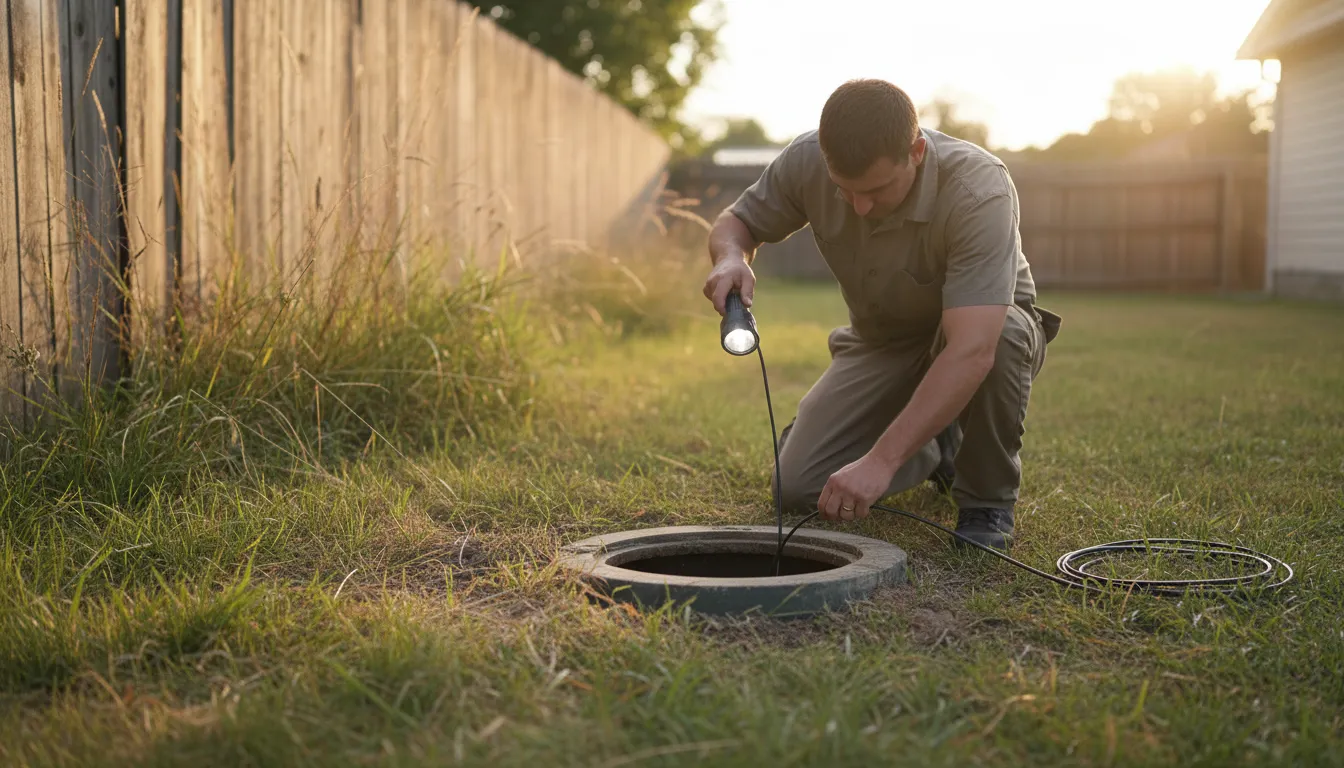
Find the Best Septic Tank Inspection Companies for Your Business
No obligation • Fast responses • Nationwide coverage

Why you can trust Septic Spot
Septic Spot is a leading United States resource for understanding and comparing septic services. Our editors review providers using consistent criteria and verify key business details. Listings and scores are independent, and companies cannot pay to influence our content.
Search providers near you
Top Septic Tank Inspection Companies in Millcreek, Utah Ranked
A septic tank inspection is a critical evaluation of your onsite wastewater system's health and functionality. In Millcreek, these assessments are not just a good idea-they are often a legal requirement governed by local health codes, especially during property transfers or when a system shows signs of trouble. This guide explains why septic system evaluations matter, what the process entails, and how you can find certified local professionals to ensure your system is safe, compliant, and operating efficiently.

A-1 Septic
851 N 900 W, Orem, UT 84057
A-1 Septic is a septic tank pumping, inspection, and repair company serving Provo, UT, and the surrounding Utah County area. With over 60 years of experience, they offer a wide range of septic services including tank pumping, locating, inspections, maintenance, riser installations, and troubleshooting. Their capabilities also extend to wastewater system services such as holding tank pumping, lift station maintenance, and compliant wastewater disposal. The company operates six days a week and provides emergency services on Sundays.
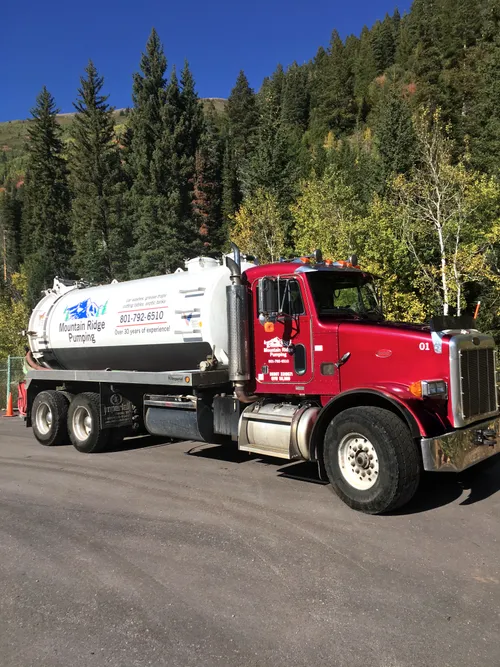
Mountain Ridge Pumping
Salt Lake City, UT
Mountain Ridge Pumping is a licensed and insured company based in Salt Lake City, UT, specializing in septic tank pumping and inspection services for both commercial and residential clients. With over 30 years of experience, they handle non-hazardous liquid waste removal from various sources including septic tanks, car wash pits, storm drains, and lift stations. The company emphasizes proper waste disposal and environmental responsibility by working with reputable waste treatment facilities.
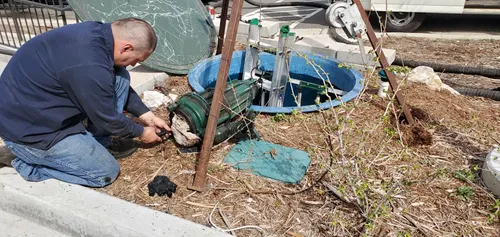
A&B Sewer & Drain Cleaning
1061 Major St, Salt Lake City, UT 84111
A&B Sewer & Drain Cleaning is a licensed, bonded, and insured company based in Salt Lake City, UT. They provide plumbing, sewer, and septic tank services for residential, commercial, and infrastructure clients. Their offerings include septic tank pumping, inspections, drain cleaning, water main replacement, and full video inspection services. The company serves both Utah and Nevada and is available around the clock for emergency plumbing needs.
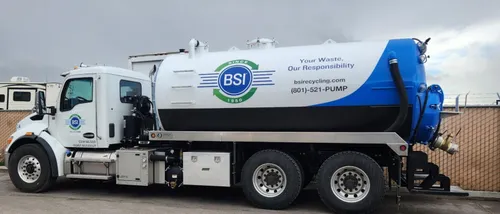
Beck's Sanitation
543 Iron Rose Pl, Salt Lake City, UT 84104
Beck's Sanitation is a family-owned sanitation company serving Salt Lake City, UT, with over 70 years of experience. They provide septic tank pumping and inspection along with grease trap cleaning, cooking oil recycling, storm drain maintenance, and wastewater management. Their services include commercial pumping and eco-friendly waste disposal, ensuring regulatory compliance and environmental safety. Beck's Sanitation also offers emergency clean-outs and routine maintenance to prevent blockages and flooding, supporting local businesses with reliable sanitation solutions.
Why Septic Inspections Are Required in Millcreek
Septic system inspections in Millcreek are mandated by the Salt Lake County Health Department to protect public health and the environment. A failing system can contaminate groundwater, create unsanitary conditions, and pose significant health risks. The primary triggers for a mandatory septic evaluation include:
- Property Sale or Purchase: Most real estate transactions involving a home with a septic system require a passing inspection report to finalize the sale. This protects both the buyer and the seller.
- System Failure Signs: If you notice symptoms like slow drains, sewage odors in the yard, or soggy, bright green grass over the drain field, an inspection is urgently needed to diagnose the problem.
- Major Renovations: Adding a bedroom or significantly increasing the home's water usage often requires a permit and a verification that the existing system can handle the new load.
- Regular Maintenance: While not always legally required on a schedule, a periodic professional assessment is the best way to catch small issues before they become expensive, catastrophic failures.
The Role of Certified Professionals
In Utah, a septic system inspection must be performed by a state-certified Onsite Systems Professional. Hiring a certified expert is non-negotiable for a valid inspection. These professionals have the training to:
- Correctly locate and access all system components.
- Perform the inspection according to county and state regulations.
- Provide the official documentation required by the health department for permits or property transfers.
- Identify problems that an untrained eye would miss, ensuring the system meets current code standards for a "final inspection" or "existing system evaluation" 1 2.
The Step-by-Step Inspection Process
A thorough septic tank evaluation is a detailed procedure. Here's what you can expect when a certified inspector assesses your system in Millcreek.
1. Records Review & Site Locating
The inspector will start by reviewing any available system records, such as the "as-built" diagram. If records are unavailable, they will use probing tools to locate the tank, distribution box, and drain field. This step is crucial for planning safe access.
2. Pumping and Cleaning
For a proper inspection, the tank must be emptied. Pumping allows the inspector to see the tank's interior walls, floor, and critical components clearly. This step is not just preparatory; it's a core part of the maintenance that an inspection facilitates. The average cost for pumping a standard 1,000-1,500-gallon tank in the area ranges from $300 to $800, with an average around $400-$500 3 4.
3. Tank Component Inspection
With the tank empty and clean, the inspector conducts a close examination. They check for:
- Structural Integrity: Looking for cracks, leaks, or deterioration in the tank walls and seams.
- Baffles and Tees: Verifying that the inlet and outlet baffles (or tees) are intact and properly positioned. These prevent solids from flowing into the drain field 5 6.
- Sludge and Scum Layers: Measuring these layers before pumping helps assess if the system has been maintained on an appropriate schedule.
4. Drain Field Evaluation
The inspector then evaluates the drain field (or leach field). They look for telltale signs of failure, such as:
- Saturated or soggy soil above the field lines.
- Surfacing sewage or effluent.
- Unusual, overly lush vegetation indicating nutrient-rich wastewater is coming to the surface.
5. Report and Documentation
Finally, the inspector provides a detailed written report. This document will state whether the system passes or fails and note any required repairs. For official purposes, this report is often submitted directly to the Salt Lake County Health Department.
Find the perfect septic tank inspection companies for your needs
Get personalized recommendations and expert advice
Understanding Inspection Costs in Millcreek
The cost of a septic inspection in Millcreek can vary based on the system's complexity and specific circumstances. Here's a general breakdown:
- Standard Inspection: A basic visual inspection and report typically start around $100 to $300.
- Comprehensive Evaluation: A full inspection that includes pumping, a detailed tank assessment, and a drain field evaluation generally ranges from $400 to $1,000 7.
- Factors That Increase Cost: The price can rise if the tank is deep, lacks access risers (requiring excavation), is difficult to locate, or if the system is particularly large or complex 8. Always clarify what is included in an inspector's quoted price.
Maintaining Your System Post-Inspection
After a successful inspection, proper maintenance is key to avoiding future problems and costly emergency repairs. Key maintenance tips include:
- Pump Regularly: Have your tank pumped every 3-5 years, or as recommended by your inspector based on household size and usage.
- Conserve Water: Spread out laundry loads and fix leaky fixtures to avoid overwhelming the drain field.
- Mind What You Flush: Only human waste and toilet paper should go down the drain. Avoid chemicals, grease, wipes, and feminine hygiene products.
- Protect the Drain Field: Never drive or park vehicles over it, and avoid planting trees with deep roots nearby.
When an Inspection Reveals Problems
If your system fails the inspection, the report will outline the necessary repairs. Common issues include:
- Baffle Repair/Replacement: A compromised baffle is a common and relatively fixable problem.
- Tank Damage: Cracks or leaks may require patching or, in severe cases, tank replacement.
- Drain Field Failure: This is the most serious and expensive outcome, often requiring a completely new leach field to be designed and installed. All repairs must be permitted through the Salt Lake County Health Department and completed by a certified professional 9 10.
Frequently asked questions
Sources
Footnotes
-
TriCounty Health Department TCHD-WW-0317 Wastewater Regulation - https://www.utah.gov/pmn/files/938461.pdf ↩
-
TriCounty Health Department TCHD-WW-0317 Wastewater Regulation - https://www.utah.gov/pmn/files/1333283.pdf ↩
-
Understanding the Average Cost to Pump a Septic Tank - https://www.scorpionsepticservices.com/blog/understanding-the-average-cost-to-pump-a-septic-tank ↩
-
Septic Tank Pumping Cost: Guide & Pricing in 2025 - Splash Plumbing - https://www.splashplumbing.com/how-much-does-it-cost-to-pump-septic-tank-understanding-pricing-and-factors-involved/ ↩
-
Guidance for the Inspection of On-site Sewage Disposal Systems - https://www.mass.gov/guides/guidance-for-the-inspection-of-on-site-sewage-disposal-systems ↩
-
What Is a Septic Tank Inspection - https://martinseptic.com/what-does-a-septic-tank-inspection-involve/ ↩
-
Septic System Cost Estimate: A Complete Breakdown - Land Perc - https://landperc.com/septic-system-cost-estimate/ ↩
-
SEPTIC SYSTEM APPLICATION CHECKLIST v03-2023 - https://swuhealth.org/wp-content/uploads/2023/03/SEPTIC-SYSTEM-APPLICATION-CHECKLIST_2023-03.pdf ↩
-
Septic & Onsite Wastewater Systems - Waste - Salt Lake County - https://www.saltlakecounty.gov/health/waste/septic/ ↩
-
Wastewater Certification Permit Guide - https://deq.utah.gov/permits/permit-guide/wastewater-certification-permit-guide ↩