Find the Best Septic Tank Inspection Companies for Your Business
No obligation • Fast responses • Nationwide coverage

Why you can trust Septic Spot
Septic Spot is a leading United States resource for understanding and comparing septic services. Our editors review providers using consistent criteria and verify key business details. Listings and scores are independent, and companies cannot pay to influence our content.
Search providers near you
Top Septic Tank Inspection Companies in Kenosha, Wisconsin Ranked
A septic tank inspection is a critical evaluation of your entire onsite wastewater treatment system to ensure it is functioning safely and legally. In Kenosha County, these inspections are not just a recommendation-they are a mandatory requirement for all property owners with a septic system. This guide will help you understand the local regulations, what happens during an inspection, and how to connect with licensed professionals who can perform this essential service for your home or business.
Understanding Kenosha's Mandatory Inspection Program
Kenosha County operates a rigorous, state-mandated maintenance program for all Private Onsite Wastewater Treatment Systems (POWTS), which includes conventional septic systems and holding tanks. This program has been in effect since 1981 and is designed to protect public health and groundwater quality by preventing system failures.
The core rule is straightforward: your septic system must be inspected and pumped at least once every three years 1 2. This is a non-negotiable cycle. A licensed inspector or pumper must perform the work and submit an official report directly to the Kenosha County Planning & Development department. As the homeowner, you are responsible for ensuring this compliance. Failure to submit the required maintenance records can result in enforcement actions from the county 1 2.
What a Comprehensive Septic Inspection Involves
A proper septic system evaluation in Kenosha is more than just a quick look. It's a multi-step process performed by a certified professional to assess the health of every component.
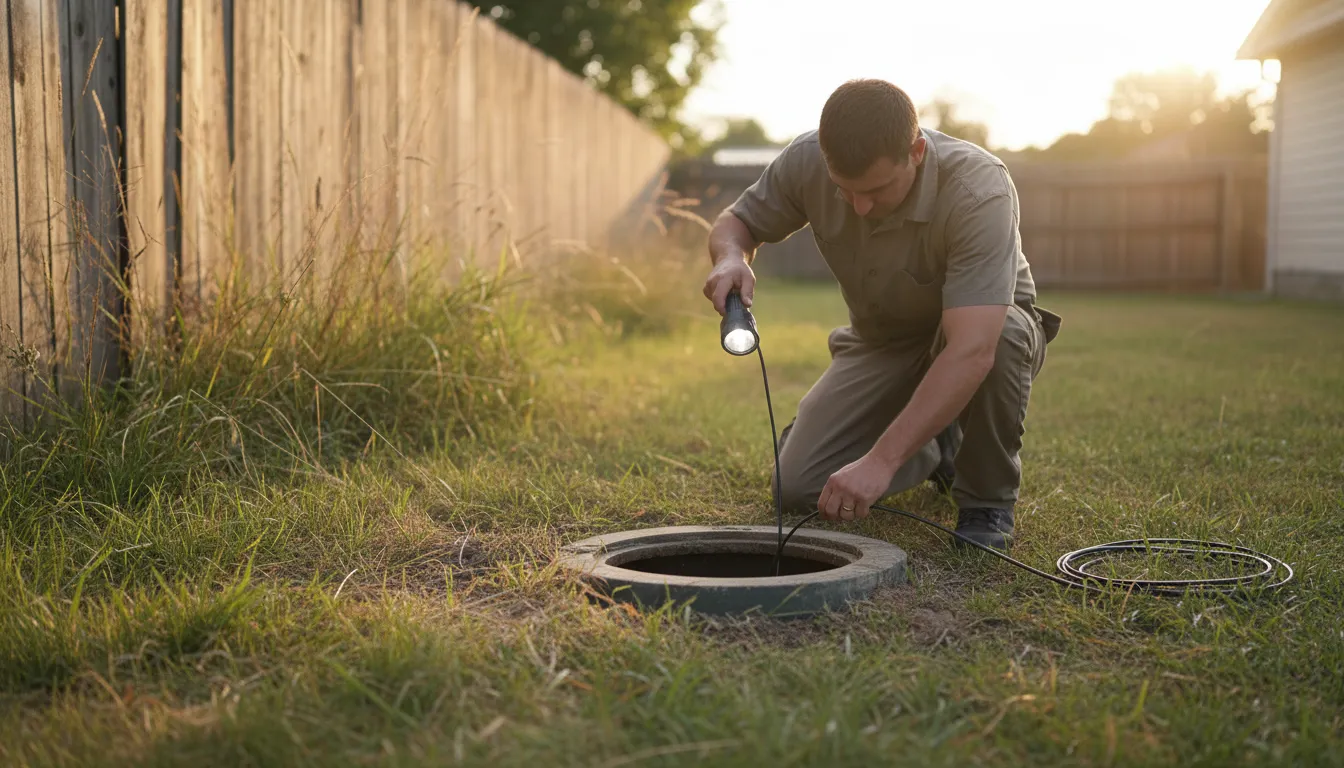
1. System Location & Access The inspector will first locate your septic tank and distribution box. They must uncover the manhole covers to gain access. This step can sometimes be challenging if the tank lids are buried deep, which may affect the overall service cost.
2. Tank Pumping & Sludge Evaluation The tank is pumped out to remove accumulated solids (sludge) and floating scum. County rules require pumping when the sludge and scum combined take up more than one-third of the tank's liquid depth. Pumping is a required part of the three-year inspection cycle to prevent solids from flowing into and clogging the drainfield.
3. Tank & Component Inspection With the tank empty, the inspector can thoroughly check for:
- Structural Integrity: Cracks, leaks, or corrosion in the tank walls.
- Baffles & Outlet Filters: These are checked for damage and cleaned to ensure efficient flow.
- Inlet/Outlet Pipes: Inspected for blockages or deterioration.
4. Drainfield Assessment This is a crucial part of the inspection. The inspector examines the soil absorption area (drainfield) for signs of failure, such as:
- Surfacing sewage or effluent.
- Unusually lush or soggy grass over the field.
- Foul odors emanating from the area. Any of these signs indicate a serious problem that requires immediate attention to prevent environmental contamination and property damage 3.
5. Official Reporting After the inspection, the licensed professional will complete the official "Treatment Tank(s) & Field Service Report" form. You will receive a copy, and the inspector is required to submit the report to Kenosha County to prove your system's compliance 4.
Find the perfect septic tank inspection companies for your needs
Get personalized recommendations and expert advice
Cost Expectations for Inspection and Pumping in Kenosha
Understanding the potential costs can help you budget for this necessary maintenance. Pricing is typically bundled for the inspection and pumping service, as they are performed together.
For a standard septic tank pumping alone, homeowners might expect a range of $300 to $5005 6. However, in Kenosha, the mandatory service is a full inspection combined with pumping. For a conventional system, this combined service generally falls in the range of $400 to $800 or more7 5.
Several factors influence the final price:
- Tank Size and Access: Larger tanks cost more to pump. Difficult access (e.g., deep lids, limited driveway space) adds labor time.
- System Type: Conventional gravity systems are typically on the lower end of the cost spectrum. Mound systems or other alternative/advanced treatment systems have more complex components (pumps, alarms, sand filters) that require additional inspection time, leading to higher costs.
- Condition: If the inspector discovers issues like a damaged baffle or early signs of drainfield problems, they will discuss repair options and associated costs with you separately.
The Critical Importance of Regular Septic Evaluations
Scheduling your three-year inspection is the most important thing you can do as a septic system owner. It's a proactive measure that offers significant benefits:
- Prevents Costly Emergencies: A routine inspection can identify small issues-like a failing outlet filter or minor tank crack-before they escalate into a total drainfield failure, which can cost tens of thousands of dollars to replace.
- Protects Your Property Value: A well-documented, compliant septic system is a valuable asset during a home sale. Proof of regular maintenance provides confidence to potential buyers and inspectors.
- Safeguards Health and Environment: A malfunctioning system can contaminate nearby wells, streams, and lakes with harmful bacteria and nutrients. Regular maintenance ensures your wastewater is treated properly, protecting your family and your community 8.
- Ensures Legal Compliance: Staying on the three-year cycle keeps you in good standing with Kenosha County, avoiding fines and enforcement orders.
Choosing a Licensed Service Provider in Kenosha
When it's time for your inspection, selecting the right contractor is key. Always verify that the company or individual is licensed by the State of Wisconsin to perform POWTS maintenance. They should be familiar with Kenosha County's specific reporting forms and procedures. You can ask for their license number and confirm their standing if needed. A reputable provider will be happy to explain the process, provide a detailed estimate, and give you a copy of the report filed with the county.
For questions about the county ordinance or your compliance status, you can contact the Kenosha County Planning & Development department directly 9.
Frequently asked questions
Sources
Footnotes
-
Septic & Pump Tank Maintenance | Kenosha County, WI - Official Website - https://www.kenoshacountywi.gov/760/Septic-Pump-Tank-Maintenance ↩ ↩2
-
affidvt [document] - Kenosha County, WI - https://wi-kenoshacounty.civicplus.com/DocumentCenter/Home/View/115 ↩ ↩2
-
Wisconsin Septic System Inspections | What You Need to Know - https://sunsetseptic.com/what-are-wisconsin-septic-system-inspections/ ↩
-
Treatment Tank(s) & Field Service Report Form - Option 1 only - https://www.kenoshacountywi.gov/DocumentCenter/View/98/Option-1---Septic-Tank ↩
-
How Often Should You Pump Your Septic Tank: 3 Factors Solved - https://www.frasiers.com/blog/sewage-tank-pump-frequency/ ↩ ↩2
-
SEPTIC SYSTEM GENERAL INFORMATION - https://www.woodcountywi.gov/departments/pz/Doc/Septic%20System%20Information%20for%20Homeowners.pdf ↩
-
Frequent Questions on Septic Systems | US EPA - https://www.epa.gov/septic/frequent-questions-septic-systems ↩
-
Wisconsin Maintenance Program - DSPS - https://dsps.wi.gov/Documents/Programs/POWTS/POWTSMaintenanceProgramBrochure.pdf ↩
-
Frequently Asked Questions - CivicPlus.CMS.FAQ - https://www.kenoshacountywi.gov/faq.aspx?TID=37 ↩