Find the Best Septic Tank Inspection Companies for Your Business
No obligation • Fast responses • Nationwide coverage

Why you can trust Septic Spot
Septic Spot is a leading United States resource for understanding and comparing septic services. Our editors review providers using consistent criteria and verify key business details. Listings and scores are independent, and companies cannot pay to influence our content.
Search providers near you
Top Septic Tank Inspection Companies in Milwaukee, Wisconsin Ranked
A septic tank inspection is a professional evaluation of your private wastewater treatment system to ensure it is functioning safely and legally. In Milwaukee and across Wisconsin, these assessments are not just a good idea-they are a legal requirement for protecting public health and the environment. This guide will help you understand the inspection process, state and local regulations, and how to find qualified professionals to maintain your system.

Understanding Wisconsin's Septic System Inspection Law
Wisconsin law mandates that all Private Onsite Wastewater Treatment Systems (POWTS), commonly known as septic systems, be inspected by a licensed professional at least once every three years. This statewide rule is administered at the county level, meaning your local health or sanitation department enforces the schedule and receives the inspection reports. Many counties, including those in the Milwaukee area, send out maintenance reminders to homeowners to help them stay compliant.
The core purpose of this 3-year inspection cycle is preventative. Regular check-ups catch minor issues before they become major, costly failures that can lead to sewage backups in your home or contamination of groundwater and local waterways. A failing system poses serious health risks and can significantly impact property value.
Who Can Perform a Legal Inspection?
Not just anyone can sign off on your mandatory septic evaluation. Wisconsin requires the inspection to be conducted by a licensed professional. This is typically a:
- Certified POWTS Inspector
- Licensed Master Plumber
- Licensed Sewage Pumper
Always verify a provider's credentials before hiring them for your mandatory system inspection. A qualified inspector will know exactly what to check and how to file the necessary paperwork with your local county authorities.
What Happens During a Septic System Inspection?
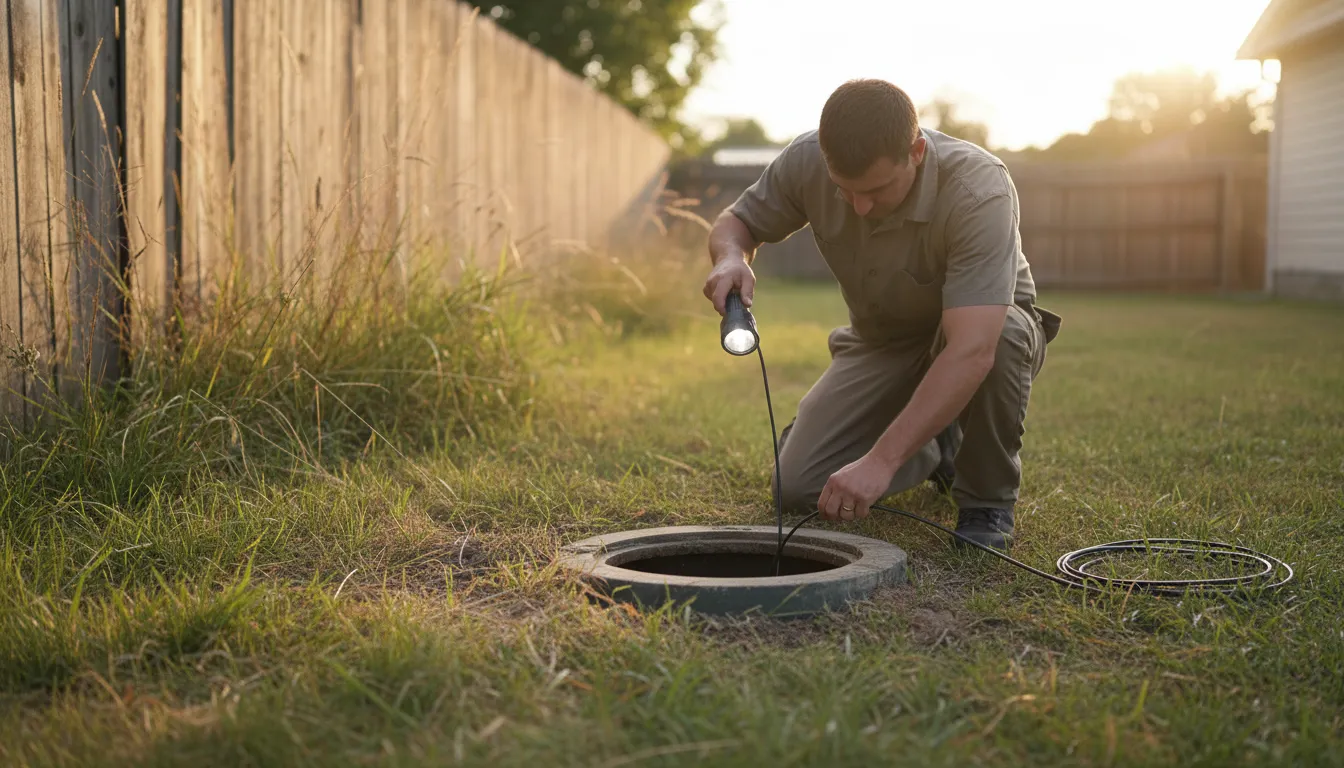
A comprehensive septic tank inspection is a multi-step process that evaluates every major component of your wastewater system. Here's what you can expect a professional to do:
1. Locating System Components: The inspector will first locate and uncover the tank's manhole covers, as well as identify the drainfield area. Accurate access is crucial for a proper assessment.
2. Evaluating Tank Structure: The inspector checks the tank (often made of concrete, fiberglass, or polyethylene) for any signs of structural failure, such as cracks, leaks, or corrosion that could allow untreated sewage to escape into the surrounding soil.
3. Checking Baffles and Filters: The inlet and outlet baffles inside the tank are examined to ensure they are intact and secure. These baffles are critical for preventing scum (floating fats and greases) and sludge (settled solids) from flowing out into the drainfield. Filters, if present, will also be cleaned and inspected 1.
4. Measuring Sludge and Scum Levels: This is one of the most critical steps. Using a tool called a "sludge judge," the inspector measures the depth of the sludge layer at the bottom of the tank and the scum layer at the top. Wisconsin law specifically requires that the tank be pumped if the combined sludge and scum volume occupies one-third or more of the tank's total liquid depth. This rule is designed to prevent solids from washing out and clogging the drainfield.
5. Assessing the Drainfield: The inspector will examine the soil over the drainfield (leach field) for signs of failure. Warning signs include overly soggy soil, foul odors, or the surfacing of sewage effluent, which can create standing pools of wastewater 2.
6. Inspecting Mechanical Components: If your system includes pumps, siphons, or alarms, these will be tested to ensure they are operating correctly 3.
7. Reporting: Following the inspection, the licensed professional will complete a state-approved form detailing their findings. This report must be submitted to your local county health or sanitation department to prove compliance with the 3-year rule 4.
Find the perfect septic tank inspection companies for your needs
Get personalized recommendations and expert advice
Inspection Costs and Related Services in Milwaukee
Understanding the potential costs helps homeowners budget for this necessary maintenance. In the Milwaukee area, pricing typically falls within these ranges 5:
- Standard Inspection: A routine 3-year compliance inspection generally costs between $200 and $400.
- Tank Pumping/Cleaning: If the inspector finds that sludge/scum levels meet the one-third threshold, pumping will be required. This service typically adds $300 to $600 to the total cost.
- Combined Service Visit: Therefore, a maintenance visit that includes both the inspection and necessary pumping can range from $500 to $1,000 or more, depending on tank size, accessibility, and other factors.
It's important to view pumping not as an extra expense, but as a vital part of system care when needed. Pumping based on the inspector's measurements prevents the far greater expense of drainfield repair or replacement.
The Crucial Difference: Inspection vs. Pumping
A common point of confusion is the relationship between inspection and pumping. It's essential to remember:
- Inspection is Mandatory Every 3 Years. The law requires a licensed inspection on this schedule, regardless of the tank's condition 6.
- Pumping is Condition-Based. Pumping is legally required only if the inspection reveals that sludge and scum occupy one-third of the tank's volume 7 8. An inspector cannot mandate pumping unless this condition is met. However, a homeowner may choose to pump more frequently as part of a proactive maintenance plan.
Maintaining Your System Between Inspections
Professional inspections are the cornerstone of septic care, but homeowner habits between visits are equally important for system longevity. Follow these best practices to keep your Milwaukee-area septic system healthy:
- Keep Detailed Records: Maintain a file of all inspection reports, pumping receipts, repair invoices, and a sketch of your system's location. This is invaluable for troubleshooting and is often required during property transactions.
- Mind Your Drainfield: Only plant grass over your drainfield. Do not drive or park vehicles, build structures, or plant trees and shrubs in this area, as roots and compaction can destroy the pipes.
- Watch What You Flush: Your system is designed for human waste and toilet paper. Never flush disinfecting wipes, "flushable" wipes, diapers, feminine hygiene products, cigarette butts, or excessive cooking fats and grease 9 10.
- Conserve Water: Sudden large volumes of water (like from long showers, laundry loads, or a running toilet) can overwhelm the system, pushing solids into the drainfield before they have time to settle in the tank.
- Properly Dispose of Chemicals: Avoid pouring harsh chemicals, paints, solvents, or pesticides down the drain, as they can kill the beneficial bacteria in your tank that break down waste.
Signs Your Septic System May Need Attention Before Your Scheduled Inspection
While adhering to the 3-year schedule is key, be alert for warning signs that may indicate a problem requiring immediate professional attention:
- Slow-draining sinks, tubs, or toilets
- Gurgling sounds in your plumbing
- Sewage backups in your home
- Unpleasant odors around the tank or drainfield
- Exceptionally lush or soggy grass over the drainfield
- Standing water or surfacing sewage in your yard
If you notice any of these issues, contact a licensed septic professional promptly to diagnose and address the problem before it escalates.
Frequently asked questions
Sources
Footnotes
-
Wisconsin's 3-Year Septic Inspection - Toombs Septic Services - https://toombssepticservices.com/septic-services/wisconsins-3-year-septic-inspection/ ↩
-
Septic System Inspections - InterNACHI - https://www.nachi.org/inspecting-septic-systems.htm ↩
-
Land Information » Sanitation » Private Sewage System Maintenance - https://www.marinettecountywi.gov/departments/land-information/sanitation/private-sewage-system-maintenance/ ↩
-
SEPTIC SYSTEM GENERAL INFORMATION - https://www.woodcountywi.gov/departments/pz/Doc/Septic%20System%20Information%20for%20Homeowners.pdf ↩
-
WI Well & Septic Inspections 2026: Buyer's Complete Guide - https://askdoss.com/how-to-handle-well-and-septic-inspections-in-wisconsin-what-buyers-must-know/ ↩
-
Septic Systems | Waukesha County - https://www.waukeshacounty.gov/parks-and-land-use/environmental-health/septic-systems/ ↩
-
Wisconsin Maintenance Program - DSPS - https://dsps.wi.gov/Documents/Programs/POWTS/POWTSMaintenanceProgramBrochure.pdf ↩
-
Maintaining Your POWTS (Septic System) - DSPS - https://dsps.wi.gov/Documents/Programs/POWTS/POWTSMaintenanceBrochure.pdf ↩
-
Homeowner's Guide to Septic Systems - https://www.co.richland.wi.us/departments/zoning/sanitation/homeowner_guide_long.pdf ↩
-
Septic System Inspection Requirements | Don't Miss the Deadline - https://sunsetseptic.com/septic-system-inspection-requirements-wisconsin/ ↩