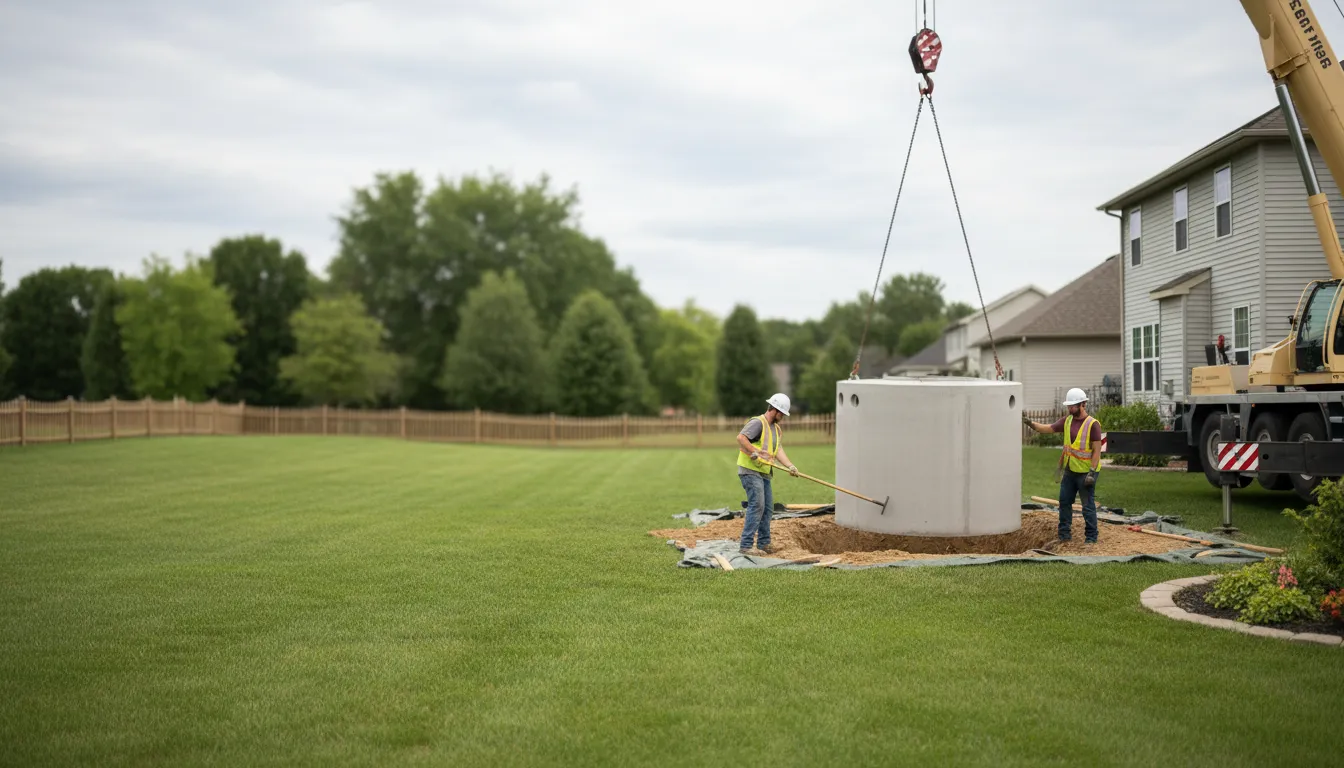
Find the Best Septic Tank Installation & Replacement Contractors for Your Business
No obligation • Fast responses • Nationwide coverage

Why you can trust Septic Spot
Septic Spot is a leading United States resource for understanding and comparing septic services. Our editors review providers using consistent criteria and verify key business details. Listings and scores are independent, and companies cannot pay to influence our content.
Search providers near you
Best Septic Tank Installation & Replacement Contractors in Arizona Ranked
Installing or replacing a septic system is a significant investment in your property's infrastructure and environmental health. In Arizona, this process is governed by specific state and county regulations to protect groundwater and public safety. This guide provides clear, practical information on the process, costs, and requirements for septic tank installation and replacement in Arizona, helping you understand what to expect and how to find qualified local professionals for the job.
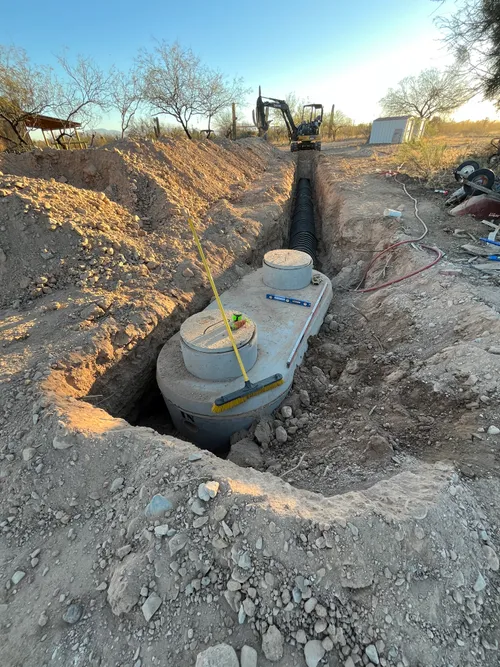
Fearless Contracting Inc. Septic Service
7502 S Placita De La Sombra, Tucson, AZ 85746
Fearless Contracting Inc. Septic Service is a family owned and operated business based in Tucson, AZ. They offer a wide range of septic system services including septic tank pumping, installation, inspection, and repair, as well as drain field repair and hydro jetting. The company serves Tucson and surrounding areas such as Catalina, Vail, Oro Valley, and Marana. With over 14 years of experience in the underground industry, Fearless Contracting provides 24/7 emergency service to meet various septic system needs.

88DRAIN
4377 S Sky High Pl a, Tucson, AZ 85730
88DRAIN is a septic tank and plumbing service provider based in Tucson, AZ. The company offers septic tank pumping, inspection, repair, installation, and drain field repair services. With over 44 years of experience serving Tucson and Pima County, 88DRAIN has recently joined the Rite Way family, expanding its service offerings to include heating, cooling, plumbing, and electrical work. This transition ensures continued comprehensive support for local customers with the same team and phone number.

Priority Pumping
2480 S Higley Rd, Gilbert, AZ 85295
Priority Pumping, now operating as HomeField Onsite Environmental, provides septic tank pumping, inspections, and installations in Phoenix, AZ. The company also offers services for grease traps and advanced wastewater management. Their certified technicians deliver tailored solutions to maintain and improve septic and wastewater systems. As a local, woman-owned business, they emphasize education and community support. The team is known for its skilled, certified professionals and positive approach to customer service.
Canyon State Septic LLC
Phoenix, AZ
Canyon State Septic LLC is a septic service provider located in Phoenix, AZ. The company offers a range of services including septic tank pumping, inspections for certified transfer of ownership, installations, excavation, and septic pump repair or replacement. They hold certifications such as NAWT# 14870ITC and ADEQ# 2673, indicating compliance with industry standards.
Sewer Time Septic & Drain
33645 N Cave Creek Rd, Cave Creek, AZ 85331
Sewer Time Septic & Drain is a licensed septic and plumbing contractor serving the Phoenix, AZ area. They provide a range of services including septic tank pumping, inspections, system repairs, and full installations for residential and commercial properties. Their certified technicians handle soil and percolation testing, system design, permitting, grease trap cleaning, and lift station maintenance. Sewer Time offers same-day service and 24/7 plumbing support for emergencies and new construction projects.
Understanding Arizona's Regulatory Framework
In Arizona, the Arizona Department of Environmental Quality (ADEQ) sets the statewide standards for onsite wastewater treatment facilities, which are then administered by ADEQ or local county environmental health departments 1. The primary permit for most residential installations is the Type 4.02 General Permit, which covers systems with a design flow of up to 24,000 gallons per day 1.
The permitting authority depends on your location. Some counties, like Mohave and Yavapai, have their own approved local programs, while in other areas, ADEQ manages the process directly. It's crucial to contact your county's environmental services or development services department first to determine who your permitting authority is and to obtain their specific application packet.
The Step-by-Step Installation Process
A successful septic system installation follows a defined sequence. Skipping or rushing steps can lead to permit denials, system failures, and costly corrections.
1. Site Evaluation and Soil Testing
The process begins with a site investigation or percolation (perc) test. A licensed professional evaluates your property's soil composition, depth to bedrock or groundwater, and slope to determine the soil's absorption rate. This test is critical because it dictates the size and type of drain field required. The results will be included in your permit application.
2. System Design and Permit Application
Based on the soil evaluation, a system design is created. This includes the septic tank specifications, the layout and size of the leach field, and the overall site plan. You or your contractor will submit a Notice of Intent to Construct along with the design plans, the soil report, and the application fee to the permitting authority. For a replacement where the bedroom count and system location remain the same, a simpler alterations permit may suffice 2.
3. Professional Installation
Arizona law requires that septic system installation be performed by a contractor holding a CR-41 license for specialty contracting in onsite wastewater treatment. The installation involves excavating for the tank and leach field, placing the watertight tank, connecting plumbing from the house, and constructing the absorption field according to the approved design.
4. Inspections and Final Approval
Before the tank is backfilled, it must pass a watertightness test. This typically involves filling the tank with water and monitoring it for 24 hours to ensure no leaks are present. A county or ADEQ inspector will visit the site to verify the installation matches the approved plans and passes the water test. Once approved, the authority issues a Discharge Authorization (DA), which is the final permit allowing you to operate the system 3 4.
Key Design and Material Requirements
Arizona's administrative code specifies detailed requirements for septic system components to ensure long-term functionality and environmental protection.
- Tank Specifications: Septic tanks must be watertight, have at least two compartments, and a minimum liquid depth of 42 inches. They are typically made of concrete, fiberglass, or polyethylene.
- Tank Sizing: Tank capacity is primarily based on the number of bedrooms in the home, which estimates daily wastewater flow. A standard guideline is a 1,000-gallon tank for a 3-4 bedroom home, with size increasing for larger homes 5.
- Effluent Filters: A key modern requirement is that all new installations must include an effluent filter on the outlet side of the tank 6. This device prevents solids from escaping into the drain field, significantly extending its lifespan.
- Setback Distances: Systems must be sited a safe distance from other features:
- Minimum 100 feet from water wells or drinking water sources.
- Minimum 50 feet from lakes, streams, or other water bodies.
- Minimum 10 feet from water service lines 7.
- Leach Field Sizing: The size and length of the leach field (disposal area) are calculated using the results of the soil percolation test and the home's estimated daily wastewater flow 8.
Find the perfect septic tank installation & replacement contractors for your needs
Get personalized recommendations and expert advice
Cost Breakdown for Installation and Replacement
The total cost for a septic system in Arizona varies widely based on system type, soil conditions, tank size, and property accessibility.
- Standard Conventional System: For a property with suitable soil, a standard gravity-fed system typically ranges from $4,000 to $9,000 for a complete installation.
- Alternative or Engineered Systems: If your soil is rocky, has a high water table, or poor percolation, you may need a more complex system like a mound, aerobic treatment unit (ATU), or drip irrigation system. These can cost $10,000 to $20,000 or more 9.
- Overall Project Average: Many Arizona homeowners report total project costs, including permits, design, and installation, falling between $5,000 and $15,000 10 11.
- Tank-Only Replacement: If you are only replacing a failing tank without altering the drain field, costs are lower, generally $1,250 to $3,500, depending on the tank material and size (e.g., 750 to 2,000 gallons) 12.
Choosing a Licensed Contractor
Selecting the right professional is the most important decision you'll make. Always verify that a contractor holds a current AZ CR-41 license 13. Ask for proof of insurance and references from recent jobs in your area. A reputable contractor will handle the permit application process, provide a detailed written estimate, and explain the installation plan clearly. They should also be familiar with your specific county's requirements and inspectors.
Maintaining Your New System
After a successful installation, proper maintenance is essential. This includes pumping the tank every 3-5 years (depending on usage), having the effluent filter cleaned annually, and being mindful of what goes down the drains. Avoid pouring grease, chemicals, or non-biodegradable items into the system. Protect the drain field area by not driving or parking heavy vehicles over it and planting only grass or shallow-rooted plants above it.
Frequently asked questions
Sources
Footnotes
-
WQD | Permit | OSWW Type 4.02 - 4.23 GP | ADEQ - http://azdeq.gov/wqd-permit-osww-type-402-423-gp ↩ ↩2
-
Septic System Installation & Alterations - Priority Pumping - https://prioritypumpingaz.com/septic-system-installations-alterations/ ↩
-
Arizona Septic Tank Requirements - https://www.ntotank.com/blog/arizona-septic-tank-requirements ↩
-
Understanding Septic System Permits in Pima County - https://tucsonsepticsystems.com/septic/understanding-septic-system-permits-in-pima-county/ ↩
-
Septic System 101 - Homeowners Manual - Mohave County - https://www.mohave.gov/departments/development-services/environmental-qualitywaste-disposal/documents/septic-system-101-homeowners-manual/ ↩
-
Ariz. Admin. Code § R18-9-A314 - Septic Tank Design, Manufacturing, and Installation for On-site Wastewater Treatment Facilities | State Regulations - https://www.law.cornell.edu/regulations/arizona/Ariz-Admin-Code-SS-R18-9-A314 ↩
-
permit requirements for the installation of septic systems - https://www.graham.az.gov/DocumentCenter/View/758/Permit-Requirements-for-the-Installation-of-Septic-Systems-PDF ↩
-
Design and Installation - Arizona Septic Tank - https://wellsseptictank.com/design-and-installation/ ↩
-
Cost to Install a Septic System in Phoenix [2026 Data] - Angie's List - https://www.angi.com/articles/what-does-it-cost-install-septic-system/az/phoenix ↩
-
HOMEOWNER'S MANUAL Septic Systems 101 - Yavapai County - https://www.yavapaiaz.gov/files/sharedassets/public/development-and-permits/zoning-amp-planning/documents/homeownersepticmanual.pdf ↩
-
How Much Does a Septic System & Septic Tank Cost - NexGen Septics - https://www.nexgenseptics.com/septic-system-cost/ ↩
-
Understanding Septic Tank Permits and Regulations - https://westcoastsanitationinc.com/understanding-septic-tank-permits-and-regulations/ ↩
-
Arizona Septic License & Certification | 2024 Contractor Guide - https://www.servicetitan.com/licensing/septic/arizona ↩