Find the Best Septic Tank Installation & Replacement Contractors for Your Business
No obligation • Fast responses • Nationwide coverage

Why you can trust Septic Spot
Septic Spot is a leading United States resource for understanding and comparing septic services. Our editors review providers using consistent criteria and verify key business details. Listings and scores are independent, and companies cannot pay to influence our content.
Search providers near you
Best Septic Tank Installation & Replacement Contractors in Colorado Ranked
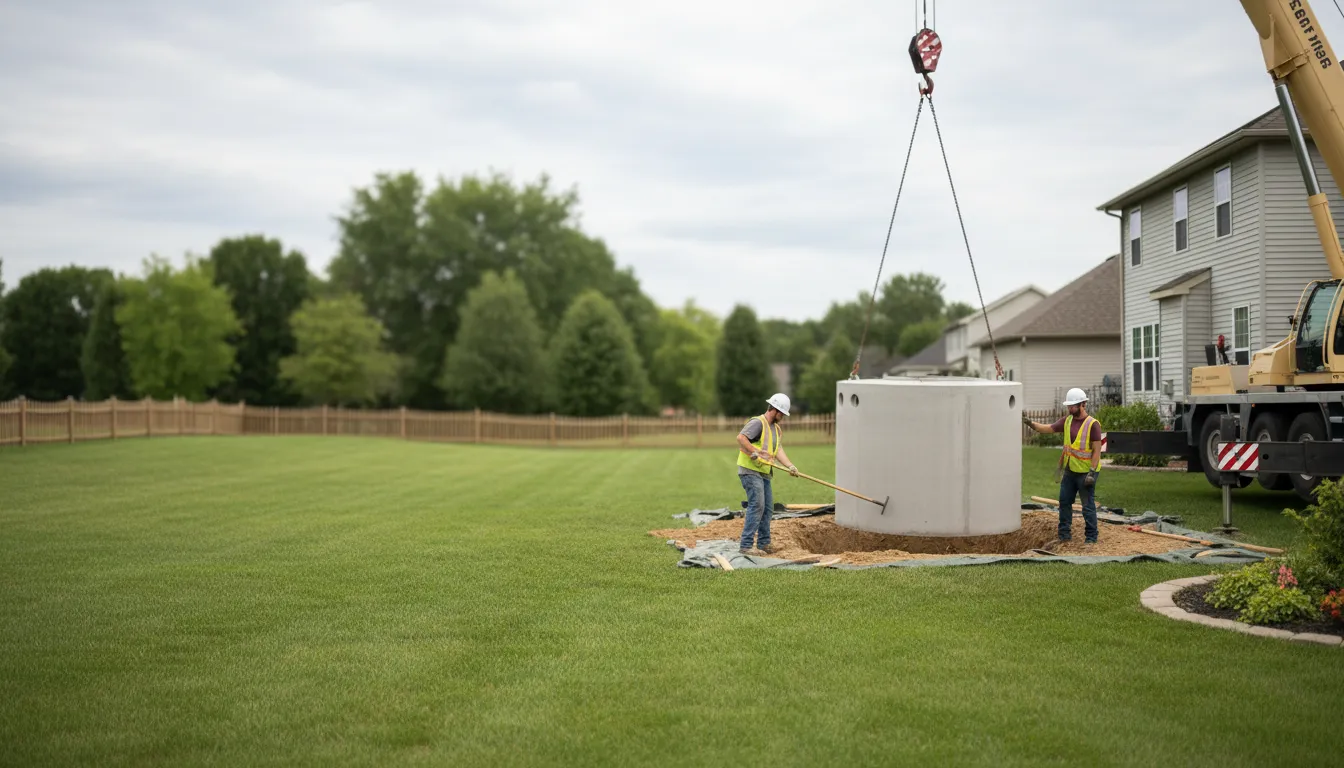
Installing or replacing a septic system in Colorado is a significant project governed by specific state and local regulations. This process ensures that on-site wastewater treatment protects public health and the environment. Understanding the steps, costs, and legal requirements can help you plan effectively and connect with qualified local professionals who are familiar with Colorado's unique permitting and inspection landscape.
Dan's Drains and Digs
216 S Chestnut St, Colorado Springs, CO 80905
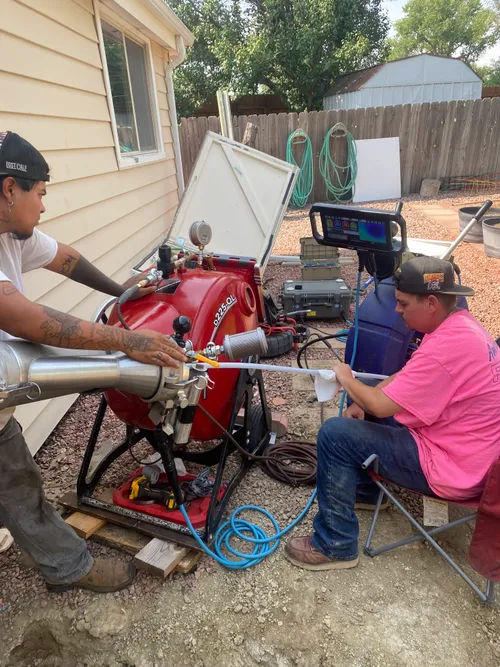
Dan's Drains and Digs is a septic tank inspection, repair, and installation company based in Colorado Springs, CO. They provide a range of underground plumbing services including drain and sewer cleaning, underground line replacement and repairs, video camera inspection, and septic system installation. One of their notable capabilities is sewer pipe lining, which they have successfully applied to complex projects involving old clay sewer lines. The business is known for handling both routine and major underground plumbing issues efficiently.
High Country Sewer & Septic
1895 Main St, Colorado Springs, CO 80911
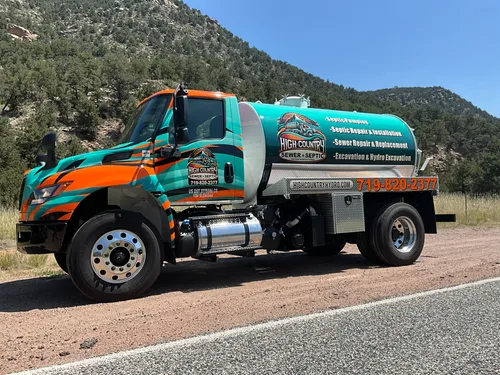
High Country Sewer & Septic is a family-owned business serving Colorado Springs, CO, and the surrounding Front Range area. They offer comprehensive septic services including tank pumping, inspections, installations, repairs, and drain field restoration. The company manages all aspects of septic system care, from permits and inspections to excavation and settling checks, ensuring a streamlined process without the need for multiple contractors. With over 14 years of experience, they understand the unique challenges posed by local soil and elevation conditions. Their work is backed by five-year warranties and $2 million in insurance coverage. Same-day estimates and owner involvement on every project provide added assurance. They also offer after-hours communication to support emergency needs.
NoCo Septic & Excavation
Greeley, CO
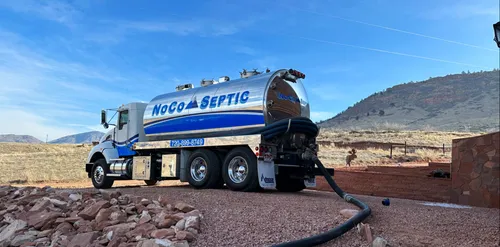
NoCo Septic & Excavation is a septic tank pumping, repair, and installation company based in Greeley, CO. Serving Boulder County and surrounding areas, they offer expert septic services with a focus on quality and customer information. Established in 2016, the company brings experience from water treatment and public works to ensure dependable septic solutions.
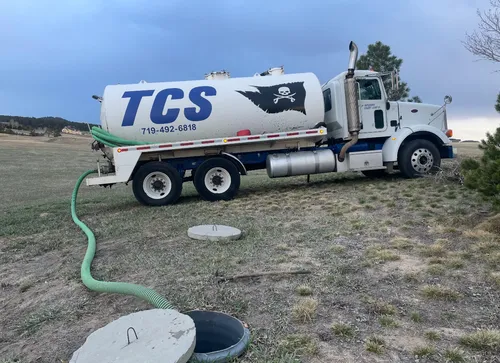
TCS Septic
1301 S 8th St, Colorado Springs, CO 80905
TCS Septic is a septic tank pumping, inspection, repair, and installation company based in Colorado Springs, CO. They provide services for both residential and commercial clients, including septic system design and installation tailored to urban or rural settings. TCS Septic also handles septic and sewer system repairs and inspections, working with local contractors and government agencies to ensure compliance and efficiency. Their capabilities include septic system design and maintenance to prevent emergencies.
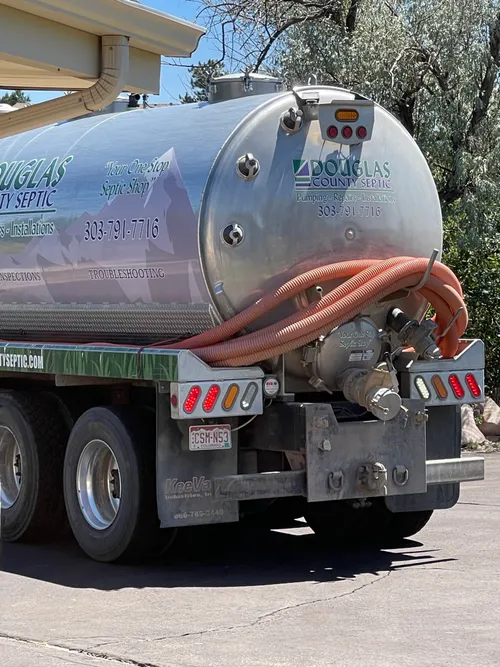
Douglas County Septic
Denver, CO
Douglas County Septic offers full-service septic system installation, maintenance, cleaning, troubleshooting, and repair in Denver, CO. They serve a variety of clients including homeowners, businesses, schools, golf courses, parks, government entities, homeowners associations, and builders in the south metro Denver area. Their services cover septic tank pumping, repairs, and installations.
Understanding Colorado's Regulatory Framework
All septic system work in Colorado falls under the state's Regulation 43, which outlines the rules for On-site Wastewater Treatment Systems (OWTS). This regulation is enforced at the local level by county health departments. Whether you're building a new home on unimproved land or replacing a failing system, you must navigate this permit process before any digging begins. The primary goal is to ensure the system is designed and installed to handle your household's wastewater without contaminating groundwater or creating a public nuisance.
Key statewide requirements include:
- A permit is mandatory prior to installing, altering, or replacing any OWTS.
- Systems must be designed by or under the supervision of a Colorado-licensed professional engineer (PE) for most residential installations.
- The local health department must approve the system design and conduct required inspections during installation.
The Permit Process: Your First Step
The journey begins at your local county health department. You cannot legally start installation without an approved permit. The process and costs can vary significantly from one county to another, so checking with your specific county's environmental health division is crucial.
Typical Permit Requirements:
- Application: Submit a completed application form, often along with the engineered site plan and design.
- Fees: Permit fees in Colorado typically range from $250 to over $1,800, depending on the county and the complexity of the system. For example, some counties may charge around $600 for a major repair permit and $800 for a new installation permit.
- Expiration: Once issued, a permit is typically valid for one year. If installation is not completed within that year, the permit may expire and require renewal. Permits for certain repairs may have a shorter lifespan, such as 180 days.
Local Health Department Approval: Your county health department reviews the proposed system to ensure it complies with Regulation 43 and any local amendments. They assess the design, soil conditions, and proposed location to protect water quality. Systems designed for a flow of less than 2,000 gallons per day are approved at this local level.
Engineered Design and Site Evaluation
Most new installations and full replacements in Colorado require a professional engineering design. This isn't just a formality; it's a critical step that tailors the system to your specific property.
The Role of the Professional Engineer (PE): A licensed PE will create a site plan and system design that gets stamped with their seal, certifying it meets all regulatory standards. Their work is based on a thorough site evaluation.
Essential Site and Design Criteria:
- Soil Testing: A mandatory soil evaluation involves digging at least two deep test pits (typically 40-50 feet apart and up to 8 feet deep, or to bedrock/groundwater) to determine absorption rates and identify limiting layers.
- Tank Sizing: State guidelines specify minimum tank sizes. For a standard 4-5 bedroom home, the minimum is usually 1,500 gallons. For smaller homes, a 1,000-gallon tank is often the minimum requirement 1 2.
- System Components: Modern codes require watertight risers to be installed over each tank manhole, extending to or above the final grade. This provides safe, easy access for future pumping and inspection 3.
Find the perfect septic tank installation & replacement contractors for your needs
Get personalized recommendations and expert advice
The Installation & Inspection Phases
Once the permit is in hand, the physical installation can begin. This process is closely monitored through a series of mandatory inspections. You or your installer must schedule each inspection with the health department before proceeding to the next phase.
Common Phased Inspection Schedule:
- Open Hole/Soil Inspection: After the excavation for the leach field (absorption area) is complete but before any gravel or distribution piping is placed, an inspector will verify the dimensions, depth, and soil conditions 4.
- Tank Placement Inspection: Once the septic tank is set in the ground but before it is connected or backfilled, the inspector checks for proper placement, levelness, and integrity 5.
- Final System Inspection: After all components-tank, piping, distribution box, and leach field-are fully installed but before the entire system is covered, a final inspection ensures everything is built according to the approved plan 6.
Passing these inspections is non-negotiable. The inspector will verify proper setbacks from wells, property lines, and buildings, as well as the integrity of all components. Only after the final inspection is approved can the system be covered and put into use.
Understanding Costs for Replacement and New Installation
The cost for a full septic system replacement or new installation in Colorado is substantial and varies based on many factors. Typical total costs range from $9,500 to over $11,500, with complex sites driving prices higher 7 8.
What Influences the Total Cost?
- System Size and Type: A larger home or a system requiring advanced treatment (like a mound system for poor soils) costs more.
- Site Conditions: Rocky soil, high groundwater, steep slopes, or limited space can significantly increase excavation and engineering costs.
- Permit and Design Fees: Remember to factor in the county permit fee ($250-$1,800+) and the professional engineer's design fee, which is a separate cost 9.
- Component Reuse: In some replacement scenarios, if the existing leach field is still functional, costs may be lower if only the tank needs replacement. However, this is determined by the PE and health department during the evaluation.
Repair vs. Full Replacement
Not all system issues require a full, ground-up replacement. Colorado's regulations account for minor repairs, which have a streamlined process.
- Minor Repairs: Actions like adding access risers, replacing a damaged lid, or repairing a baffle may only require a simplified permit (sometimes as low as $25) and photographic documentation for approval, bypassing the full engineered design and inspection sequence 10 11.
- Major Repairs or Alterations: Any work that changes the system's design capacity, location, or function is treated like a new installation and requires the full permit, design, and inspection process 12.
Frequently asked questions
Sources
Footnotes
-
Septic Systems (OWTS) - | Larimer County - https://www.larimer.gov/health/environmental-health/septic-systems/septic-systems-owts ↩
-
Section 9 - Design Criteria: General - Clear Creek County - https://www.clearcreekcounty.us/DocumentCenter/View/8796 ↩
-
On-site Wastewater Treatment System Regulations - https://nchd.org/wp-content/uploads/2024/08/Onsite-wastewater-treatment-system-regulations.pdf ↩
-
Septic System Installation 101: A Beginner's Guide - https://www.townesseptic.com/blog/septic-system-installation-beginners-guide ↩
-
Septic Design Caledon | Full Permit & Cost Guide for 2025 - https://www.elmid.ca/septic-design-caledon-permit-cost-guide/ ↩
-
Septic System Install Timeline - https://www.rciseptic.com/complete-step-by-step-timeline-septic-system-installation-from-permit-to-finish ↩
-
Septic System Replacement Costs, Repair & Pumping in Northern CO - https://boonstraexcavation.com/septic-systems/ ↩
-
Cost to Install a Septic System in Denver [2026 Data] - https://www.angi.com/articles/what-does-it-cost-install-septic-system/co/denver ↩
-
Septic Permit Information | Grand County, CO - Official Website - https://www.co.grand.co.us/1246/Septic-Permit-Information ↩
-
On-site Wastewater Treatment Systems Regulations - Mesa County - https://www.mesacounty.us/sites/default/files/2025-01/On-Site%20Wastewater%20Treatment%20Services%20-%20Regulation%20Revision%20-%20Effective%2007-29-24.pdf ↩
-
Septic System Permitting | Lake County, CO - https://www.lakecountyco.gov/212/Septic-System-Permitting ↩
-
Clean water: On-site wastewater treatment systems | Colorado Department of Public Health and Environment - https://cdphe.colorado.gov/OWTS ↩