Find the Best Septic Tank Installation & Replacement Contractors for Your Business
No obligation • Fast responses • Nationwide coverage

Why you can trust Septic Spot
Septic Spot is a leading United States resource for understanding and comparing septic services. Our editors review providers using consistent criteria and verify key business details. Listings and scores are independent, and companies cannot pay to influence our content.
Search providers near you
Top Septic Tank Installation & Replacement Contractors in Decatur, Illinois Ranked
Installing or replacing a septic system is a significant investment in your property's long-term functionality and environmental health. A properly designed and installed onsite wastewater system safely treats household sewage, protecting your family's health and local groundwater. For Decatur homeowners, this process is governed by specific state and county regulations to ensure safety and effectiveness. This guide will help you understand the key steps, requirements, and considerations for a successful septic system project in Morgan County.

Understanding the Basics of Onsite Wastewater Systems
A residential septic system is a self-contained, underground wastewater treatment structure. The most common type is a conventional system, which consists of a septic tank and a soil absorption field, often called a drain field or leach field. Wastewater from your home flows into the tank, where solids settle and begin to decompose. The liquid effluent then exits the tank into a network of perforated pipes buried in the drain field, where it is further treated as it percolates through the soil. The design and size of your system are critically dependent on your household size, soil conditions, and property layout.
The First Step: Site Evaluation and Soil Testing
Before any plans are drawn, you must determine if your lot is suitable for a septic system. This begins with a formal site evaluation. A licensed professional will assess your property's topography, slope, and proximity to wells, water bodies, and property lines. The most crucial component of this evaluation is the soil analysis, specifically a percolation test.
A percolation test, or "perc test," measures the soil's ability to absorb water. In Alabama, a licensed installer or soil classifier must conduct this test by digging holes to a minimum depth of 12 inches, saturating the soil, and then timing how long it takes for water to drop one inch 1. The results determine the soil's absorption rate, which directly dictates the size and type of drain field required. Without a passing perc test, you cannot obtain a permit for a standard system.
Navigating Permits and Regulations in Morgan County
All septic system work in Decatur and Morgan County is regulated. You cannot legally begin installation or replacement without the proper approvals.
Key Regulatory Bodies:
- Morgan County Health Department: This local agency issues the "Permit to Install" after reviewing your site evaluation and system design plans 2.
- Alabama Onsite Wastewater Board (AOWB): This state board licenses all septic system installers, pumpers, and inspectors. Alabama law mandates that installation, repair, or replacement work must be performed by an AOWB-licensed technician 3.
The Permit Process:
- Submit Application: After your site is evaluated, your licensed installer will typically help you submit a permit application to the Morgan County Health Department. This includes the site plan, soil test results, and the proposed system design.
- Plan Review: Health department officials review the plans to ensure compliance with the Alabama Administrative Code Chapter 420-3-1, which covers all aspects of onsite sewage disposal 4.
- Permit Issuance: Once approved, you will receive your Permit to Install, which is your authorization to begin construction.
The Installation Process: From Excavation to Final Inspection
A professional septic system installation follows a structured sequence, often involving multiple inspections.
- Pre-Construction Inspection: In some cases, a health department official may visit the site to verify soil conditions and the proposed location before excavation begins 5 6.
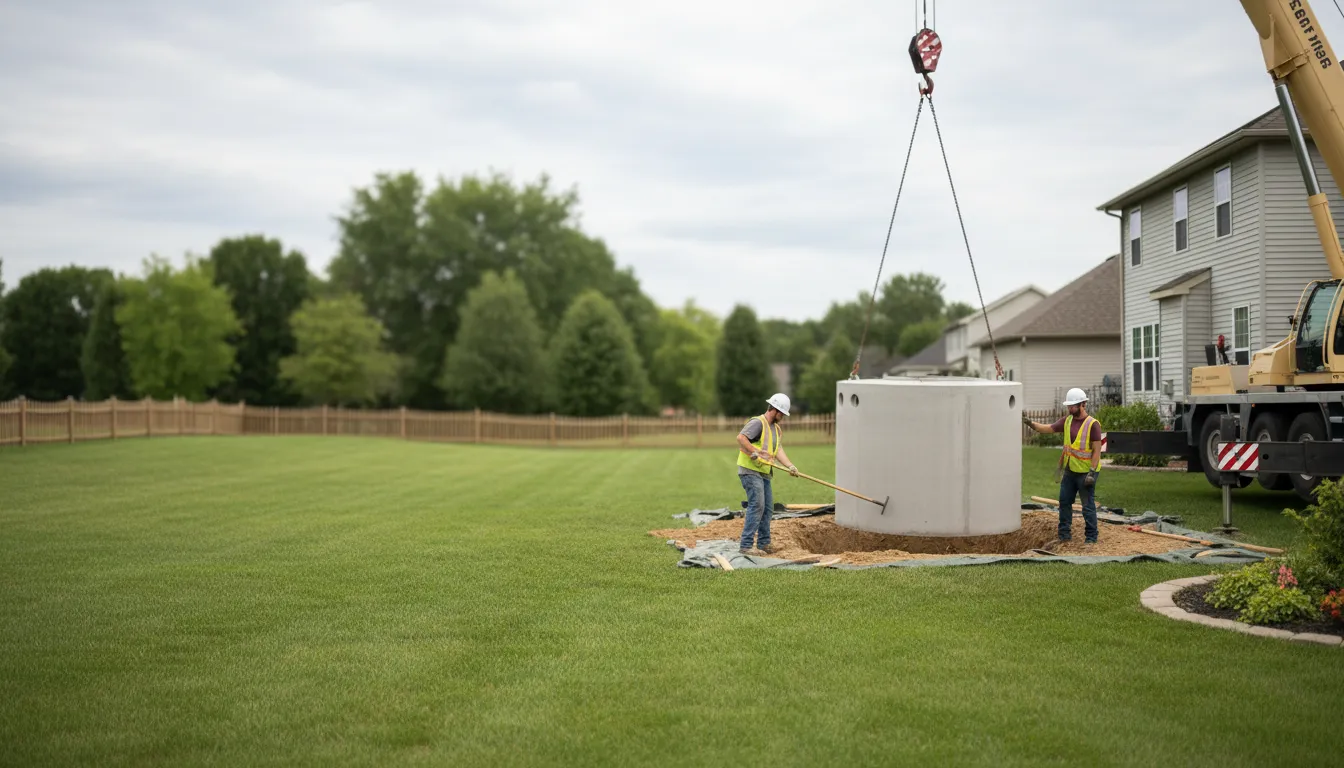
- Excavation and Tank Placement: The installer excavates the area for the septic tank and drain field. The tank-typically made of concrete or polyethylene-is carefully set and leveled. State rules require tanks to be installed according to specific standards to prevent settling and leakage 7.
- Drain Field Construction: Trenches are dug for the drain field lines according to the approved design. Gravel is laid, perforated pipes are positioned, and more gravel is added before the trenches are covered with soil.
- Construction Inspection: Before the septic tank and drain field are backfilled with soil, they must be inspected by the Morgan County Health Department 8. This ensures the installation matches the approved plans and that the tank is watertight.
- Final Approval: After the system passes inspection and is covered, a final approval is granted, allowing you to put the system into operation.
Find the perfect septic tank installation & replacement contractors for your needs
Get personalized recommendations and expert advice
Cost Considerations for Septic System Installation
The total cost for a new conventional septic system in the Decatur area typically ranges from $5,000 to $12,000 9 10. This is a significant investment, and the final price depends on several factors:
- System Size and Complexity: A larger home requiring a larger tank and drain field will cost more.
- Soil Conditions: Poor soil (like heavy clay) may require a more extensive, engineered drain field, increasing costs.
- Site Accessibility: Difficult terrain or limited access for heavy machinery can raise labor costs.
- Materials: Concrete tanks are standard, but alternative materials or advanced treatment components add expense.
- Permits and Fees: The cost includes county permit fees and any required engineering or soil classification reports.
The quoted price from a reputable installer should encompass excavation, materials (tank, pipes, gravel), labor, and the permit process. Always get detailed, written estimates from multiple licensed installers.
When is System Replacement Necessary?
Understanding when to repair versus replace your septic system can save you money and prevent emergencies. Consider replacement if you experience:
- Frequent backups or surfacing sewage in the yard or drain field area.
- Persistent soggy ground or foul odors near the tank or drain field, even after pumping.
- Failed repair attempts on an aging system.
- Changes in property use, such as a home addition that increases daily wastewater flow beyond the system's original design capacity.
- An old system made of outdated materials (e.g., steel tanks that corrode) or that no longer meets current health codes.
Replacement follows the same permit and installation process as a new installation, as it is considered a new system.
Choosing a Licensed Installer in Decatur
This is the most critical decision you will make. Always verify that any contractor you consider holds a current Installation Technician license from the Alabama Onsite Wastewater Board (AOWB). You can ask to see their license or verify it through the AOWB. A licensed professional will:
- Understand local soil conditions in Morgan County.
- Accurately conduct or arrange for soil percolation testing.
- Prepare and submit compliant design plans for permit approval.
- Schedule and coordinate required health department inspections.
- Install the system according to all state and county codes.
Don't base your decision on price alone. Check reviews, ask for local references, and ensure they carry proper insurance.
Long-Term Care for Your New System
Once installed, proper maintenance is key to a long system life. The Alabama Department of Public Health recommends having your septic tank pumped and the effluent filter cleaned every 3 to 5 years, depending on household size and usage 11. Avoid pouring grease, chemicals, or non-biodegradable items down the drain. Also, protect your drain field by not driving or parking heavy vehicles over it and by diverting roof drains and surface water away from the area. A well-maintained conventional system can last 20 to 30 years or more.
Frequently asked questions
Sources
Footnotes
-
Rule 420-3-1-.45 - Percolation Test Procedure - https://admincode.legislature.state.al.us/administrative-code/420-3-1-.45 ↩
-
Can I Live On This Lot? | Alabama Department of Public Health ( ... - https://www.alabamapublichealth.gov/onsite/before-construction.html ↩
-
Caring for Septic Systems - Alabama Cooperative Extension System - https://www.aces.edu/blog/topics/fish-water/caring-for-septic-systems/ ↩
-
rules of state board of health - https://www.adph.org/onsite/assets/OnsiteSewageDisposalRules.pdf ↩
-
Septic Installation Sacramento County | Step-by-Step Guide | Blog - https://www.blueribbonseptic.com/blog/septic-installation-sacramento-county ↩
-
Anderson Engineering's Guide to Septic Permitting in Utah - https://www.andersoneng.com/a-clear-guide-to-the-septic-system-permitting-process-today/ ↩
-
Rule 420-3-1-.20 - Tank Installation - Alabama Administrative Code - https://admincode.legislature.state.al.us/administrative-code/420-3-1-.20 ↩
-
What to Expect During a Septic System Replacement - Townes Septic Service - https://www.townesseptic.com/blog/what-to-expect-during-a-septic-system-replacement ↩
-
Alabama Septic Tank Requirements - https://www.ntotank.com/blog/alabama-septic-tank-requirements ↩
-
How Much Does It Cost To Install A Septic Tank In Alabama? - https://kandkseptic.com/how-much-does-it-cost-to-install-a-septic-tank-in-alabama/ ↩
-
Septic Tank Maintenance | Alabama Department of Public Health ( ... - https://www.alabamapublichealth.gov/onsite/maintenance.html ↩