
Find the Best Septic Tank Installation & Replacement Contractors for Your Business
No obligation • Fast responses • Nationwide coverage

Why you can trust Septic Spot
Septic Spot is a leading United States resource for understanding and comparing septic services. Our editors review providers using consistent criteria and verify key business details. Listings and scores are independent, and companies cannot pay to influence our content.
Search providers near you
Top Septic Tank Installation & Replacement Contractors in Springfield, Illinois Ranked
Installing or replacing a septic system is a significant investment in your property's long-term functionality and environmental health. In Illinois, this process is governed by specific state and local regulations designed to protect groundwater and public safety. Understanding the steps, requirements, and costs involved can help you navigate the project confidently. This guide provides a clear overview of the process for Illinois homeowners, from permits and soil testing to final inspection, helping you connect with qualified local professionals.
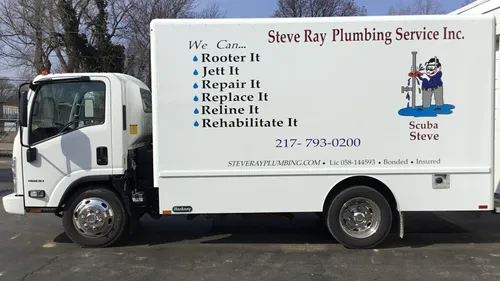
Steve Ray Plumbing Service Inc.
1501 E Griffiths Ave, Springfield, IL 62702
Steve Ray Plumbing Service Inc. is a plumbing and septic service provider located in Springfield, IL. With over 20 years of experience, they offer a range of services including septic tank installation, pumping, cleaning, system repairs, and real estate inspections. Their team is equipped to handle both residential and commercial plumbing and septic needs, including aeration sewage system installation and grease trap cleaning. Steve Ray Plumbing also provides emergency response services, available day or night, to address urgent plumbing issues promptly.

Smith Septic Inc
7180 Ramblewood Dr, Rochester, IL 62563
Smith Septic Inc is a family-owned septic company serving Springfield, IL and nearby areas. The company offers residential and commercial septic tank pumping, aeration, grease trap pumping, as well as installation and repair of septic systems. Established in 1963, Smith Septic has decades of experience handling a variety of septic issues, including emergency services.
Septic Specialist
4460 W Main St, Decatur, IL 62522
Septic Specialist is a full-service septic tank company based in Springfield, IL, serving homeowners and businesses throughout Central Illinois. They provide septic tank installation, repair, pumping, and inspection services, along with sewer line cleaning and video sewer inspections. Their capabilities include high-pressure water jetting to clear clogs and maintain system efficiency. The company also offers grease trap cleaning and maintenance plans to keep septic and sewer systems running smoothly year-round. Septic Specialist employs licensed installers and serves all brands of aerobic septic systems.
Understanding Illinois Septic System Regulations
The Illinois Department of Public Health (IDPH) administers the Private Sewage Disposal Licensing Code (77 Ill. Adm. Code 905), which sets the statewide standards for all septic system work 1. However, the day-to-day permitting, plan review, and inspections are handled by your local county health department. This means the specific application forms, fees, and some local requirements may vary slightly between counties like McHenry, Kane, or Clinton, but all must meet or exceed the state's minimum standards.
The core purpose of these regulations is to ensure that wastewater is treated effectively before it re-enters the environment, preventing the contamination of wells, surface water, and neighboring properties. A properly permitted and installed system is not only a legal requirement but also a safeguard for your family's health and your property's value.
The Permit Process: Your First and Most Critical Step
You must obtain a permit from your local county health department before any excavation or construction begins for a new or replacement system. Starting work without a permit can result in stop-work orders, fines, and being forced to remove non-compliant work.
The permit application typically requires:
- Site Evaluation Report: A certified soil classifier or professional engineer must conduct soil borings and produce a report detailing soil type, depth to bedrock, and seasonal high groundwater table. This evaluation determines the soil's absorptive capacity and dictates the type of system you can install.
- System Design Plans: These detailed plans, often prepared by a licensed installer or engineer, show the proposed location, size, and specifications of the tank, drain field, and all components. They must comply with the findings of the site evaluation.
- Property Survey/Site Plan: A drawing showing the proposed system location in relation to your home, well, property lines, and any other structures.
- Contractor Information: Proof that the installer is a licensed Private Sewage Disposal Installation Contractor in Illinois. In some cases, a homeowner may install their own system, but they must still follow all codes and pass inspections.
Site Evaluation and System Design
The soil evaluation, often called a "perc test" or soil investigation, is the scientific foundation of your septic system 2. An inspector will dig deep soil borings to analyze the soil profile. The results will classify the soil and determine the appropriate system type:
- Conventional Septic System: Used in soils with good permeability (like sandy loam). It consists of a septic tank and a subsurface trench or bed drain field.
- Alternative Treatment System: Required in areas with poor soil conditions, high groundwater, or small lots. These include:
- Mound Systems: An elevated drain field constructed with imported sand.
- Aerobic Treatment Units (ATUs): Systems that use oxygen to break down waste more efficiently.
- Sand Filters or Other Advanced Technologies.
The design must also adhere to strict setback distances from wells (typically 50-100 feet), buildings (10 feet), property lines (10 feet), and other sensitive areas 3. Your local health department will provide the exact distances required in your jurisdiction.
Septic Tank Specifications and Requirements
Illinois law has specific construction standards for septic tanks to ensure durability and proper function:
- Capacity and Size: Tanks must be sized based on the estimated daily wastewater flow from the home. The minimum tank size is generally 750 gallons, but a standard 3-bedroom home often requires a 1,000 to 1,500-gallon tank 4. Tanks must be designed to hold at least 50% of the daily flow volume.
- Construction: Tanks must be watertight and structurally sound to withstand the pressure of the surrounding soil. They are typically made of precast concrete, fiberglass, or polyethylene. Tanks must support a top-dead load of at least 500 lbs/ft² 5.
- Compartments and Access: Tanks can be single or two-compartment. Crucially, they must have risers with manhole covers (minimum 12 inches in diameter) that extend to or above the final grade. This provides safe, easy access for required inspections and future pumping without excavation 6 7.
- Baffles and Filters: Approved inlet and outlet baffles or effluent filters (meeting NSF/ANSI Standard 46) are mandatory to prevent solids from escaping the tank and clogging the drain field 8.
Find the perfect septic tank installation & replacement contractors for your needs
Get personalized recommendations and expert advice
The Installation Process: Step-by-Step
Once permits are secured and the design is approved, the physical installation can begin. This process is closely monitored by health department inspectors.
- Site Preparation & Excavation: The installer will mark the location and excavate holes for the tank and drain field. The area must be protected from compaction by heavy equipment during construction 9.
- Tank Placement: The septic tank is carefully lowered into the excavation, set level on a stable base (often compacted sand or gravel), and connected to the inlet pipe from the house.
- Drain Field Construction: For a conventional system, perforated pipes are laid in gravel-filled trenches. For alternative systems, more complex construction like building a sand mound occurs.
- Critical Open-Trench Inspection: This is a mandatory inspection. Before the tank or drain field is backfilled, a health department inspector must visit the site to verify that the installation matches the approved plans, that all components are correct, and that the workmanship meets code 10 11. Nothing should be covered before this inspection.
- Backfilling and Final Grading: After passing the inspection, the system is carefully backfilled, and the site is graded to direct surface water away from the drain field.
- Final Inspection and Approval: A final inspection may be conducted to ensure proper grading and restoration. Once approved, the health department will issue a final approval, and the system can be put into use.
Understanding Costs for Septic System Installation in Illinois
The cost of a septic system in Illinois varies widely based on system type, soil conditions, and property specifics. It's one of the most significant factors homeowners consider.
- Basic System Replacement or New Installation: For a conventional gravity-fed system on a property with suitable soil, costs typically range from $5,000 to $10,000 12 13.
- Complex or Alternative Systems: If your site requires a mound system, aerobic treatment unit (ATU), or other advanced technology due to poor soil or a high water table, costs can range from $10,000 to over $20,000 14 15 16.
- Key Cost Factors:
- Soil Conditions: Poor soil is the primary driver of higher costs, necessitating more expensive alternative systems.
- System Size & Tank Material: Larger tanks or specific materials (like fiberglass) affect price.
- Property Accessibility: Difficult sites for heavy equipment can increase labor costs.
- Permit and Design Fees: These include county health department fees and soil evaluator/engineer costs.
Maintaining and Protecting Your New System
A properly installed system is the first step. Protecting your investment requires proper care:
- Avoid Compaction: Never drive or park vehicles, or build structures like sheds or patios, over the tank or drain field.
- Mind Your Water Use: Spread out laundry loads and fix leaking fixtures to avoid hydraulically overloading the system.
- Be Careful What You Flush: Only human waste and toilet paper should go down the drain. Avoid chemicals, grease, wipes, and other solids.
- Pump Regularly: Have the tank pumped by a licensed professional every 3-5 years, or as recommended based on usage and tank size.
Failure to maintain a system can lead to backups, drain field failure, and environmental contamination. If a system fails, the health department will require repairs or a full replacement, which must then meet all current codes, including updated setback rules 17.
Frequently asked questions
Sources
Footnotes
-
Private Sewage Disposal - Illinois Department of Public Health - https://dph.illinois.gov/topics-services/environmental-health-protection/private-sewage-disposal.html ↩
-
Septic Tank Installation Process: A Step-by-Step Guide - Tidy Tank Plumbing, Sewer, and Septic - https://tidytanksepticservice.com/blog/understanding-the-septic-tank-installation-process/ ↩
-
Septic Permitting Essentials for Weber County Contractors - https://www.andersoneng.com/the-ultimate-guide-to-septic-system-permitting-in-weber-county-utah-for-general-contractors/ ↩
-
Sewage Disposal | Tazewell County, IL - https://tazewellhealth.org/225/Sewage-Disposal ↩
-
Ill. Admin. Code tit. 77, § 905.40 - Septic Tanks - https://www.law.cornell.edu/regulations/illinois/Ill-Admin-Code-tit-77-SS-905.40 ↩
-
9-4-6: APPROVED PRIVATE SEWAGE DISPOSAL SYSTEMS (IDPH ... - https://codelibrary.amlegal.com/codes/invernessil/latest/inverness_il/0-0-0-7046 ↩
-
4-5A-4: SEPTIC TANK CONSTRUCTION AND INSTALLATION: - https://codelibrary.amlegal.com/codes/northbarringtonil/latest/northbarrington_il/0-0-0-1929 ↩
-
ADMINISTRATIVE CODE - Illinois General Assembly - https://www.ilga.gov/agencies/JCAR/EntirePart?titlepart=07700905 ↩
-
Section 905 - Illinois General Assembly - https://www.ilga.gov/ftp/JCAR/AdminCode/077/077009050000200R.html ↩
-
Private Sewage Disposal - Clinton County Health Department - https://clintoncountyhealth.com/environmental-health/private-sewage-disposal/ ↩
-
Application for Permit for Private Sewage Disposal Installation - https://menardcountyil.com/index.php/download_file/view/2455/182/ ↩
-
Septic Sewage - Kane County Health Department - https://www.kanehealth.com/Pages/Septic-Sewage.aspx ↩
-
How Much Does a Septic System & Septic Tank Cost - https://www.nexgenseptics.com/septic-system-cost/ ↩
-
Illinois Septic Tank Requirements - https://www.ntotank.com/blog/illinois-septic-tank-requirements ↩
-
Expert New Septic Tank Installation - https://www.scorpionsepticservices.com/blog/septic-tank-installation-what-homeowners-need-to-know ↩
-
Septic Systems in Quincy IL | Vinson and Sill, Inc - https://www.vinsonandsill.com/septic-systems-quincy-il ↩
-
Onsite Wastewater Treatment Systems (Septic Systems) - https://www.mchenrycountyil.gov/departments/health-department/environmental-health/onsite-wastewater-treatment ↩