Find the Best Septic Tank Installation & Replacement Contractors for Your Business
No obligation • Fast responses • Nationwide coverage

Why you can trust Septic Spot
Septic Spot is a leading United States resource for understanding and comparing septic services. Our editors review providers using consistent criteria and verify key business details. Listings and scores are independent, and companies cannot pay to influence our content.
Search providers near you
Top Septic Tank Installation & Replacement Contractors in Mount Prospect, Illinois Ranked
Installing or replacing a septic system is a significant home improvement project that ensures the safe and efficient treatment of household wastewater. For Mount Prospect homeowners, this process involves navigating specific local and state regulations, securing permits, and working with qualified professionals. This guide explains the key steps, costs, and regulations for septic system work in the area, helping you understand what to expect and how to find experienced local installers.

Suburban Plumbing Sewer Line and Drain Cleaning Experts
9100 Plainfield Rd Suite #9A, Brookfield, IL 60513
Suburban Plumbing Sewer Line and Drain Cleaning Experts is a full-service plumbing company serving Chicago, IL, and the greater Chicagoland area. They provide a wide range of services including septic tank pumping, inspections, repairs, and new system installations, as well as sewer line repairs, drain cleaning, water heater services, and flood control solutions. With over 30 years of experience, their licensed and insured technicians use advanced equipment like hydro jetting and sewer camera inspections to deliver effective plumbing solutions. The company offers 24/7 emergency plumbing services to address urgent issues promptly.
Ability Septic
801 N Raddant Rd, Batavia, IL 60510
Ability Septic is a family-owned septic service provider based near Aurora, IL, serving Batavia and surrounding areas. With over 65 years of experience since 1956, they offer a full range of septic services including pumping, inspection, installation, repair, and drain field maintenance. Their team uses advanced Lenzyme bio-products for eco-friendly septic system solutions and provides 24/7 emergency services to address urgent needs promptly.

Mikes Plumbing Chicago : 24 Hour Plumber Chicago, Emergency Plumbers In Glenview, Evanston, Glencoe, Niles & Skokie
7214 N Crawford Ave, Lincolnwood, IL 60712
Mikes Plumbing Chicago is a licensed and insured plumbing contractor serving Chicago, IL, and the Greater Chicagoland area. They provide a wide range of residential and commercial plumbing services, including septic tank installation, plumbing repairs, and sewer system maintenance. The company is equipped to handle emergencies with 24/7 availability and an average response time of 45 minutes. Established in 1997, Mikes Plumbing Chicago offers a 10-year labor warranty and manufacturer guarantees on parts, emphasizing quality and reliability in their work.
Suburban Sewer Experts
Chicago, IL
Suburban Sewer Experts provides sewer line repair, septic tank pumping, installation, and maintenance services in Chicago, IL. With over 40 years of experience, they serve both residential and commercial properties, using advanced sewer camera inspections and hydro jetting to diagnose and clear blockages efficiently. Their expertise includes main water line repair and flood control system installation, offering comprehensive solutions to protect properties from sewer and water damage.

Zeilinga Services, Inc.
850 Meadowview Crossing #9, West Chicago, IL 60185
Zeilinga Services, Inc. is a septic system company based in Chicago, IL. They provide septic tank pumping, inspection, repair, and installation services, along with drain field repair and septic pump replacement. Their work includes servicing various septic units such as Aqua 02, AquaKleer, and Norweco systems. They perform thorough maintenance tasks like cleaning pumps, changing filters, checking alarms, and conducting sludge tests to determine pumping needs. Zeilinga Services also offers specialized capabilities including jetting, lift station work, TV camera line inspections, and root control treatments.
Understanding Septic Systems and Local Needs
A septic system is an onsite wastewater treatment structure, typically consisting of a tank and a soil absorption field (or leach field). In areas not served by municipal sewer lines, these systems are essential for public health and environmental protection. In Mount Prospect and surrounding Cook and Lake Counties, properties in unincorporated areas or certain subdivisions may rely on individual sewage disposal systems. Whether you're building a new home, replacing a failing system, or upgrading an old one, understanding the installation process is crucial for a successful, code-compliant project.
The Permit Process: A Required First Step
Before any digging begins, you must obtain the proper permits. This is not a mere formality; it's a legal requirement designed to protect groundwater and ensure system longevity.
- Site Development Permit: For any new installation or full replacement in Mount Prospect, a Site Development Permit is mandatory. This permit application triggers the official review process.
- Agency Approval: The septic system design must be approved by the local health department with jurisdiction. For many in the Mount Prospect area, this is the Lake County Health Department (or the Cook County Department of Public Health, depending on location). They review the proposed system plans to ensure they meet all technical and public health standards.
- Lot Size Requirements: Local regulations, such as those in Mount Prospect's municipal code, often stipulate minimum lot sizes for subsurface sewage disposal. One common requirement is a minimum lot size of one acre (43,560 square feet).
- Timeline: Be prepared for the permitting process to take time. It can range from approximately 10 business days for straightforward reviews to several months if the site is complex, requires additional studies, or if there are application backlogs1.
Critical Step: The Professional Soil Evaluation
The most important technical factor in designing a septic system is the soil on your property. A professional soil percolation test (often called a "perc test") is required 2. This test measures how quickly water drains through the soil at the proposed leach field site.
- Why It Matters: The percolation rate directly determines the size and type of drain field needed. Slow-draining soils require a larger leach field to adequately treat wastewater, while fast-draining soils may need a different design approach to prevent groundwater contamination.
- Who Conducts It: A licensed septic installer, engineer, or soil scientist typically performs this evaluation. The results are submitted as part of the permit application to the health department.
- Impact on Design: The soil evaluation will dictate whether a conventional gravity-fed system, a pressure-dosed system, or a more advanced alternative treatment system is necessary for your property3.
The Installation and Replacement Process
Once permits are secured and the design is finalized, the physical installation can begin. Here's a typical sequence of events for a septic system installation or replacement:
- Site Preparation & Excavation: The installer will clear the area and excavate holes for the septic tank and the trenches for the leach field according to the approved plan.
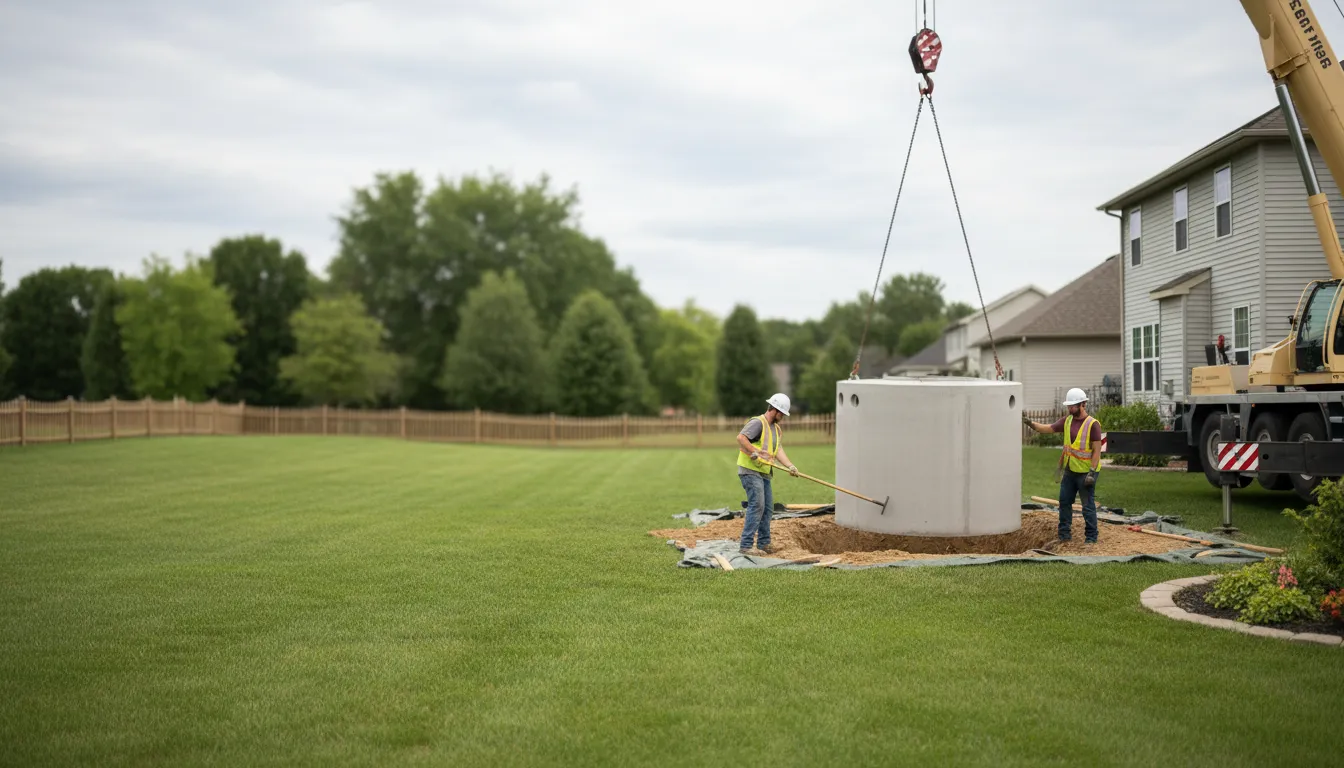
- Tank Placement: The septic tank (often concrete, plastic, or fiberglass) is set into the ground and leveled. All inlet and outlet pipes are connected.
- Leach Field Construction: Perforated pipes are laid in gravel-filled trenches in the drain field area. These pipes will distribute the treated liquid effluent into the soil for final purification.
- System Connection: The pipe from your house is connected to the tank inlet, and the tank outlet is connected to the distribution box and leach field.
Find the perfect septic tank installation & replacement contractors for your needs
Get personalized recommendations and expert advice
Mandatory Inspections During Installation
You cannot simply install a system and cover it up. Health department officials must inspect the work at critical stages4 5:
- Initial/Site Inspection: An inspector may visit to verify the site layout and soil conditions.
- Open Trench Inspection: This is a crucial inspection. Before the septic tank and leach field trenches are backfilled, an official must inspect the piping, gravel bed, tank placement, and connections. This ensures everything is built to the approved specifications.
- Final Inspection: After the system is fully installed and the site is graded, a final inspection is conducted for approval. Passing this inspection is necessary to close out the permit.
Cost Breakdown for Septic System Projects
The total investment for a septic system project in Mount Prospect varies widely based on system type, soil conditions, and property layout. Here's a general cost framework based on regional data:
- Permit Fees: These are typically the smallest cost, generally ranging from $150 to $5006.
- System Installation/Replacement: This is the major cost component. For a standard residential system, total costs typically range from $5,000 to $15,000. For larger homes, difficult sites, or systems requiring advanced treatment technology, costs can exceed $20,0007 8.
- Soil Evaluation & Design: The cost for the perc test and system design is often included in the installer's quote but can be a separate line item.
- Septic Inspection Fees: If you are purchasing a home or diagnosing an existing system, a professional septic inspection is wise. In Illinois, the average cost for a thorough inspection is around $530 (2026 data)9. This is separate from the mandatory construction inspections performed by the health department.
Ongoing Operation and Maintenance
A new system is a long-term investment that requires proper care. The Illinois EPA recommends annual inspections of the tank's scum and sludge layers to prevent system failure10. Furthermore, Mount Prospect code explicitly states that no septic tank may discharge into a natural outlet like a ditch or stream11. Regular pumping every 3-5 years, water conservation, and avoiding flushing harmful chemicals are key to a system that lasts for decades.
Choosing a System Type
While conventional gravity systems are common, your soil evaluation may necessitate an alternative:
- Conventional System: Relies on gravity to move wastewater from tank to field.
- Pressure-Dosed System: Uses a pump to evenly distribute effluent across the leach field, ideal for sites with slight elevation changes or less-than-ideal soil.
- Aerobic Treatment Unit (ATU): Adds oxygen to the treatment process, providing a higher level of treatment for challenging sites or environmentally sensitive areas.
Your licensed installer can advise on the best and most cost-effective type for your specific property conditions and local code.
Frequently asked questions
Sources
Footnotes
-
Septic Repair/Installation - Lake County, Illinois - https://www.lakecountyil.gov/830/Septic-RepairInstallation ↩
-
Residential Onsite Wastewater Treatment: Conducting a Soil Percolation Test - https://extensionpubs.unl.edu/publication/g1472/2011/html/view ↩
-
Septic System Installation 101: A Beginner's Guide - https://www.townesseptic.com/blog/septic-system-installation-beginners-guide ↩
-
Illinois Septic Tank Requirements | Onsite Wastewater Treatment ... - https://www.ntotank.com/blog/illinois-septic-tank-requirements ↩
-
What to Expect During a Septic System Replacement - Townes Septic Service - https://www.townesseptic.com/blog/what-to-expect-during-a-septic-system-replacement ↩
-
Understanding Septic Tank Permits and Regulations - https://westcoastsanitationinc.com/understanding-septic-tank-permits-and-regulations/ ↩
-
Septic Systems in Quincy IL | Vinson and Sill, Inc - https://www.vinsonandsill.com/septic-systems-quincy-il ↩
-
REVISED OPERATION AND MAINTENANCE (O & M) MANUAL - https://semspub.epa.gov/work/05/155713.pdf ↩
-
How Much Does a Septic Inspection Cost? [2026 Data] - Angie's List - https://www.angi.com/articles/septic-inspection-cost.htm ↩
-
septic-systems.pdf - Illinois Environmental Protection Agency - https://epa.illinois.gov/content/dam/soi/en/web/epa/documents/water/conservation/lake-notes/septic-systems.pdf ↩
-
Ord 3527 05/21/1985 - IIS Windows Server - Village of Mount Prospect - https://docs.mountprospect.org/WebLink/DocView.aspx?id=6485&dbid=0&repo=VOMP ↩