Find the Best Septic Tank Installation & Replacement Contractors for Your Business
No obligation • Fast responses • Nationwide coverage

Why you can trust Septic Spot
Septic Spot is a leading United States resource for understanding and comparing septic services. Our editors review providers using consistent criteria and verify key business details. Listings and scores are independent, and companies cannot pay to influence our content.
Search providers near you
Top Septic Tank Installation & Replacement Contractors in Normal, Illinois Ranked
Installing or replacing a septic system is a significant investment in your property's long-term functionality and value. In Normal, Illinois, this process is governed by specific state and local regulations designed to protect public health and the environment. Understanding the steps, from soil testing to final inspection, is crucial for a successful project. This guide outlines the key considerations, costs, and regulatory requirements for septic system work in McLean County, helping you navigate the process and connect with qualified local professionals.
Hofstatter Material & Services
205 Center St, Metamora, IL 61548
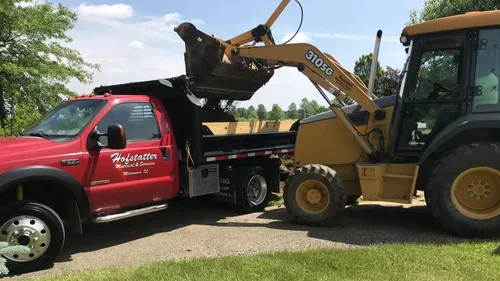
Hofstatter Material & Services is a family-owned business based near Peoria, IL, specializing in septic tank installation, excavation, and delivery of hardscaping materials. Serving residential and commercial clients, they use state-of-the-art equipment and the latest techniques to handle excavation, trucking, hauling, and septic installation needs. Established in 2001, they bring over 21 years of experience to their projects and offer same-day responses to inquiries.
Popejoy Plumbing, Heating, Electric and Septic
1206 S Adelaide St, Normal, IL 61761
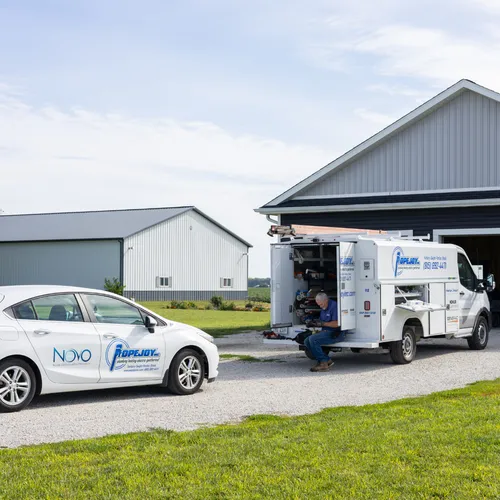
Popejoy Plumbing, Heating, Electric and Septic is a full-service contractor based near Peoria, IL, offering plumbing, HVAC, electrical, and septic system services. They provide septic tank installation and repair along with a wide range of plumbing solutions, including water treatment and sewer services. The company serves numerous communities around Peoria and maintains a large inventory of equipment and parts to support their work. Their team includes NATE-certified technicians and they offer preventive maintenance agreements. Popejoy also provides 24/7 emergency HVAC service for current customers.
Understanding Illinois Septic System Regulations
All private sewage disposal system installations and replacements in Normal must comply with the Illinois Department of Public Health (IDPH) Code 905 1. This state code sets the minimum standards for design, construction, and installation, which are enforced locally, often by the McLean County Health Department. The regulations ensure systems are safe, effective, and do not contaminate groundwater or create public nuisances. Before any digging begins, a permit is mandatory, and obtaining one requires a detailed application and site evaluation by certified professionals.
Key statewide rules include mandatory setbacks: septic systems must be located at least 50 feet from any water well and 10 feet from property lines. These distances help prevent contamination. The permit itself is typically valid for one to two years from the date of issuance, giving the property owner adequate time to complete the installation through its required phases.
The Permit Process: A Step-by-Step Guide
Navigating the permit process is the first and most critical phase of your septic project. Skipping or misunderstanding a step can lead to costly delays or failed inspections.
-
Site Evaluation and Soil Testing: This is the foundational step. A Certified Soil Classifier or Licensed Professional Engineer must conduct a detailed site evaluation 2 3. This involves taking soil borings (typically three, spaced 50 feet apart) to perform a percolation test, which determines the soil's absorption rate 4. The results identify limiting layers like a high water table or bedrock and define the sewage loading rate, which directly dictates the size and type of system your property can support 2 3.
-
System Design and Plan Submission: Using the soil evaluation data, a design professional creates a plan for your private sewage disposal system. This plan must include the layout of the septic tank, distribution box, and drain field (also called a leach field or absorption area). It will specify the tank capacity (e.g., a minimum 1,000-gallon tank for a three-bedroom home 5) and the exact dimensions and construction details of the drain field trenches. This plan is submitted as part of your Private Sewage Disposal System Permit Application to the local health department 6.
-
Permit Approval: The health department reviews the application and site plans for compliance with all regulations. Once approved and the permit fee is paid, you receive the official permit to proceed with construction. Keep this document accessible, as it will need to be presented at each inspection.
Types of Septic Systems for Normal Properties
The type of system installed depends almost entirely on the results of the soil evaluation. Not all properties can support a conventional system.
- Conventional Gravity-Fed System: This is the most common and least expensive type, suitable for properties with permeable, well-drained soil that passes the perc test. Wastewater flows by gravity from the home to the septic tank, where solids settle. The liquid effluent then flows into a network of perforated pipes in a gravel-filled trench, where it slowly percolates into the soil.
- Alternative or Engineered Systems: If the soil has poor percolation, a high water table, or limited space, an alternative system is required. These include aerobic treatment units (ATUs), which use oxygen to break down waste more efficiently, mound systems, or sand filter systems. These systems are more complex and have higher installation costs but are necessary for challenging sites to ensure proper treatment.
Installation Timeline and Key Inspections
A professional installation follows a clear sequence, punctuated by mandatory inspections. The entire process from permit to completion can take several weeks to months, depending on weather, contractor schedules, and permit timing.
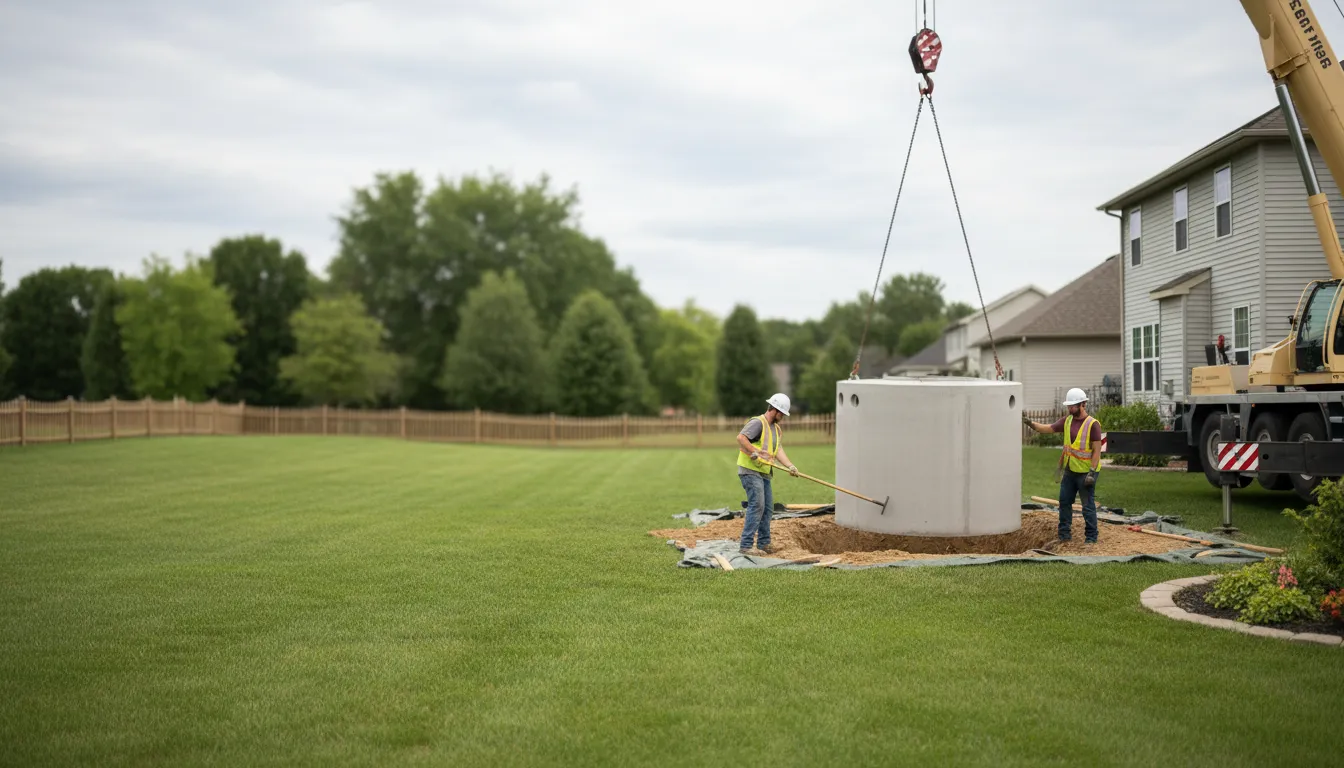
- Site Preparation & Excavation: Once the permit is in hand, the installer will mark the system location and begin excavation for the septic tank and drain field.
- Rough-In / Pre-Cover Inspection: This is a critical milestone. After the tank is set and the drain field trenches and piping are installed but before they are backfilled with soil, the health department inspector must visit the site 7. They verify that the installation matches the approved plans, checks pipe slopes and connections, and ensures the tank is watertight and properly leveled. Nothing can be covered until this inspection is passed 8.
- Backfilling and Final Grading: After passing the rough-in inspection, the installer can backfill the trenches and tank area, taking care to use suitable soil and protect the components. The site is graded to direct surface water away from the drain field.
- Final Inspection: Once the installation is complete and the site is restored, a final inspection is scheduled 9. The inspector ensures the system is functional, the grading is correct, and all components are properly installed. Passing this inspection provides the final approval for the system to be put into service.
Find the perfect septic tank installation & replacement contractors for your needs
Get personalized recommendations and expert advice
Cost Considerations for Installation and Replacement
The cost of a new septic system in Normal varies widely based on system type, site conditions, and property size. For a standard gravity-fed system for a three-bedroom home, homeowners can expect a price range between $10,000 and $20,000 10 11. However, if the soil evaluation dictates the need for an alternative or aerobic treatment system, costs can rise significantly, often ranging from $20,000 to $30,000 or more 10 12 13.
These estimates typically include the permit fees, soil testing, design, excavation, all materials (tank, piping, gravel), installation labor, and the required inspections. Factors that can increase cost include difficult site access, rocky soil requiring additional excavation, the need for pumps (if gravity flow isn't possible), and the size of the home (requiring a larger tank and drain field). Replacing a failed system often carries similar costs to a new installation, as it involves complete removal of the old components and installation of a new, compliant system.
Maintaining Your New Septic System
A properly installed system is designed to last for decades, but only with responsible care. Regular pumping of the septic tank (typically every 3-5 years) is essential to prevent solids from overflowing into and clogging the drain field, which is the most common cause of system failure. Be mindful of water usage and avoid flushing anything besides human waste and toilet paper. Never pour grease, chemicals, or medications down the drain, as they can kill the beneficial bacteria in the tank and contaminate groundwater. Protect the drain field area by not driving or parking heavy vehicles over it and planting only grass over the trenches to prevent root intrusion.
Working with Local Professionals
Given the regulatory complexity, hiring experienced, licensed local contractors is non-negotiable. They understand the specific requirements of McLean County and have established relationships with the health department inspectors. Look for professionals who offer comprehensive services: they should handle or coordinate the soil testing, permit application, installation, and scheduling of inspections. A reputable installer will provide a detailed written contract outlining the scope of work, the specific system to be installed, the total cost, and the project timeline.
Frequently asked questions
Sources
Footnotes
-
ADMINISTRATIVE CODE - Illinois General Assembly - https://www.ilga.gov/agencies/JCAR/EntirePart?titlepart=07700905 ↩
-
Perc Test for Septic System: A Complete Guide - https://landperc.com/perc-test-for-septic-system/ ↩ ↩2
-
The Complete Guide to Soil Testing for Septic System Design: Ensuring Regulatory Compliance and System Longevity - https://www.mapengineering.net/the-complete-guide-to-soil-testing-for-septic-system-design/ ↩ ↩2
-
percolation-test.pdf - https://www.c-uphd.org/documents/eh/percolation-test.pdf ↩
-
4-5A-4: SEPTIC TANK CONSTRUCTION AND INSTALLATION: - https://codelibrary.amlegal.com/codes/northbarringtonil/latest/northbarrington_il/0-0-0-1929 ↩
-
Sewage Disposal System Permit | Bureau, Putnam & Marshall ... - https://bpmhd.org/steps-to-obtain-a-sewage-disposal-system-permit/ ↩
-
9-4-7: SEPTIC TANKS (IDPH SECTION 905.40): - https://codelibrary.amlegal.com/codes/invernessil/latest/inverness_il/0-0-0-7060 ↩
-
Septic System Install Timeline | RCI Septic Service - https://www.rciseptic.com/complete-step-by-step-timeline-septic-system-installation-from-permit-to-finish ↩
-
All Around Underground - Getting starter with inspection, design, engineering, permits, regulations, drainfield, excavation and professional installation - http://www.all-around-underground.com/GettingStarted.html ↩
-
Illinois Septic Tank Requirements - https://www.ntotank.com/blog/illinois-septic-tank-requirements ↩ ↩2
-
§ 51.05 SEWAGE TREATMENT OR DISPOSAL SYSTEMS. - https://codelibrary.amlegal.com/codes/willcounty/latest/willcounty_il/0-0-0-31672 ↩
-
SEPTIC SYSTEMS OWNERS - Field Street Properties, LLC - https://www.fieldstreetproperties.com/pdf/Septic%20System%20Owners.pdf ↩
-
Septic System Installation: Essential Steps for a Reliable Setup - https://www.bridgewaterenviro.com/septic-system-installation/ ↩