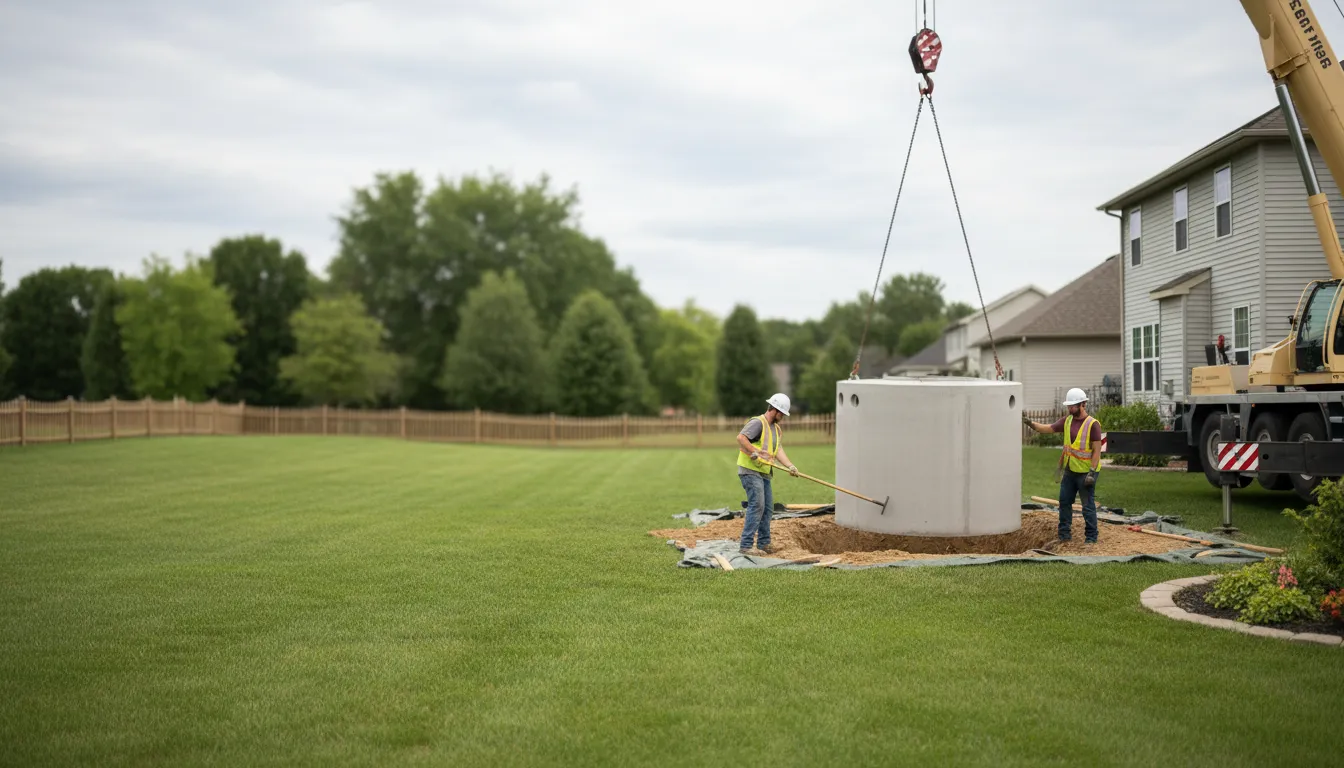
Find the Best Septic Tank Installation & Replacement Contractors for Your Business
No obligation • Fast responses • Nationwide coverage

Why you can trust Septic Spot
Septic Spot is a leading United States resource for understanding and comparing septic services. Our editors review providers using consistent criteria and verify key business details. Listings and scores are independent, and companies cannot pay to influence our content.
Search providers near you
Top Septic Tank Installation & Replacement Contractors in St Charles, Missouri Ranked
Installing or replacing a septic system is a significant home infrastructure project that requires careful planning and adherence to local regulations. For homeowners in St. Charles, this process is governed by specific county codes designed to protect public health and the environment. This guide explains the key steps, regulations, and considerations for septic system installation and replacement in St. Charles, helping you navigate the process to find qualified local professionals for your wastewater treatment needs.
Understanding St. Charles County Septic System Regulations
Before any digging begins, understanding the local regulatory landscape is crucial. In St. Charles County, all new, replacement, or repaired Onsite Wastewater Treatment Systems (OWTS) require a permit from the Division of Building and Code Enforcement. One of the most critical regulations is the minimum lot size requirement: a minimum of 3 acres is mandated for any new OWTS installation. Furthermore, if a public sewer connection is available within 200 feet of your property line, connection to that public sewer is required by law.
These rules underscore the county's focus on ensuring adequate land area for proper wastewater treatment and preventing contamination. For replacement projects, these same standards often apply, especially if the existing system is failing or if you're making substantial property improvements.
The Permit Process: Your First Step
The journey to a new septic system starts with obtaining the proper permit. You cannot legally install a system without county approval. The permitting process ensures your planned system meets all health, safety, and environmental standards.
- Application: You or your licensed installer will submit a Septic System Installation Permit Application to the county 1.
- Fees: Permit fees vary based on system complexity, starting around $150 for conventional systems and increasing for more advanced designs.
- Mandatory Design: A key part of the permit application is the system design, which must be created by a qualified professional based on the results of a county-approved site and soil evaluation.
Critical Pre-Installation Requirements
Two non-negotiable steps must be completed before a permit is issued: a professional site evaluation and a system design featuring specific, county-mandated technology.
Soil Evaluation and Site Assessment
The suitability of your land for a septic drain field is determined by a detailed soil evaluation. A registered professional must conduct tests, including excavating a test pit at least 5 feet deep to assess soil composition, texture, and permeability 2. This report determines the absorption field's size and design and must be approved by the county, often before final subdivision plat approval 2. This step is vital because poorly draining soil can lead to immediate system failure.
Tank and Technology Mandates
St. Charles County has specific requirements for the wastewater treatment technology used. For both new installations and system replacements, the county requires the use of an Aerobic Treatment Unit (ATU). An ATU is a more advanced system that uses oxygen to break down waste more efficiently than a traditional anaerobic tank, resulting in cleaner effluent. All new and replacement tanks must be NSF Standard 40, Class 1 certified ATUs.
Installation: Key Steps and County Inspections
Once permits are secured and the design is finalized, the physical installation can begin. This process should always be handled by a licensed and experienced septic system contractor.
- Excavation: The contractor will excavate the area for the ATU tank and the designated absorption field (drain field).
- Tank Placement: The NSF-certified aerobic tank is carefully set in place. Proper placement relative to property lines and wells is critical.
- Field Construction: The network of perforated pipes in gravel-filled trenches (the lateral lines) is constructed according to the approved design.
- System Integration: All components, including the tank, pumps (if needed), and distribution box, are connected.
Find the perfect septic tank installation & replacement contractors for your needs
Get personalized recommendations and expert advice
The Role of County Inspections
St. Charles County requires mandatory inspections at critical stages of the installation 3 4. An inspector will typically visit to:
- Verify the tank's placement and ensure it meets all setback requirements.
- Inspect the construction of the lateral lines and absorption field before they are covered.
- Check the overall system layout against the approved design.
These inspections are for your protection; the installer should not backfill the trenches until the relevant inspections are passed. Failing to call for an inspection can result in fines and orders to excavate the system for review 5.
Cost Considerations for Installation and Replacement
The total investment for a septic system in St. Charles varies widely based on site conditions, system size, and technology. According to industry estimates, total installation costs often range between $5,000 and $15,000 6 7. The aerobic treatment unit (ATU) itself is a significant cost component. For example, a 1,000-gallon tank may cost between $900 and $2,100, while a 1,500-gallon tank can range from $1,500 to $3,000 7. Remember, these are tank-only estimates; the total project cost includes excavation, piping, drain field construction, permits, and labor.
Replacement projects can sometimes cost more than new installations if there is additional work required to remove and dispose of an old, failing system or to address changes in county code since the original system was installed.
Setback Requirements and Property Considerations
Proper placement of your septic system is legally defined by setback distances from other features on your property. Adhering to these is essential for permit approval and long-term safety.
- Wells: Tanks and absorption fields must generally be set back 100 feet from any water well 8.
- Property Lines: A minimum distance of 10 feet from property lines is required for tanks and absorption fields 9.
- Structures: Setbacks from buildings, streams, and other features also apply and will be detailed in your approved design.
These setbacks are designed to prevent wastewater from contaminating drinking water sources and to avoid creating nuisances for neighboring properties.
Choosing a Contractor in St. Charles
Selecting the right professional is the most important decision you'll make. Look for a contractor who is:
- Licensed and Insured: Verify they hold current licenses to work in St. Charles County.
- Familiar with Local Codes: They should have a proven track record of pulling permits and passing inspections in St. Charles County.
- Experienced with ATUs: Given the county mandate, specific experience installing and maintaining aerobic treatment systems is crucial.
- Transparent: They should provide detailed written estimates, explain the permit process, and outline the inspection timeline.
A reputable installer will handle the permit application, coordinate county inspections, and ensure every phase of the installation meets or exceeds local standards.
Frequently asked questions
Sources
Footnotes
-
Septic System Installation Permit Application - https://charlescountyhealth.org/wp-content/uploads/2025/10/Septic_System_Installation_Permit_Application.pdf ↩
-
Article III: Process and Specifications - St. Charles County, MO - https://ecode360.com/27758451 ↩ ↩2
-
How to Know if You Need a Septic System Permit - Pippin Home Designs - https://www.pippinhomedesigns.com/septic-system-permit/ ↩
-
OWTS Permitting and Inspection | St Charles County, MO - https://www.sccmo.org/2175/OWTS-Permitting-and-Inspection ↩
-
Septic System Installation 101: A Beginner's Guide - https://www.townesseptic.com/blog/septic-system-installation-beginners-guide ↩
-
Understanding Septic Tank Permits and Regulations - https://westcoastsanitationinc.com/understanding-septic-tank-permits-and-regulations/ ↩
-
How Much Does It Cost To Install a Septic System in St. Louis, MO? | Angi - https://www.angi.com/articles/what-does-it-cost-install-septic-system/mo/st-louis ↩ ↩2
-
Sewage Tanks | St Charles County, MO - Official Website - https://www.sccmo.org/2179/Sewage-Tanks ↩
-
Onsite Wastewater Treatment Systems (OWTS) - St. Charles County - https://www.sccmo.org/2181/OWTS-FAQs ↩