Find the Best Septic Tank Installation & Replacement Contractors for Your Business
No obligation • Fast responses • Nationwide coverage

Why you can trust Septic Spot
Septic Spot is a leading United States resource for understanding and comparing septic services. Our editors review providers using consistent criteria and verify key business details. Listings and scores are independent, and companies cannot pay to influence our content.
Search providers near you
Top Septic Tank Installation & Replacement Contractors in Cary, North Carolina Ranked
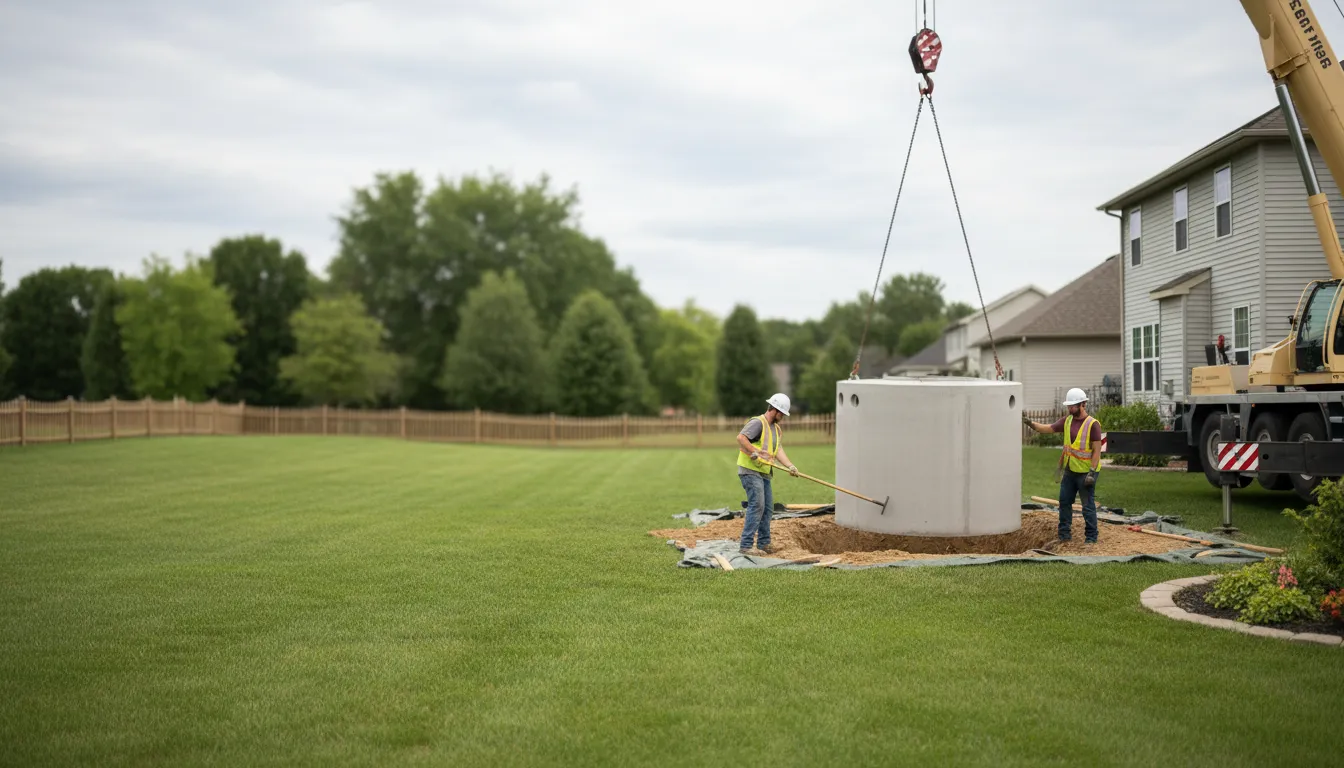
Installing or replacing a septic system is a significant home infrastructure project that requires careful planning and adherence to strict local regulations. In Cary, this process is managed by Wake County Environmental Services under North Carolina state rules, ensuring systems are safe, effective, and environmentally sound. This guide explains the key steps, costs, and considerations for septic system installation and replacement, helping you understand what to expect and how to connect with qualified local professionals for your project.
Environmental Systems & Services of NC LLC
Raleigh, NC
Environmental Systems & Services of NC LLC provides comprehensive septic and plumbing services in Raleigh, NC, and throughout Eastern and Central North Carolina. With over 30 years of experience, they handle septic tank pumping, inspections, repairs, and installations, as well as plumbing repairs, sewer line services, and drain field maintenance. Their team uses advanced equipment like cameras and hydro-jetting tools to diagnose and resolve issues efficiently. They offer customized maintenance plans to help extend the lifespan of septic and plumbing systems, ensuring compliance with local regulations and protecting water quality.

A1-Septic Tank Cleaning
Raleigh, NC
A1-Septic Tank Cleaning provides septic tank pumping, repair, and installation services in Raleigh, NC. Serving both residential and commercial clients, they offer comprehensive septic solutions including lift station maintenance and grease trap cleaning. With over 30 years of experience and 26 years in business, the company emphasizes personalized care and compliance with environmental regulations. They also offer 24/7 availability for septic needs.
Big Dawg’s Plumbing Services
5540 Centerview Dr Ste 204 PMB 96204, Raleigh, NC 27606
Big Dawg's Plumbing Services is a locally owned and operated plumbing contractor based in Raleigh, NC. They provide a range of plumbing services including septic tank installation, drain cleaning, leak detection and repair, pipe installation and repair, toilet installation and repair, and water heater services. Serving the Triangle Area and surrounding communities, they handle both residential and commercial plumbing needs. The company is fully insured and offers emergency services to address urgent plumbing issues.
C & C Septic Services, Inc.
Raleigh, NC
C & C Septic Services, Inc. is a locally owned septic company based in Raleigh, NC. They provide septic tank pumping, inspections, repairs, and new system installations. Their service area includes Selma, Princeton, Smithfield, Clayton, Archers Lodge, Goldsboro, Pikeville, and surrounding locations. The company focuses on maintaining reliable septic systems and offers repair options and installations to meet customer needs.
Septic Innovations
5209 Winfree Ln, Wake Forest, NC 27587
Septic Innovations is a septic system company based in Raleigh, NC, offering a range of services including septic tank pumping, inspection, repair, and installation. They handle all system components such as tanks, pumps, control panels, distribution boxes, and drain fields. The company is certified as NC Grade IV installers and VA Master Alternative installers, capable of installing any type of septic system in North Carolina and Virginia. Septic Innovations also provides point-of-sale septic inspections to evaluate system compliance and condition. They assist with permitting when required for installation or repair work.
Understanding the Regulatory Framework in Wake County
All septic system installations in Cary fall under the jurisdiction of Wake County Environmental Services, which enforces rules established by the North Carolina Department of Health and Human Services (NCDHHS) 1. These regulations, found in NC General Statute Chapter 130A and the 15A NCAC 18A .1900 rules, are designed to protect public health and groundwater quality 2. The process is permit-driven and involves multiple inspections to ensure compliance. Whether you're building a new home on a lot without municipal sewer access or replacing a failing onsite wastewater system, navigating this regulatory pathway is your first and most crucial step.
The Step-by-Step Permit Process
The journey from planning to a legally operating system involves four key stages. Skipping or misunderstanding any step can lead to costly delays or failed inspections.
1. Soil Evaluation and Site Suitability
Before any design work begins, a qualified professional-often a licensed soil scientist or a county environmental health specialist-must evaluate your property. North Carolina has largely moved away from traditional percolation ("perc") tests in favor of comprehensive soil profile evaluations 3. The inspector analyzes soil structure, texture, color, and conditions to determine the depth to the seasonal high water table and overall drainage capacity 3. This evaluation directly determines what type of septic system your land can support.
2. The Improvement Permit (IP)
With the soil evaluation complete, you or your designer can apply for an Improvement Permit. This permit proposes the system's location and outlines the system type based on the soil findings, property layout, and the size of the home it will serve. The IP is essentially the county's approval of your plan. It confirms that, in theory, a system can be installed on your lot according to code.
3. The Construction Authorization (CA)
Once the Improvement Permit is granted, detailed construction designs are submitted. After these designs are approved, the county issues a Construction Authorization. This is your green light to have a licensed septic contractor begin the physical installation. The CA specifies the approved system type and any special conditions that must be met during construction.
4. Inspections and the Operation Permit (OP)
The installation itself is subject to mandatory inspections by the Health Department:
- Layout Inspection: Ensures the site is cleared and staked according to the approved plan.
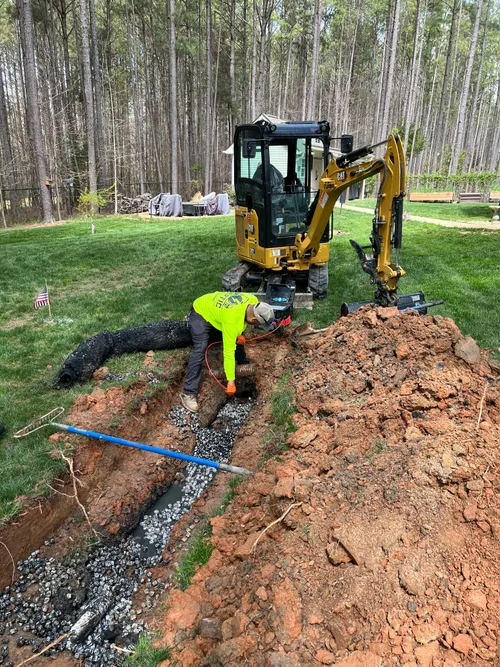
- Pre-Cover Inspection: This critical inspection happens after the tank, distribution pipes, and drainfield media (like stone or chambers) are placed but before they are covered with soil. The inspector checks pipe slope, tank integrity, and component quality 4 5.
- Final Inspection: Verifies the entire system, including any pumps or advanced components, is functioning correctly.
Only after passing all inspections will the county issue the final Operation Permit, which is required for legal occupancy of the home 6.
Types of Septic Systems Used in Cary
The soil evaluation dictates which system is suitable for your property. Costs and complexity vary significantly between types.
- Conventional Gravity System: This is the most common and least expensive type, but it requires ideal soil conditions-good permeability and a deep water table. Wastewater flows from the tank to the drainfield by gravity alone.
- Engineered or Alternative Systems: If soil conditions are poor (e.g., high clay content, shallow bedrock, or a high water table), an engineered system is necessary. These include pump systems, low-pressure pipe (LPP) systems, or other advanced treatment technologies. They are more complex to design and install but make septic tank replacement or installation possible on challenging sites 7.
Find the perfect septic tank installation & replacement contractors for your needs
Get personalized recommendations and expert advice
Cost Considerations for Installation and Replacement
Budgeting for a new septic system requires understanding the variables at play. For a conventional gravity system in the Cary area, homeowners can expect costs typically ranging from $5,000 to over $10,000 8 9. However, if your property requires an engineered pump or alternative system, the price can jump significantly, often falling between $10,000 and $20,000 or more 8 9. These figures generally include excavation, tank, piping, drainfield, and labor. Remember to also factor in permit fees paid to Wake County, which vary based on project complexity, as well as the cost of the required soil evaluation and system design.
It's important to note that septic system replacement often triggers stricter compliance with current codes than the original installation. If the original drainfield area is now unsuitable due to changes in soil conditions or regulations, you may need to install a more complex (and costly) system in a new location on your property.
Choosing a Licensed Septic Contractor
Selecting the right professional is paramount. Always choose a contractor licensed by the state of North Carolina for onsite wastewater system installation. A reputable contractor will:
- Be familiar with Wake County's specific processes and inspectors.
- Handle or seamlessly coordinate the permit application and soil evaluation.
- Provide a detailed, written estimate that breaks down equipment, labor, and permit fees.
- Schedule and coordinate all required county inspections.
- Offer warranties on both labor and the components they install.
Don't hesitate to ask for references from recent projects in Cary and verify their license status. A good contractor acts as your guide through the entire regulatory and construction process.
Maintenance Starts at Installation
A properly installed system is the foundation for long-term performance, but ongoing maintenance is key. Your contractor should provide clear instructions on caring for your new system. This includes regular pumping of the tank (typically every 3-5 years), water conservation, and avoiding flushing harmful chemicals or materials. Protecting your drainfield from compaction by vehicles or heavy structures is also critical for its longevity.
Frequently asked questions
Sources
Footnotes
-
Navigating Septic Tank Installation in Eastern NC: A County ... - https://www.coastalsepticsolutions.com/blog/navigating-septic-tank-installation-in-eastern-nc-a-county-by-county-guide ↩
-
North Carolina Onsite Wastewater Rules - Environmental Health - https://ehs.dph.ncdhhs.gov/oswp/docs/rules/1900-Rules-08-2017.pdf ↩
-
North Carolina Soil Evaluations: The New Standard for Septic ... - https://www.creechsplumbing.com/blog/2024/february/perc-tests-are-no-longer-used-uncovering-north-c/ ↩ ↩2
-
NC Septic Permit Process: Step-by-Step Guide for Homeowners - https://septicandwell.com/articles/nc-septic-permit-process ↩
-
Septic System Install Timeline | RCI Septic Service - https://www.rciseptic.com/complete-step-by-step-timeline-septic-system-installation-from-permit-to-finish ↩
-
Septic Systems and Their Maintenance - https://content.ces.ncsu.edu/septic-systems-and-their-maintenance ↩
-
Types Of Engineered Septic Systems | #AskThePumperdude - https://www.youtube.com/watch?v=CH3bJ1Ik3a8 ↩
-
Navigating the Septic System Permit and Installation Process ... - https://carolinaearthwerx.com/blogs/news/navigating-the-septic-system-permit-and-installation-process-in-north-carolina ↩ ↩2
-
18A .1900 NORTH CAROLINA ADMINISTRATIVE CODE 01/21/99 ... - https://ehs.dph.ncdhhs.gov/oswp/docs/rules/jan99amen.pdf ↩ ↩2