
Find the Best Septic Tank Installation & Replacement Contractors for Your Business
No obligation • Fast responses • Nationwide coverage

Why you can trust Septic Spot
Septic Spot is a leading United States resource for understanding and comparing septic services. Our editors review providers using consistent criteria and verify key business details. Listings and scores are independent, and companies cannot pay to influence our content.
Search providers near you
Best Septic Tank Installation & Replacement Contractors in Nebraska Ranked
Installing or replacing a septic system is a significant investment in your property's long-term functionality and environmental health. In Nebraska, this process is regulated by the state to protect groundwater and public safety, requiring certified professionals for design and installation. This guide explains the key steps, regulations, and costs involved, helping you understand what to expect and how to connect with qualified local experts for your project.

Nebraska Septic
Lincoln, NE
Nebraska Septic is a septic tank inspection, repair, and installation company based in Lincoln, NE. The business is led by Steven Lewis, a master installer and inspector for wastewater treatment systems in Nebraska. Nebraska Septic handles septic emergencies and offers thorough assessments to help customers determine the best course of action. The company provides 24/7 emergency service to address urgent septic issues promptly.
Midwest Septic & Excavating LLC
22377 Sumac Rd, Neola, IA 51559
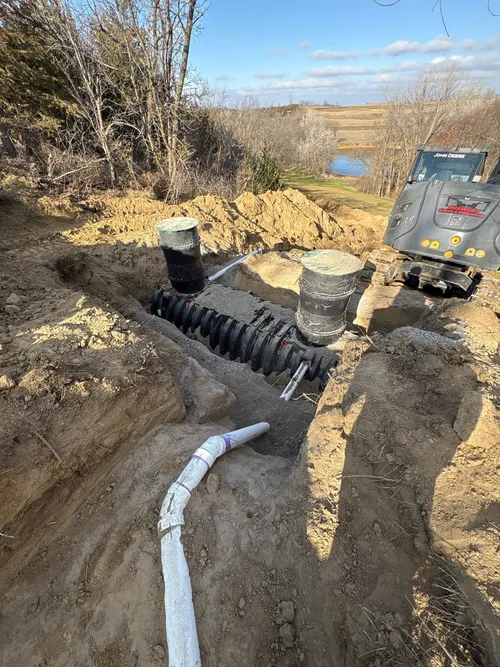
Midwest Septic & Excavating LLC is a septic system repair and installation company serving Omaha, NE, and the surrounding Council Bluffs, IA area. Established in 2021, the company offers septic system installation, including EcoFlo systems, septic repairs, and excavation services such as trenching and site preparation. Their certified experts handle both new and existing home septic projects with a focus on quality workmanship.

Norm's Pumping Service Inc
20418 Husker Ln, Council Bluffs, IA 51503
Norm's Pumping Service Inc provides septic system services including pumping, inspections, repairs, and installations in Omaha, NE. With over 70 years of experience since 1954, they serve both residential and commercial clients. Their capabilities include septic pump repairs and certified septic tank inspections, as well as grease trap maintenance to prevent sewer line clogs. Norm's offers emergency and routine septic pumping to help maintain system performance.

Lincoln Demolition & Excavation
900 N 162nd St, Lincoln, NE 68527
Lincoln Demolition & Excavation is a locally owned company based in Lincoln, NE, specializing in septic tank installation, repair, inspection, and maintenance. They also provide drainage solutions such as French drains and drain tiles to address water issues. The company is a State of Nebraska Certified Master Installer and serves both commercial and residential clients across Lincoln and surrounding areas. Their services include excavation, demolition, concrete work, grading, and water and sewer repair, with a focus on solving leaks, breaks, and backups efficiently.
Allen Septic
240 W 3rd St, Douglas, NE 68344
Allen Septic is a septic service provider based in Lincoln, NE, offering a range of services including septic tank pumping, system repair, installation, and lagoon maintenance. They work with both residential and commercial clients to ensure septic systems meet specific property needs. The company uses modern technology such as sewer inspection cameras and electronic line locators to accurately locate and inspect septic systems. They also provide main line cleaning with professional-grade equipment to clear blockages and maintain system flow. Allen Septic offers 24/7 emergency services to address urgent septic issues promptly.
Understanding Nebraska's Regulatory Framework
The Nebraska Department of Environment and Energy (NDEE) oversees all onsite wastewater systems under Title 124 regulations. This framework ensures systems are designed, installed, and maintained to prevent contamination. A critical first step is understanding that state law requires a certified master installer, professional engineer, or environmental health specialist to design or install your system. You cannot legally install a septic system yourself in Nebraska.
Most residential installations proceed under an "Authorization by Rule," which is a registration process rather than a formal permit, provided the system meets standard state criteria. If your site or proposed system does not meet these standards, a formal construction permit from the NDEE will be necessary 1.
The Step-by-Step Installation & Replacement Process
1. Initial Site Evaluation and Soil Testing
Before any design work begins, a thorough site evaluation is mandatory. This includes a soil percolation test to determine the absorption rate of your soil, which dictates the size and type of drainfield needed. The test requires at least three holes dug in the proposed drainfield area 2. The evaluator will also assess the slope, groundwater depth, and proximity to wells or surface water. Systems must be at least 100 feet from private wells and surface water bodies 3.
2. System Design and Sizing
A certified professional uses the site evaluation data to design your system. State rules specify minimum tank sizes; a 1,000-gallon septic tank is generally the starting point for a standard dwelling 4. For holding tanks, the minimum is 1,000 gallons for two or fewer bedrooms, plus an additional 300 gallons for each extra bedroom 4. The design must account for proper pipe slope (1/8" to 1/4" per foot leading to the tank) and appropriate drainfield technology 5.
3. Securing State Registration and Local Permits
For systems that qualify, the installer will submit a construction registration to the NDEE with the required $140 fee. It is crucial to file this registration before construction begins. Late fees apply: $150 if filed 46-90 days after construction, and $450 if filed 91 or more days after. Additionally, always check with your local city or county health department, as they may have permitting requirements that are more stringent than the state's 6.
4. Construction and Required Inspections
During construction, multiple inspections by certified personnel are required to ensure compliance:
- Construction Inspection: The septic tank is inspected for cracks and proper baffle installation before it is buried 7.
- Final Inspection: The completed drainfield is inspected for proper layout and soil suitability 8.
- Operation Inspection: If the system includes pumps or alarms, these components must be tested 9.
Find the perfect septic tank installation & replacement contractors for your needs
Get personalized recommendations and expert advice
5. System Types and Technology
The soil conditions on your property will determine the type of system you need.
- Conventional System: Used in soils with good percolation. It consists of a septic tank and a subsurface trench drainfield. This is typically the most cost-effective option.
- Alternative (Engineered) System: Required for sites with poor soil, high groundwater, or limited space. Examples include mound systems, sand filters, or aerobic treatment units (ATUs). These involve more complex engineering and construction.
Cost Factors for Installation and Replacement
The total cost for a new septic system in Nebraska varies widely based on system type, soil conditions, and property specifics. Generally, you can expect the following ranges 10 11 12:
- Conventional System: $5,000 - $10,000
- Alternative/Engineered System: $10,000 - $20,000+
Replacing an existing system often costs more than a new installation due to the additional labor and equipment required to safely remove and dispose of the old tank and drainfield, as well as repairing the landscaping.
Beyond the equipment and labor, budget for:
- State Registration Fee: $140 13.
- Local Permit Fees: Vary by county or city.
- Soil Testing and Design Fees: Paid to the certified designer or evaluator.
- Annual Maintenance Costs: Essential for preserving your investment and avoiding premature failure.
Key Considerations for System Replacement
Replacing a failing or outdated system follows the same regulatory process as a new installation. Signs you may need a replacement include persistent drainfield backups, soggy ground or foul odors near the tank or drainfield, and excessively high nitrate levels in well water tests. A certified inspector can confirm the need for replacement.
When replacing, the professional will evaluate whether a "like-for-like" system is possible or if updated regulations and current soil conditions require a different, often more advanced, system design. This evaluation will significantly impact the project's scope and cost.
Maintaining Your New System
Proper maintenance is non-negotiable. A well-maintained conventional system can last 25-30 years or more. Key maintenance tasks include:
- Regular Pumping: Have the tank pumped every 3-5 years by a licensed pumper.
- Water Conservation: Reducing water flow into the system extends its life.
- Mindful Use: Avoid flushing chemicals, grease, or non-biodegradable items.
- Protect the Drainfield: Never drive or park vehicles over it, and keep roof drains and sump pumps directed away from the area.
Frequently asked questions
Sources
Footnotes
-
Onsite Wastewater Treatment Facilities: Permits | DWEE NE - https://dee.nebraska.gov/permitting/water-permitting/wastewater/onsite-wastewater-treatment-facilities-permits ↩
-
June 2016 - Nebraska.gov - https://dee.nebraska.gov/sites/default/files/publications/2016June.pdf ↩
-
Onsite Wastewater Systems: Frequently Asked Questions - https://dee.nebraska.gov/sites/default/files/publications/WAT056-Frequently%20Asked%20Questions.pdf ↩
-
Septic and Holding Tanks Fact Sheet A septic tank or holding ... - https://dee.nebraska.gov/sites/default/files/publications/12-036%20Septic%20and%20Holding%20Tank%20Fact%20Sheet.pdf ↩ ↩2
-
Residential Onsite Wastewater Treatment: Septic Tank Design ... - https://extensionpubs.unl.edu/publication/219/html/view ↩
-
Just for Homeowners | DWEE NE - https://dee.nebraska.gov/water/surface-water/wastewater/just-homeowners ↩
-
Residential Onsite Wastewater Treatment: Traditional Drainfields for ... - https://extensionpubs.unl.edu/publication/235/html/view ↩
-
All About DWEE: Onsite Septic Systems - https://dee.nebraska.gov/news-events/press-releases/all-about-dwee-onsite-septic-systems ↩
-
Preparing for Septic Tank Inspection: 7 Key Steps - https://septic911.com/preparing-for-septic-tank-inspection/ ↩
-
§ 53.037 PERMIT, WHEN EFFECTIVE; INSPECTIONS. - https://codelibrary.amlegal.com/codes/loupcity/latest/loupcity_ne/0-0-0-1907 ↩
-
How Much Does a Septic Tank System Cost? (2026) - https://homeguide.com/costs/septic-tank-system-cost ↩
-
How Much Does Septic Tank Installation Cost? (2026) - https://todayshomeowner.com/plumbing/cost/septic-tank-installation-cost/ ↩
-
Onsite Wastewater Fees, Certifications, & Permits | DWEE NE - https://dee.nebraska.gov/water-quality/wastewater/onsite-wastewater-program/professional-certification/onsite-wastewater-fees-certifications-permits ↩