
Find the Best Septic Tank Installation & Replacement Contractors for Your Business
No obligation • Fast responses • Nationwide coverage

Why you can trust Septic Spot
Septic Spot is a leading United States resource for understanding and comparing septic services. Our editors review providers using consistent criteria and verify key business details. Listings and scores are independent, and companies cannot pay to influence our content.
Search providers near you
Top Septic Tank Installation & Replacement Contractors in Lincoln, Nebraska Ranked
Installing or replacing a septic system is a significant home infrastructure project that ensures the safe and effective treatment of household wastewater. In Lincoln, this process is governed by specific state and local regulations designed to protect public health and groundwater quality. This guide provides a detailed overview of what to expect, from permits and soil testing to installation steps and costs, helping you navigate the process of finding qualified local professionals for your septic system needs.

Nebraska Septic
Lincoln, NE
Nebraska Septic is a septic tank inspection, repair, and installation company based in Lincoln, NE. The business is led by Steven Lewis, a master installer and inspector for wastewater treatment systems in Nebraska. Nebraska Septic handles septic emergencies and offers thorough assessments to help customers determine the best course of action. The company provides 24/7 emergency service to address urgent septic issues promptly.

Lincoln Demolition & Excavation
900 N 162nd St, Lincoln, NE 68527
Lincoln Demolition & Excavation is a locally owned company based in Lincoln, NE, specializing in septic tank installation, repair, inspection, and maintenance. They also provide drainage solutions such as French drains and drain tiles to address water issues. The company is a State of Nebraska Certified Master Installer and serves both commercial and residential clients across Lincoln and surrounding areas. Their services include excavation, demolition, concrete work, grading, and water and sewer repair, with a focus on solving leaks, breaks, and backups efficiently.
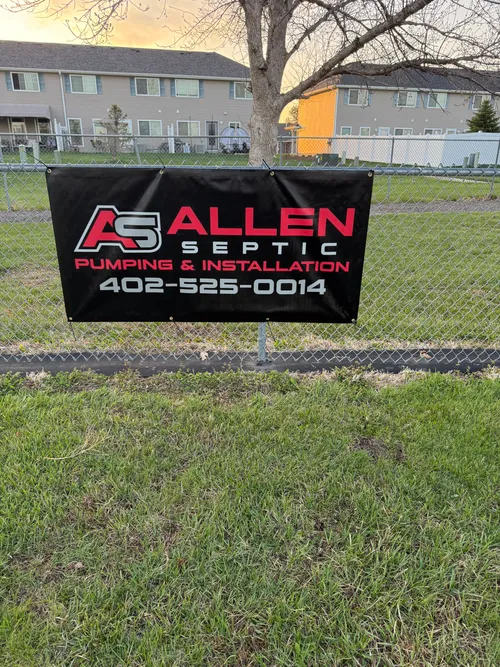
Allen Septic
240 W 3rd St, Douglas, NE 68344
Allen Septic is a septic service provider based in Lincoln, NE, offering a range of services including septic tank pumping, system repair, installation, and lagoon maintenance. They work with both residential and commercial clients to ensure septic systems meet specific property needs. The company uses modern technology such as sewer inspection cameras and electronic line locators to accurately locate and inspect septic systems. They also provide main line cleaning with professional-grade equipment to clear blockages and maintain system flow. Allen Septic offers 24/7 emergency services to address urgent septic issues promptly.
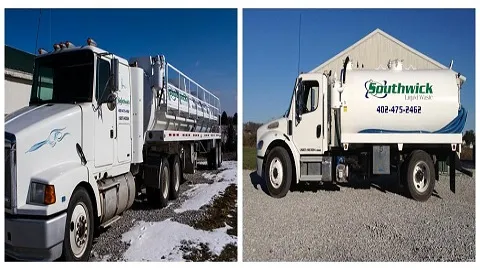
Southwick Liquid Waste
Hickman, NE 68372
Southwick Liquid Waste is a family-owned septic tank pumping and installation company based near Lincoln, NE. Serving Lincoln and surrounding areas, they offer residential septic pumping and install septic systems tailored to property needs. They operate the largest capacity wastewater pumping truck in Lincoln and Omaha, supporting larger pumping requirements. With over 30 years of experience, Southwick Liquid Waste brings extensive knowledge to their services.
Understanding Septic System Basics
A septic system, or onsite wastewater treatment system, is a self-contained, underground system that treats and disposes of household sewage. The most common type consists of a septic tank and a soil absorption field (drain field). Wastewater flows from the home into the tank, where solids settle and begin to decompose. The liquid effluent then exits the tank and is distributed into the drain field, where the soil provides final treatment. In Lincoln, all such systems must comply with Nebraska Title 124 rules, which set the standards for design, construction, and environmental protection.
The Permit Process: Your First Step
Before any digging begins, you must secure the proper permits. In Lancaster County, which includes Lincoln, a Construction or Alteration Permit must be obtained from the local Health Director before installing or replacing a septic tank, soil absorption system, or lateral line 1 2. This permit process ensures your planned system meets all regulatory requirements. The application will require a detailed design plan, often prepared by a certified professional. For systems designed to handle over 1,000 gallons of wastewater per day, permit application fees can be around $450. Skipping this step can result in costly fines and the requirement to remove a non-compliant system.
The Critical Role of Soil Percolation Tests
A soil percolation ("perc") test is not just a recommendation-it's a mandatory requirement for any new septic system installation or major replacement in Nebraska. This test measures the rate at which water drains through the soil in a prepared hole, determining the soil's absorption rate. The results, measured in minutes per inch of drop, directly dictate the size and type of drain field your property can support. A licensed professional, such as a certified installer or a registered environmental health specialist, must conduct this test. The cost for a professional perc test can vary based on property size and complexity 3.
Working with Certified Professionals
Nebraska law requires that key aspects of septic system work be performed by certified individuals. Only certified installers or professionals can conduct percolation tests, design systems, and construct or alter them 4. Hiring a certified installer guarantees they understand the Nebraska Department of Environment and Energy (NDEQ) Title 124 regulations, proper construction techniques, and local Lincoln Municipal Code requirements, such as mandatory setbacks. For instance, septic tanks must be located at least 100 feet from private wells or surface water and 1,000 feet from community water supply wells.
Find the perfect septic tank installation & replacement contractors for your needs
Get personalized recommendations and expert advice
Key Installation Steps and Inspections
A proper septic system installation follows a sequenced process with required inspections to ensure compliance and long-term functionality.
- Site Evaluation & Design: After the perc test, a certified professional designs a system tailored to your household's estimated water usage and your property's soil conditions.
- Permit Approval: The design plan is submitted with the permit application to the local health department for review and approval.
- Pre-Construction Notification: Before excavation, you must contact Nebraska Diggers' Hotline (811) at least two full business days in advance to have underground utility lines marked 5.
- Installation & Open Inspection: The tank is set and the absorption field is excavated and prepared. Before any components are covered, a health department inspector must conduct an "open" inspection to verify the tank placement, pipe layout, and overall construction align with the approved plan 6.
- Final Inspection: Once the system is fully installed and backfilled, a final inspection is typically required to ensure the installation is complete and the site is properly restored 7.
Understanding Costs for Installation and Replacement
The total cost for a new septic system or a full system replacement in Lincoln varies widely based on system type, soil conditions, and property size.
- Conventional Gravity Systems: For properties with suitable soil, a standard septic tank and drain field system typically ranges from $5,000 to $10,000.
- Complex or Alternative Systems: If your soil fails a standard perc test, you may need an advanced treatment system like a sand filter, pressure-dosing system, or aerobic treatment unit. These systems involve more complex engineering and components, with costs often exceeding $20,000 8 9.
- Additional Costs: Remember to budget for the soil percolation test, permit fees, and any necessary landscaping or site restoration after installation.
System Replacement Considerations
Replacing an existing failed system follows the same permit and installation rules as a new installation. Often, replacement is needed due to drain field failure, which may require a new absorption field in a different location on your property. A certified professional can assess whether just the tank, just the field, or the entire system needs replacement. Using water efficiently and having your tank pumped regularly every 3-5 years are the best ways to extend the life of your system and delay the need for costly replacement.
Frequently asked questions
Sources
Footnotes
-
Conducting a Soil Percolation Test - https://extensionpubs.unl.edu/publication/g1472/2011/html/view ↩
-
Lincoln Municipal Code - enCodePlus - https://online.encodeplus.com/regs/lincoln-ne/doc-viewer.aspx?secid=10857 ↩
-
How Much Does a Septic Soil Test Cost in 2026? - https://landperc.com/septic-soil-test-cost/ ↩
-
All About DWEE: Onsite Septic Systems - https://dee.nebraska.gov/news-events/press-releases/all-about-dwee-onsite-septic-systems ↩
-
Residential Onsite Wastewater Treatment: Traditional Drainfields for ... - https://extensionpubs.unl.edu/publication/235/html/view ↩
-
Understanding Septic Tank Permits and Regulations - https://westcoastsanitationinc.com/understanding-septic-tank-permits-and-regulations/ ↩
-
Septic System Installation 101: A Beginner's Guide - https://www.townesseptic.com/blog/septic-system-installation-beginners-guide ↩
-
EC01-798 Residential On-site Wastewater Treatment: An Overview - https://digitalcommons.unl.edu/cgi/viewcontent.cgi?article=2400&context=extensionhist ↩
-
Onsite Wastewater Fees, Certifications, & Permits | DWEE NE - https://dee.nebraska.gov/water-quality/wastewater/onsite-wastewater-program/professional-certification/onsite-wastewater-fees-certifications-permits ↩