Find the Best Septic Tank Pumping Contractors for Your Business
No obligation • Fast responses • Nationwide coverage

Why you can trust Septic Spot
Septic Spot is a leading United States resource for understanding and comparing septic services. Our editors review providers using consistent criteria and verify key business details. Listings and scores are independent, and companies cannot pay to influence our content.
Search providers near you
Top Septic Tank Pumping Contractors in Chicago, Illinois Ranked
For Chicago and Cook County homeowners with a private septic system, regular septic tank pumping is a non-negotiable part of responsible property ownership. This essential maintenance service removes accumulated sludge and scum from your tank, preventing system failures, costly repairs, and environmental contamination. Finding a reliable, licensed professional for this critical task ensures your system operates efficiently and protects your home's sanitation for years to come. This guide will help you understand the local requirements, recognize warning signs, and know what to expect when scheduling service.

Suburban Plumbing Sewer Line and Drain Cleaning Experts
9100 Plainfield Rd Suite #9A, Brookfield, IL 60513
Suburban Plumbing Sewer Line and Drain Cleaning Experts is a full-service plumbing company serving Chicago, IL, and the greater Chicagoland area. They provide a wide range of services including septic tank pumping, inspections, repairs, and new system installations, as well as sewer line repairs, drain cleaning, water heater services, and flood control solutions. With over 30 years of experience, their licensed and insured technicians use advanced equipment like hydro jetting and sewer camera inspections to deliver effective plumbing solutions. The company offers 24/7 emergency plumbing services to address urgent issues promptly.
Feikema Plumbing & Sanitation
1854 Ridge Rd, Munster, IN 46321
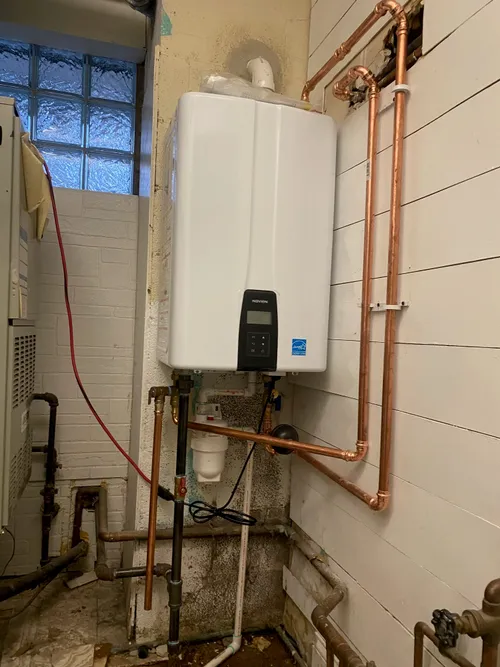
Feikema Plumbing & Sanitation is a family-owned business based in Munster, IN, serving the Chicago, IL area with plumbing and septic system services. Established in 1956, they offer a wide range of solutions including septic tank pumping, septic system repairs, drain cleaning, water heater installation, and sewer maintenance. Their expertise includes advanced diagnostics using sewer cameras and modern rodding tools. With over 60 years of experience, Feikema Plumbing & Sanitation combines local community focus with licensed, bonded, and insured service.
Johnson Septic Service
7523 S 1st Line Rd, Kingsbury, IN 46345
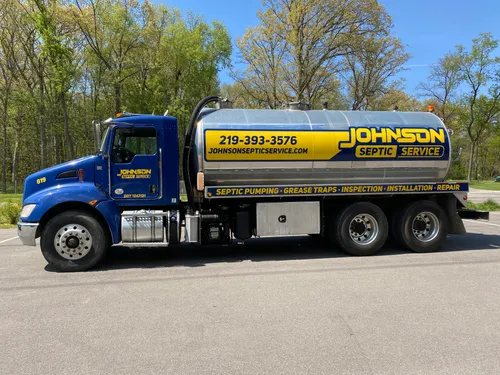
Johnson Septic Service provides septic tank pumping, inspection, repair, and installation services in Chicago, IL. They also offer grease trap pumping and use Bio-Tabs as part of their service options. The company serves the northwest Indiana area with a focus on quality septic system maintenance and repair.
Gift Septic Service
7357 US-30, Wanatah, IN 46390
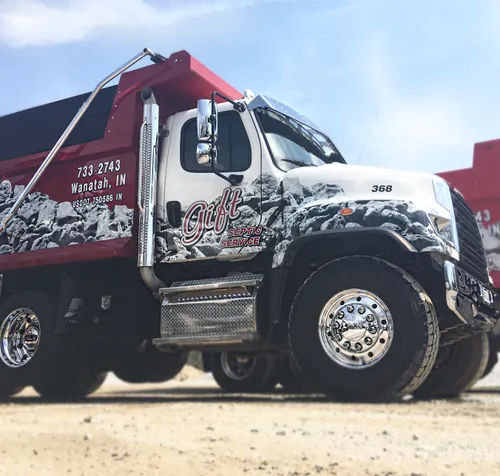
Gift Septic Service is a septic tank pumping and installation contractor based near Chicago, IL. They serve Porter County, La Porte County, and select areas of Lake and Starke counties. Established in 1968, the company has decades of experience in septic system services. Gift Septic Service is known for its commitment to integrity, honesty, and professionalism in every job.
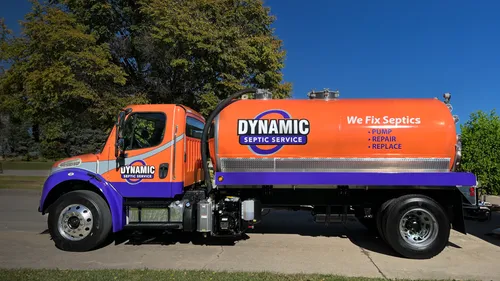
Dynamic Septic Service
18600 Rte 59, Shorewood, IL 60404
Dynamic Septic Service is a locally owned company based in Shorewood, Illinois, providing septic pumping, inspection, repair, and installation services in Chicago, IL, and surrounding counties including Will, DuPage, Cook, Kendall, Grundy, and Kankakee. With over 30 years of hands-on experience, they specialize in diagnosing septic system issues and offering clear options for repair or replacement. Their expertise includes routine pumping and complex system repairs, ensuring long-term functionality of septic systems.
Understanding Your Septic System and Why Pumping is Critical
A septic system is an on-site wastewater treatment structure, typically used where municipal sewer lines are not available. It consists of a large underground tank and a drain field. When wastewater from your home enters the tank, solids settle to the bottom as sludge, fats and oils float to the top as scum, and the clarified liquid in the middle flows out to the drain field for further treatment in the soil. Over time, the sludge and scum layers build up. If they aren't removed via professional septic tank cleaning, they can overflow into the drain field, causing clogs, backups into your home, and potentially contaminating groundwater.
Regular septic system pumping is the most effective way to prevent these disasters. It's not just about convenience; it's a matter of public health and environmental stewardship. In Illinois, septic systems are regulated to protect water quality, and proper maintenance is a legal requirement for homeowners.
Recommended Pumping Frequency for Chicago-Area Homes
How often you need to schedule septic tank service depends on several factors, but general guidelines are established by health authorities. For most households in the Chicago region, the recommended interval for septic tank emptying is every 3 to 5 years.
However, this is a general rule. Your specific septic tank maintenance schedule may need to be more frequent based on:
- Household Size: A family of five or more will generate more wastewater and solids, potentially requiring pumping every 1 to 2 years.
- Tank Size: A smaller 1,000-gallon tank serving four or more people will fill up faster and likely needs service every 2-3 years.
- Garbage Disposal Use: Using a garbage disposal significantly increases the amount of solids entering the tank, shortening the time between necessary pump-outs.
- Overall Water Usage: High water consumption from frequent laundry, long showers, or many house guests accelerates sludge accumulation.
The most reliable method is to have your tank inspected annually by a licensed contractor. They can measure the sludge and scum layers and give you a precise recommendation for when pumping is needed, taking the guesswork out of your maintenance plan.
Local Regulations and the Importance of Licensed Professionals
In Illinois, septic system installation and maintenance are governed by state code (77 Ill. Adm. Code 905) under the Illinois Department of Public Health (IDPH) 1 2. This means you cannot hire just anyone to perform septic tank pumping or repairs.
Always verify that a contractor is licensed by the state of Illinois to perform private sewage disposal work. Licensed professionals understand the local codes, including those specific to Cook County. They will properly dispose of the septage at approved facilities, file any necessary permits or notifications, and ensure the work is done safely and correctly. Using an unlicensed provider can lead to improper service, environmental violations, and could void any existing warranties on your system.
Furthermore, a full septic system inspection is often a required part of a real estate transaction in Illinois. Having a record of regular maintenance and pumping from a licensed provider is invaluable during a home sale.
Recognizing Signs You Need Service Sooner
Don't wait for a complete failure. Be proactive and watch for these warning signs that your tank may be reaching capacity and needs septic tank cleaning:
- Slow Drains: Sinks, showers, and especially toilets that drain slowly can be an early indicator.
- Unpleasant Odors: Sewage smells in your yard, particularly around the tank or drain field area, are a red flag.
- Lush or Soggy Lawn: Unexpectedly green, lush grass or standing water over the drain field indicates that effluent is not draining properly and is surfacing.
- Gurgling Sounds: Strange gurgling noises from your plumbing can signal a blockage or full tank.
- Sewage Backup: The most severe sign is wastewater backing up into household drains.
If you notice any of these issues, contact a licensed septic service provider immediately to assess the situation.
Find the perfect septic tank pumping contractors for your needs
Get personalized recommendations and expert advice
What to Expect: The Pumping Process and Associated Costs
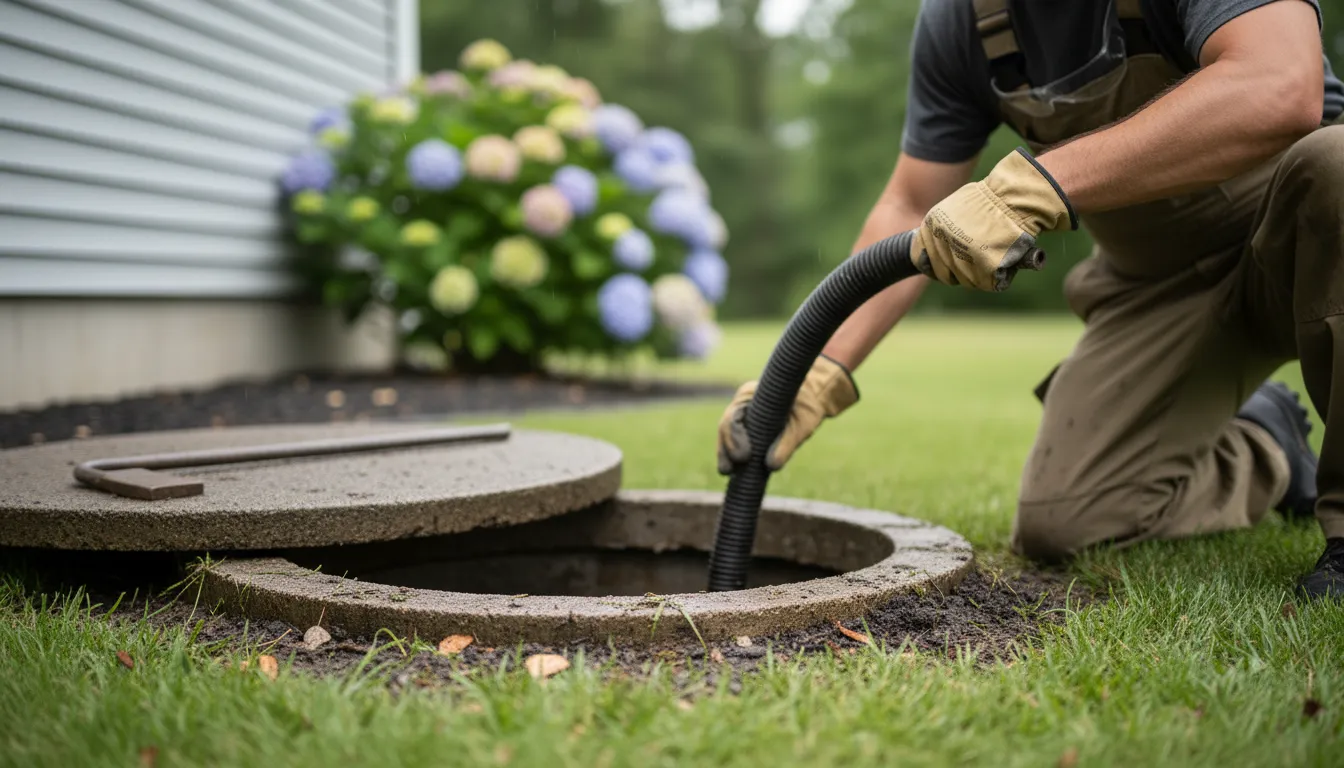
When you schedule a septic tank pumping service, a licensed contractor will arrive with a vacuum truck. They will locate and uncover the tank's access lids, inspect the baffles and inlet/outlet tees, and then insert a large hose to vacuum out all the contents-sludge, scum, and liquid. A thorough provider will also inspect the tank's structure for cracks and check the drain field distribution box if accessible.
Costs for Septic Tank Pumping in Chicago The price for this essential service typically ranges from $300 to $700 for a standard residential tank 3. Several factors can influence the final cost:
- Tank Size and Volume: Larger tanks cost more to pump.
- Accessibility: If the tank lids are buried deep, under a patio, or otherwise difficult to access, additional labor charges may apply.
- Additional Services: Many companies offer inspection packages with pumping. A full system inspection on its own can range from $200 to $700.
It's important to understand that while pumping is a maintenance cost, neglecting it can lead to emergency repair bills that are far higher. For example, repairing a clogged or failed drain field can easily exceed $1,800 4.
Beyond Pumping: Essential Septic System Maintenance
Pumping is the cornerstone of septic care, but a comprehensive maintenance plan includes more:
- Annual Inspections: Even if you're not due for a pump, an annual check of sludge levels and component integrity (baffles, tees) can catch small problems before they become big ones 5 6.
- Water Conservation: Reducing water flow into the tank gives solids more time to settle and reduces strain on the system. Fix leaks, install efficient fixtures, and spread out laundry loads.
- Mind What You Flush: Only human waste and toilet paper should go down the drain. Avoid flushing wipes (even "flushable" ones), feminine hygiene products, cooking grease, chemicals, and medications.
- Protect Your Drain Field: Never park vehicles or build structures over the drain field. Keep roof drains, sump pumps, and other surface water away from the area.
By combining regular professional septic tank pumping with smart daily habits, you can ensure your Chicago-area septic system provides reliable, trouble-free service for decades.
Frequently asked questions
Sources
Footnotes
-
Private Sewage Disposal - Illinois Department of Public Health - https://dph.illinois.gov/topics-services/environmental-health-protection/private-sewage-disposal.html ↩
-
Illinois Septic Tank Requirements - https://www.ntotank.com/blog/illinois-septic-tank-requirements?srsltid=AfmBOooYC1FgaSrYvOOZAfL3oEFKyjA0suuG9l2ukkTrDJzGuBEUHcub ↩
-
How Much Does It Cost to Pump A Septic Tank in Chicago, IL? - https://www.angi.com/articles/how-much-does-septic-tank-pumping-cost/il/chicago ↩
-
How Often to Pump Septic Tank: 2026 Maintenance Guide - https://dandhsepticservices.com/how-often-to-pump-septic-tank/ ↩
-
septic-systems.pdf - Illinois Environmental Protection Agency - https://epa.illinois.gov/content/dam/soi/en/web/epa/documents/water/conservation/lake-notes/septic-systems.pdf ↩
-
SEPTIC SYSTEMS OWNERS - Field Street Properties, LLC - https://www.fieldstreetproperties.com/pdf/Septic%20System%20Owners.pdf ↩