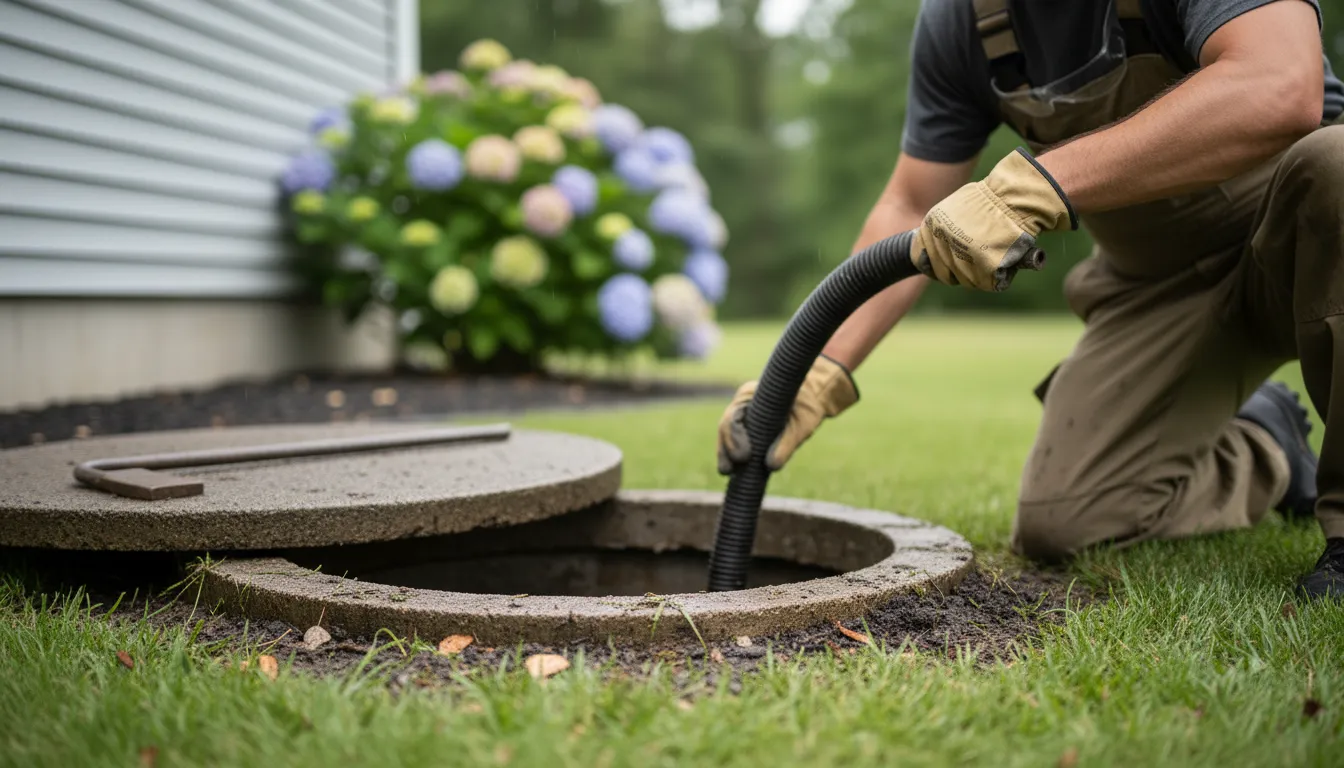
Find the Best Septic Tank Pumping Contractors for Your Business
No obligation • Fast responses • Nationwide coverage

Why you can trust Septic Spot
Septic Spot is a leading United States resource for understanding and comparing septic services. Our editors review providers using consistent criteria and verify key business details. Listings and scores are independent, and companies cannot pay to influence our content.
Search providers near you
Top Septic Tank Pumping Contractors in Decatur, Illinois Ranked
Maintaining a healthy septic system is a crucial responsibility for homeowners not connected to municipal sewer lines. Regular septic tank pumping is the most important preventative maintenance task you can perform to protect your property, your health, and the local environment. This guide provides Decatur residents with essential information on septic system maintenance, including recommended service intervals, local costs, and how to find qualified, licensed professionals for your pumping and inspection needs.
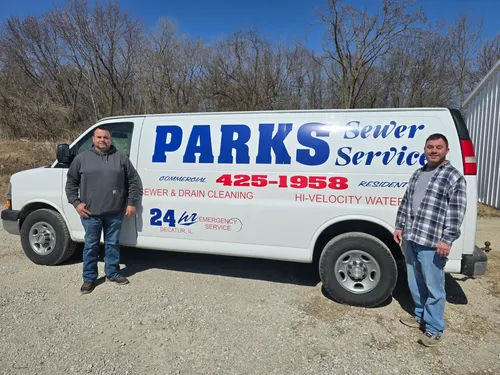
Parks Sewer Services Inc.
965 S Wyckles Rd, Decatur, IL 62522
Parks Sewer Services Inc. is a family-owned business based near Springfield, IL, specializing in septic tank pumping, inspection, and system repair. Founded in 2004 by two brothers, the company serves Decatur and the surrounding areas with a focus on sewer, septic, and drain cleaning services. They provide expertise in sewer line repair and installation, as well as septic tank and grease trap pumping. Parks Sewer Services emphasizes honest work and long-term customer relationships, with availability that includes after-hours service when needed.
Nolen Services, Inc.
401 Birch St, Stonington, IL 62567
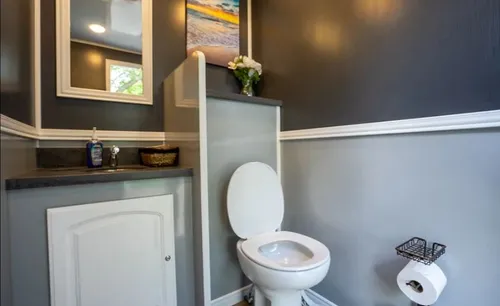
Nolen Services, Inc. is a family-owned company based near Springfield, IL, offering portable restroom rentals and septic tank pumping services. Serving Central Illinois since 1959, they provide a range of portable restrooms including luxury trailers suitable for events and construction sites. Their expertise covers all septic service needs, making them a comprehensive provider in the region.

Septic Specialist
4460 W Main St, Decatur, IL 62522
Septic Specialist is a full-service septic tank company based in Springfield, IL, serving homeowners and businesses throughout Central Illinois. They provide septic tank installation, repair, pumping, and inspection services, along with sewer line cleaning and video sewer inspections. Their capabilities include high-pressure water jetting to clear clogs and maintain system efficiency. The company also offers grease trap cleaning and maintenance plans to keep septic and sewer systems running smoothly year-round. Septic Specialist employs licensed installers and serves all brands of aerobic septic systems.
Why Regular Septic Maintenance is Essential in Decatur
Your septic system is an onsite wastewater treatment plant. When functioning correctly, it safely processes household water and waste. The tank itself holds solids, allowing them to decompose, while liquid effluent flows out to the drain field. Over time, non-decomposable solids (sludge) accumulate at the tank's bottom. If not removed through periodic pumping, this sludge can overflow into the drain field, causing costly and unsanitary failures. A failed system can lead to sewage backups in your home, contamination of groundwater, and the need for a complete system replacement-an expense far exceeding routine maintenance costs. For Decatur homeowners, adhering to a regular septic service schedule is the key to long-term system health and compliance with Alabama state regulations1 2.
Recommended Pumping Frequency for Decatur Homes
How often you need to schedule septic tank cleaning depends on several household factors. The general rule, supported by the U.S. Environmental Protection Agency and Alabama public health guidelines, is to pump your tank every 3 to 5 years.
However, this is an average. Your specific schedule may vary:
- Small Households/Low Water Usage: If you live alone or have a small family with conservative water habits, your system may function well on the longer end of the 5-year interval. However, an inspection is still recommended more frequently to assess sludge levels.
- Large Families/High Water Usage: More people means more wastewater and solids. Families of four or more, or those who use garbage disposals heavily, should consider a more frequent septic pumping schedule, potentially every 2 to 3 years, to prevent solids from overwhelming the system3.
- Other Factors: The size of your tank (common sizes are 750, 1000, and 1500 gallons), the volume of solids in your wastewater, and whether you use bacterial additives can also influence pumping frequency.
The most reliable method is not to guess but to have your tank inspected. Professionals can measure the sludge and scum layers to give you a precise recommendation for your next service.
Signs Your Decatur Septic Tank Needs Pumping
Don't wait for a disaster. Be proactive and watch for these warning signs that your tank is reaching capacity and requires immediate septic system servicing:
- Slow Drains: Sinks, showers, and toilets that drain slower than usual, especially if plunging or drain cleaners don't help.
- Unpleasant Odors: The smell of sewage in your home, yard, or near the drain field area.
- Gurgling Sounds: Strange gurgling noises coming from your plumbing pipes when you flush or run water.
- Soggy Lawn: Unusually lush, green, or soggy patches of grass over the drain field, especially when it hasn't rained.
- Sewage Backup: The most severe sign-wastewater or sewage backing up into household drains.
If you notice any of these issues, it's time to contact a local septic service provider for an assessment and likely a pump-out4.
Understanding Septic Service Costs in Decatur
The cost for septic tank pumping is an investment in your property's infrastructure. In Decatur, pricing is generally competitive and based on several key factors.
Average Cost: For a standard 1,000-gallon tank cleaning, the estimated average cost in Decatur is around $248, with typical prices ranging from $228 to $2685. Across Alabama, standard service can range from $290 to $700 depending on the variables below6.
Factors Influencing Price:
- Tank Size: Larger tanks (e.g., 1,500 gallons) hold more waste and cost more to pump than smaller (750-gallon) tanks.
- Tank Access: Is the tank lid easily accessible at ground level, or does it require excavation? Difficult access increases labor time and cost.
- Sludge Level: Tanks that are severely overdue for service will have more accumulated solids, which may require more time and handling.
- Additional Services: Most companies charge extra for initial inspection, locating the tank, or cleaning the effluent filter. A full inspection is often a separate but recommended service.
- Emergency Service: Requiring pumping on a weekend, holiday, or after normal business hours will incur a premium, with emergency rates potentially reaching $450 to $1,2007.
Always get a detailed estimate that breaks down the cost for pumping, inspection, and any potential additional fees before work begins.
Find the perfect septic tank pumping contractors for your needs
Get personalized recommendations and expert advice
The Importance of Hiring a Licensed Professional
In Alabama, septic system work is regulated to protect public health. It is state law that only licensed septic tank pumpers authorized by the Alabama Onsite Wastewater Board can perform pumping services8. Hiring a licensed professional ensures:
- Compliance: The work meets all state and local health department regulations.
- Proper Disposal: Waste is transported and disposed of at a licensed treatment facility, not dumped illegally.
- Expertise: The technician can identify potential problems during service, such as cracks, baffle issues, or a failing drain field.
- Documentation: You will receive a receipt for services, which may be required for property transfers or health department records.
Always verify a company's license before hiring them for septic maintenance or repair work.
Septic Inspections: A Critical Companion to Pumping
While pumping removes accumulated solids, a thorough inspection assesses the overall health of your entire system. Alabama guidelines recommend having your septic system inspected every 1 to 3 years 9. A professional inspection typically includes:
- Measuring sludge and scum layers to determine pumping frequency.
- Checking the tank's inlet and outlet baffles for blockages or damage.
- Inspecting and cleaning the effluent filter (if installed).
- Examining the drain field for signs of surfacing effluent or saturation.
- Looking for cracks or leaks in the tank itself.
Scheduling an inspection with your pumping service is a smart way to get a complete picture of your system's condition and catch small issues before they become expensive repairs10.
Protecting Your Drain Field
The drain field is the final, critical component where treated effluent is absorbed into the soil. You can extend its life by:
- Avoiding Heavy Loads: Never drive or park vehicles, or build structures like sheds or patios, over the drain field.
- Managing Water: Use water efficiently and space out laundry loads. Direct rainwater drainage systems (like roof gutters) away from the field.
- Being Mindful of Plantings: Only plant grass over the drain field. Tree and shrub roots can invade and clog the pipes.
- Keeping Chemicals Out: Avoid flushing harsh chemicals, paints, or non-biodegradable items (wipes, feminine products, dental floss) that can kill beneficial bacteria and clog the system.
Proper care of your drain field is essential, as repairing or replacing it is the most costly septic system project a homeowner can face11.
Local Resources for Decatur Homeowners
For specific questions about regulations, permits, or system complaints, Decatur residents can contact the Morgan County Health Department. They can provide guidance on local codes and ensure your system and the professional you hire are in compliance with all requirements.
Frequently asked questions
Sources
Footnotes
-
Septic Tank Maintenance | Alabama Department of Public ... - https://www.alabamapublichealth.gov/onsite/maintenance.html ↩
-
Frequent Questions on Septic Systems | US EPA - https://www.epa.gov/septic/frequent-questions-septic-systems ↩
-
Part 2: How Often Should You Pump Your Septic Tank? - https://www.alabamapumper.com/how-often-should-you-pump-your-septic-tank-factors-that-affect-it ↩
-
Septic System FAQs | Pumping, Inspections & Maintenance ... - https://northalseptic.com/faqs ↩
-
Decatur Septic Systems Costs & Prices - ProMatcher Cost Report - https://septic-systems.promatcher.com/cost/decatur-al-septic-systems-costs-prices.aspx ↩
-
Septic Pumping Cost by State: 2024 Complete Price Guide - https://wastedoor.com/article/septic-pumping-cost-by-state ↩
-
How Much Does It Cost to Pump a Septic Tank? [2026 Data] | Angi - https://www.angi.com/articles/how-much-does-septic-tank-pumping-cost.htm ↩
-
Sewage Tank Pumping Permit - Alabama Administrative Code - https://admincode.legislature.state.al.us/administrative-code/420-3-6-.23 ↩
-
Alabama Septic Tank Requirements - https://www.ntotank.com/blog/alabama-septic-tank-requirements ↩
-
Septic Systems | Department of Environmental Protection - https://www.pa.gov/agencies/dep/residents/my-water/septic-systems ↩
-
Septic Tanks - Preventative Routine Maintenance - https://des.sc.gov/permits-regulations/septic-tanks/homeowner-resources/septic-tanks-preventative-routine-maintenance ↩