Find the Best Septic Tank Pumping Contractors for Your Business
No obligation • Fast responses • Nationwide coverage

Why you can trust Septic Spot
Septic Spot is a leading United States resource for understanding and comparing septic services. Our editors review providers using consistent criteria and verify key business details. Listings and scores are independent, and companies cannot pay to influence our content.
Search providers near you
Top Septic Tank Pumping Contractors in Dearborn Heights, Michigan Ranked
Maintaining your septic system is a crucial responsibility for homeowners not connected to a municipal sewer line. Regular septic tank pumping is the most important service you can schedule to protect your property, your health, and your investment. This guide provides essential information for Dearborn Heights residents on how septic maintenance works, why it's necessary, and how to find qualified local professionals to handle your system's needs.
Bolton Septic
Ann Arbor, MI
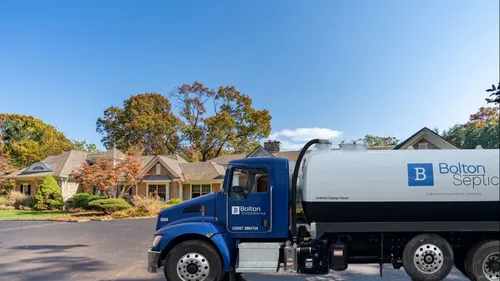
Bolton Septic is a full-service septic company serving Ann Arbor, MI, and surrounding counties including Oakland, Livingston, Wayne, and Washtenaw. Established in 1967, Bolton Septic offers septic tank pumping, inspection, and maintenance for residential and commercial properties. They emphasize preventative maintenance to extend the life of septic systems and provide licensed professionals to inspect and evaluate tanks during service. Bolton Septic is part of the Bolton Environmental Family, combining over 200 years of experience to support a wide range of septic needs.

Bob's Sanitation
27940 Wick Rd, Romulus, MI 48174
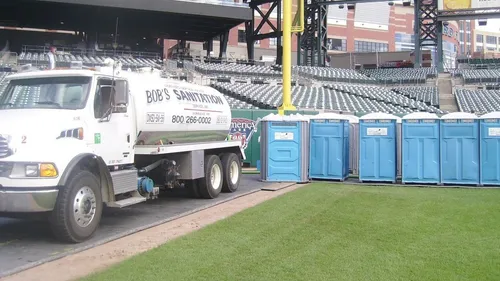
Bob's Sanitation, located near Detroit, MI, offers portable restroom rentals and septic services throughout Southeast Michigan. Their services cover a wide range of needs including construction sites, events, weddings, and emergency situations. They provide various types of portable toilets such as standard units, ADA-compliant restrooms, hand wash stations, and luxury restroom trailers. In addition to rentals, they offer septic tank pumping, tank locating, maintenance, and emergency septic services. Established in 1991, Bob's Sanitation has over 30 years of experience in the industry. They also provide emergency and after-hours portable restroom rentals to address urgent needs.
Al Pearson & Son Septic Tank Cleaning
46885 Ford Rd, Canton Township, MI 48187
Al Pearson & Son Septic Tank Cleaning is a family-owned business serving Ann Arbor, MI, and the surrounding Southeast Michigan area. They offer a full range of septic services including tank pumping, cleaning, system repairs, new installations, soil evaluations, and excavation. With over 70 years of experience since 1953, the company is licensed and certified to handle advanced septic system work for both residential and commercial clients. They emphasize clear communication and honest recommendations to ensure septic systems operate reliably. Emergency septic services are also available with often same-day pumping.
Scotty's Potties
27940 Wick Rd, Romulus, MI 48174
Scotty's Potties is a portable restroom rental and septic service provider serving Detroit, MI, and the surrounding Southeast Michigan area. Since 1991, they have offered a variety of portable toilet options including standard units, ADA-compliant restrooms, hand wash stations, and luxury restroom trailers for events, construction sites, weddings, and emergency situations. Their septic services include tank pumping, locating, maintenance, and emergency septic support. Scotty's Potties also provides after-hours and emergency portable restroom rentals to address unexpected plumbing issues promptly.
Understanding Your Septic System
A septic system is an on-site wastewater treatment structure, typically consisting of a large underground tank and a drain field. When you flush a toilet or drain a sink, the wastewater flows into the septic tank. Here, solids settle to the bottom as sludge, oils and grease float to the top as scum, and the partially treated liquid effluent flows out into the drain field for further filtration into the soil. The tank itself does not eliminate waste; it simply holds it. Over time, the sludge and scum layers accumulate, which is why periodic septic tank cleaning is non-negotiable. If these layers become too thick, they can flow into and clog the drain field, leading to system failure-a costly and disruptive problem.
Why Regular Pumping is Critical in Dearborn Heights
Ignoring your septic tank's maintenance schedule is a gamble with high stakes. A failing system can cause sewage to back up into your home, create foul odors, and lead to expensive environmental contamination on your property. In Michigan, where there is no uniform statewide septic code, the responsibility for proper maintenance falls squarely on the homeowner 1. Following best practices is your best defense.
For residents of Dearborn Heights in Wayne County, the standard recommendation is to have your septic tank serviced every 3 to 5 years. This frequency is not arbitrary; it's based on the average rate at which solids accumulate in a tank serving a typical household. Regular pumping removes the accumulated sludge and scum, preventing solids from escaping into the drain field and ensuring the entire system functions as designed. A well-maintained conventional septic system can have a lifespan of 25 to 40 years 2.
Warning Signs You Need Service Sooner
Don't wait for a disaster. Be proactive and watch for these red flags that indicate your tank may need immediate attention:
- Slow drains or sewage backups in toilets, showers, or sinks.
- Soggy ground or standing water over the drain field, especially when it hasn't rained.
- Unusually lush, green grass growing over the drain field, which can indicate a nutrient-rich sewage leak.
- Foul odors near the tank or drain field.
- Gurgling sounds coming from your plumbing.
If you notice any of these signs, contact a professional for an inspection and possible septic pumping right away.
What to Expect During a Pumping Service
Knowing what happens during a service call can help you prepare and ensure the job is done correctly.
1. Locating and Accessing the Tank: The service technician will first locate your tank and its manhole covers. It's helpful if you can provide a diagram of your system's layout if you have one. They will need clear, safe access to the main manhole cover for pumping.
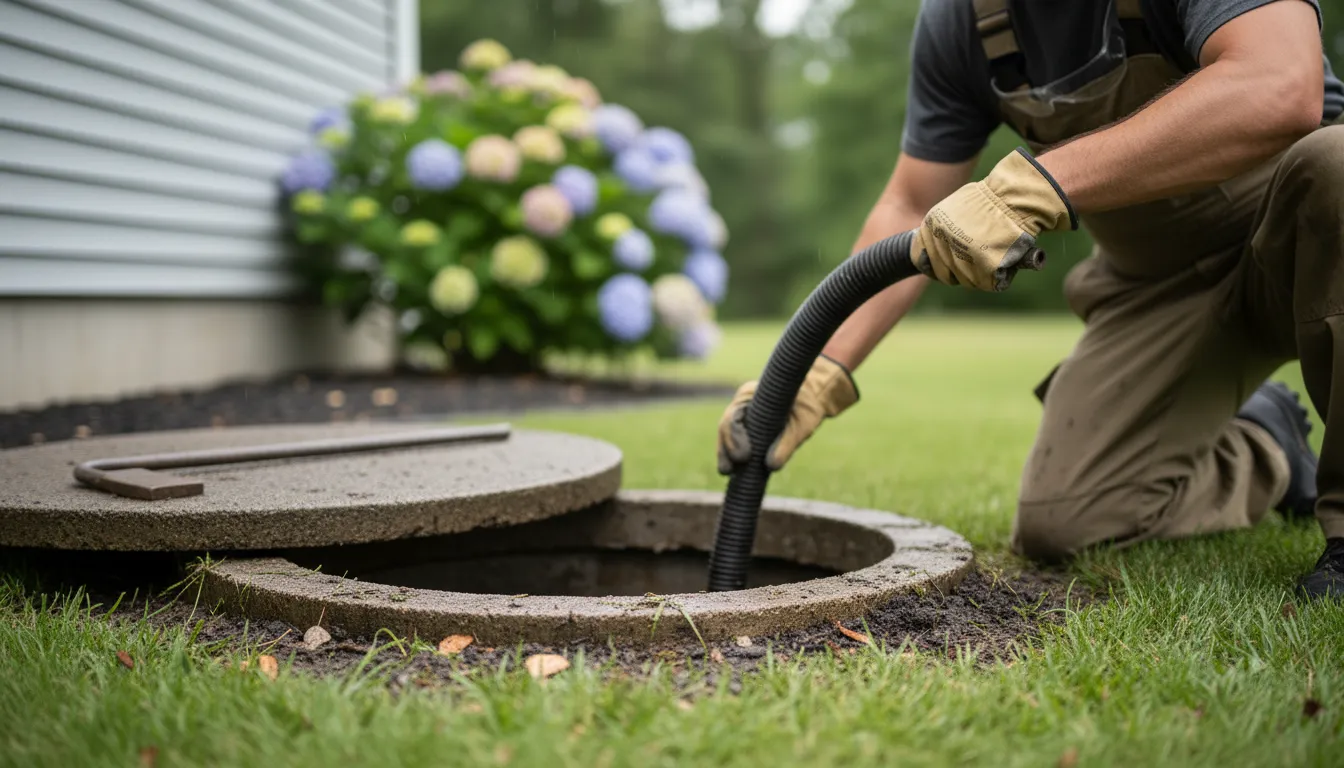
2. The Pumping Process: Using a large truck with a powerful vacuum hose, the technician will pump out all the contents of the tank-sludge, scum, and liquid. This material is then transported to a licensed treatment facility for proper disposal.
3. The Inspection: A thorough service includes a basic inspection. The technician will check the tank's inlet and outlet baffles (which are crucial for preventing solids from leaving the tank), look for any cracks or structural damage, and may measure the sludge and scum layers to determine your ideal pumping schedule. They should also note the condition of the manhole cover and risers.
4. Post-Service Guidance: After the job, a reputable provider will offer maintenance tips and recommend a date for your next service. They may also advise if they noticed any potential issues that need monitoring or repair.
Find the perfect septic tank pumping contractors for your needs
Get personalized recommendations and expert advice
Cost of Septic Tank Pumping in Dearborn Heights
The cost for septic tank emptying can vary based on several factors. For most Dearborn Heights homeowners with a standard 1,000 to 1,500-gallon residential tank, you can expect the average price to range from $300 to $500 3. The final cost depends on:
- Tank Size: Larger tanks cost more to pump.
- Tank Accessibility: If the tank is buried deep, hard to reach, or requires additional digging to access the lid, the price will increase.
- Condition of the Tank: If your tank is significantly overdue for service (e.g., 7+ years), the sludge may have hardened, requiring more labor and time, potentially adding $100 to $200 to the cost 4 5.
- Additional Services: Inspections, filter cleaning, or minor repairs will add to the total.
While it may be tempting to postpone service to save money, delaying can lead to drain field failure, where repair or replacement costs can easily reach tens of thousands of dollars-far exceeding a lifetime of routine pumping costs.
Proactive Maintenance Beyond Pumping
Pumping is the cornerstone of maintenance, but other habits extend your system's life.
Do:
- Conserve water to avoid hydraulically overloading the system.
- Divect downspouts and surface water away from the drain field.
- Keep accurate records of pumping, inspections, and repairs.
- Have the system inspected by a professional at least every 3 years, especially if it has mechanical parts like pumps 6 7.
Don't:
- Use a garbage disposal regularly, as it significantly increases the solid waste entering the tank.
- Flush anything besides human waste and toilet paper (no wipes, feminine products, grease, or chemicals).
- Drive or park vehicles over the tank or drain field, as the weight can crush pipes and compact soil.
- Plant trees or shrubs near the drain field, as roots can infiltrate and damage pipes 8.
Finding a Reliable Service Provider
When searching for a company to handle your septic system maintenance, look for licensed, insured professionals with strong local reputations in Wayne County. They should be familiar with local practices and be willing to explain the process, provide a clear written estimate, and answer all your questions. Always ask what is included in their pumping fee-does it cover a basic inspection? Getting multiple quotes is a wise approach to ensure fair pricing.
Frequently asked questions
Sources
Footnotes
-
State regulators want to track and fix failing septic systems - https://www.michiganpublic.org/environment-climate-change/2025-05-05/state-regulators-want-to-track-and-fix-failing-septic-systems ↩
-
FAQ: Septic systems - https://www.michigan.gov/egle/faqs/drinking-water/septic-systems ↩
-
Septic Tank Pumping Cost: Guide & Pricing in 2025 - Splash Plumbing - https://www.splashplumbing.com/how-much-does-it-cost-to-pump-septic-tank-understanding-pricing-and-factors-involved/ ↩
-
Septic Pumping Cost by State: 2024 Complete Price Guide - https://wastedoor.com/article/septic-pumping-cost-by-state ↩
-
How Often to Pump Your Septic Tank? 2025 Guide & Tips - https://www.splashplumbing.com/how-often-to-pump-septic-tank-for-a-family-of-4-essential-maintenance-guidelines/ ↩
-
Septic/Onsite Sewage - Wayne County, Michigan - https://www.waynecountymi.gov/Government/Departments/Health-Human-Veterans-Services/Public-Health/Environmental-Health/Environmental-Safety/SepticOnsite-Sewage ↩
-
Septic Systems: - Mid-Michigan District Health Department - https://www.mmdhd.org/wp-content/uploads/2018/09/Septic-Systems.pdf ↩
-
SepticSmart - https://www.mmdhd.org/environmental-services/septic/septic-smart/ ↩