Find the Best Septic Tank Pumping Contractors for Your Business
No obligation • Fast responses • Nationwide coverage

Why you can trust Septic Spot
Septic Spot is a leading United States resource for understanding and comparing septic services. Our editors review providers using consistent criteria and verify key business details. Listings and scores are independent, and companies cannot pay to influence our content.
Search providers near you
Top Septic Tank Pumping Contractors in Kentwood, Michigan Ranked
Maintaining a healthy septic system is a critical responsibility for homeowners not connected to municipal sewer lines. Septic tank pumping is the essential service of removing accumulated solids and sludge from your tank to prevent system failure, environmental contamination, and costly repairs. For residents of Kentwood and surrounding Kent County, understanding local guidelines and finding a reliable service provider is key to protecting your property and investment. This guide provides the information you need to schedule proper maintenance, understand local regulations, and connect with qualified professionals in your area.

Understanding Your Septic System and Why Pumping is Vital
A septic system is an on-site wastewater treatment structure, typically consisting of a tank and a drainfield (or leach field). All the water from your home's toilets, showers, sinks, and appliances flows into the septic tank. Here, solids settle to the bottom as sludge, oils and grease float to the top as scum, and the relatively clear liquid in the middle (effluent) exits into the drainfield for further treatment in the soil. Over time, the sludge and scum layers build up. If not removed through regular septic tank cleaning, these layers can become too thick, allowing solids to escape into the drainfield. This clogs the soil, causing sewage to back up into your home or pool on your lawn-a serious health hazard and an expensive problem to fix. Regular pumping is the most effective preventative maintenance you can perform.
Recommended Pumping Frequency for Kentwood Homes
How often you need to schedule septic system pumping depends on several household factors. General guidelines for the Kentwood area, in line with recommendations from local health departments, suggest a baseline of every 3 to 5 years for an average household. However, this is just a starting point. Your specific schedule can vary significantly.
- Household Size and Water Usage: The more people living in your home, the more wastewater is generated, filling the tank faster. A large family will need more frequent septic servicing than a single occupant.
- Tank Size: Smaller tanks (e.g., 750-1,000 gallons) fill with solids more quickly than larger tanks (1,500+ gallons). A large family with a small tank may need pumping as often as every 1 to 3 years 1 2.
- System Components: Systems that include electrical pumps, aerators, or advanced treatment components typically require annual inspections, and pumping may be needed more frequently as part of this maintenance 3.
- Garbage Disposal Use: Heavy use of a garbage disposal significantly increases the amount of solids entering the tank, accelerating sludge buildup and necessitating more frequent pumping.
The most accurate way to determine your needed pumping schedule is to have a professional evaluate the sludge and scum levels in your tank during an inspection. The Mid-Michigan District Health Department recommends having your septic system inspected every 1-2 years by a licensed professional 4. This inspection can tell you precisely when pumping is required, helping you avoid unnecessary service or, worse, system failure.
What to Expect During a Professional Pumping Service
A standard septic tank pumping service involves several key steps to ensure the job is done thoroughly and safely.
- Locating and Uncovering the Tank: The technician will locate your tank and risers (access ports). If the tank is buried, they will need to excavate to uncover the manhole cover.
- Inspecting the System: Before pumping, a reputable provider will often perform a basic inspection. They check inlet and outlet baffles (or tees) for damage, examine the effluent filter (if present), and look for signs of backflow or drainfield issues like ponding 5.
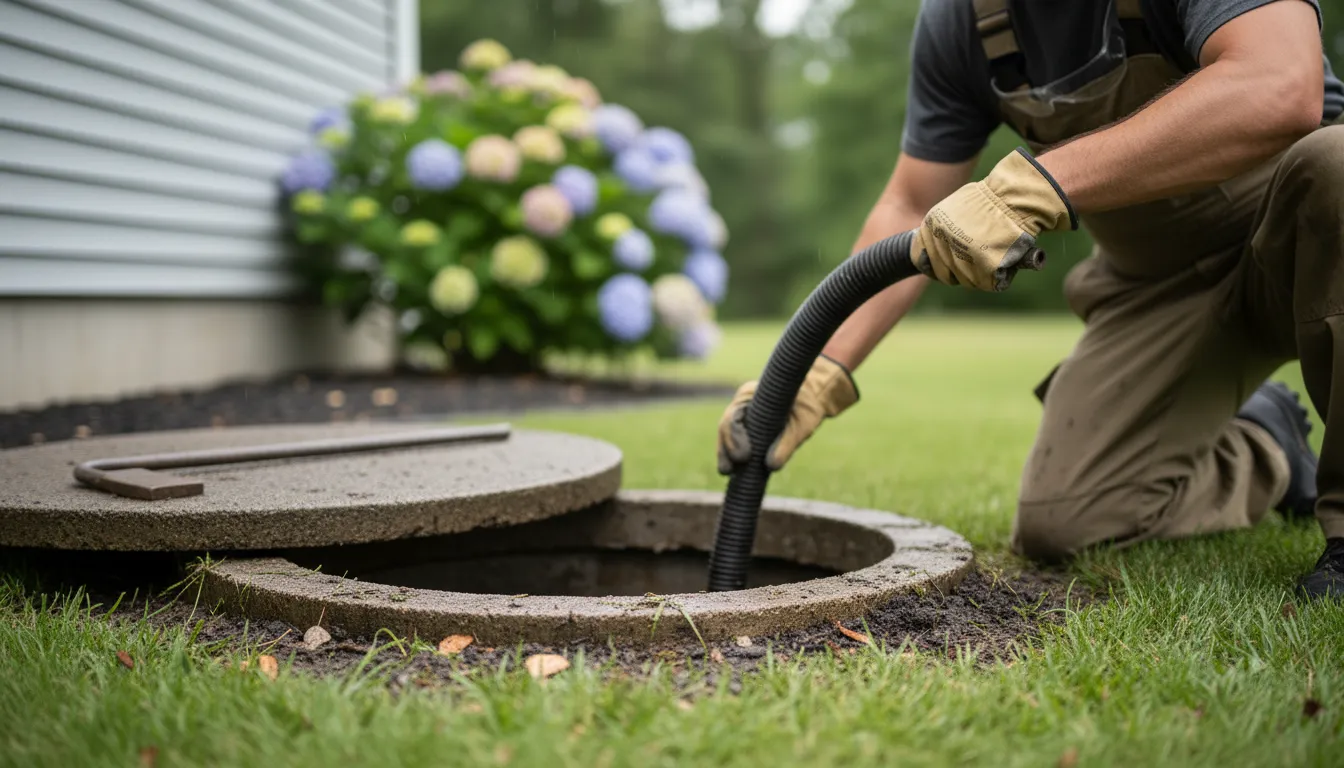
- Pumping the Tank: Using a large tank truck with a powerful vacuum hose, the technician will remove all the contents of the tank-sludge, scum, and liquid. They should pump from both compartments if it's a two-compartment tank.
- Final Check and Clean-up: After pumping, the technician may rinse the tank interior with a small amount of water to observe for leaks in the tank structure. They will replace the covers securely, clean the site, and properly dispose of the septage at a licensed treatment facility.
A thorough service is more than just a quick pump-out; it's an opportunity to catch small problems before they become major repairs.
Find the perfect septic tank pumping contractors for your needs
Get personalized recommendations and expert advice
Key Maintenance Tips to Extend Your System's Life
Pumping is essential, but what you do between services is equally important. Proper care can extend the time between pumpings and protect your drainfield.
- Conserve Water: Fix leaky faucets and toilets, install water-efficient fixtures, and stagger laundry loads throughout the week instead of doing many loads in one day. This prevents hydraulically overloading the system.
- Mind What You Flush: Your septic system is designed for human waste and toilet paper. Never flush wipes (even "flushable" ones), feminine hygiene products, dental floss, cotton swabs, cigarette butts, or cat litter. These materials do not break down and clog the system.
- Be Careful in the Kitchen: Avoid pouring cooking oils, grease, or fat down the drain. Minimize use of the garbage disposal, as it adds ground-up solids that contribute to sludge. Consider composting food scraps instead.
- Protect the Drainfield: Never park vehicles or build structures (like sheds or patios) over your drainfield. Keep roof drains, sump pumps, and other surface water away from the area. Plant only grass over the drainfield; tree and shrub roots can damage the pipes.
Following these simple practices, as emphasized by health departments like the Central Michigan District Health Department, will help ensure your system functions smoothly for decades 6.
Understanding Costs for Septic Pumping in Kentwood
The cost for septic tank pumping in Michigan typically ranges from $200 to $500, with many standard services in the Kentwood area falling between $260 and $4457 8 9. Several factors influence the final price:
- Tank Size and Volume: Pumping a 1,000-gallon tank generally costs less than pumping a 1,500-gallon tank due to the difference in labor and disposal volume10.
- Tank Accessibility: If the tank is buried deep, requires extensive digging to uncover, or is located far from where the truck can park, the job will take more time and labor, increasing the cost.
- Condition of the Tank: A tank that hasn't been pumped in many years may have extremely hardened sludge, requiring additional effort or even agitation to remove, which can add to the price.
- Additional Services: Costs will be higher if you bundle pumping with a full inspection, effluent filter cleaning, or minor repairs.
When requesting quotes, ask what is included. A slightly higher price from a licensed, reputable company that performs a thorough inspection and properly disposes of waste is often a better value than the cheapest "pump-and-run" service.
Local Regulations and Choosing a Licensed Provider
In Michigan, septic system installation, major repair, and replacement are regulated by local district health departments. For Kentwood and Kent County, this falls under District Health Department #10. Any contractor performing installation or replacement work must be licensed by this department. While pumping itself may not always require a specific license, hiring a provider familiar with local codes is crucial.
When selecting a septic pumping service, look for:
- Proof of Insurance: They should carry liability insurance.
- Proper Disposal Practices: Ensure they haul septage to a licensed wastewater treatment plant.
- Good Communication: They should be willing to explain what they are doing, show you what they find, and provide a detailed invoice.
- Local Reputation: Check online reviews and ask neighbors for recommendations.
A professional evaluation by a licensed contractor is also recommended before buying a home with a septic system or if you suspect any problems11 12.
Frequently asked questions
Sources
Footnotes
-
How Often to Pump a Septic Tank 2026 - Clear River Environmental - https://clearriverenvironmental.com/how-often-to-pump-a-septic-tank/ ↩
-
Optimizing Septic Tank Pumping Frequency for Households - https://www.unitedsewerservice.com/frequency-of-septic-tank-pumping-for-different-household-sizes/ ↩
-
How often to pump septic tank family of 2 - https://dillonseptic.com/how-often-to-pump-septic-tank-family-of-2/ ↩
-
Maintaining Your Septic System - https://www.snohd.org/682/Maintaining-Your-Septic-System ↩
-
Septic Inspection and How It Works | Buying a Home in Olympia WA - https://www.youtube.com/watch?v=ZvdpLybXV3c ↩
-
Sewage System Maintenance and Consultation | CMDHD - https://www.cmdhd.org/maintenance ↩
-
Septic Tank Pumping Frequency: Crucial Maintenance Guide - https://septic911.com/septic-tank-pumping-frequency/ ↩
-
Discover the Recommended Septic Tank Pumping Frequency: 5 Facts! - https://www.unitedsewerservice.com/recommended-septic-tank-pumping-frequency/ ↩
-
How Much Does Septic Tank Pumping Cost in 2025? - HomeAdvisor - https://www.homeadvisor.com/cost/plumbing/clean-septic-tank/ ↩
-
Avg Cost to Pump a Septic Tank - https://www.scorpionsepticservices.com/blog/understanding-the-average-cost-to-pump-a-septic-tank ↩
-
Septic Systems: - Mid-Michigan District Health Department - https://www.mmdhd.org/wp-content/uploads/2018/09/Septic-Systems.pdf ↩
-
Residential Well & Septic | District Health Department #10 - https://www.dhd10.org/environmental-health/well-septic/residential/ ↩