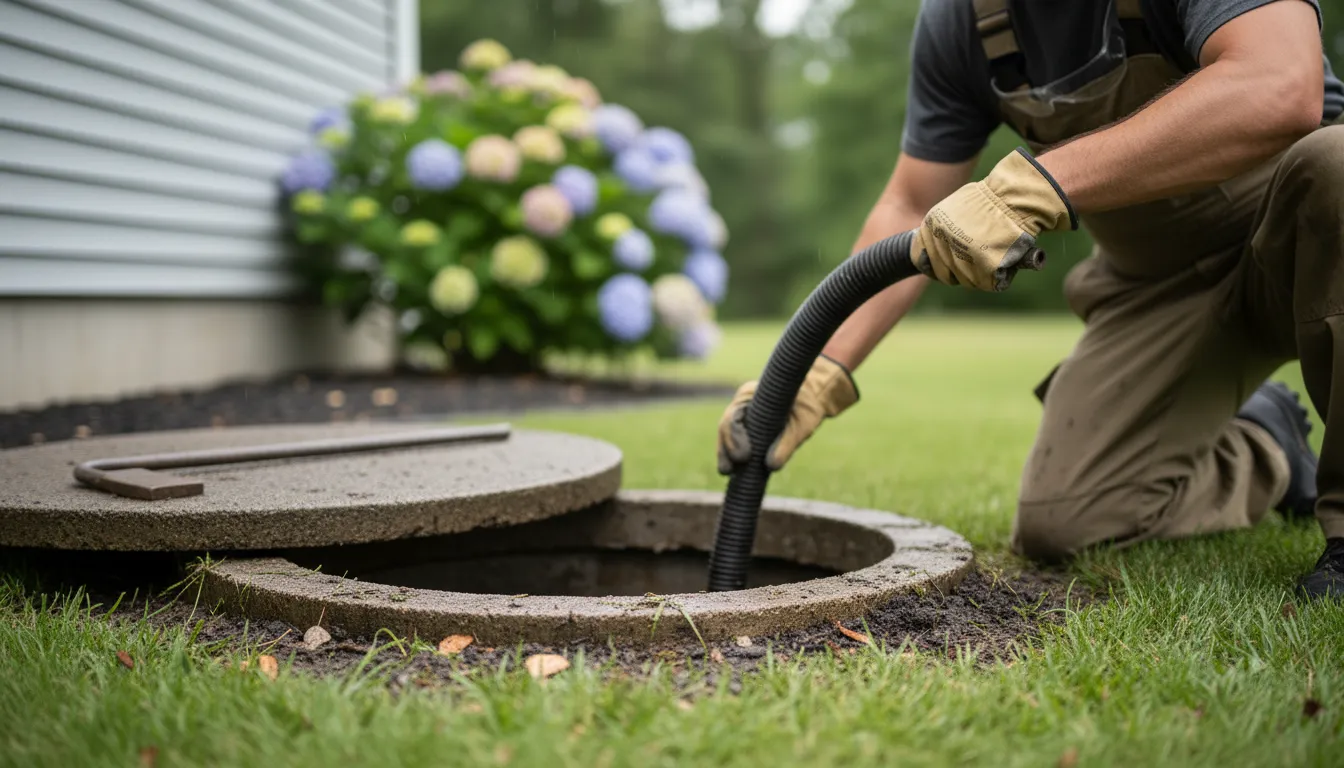
Find the Best Septic Tank Pumping Contractors for Your Business
No obligation • Fast responses • Nationwide coverage

Why you can trust Septic Spot
Septic Spot is a leading United States resource for understanding and comparing septic services. Our editors review providers using consistent criteria and verify key business details. Listings and scores are independent, and companies cannot pay to influence our content.
Search providers near you
Top Septic Tank Pumping Contractors in Warren, Michigan Ranked
Maintaining your septic system is a crucial responsibility for any homeowner not connected to a municipal sewer line. Proper septic tank pumping and maintenance protects your property from costly backups, safeguards your family's health, and preserves the local environment in Warren. This guide explains the essentials of septic system service, including recommended pumping schedules, key maintenance tips, and how to identify local professionals who can help keep your system functioning smoothly for years to come.

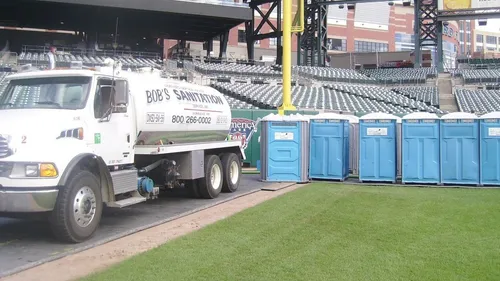
Bob's Sanitation
27940 Wick Rd, Romulus, MI 48174
Bob's Sanitation, located near Detroit, MI, offers portable restroom rentals and septic services throughout Southeast Michigan. Their services cover a wide range of needs including construction sites, events, weddings, and emergency situations. They provide various types of portable toilets such as standard units, ADA-compliant restrooms, hand wash stations, and luxury restroom trailers. In addition to rentals, they offer septic tank pumping, tank locating, maintenance, and emergency septic services. Established in 1991, Bob's Sanitation has over 30 years of experience in the industry. They also provide emergency and after-hours portable restroom rentals to address urgent needs.
Al Pearson & Son Septic Tank Cleaning
46885 Ford Rd, Canton Township, MI 48187
Al Pearson & Son Septic Tank Cleaning is a family-owned business serving Ann Arbor, MI, and the surrounding Southeast Michigan area. They offer a full range of septic services including tank pumping, cleaning, system repairs, new installations, soil evaluations, and excavation. With over 70 years of experience since 1953, the company is licensed and certified to handle advanced septic system work for both residential and commercial clients. They emphasize clear communication and honest recommendations to ensure septic systems operate reliably. Emergency septic services are also available with often same-day pumping.
Scotty's Potties
27940 Wick Rd, Romulus, MI 48174
Scotty's Potties is a portable restroom rental and septic service provider serving Detroit, MI, and the surrounding Southeast Michigan area. Since 1991, they have offered a variety of portable toilet options including standard units, ADA-compliant restrooms, hand wash stations, and luxury restroom trailers for events, construction sites, weddings, and emergency situations. Their septic services include tank pumping, locating, maintenance, and emergency septic support. Scotty's Potties also provides after-hours and emergency portable restroom rentals to address unexpected plumbing issues promptly.
Understanding Your Septic System in Warren
A septic system is an on-site wastewater treatment structure, commonly used in areas without centralized sewer systems. It consists of two main parts: the septic tank and the drain field (or leach field). All household wastewater flows into the underground septic tank, where solids settle to the bottom as sludge, and oils and grease float to the top as scum. The relatively clear liquid in the middle, called effluent, then exits the tank into the drain field, where it is filtered and treated by the soil.
Regular septic tank cleaning is not just about removing waste; it's a preventative measure that extends the life of your entire system. When a tank is not pumped on schedule, excessive sludge and scum can flow into the drain field, clogging the soil and causing system failure. This leads to sewage backups in the home or soggy, foul-smelling patches in the yard-problems that are expensive and disruptive to fix.
Recommended Pumping and Inspection Schedule
The cornerstone of septic care is adhering to a regular pumping schedule. In Warren, Michigan, septic tanks should be inspected every 1-3 years and pumped every 3-5 years to ensure proper operation 1. This standard interval can vary based on several household factors.
- Tank Size and Household Size: A family of four with a standard 1,000-gallon tank typically falls into the 3-5 year range. However, households with more than four people or those with a tank smaller than 1,000 gallons may require septic tank servicing every 2-3 years 2. Larger families simply produce more wastewater and solids, filling the tank faster.
- Overall Usage: The volume of water used daily significantly impacts pumping frequency. Homes with garbage disposals, hot tubs, or frequent laundry loads send more solids and water into the system, which can accelerate the accumulation of sludge.
- Professional Inspection: An inspection every 1-3 years by a qualified technician is essential. They will check sludge and scum levels, look for leaks or structural damage, and assess the condition of components like baffles and effluent filters 3. An inspection can often catch small issues before they become major, costly failures.
Find the perfect septic tank pumping contractors for your needs
Get personalized recommendations and expert advice
Key Maintenance Tips for Warren Homeowners
Beyond scheduling regular pumping, proactive maintenance is your best defense against system failure. Following these practices can optimize performance and potentially extend the time between necessary pump-outs.
Mind What Goes Down the Drain: Your septic system contains a community of bacteria that are essential for breaking down solid waste. Harsh chemicals can kill these bacteria, disrupting the treatment process.
- Avoid: Chemical drain cleaners, antibacterial soaps, excessive bleach, paint, pesticides, and medications.
- Dispose Properly: Never flush non-biodegradable items like feminine hygiene products, diapers, wipes (even "flushable" ones), cigarette butts, or coffee grounds. These materials do not break down and will quickly fill your tank.
Conserve Water: Reducing sudden surges of water into the tank allows effluent more time to settle and separate.
- Fix leaky faucets and toilets promptly.
- Spread out laundry loads throughout the week instead of doing many loads in one day.
- Consider installing high-efficiency toilets and showerheads.
Protect Your Drain Field: The drain field is where the final treatment of wastewater occurs. Compacting the soil or damaging the pipes here can cause system failure.
- Never park or drive heavy vehicles or equipment over the drain field.
- Plant only grass over and near the drain field; tree and shrub roots can clog and damage pipes.
- Direct rainwater drainage systems (like roof gutters) away from the drain field to prevent saturation.
Prepare for Michigan Winters: In Warren's climate, protecting your system from frost is important. A layer of grass or snow cover provides natural insulation. If you have concerns about freezing, a professional can advise on adding specific insulation over the tank and pipes 4.
Recognizing Signs You Need Service Sooner
Don't wait for a full-blown emergency. Be aware of these warning signs that your septic tank may need attention before your next scheduled pump:
- Slow Drains and Plumbing Backups: Gurgling pipes, slow-draining sinks and tubs, or sewage backups in the lowest drains of your home are classic early signs of a full tank or a blockage.
- Unpleasant Odors: Foul smells emanating from your drains, yard, or near the septic tank location indicate a problem with containment or ventilation.
- Lush, Wet Patches in the Yard: If the grass over your drain field becomes unusually bright green, spongy, or wet-especially when it hasn't rained-it often means untreated effluent is rising to the surface because the field is clogged 5.
- Standing Water: Muddy spots or standing water near the septic system components are a red flag that should be investigated immediately.
Understanding Costs and Local Resources
The cost for septic tank pumping in Michigan averages about $260 for a standard 1,000-gallon tank, with typical prices ranging from $239 to $281 6. This is a general estimate; your final cost can be influenced by tank accessibility, how long it's been since the last pump, and local market rates in Macomb County.
For specific, localized regulations and maintenance requirements, homeowners in Warren should consult the Macomb County Health Department. They are the authoritative source for permits, system standards, and any community-specific environmental protection rules 7.
Installing an effluent filter on the outlet baffle of your tank is a highly recommended upgrade. This filter catches solids that might otherwise escape into the drain field, providing an extra layer of protection and potentially reducing the frequency of needed pumpings 8.
Frequently asked questions
Sources
Footnotes
-
Septic Tank Pumping | Al Pearson & Son Michigan - https://alpearsonandson.net/services/septic-tank-pumping/ ↩
-
Frequent Questions on Septic Systems | US EPA - https://www.epa.gov/septic/frequent-questions-septic-systems ↩
-
Caring for Your Septic System | Mass.gov - https://www.mass.gov/guides/caring-for-your-septic-system ↩
-
SepticSmart - https://www.mmdhd.org/environmental-services/septic/septic-smart/ ↩
-
Proper Septic System Maintenance: - https://watershedcouncil.org/wp-content/uploads/2023/09/2022-Proper-Septic-Maintenance-For-Homeowners.pdf ↩
-
HOW OFTEN SHOULD YOU BE PUMPING YOUR SEPTIC TANK? - https://www.sandiegocounty.gov/content/dam/sdc/dpw/WATERSHED_PROTECTION_PROGRAM/WatershedRebates/SRP/PDF/Chart-Septic-Large.pdf ↩
-
How Often Should You Pump Your Home Septic Tank? - https://www.wrenvironmental.com/blog/2018/january/how-often-should-you-pump-your-home-septic-tank-/ ↩
-
Septic Tank Pumping Guide for Families - https://www.benjaminfranklinplumbing.com/league-city/blog/2025/march/how-often-to-pump-septic-tank-family-of-4-essential-maintenance-tips/ ↩