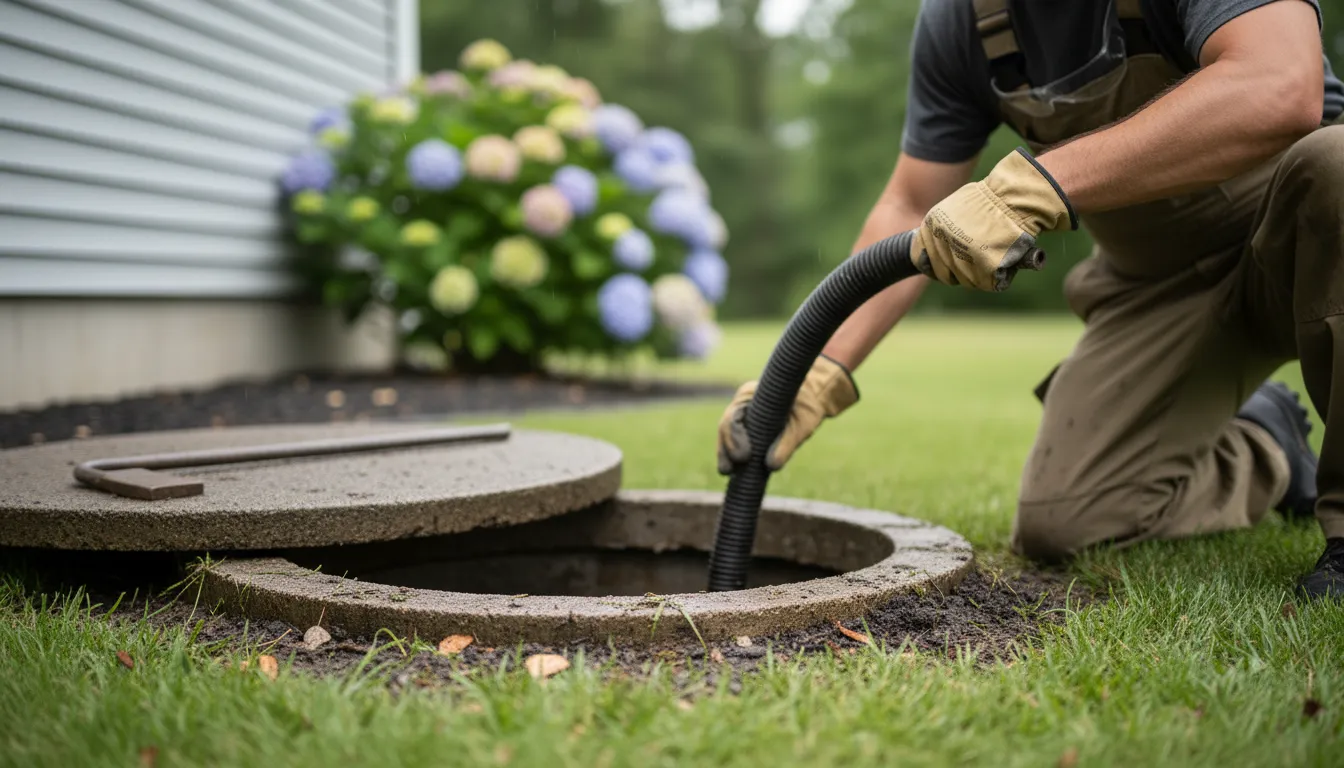
Find the Best Septic Tank Pumping Contractors for Your Business
No obligation • Fast responses • Nationwide coverage

Why you can trust Septic Spot
Septic Spot is a leading United States resource for understanding and comparing septic services. Our editors review providers using consistent criteria and verify key business details. Listings and scores are independent, and companies cannot pay to influence our content.
Search providers near you
Top Septic Tank Pumping Contractors in Chesterfield, Missouri Ranked
Maintaining your septic system is a crucial responsibility for homeowners in Chesterfield. Known officially as an Onsite Wastewater Treatment System (OWTS), this system is your property's private wastewater treatment plant, protecting both your home's value and the local environment. Regular septic tank pumping is the most essential maintenance task to prevent system failure, costly repairs, and environmental contamination. This guide will help you understand the local requirements, recommended service intervals, and best practices for finding a qualified professional to handle your septic service needs.

Understanding Your Septic System in St. Louis County
In Missouri, septic systems are regulated by the Missouri Department of Health and Senior Services (DHSS), though local county ordinances in St. Louis County may have additional requirements. For Chesterfield residents, this means your system's installation, inspection, and maintenance must meet state standards to ensure it operates safely and effectively. A properly functioning system treats household wastewater, separating solids from liquids and safely dispersing the treated effluent into the soil. Neglecting maintenance can lead to backups into your home, soggy and foul-smelling yards, and pollution of groundwater-a serious concern for the community and local waterways 1.
How Often Should You Schedule Septic Pumping?
The general rule of thumb is to have your septic tank pumped every 3 to 5 years. However, this is just a starting point. The exact frequency for your Chesterfield home depends on several key factors:
- Tank Size and Household Size: A smaller tank (e.g., 1,000 gallons) serving a large family will fill with solids much faster than a larger tank (e.g., 2,000 gallons) serving one or two people. A 1,000-gallon tank may need pumping every 2.5 years, while a 2,000-gallon tank might go 5 years between services 2.
- Water Usage Habits: High water consumption from many laundry loads, long showers, or frequent use of a garbage disposal significantly increases the load on your system, requiring more frequent pumping 3.
- Soil and System Age: The dense clay soils common in the Missouri region can slow drainage from the leach field, putting extra stress on the entire system 4. Older systems also typically require more vigilant maintenance.
The most reliable way to determine your schedule is through a professional inspection, which can assess sludge and scum levels inside the tank.
Missouri Regulations and Required Inspections
State regulations, effective since 1996, set the minimum standards for OWTS construction and operation 5. Beyond pumping, several inspection scenarios are important for Chesterfield homeowners:
- Routine Inspection: It is recommended to have your entire system professionally inspected every 1 to 3 years, even in years when pumping isn't needed 6. This can catch small issues before they become expensive disasters.
- Property Transfer: An inspection is often required during a home sale to ensure the septic system is functioning correctly and is in good repair.
- Advanced and Aerobic Systems: If your property has site limitations (like high groundwater or poor soil), you may have an "advanced" OWTS, which must be installed and serviced by a state-registered advanced installer 7. Homes with aerobic treatment systems have additional maintenance, such as checking and adding chlorine tablets every 2 to 4 weeks 8.
Investing in routine maintenance like pumping and inspections is far more cost-effective than the alternative. A full system replacement can easily exceed $10,000, while pumping is a fraction of that cost 9.
Find the perfect septic tank pumping contractors for your needs
Get personalized recommendations and expert advice
Best Practices for System Longevity
What you put down your drains directly impacts how often you'll need septic tank cleaning and how long your system will last. To protect your investment and avoid premature failures, never flush or pour the following items 10:
- "Flushable" Wipes & Cat Litter: These do not break down and will quickly clog your tank.
- Grease, Fats, and Cooking Oils: These solidify in pipes and the tank, causing blockages.
- Harsh Chemicals & Medications: Drain cleaners, paints, and pharmaceuticals can kill the essential bacteria in your tank that treat waste and can contaminate groundwater.
- Excessive Food Waste: While garbage disposals are convenient, they drastically increase the solid waste load in your tank. Composting is a better alternative.
Conserving water by fixing leaks, installing efficient fixtures, and spreading out laundry loads over the week can also significantly reduce strain on your system 11.
Choosing a Local Septic Service Provider
When it's time for septic system maintenance, selecting the right provider is key. Look for a licensed, insured professional with experience serving the Chesterfield and St. Louis County area. They should be familiar with local soil conditions and county regulations. A reputable service will not only pump the tank but also perform a basic inspection of the tank's components (baffles, lids, etc.) and note any signs of potential problems. Always ask for a detailed service report after the work is completed.
Signs Your System Needs Immediate Attention
Don't wait for your scheduled pumping if you notice any of these warning signs. Contact a septic professional right away if you experience:
- Slow drains or sewage backups in your home.
- Gurgling sounds in your plumbing.
- Unpleasant odors around the house or yard.
- Exceptionally green, spongy, or soggy grass over the drain field.
- Standing water or surfacing sewage in your yard.
Prompt action can often prevent a full system failure and limit repair costs.
Frequently asked questions
Sources
Footnotes
-
Septic Systems and Other Treatment Methods (Fact Sheet) - University of Missouri Extension ↩
-
How Often Should You Pump Your Septic Tank in Missouri? - Moore Septic Services ↩
-
How Often Should You Pump Your Septic Tank: 3 Factors Solved - Frasiers ↩
-
5 Factors for Septic Tank Pumping Frequency - WR Environmental ↩
-
Resources | Onsite Wastewater Treatment | Health & Senior Services ↩
-
An Onsite Wastewater Treatment System Owner's Manual - Missouri Department of Health and Senior Services ↩
-
7 Things That Will Damage Your Septic System - Russo Bros. & Co. ↩
-
How Often Can You Do Laundry Without Sacrificing Your Septic? - WR Environmental ↩