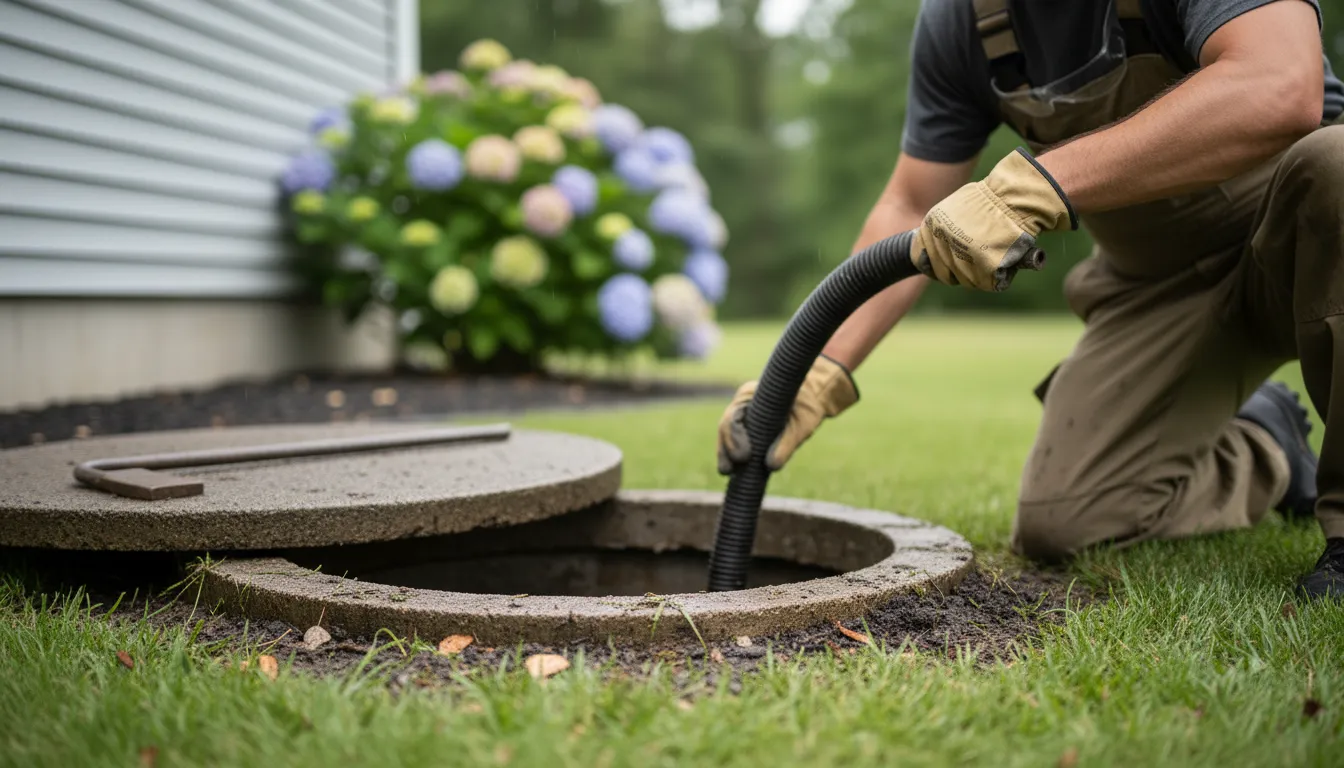
Find the Best Septic Tank Pumping Contractors for Your Business
No obligation • Fast responses • Nationwide coverage

Why you can trust Septic Spot
Septic Spot is a leading United States resource for understanding and comparing septic services. Our editors review providers using consistent criteria and verify key business details. Listings and scores are independent, and companies cannot pay to influence our content.
Search providers near you
Top Septic Tank Pumping Contractors in St Charles, Missouri Ranked
Maintaining a healthy septic system is a crucial responsibility for homeowners in St. Charles. Regular septic tank pumping is the cornerstone of this maintenance, preventing system failures, protecting your property value, and safeguarding public health. This guide explains why this service is essential, outlines local requirements, and helps you understand what to look for when choosing a professional to handle your septic cleaning or maintenance needs.

Why Regular Septic System Pumping is Non-Negotiable
A septic system is an on-site wastewater treatment plant for your home. When functioning correctly, it safely processes everything that goes down your drains. Solids settle in the tank, where bacteria begin to break them down, while liquid effluent flows out to the drain field. Over time, however, solids (sludge) accumulate. If not removed via pumping, these solids can overflow into the drain field, clogging the perforated pipes and causing a catastrophic-and very expensive-system failure. Regular septic tank cleaning prevents this by removing the sludge buildup before it can cause damage 1.
In St. Charles County, the consequences of neglect are not just financial. Local regulations mandate that septic systems be maintained to prevent surfacing sewage, which is a serious health code violation 2. A failed system can contaminate groundwater, create foul odors, and lead to sewage backing up into your home. Proactive pumping is a relatively small investment that protects your family's health, your property, and the local environment.
St. Charles County Guidelines and Requirements
Local authorities provide specific guidance to ensure systems function properly. St. Charles County officials recommend that septic tanks be inspected annually and pumped every two to three years to prevent solids from clogging the lateral lines. This is a more frequent schedule than the general national guideline of every 3-5 years, underscoring the importance of local conditions and regulations.
Notably, St. Charles County has a specific rule regarding maintenance contracts: a pumping and maintenance contract must be submitted to the county prior to a new tank installation3. This highlights the county's proactive approach to preventing system failures by ensuring homeowners have a service plan in place from the start. For the most current rules and a list of authorized inspectors, contacting the St. Charles County Environmental Health Department is always recommended.
How Often Should You Schedule Pumping?
While the county's 2-3 year recommendation is a strong baseline, the ideal pumping frequency for your home depends on several key factors:
- Household Size: More residents generate more wastewater and solid waste, filling the tank faster 4.
- Tank Size: A smaller tank will reach capacity more quickly than a larger one5 6.
- Total Water Usage: High water consumption from frequent laundry loads, long showers, or other sources accelerates the tank's fill rate.
- System Type: Alternative systems with pumps or mechanical components often require more frequent, sometimes annual, inspection and maintenance.
The U.S. Environmental Protection Agency (EPA) recommends inspecting standard systems every 1-3 years, which is when a professional can best advise if pumping is needed7 8. An inspection during pumping is the perfect time to check baffles, tees, and the overall tank structure for integrity.
Understanding Septic Service Costs in St. Charles
The cost for septic tank pumping in the St. Charles area typically ranges between $300 and $600+9 10. This variance depends on several factors:
- Tank Size and Accessibility: Larger tanks cost more to pump. Tanks that are buried deep or are difficult for trucks to access may incur additional charges.
- Service Provider: Rates can differ between companies.
- Scope of Service: A basic pump-out is standard, but many homeowners opt for a combined inspection and pumping service, which provides greater value and system insight.
While this is an essential maintenance expense, it pales in comparison to the cost of repairing or replacing a failed drain field, which can run into the tens of thousands of dollars. Viewing pumping as a protective investment is the most accurate perspective.
Find the perfect septic tank pumping contractors for your needs
Get personalized recommendations and expert advice
Protecting Your System Between Pumpings
Pumping is vital, but what you do between service visits greatly impacts your system's health and longevity. Proper care can extend the time between necessary pumpings and prevent emergencies.
What to Avoid Flushing: Your septic system relies on a delicate balance of bacteria. Flushing the wrong materials can kill these bacteria or create clogs. Never flush:
- Non-biodegradable items: "Flushable" wipes, feminine hygiene products, paper towels, and cigarette butts.
- Chemicals: Harsh drain cleaners, paints, solvents, pesticides, and excessive antibacterial soaps.
- Fats, Oils, and Grease (FOG): These solidify in pipes and the tank, causing major blockages.
- Food Waste: Especially from garbage disposals, which add excessive solids.
- Cat litter: Even the "flushable" kind is problematic for septic systems.
Water Conservation Tips: Reducing overall water use lessens the hydraulic load on your system, allowing more time for solids to settle and be treated.
- Fix leaky faucets and toilets promptly.
- Install water-efficient fixtures.
- Spread out laundry loads over the week instead of doing many loads in one day11.
Signs Your Septic Tank Needs Immediate Attention
Don't wait for a scheduled appointment if you notice any of these warning signs. They indicate your tank may be full or that a component is failing:
- Slow drains throughout the house, especially if plunging or drain cleaners don't help.
- Gurgling sounds coming from your plumbing.
- Sewage odors near the drain field or inside the home.
- Water pooling or unusually lush, green grass over the drain field area.
- Sewage backing up into household drains.
If you observe any of these issues, contact a septic professional immediately to assess the situation before it escalates into a full system failure.
Choosing a Septic Service Provider in St. Charles
Selecting a reliable company for your septic tank maintenance is important. Look for providers who:
- Are licensed and insured to work in St. Charles County.
- Offer clear, upfront pricing and can explain what their service includes.
- Perform a basic inspection during the pumping service.
- Can provide references or have positive local reviews.
- Dispose of waste at a licensed facility.
- Are familiar with local county codes and inspection requirements.
A trustworthy professional will be happy to answer your questions, explain what they are doing, and offer advice for maintaining your specific system type, whether it's a conventional system or an aerobic treatment unit (ATU) which requires different care12.
The Long-Term View: System Longevity
A well-maintained septic system can last 25-30 years or more. Regular pumping is the single most effective practice to achieve this lifespan. It's part of a holistic approach that includes mindful water use, careful waste disposal, and prompt repairs. By adhering to St. Charles County's guidelines and partnering with a qualified service provider, you ensure your system operates efficiently, protects your property value, and provides reliable service for decades.
Frequently asked questions
Sources
Footnotes
-
St. Charles County Government - https://u.realgeeks.media/schneidersells/agent_resources/Septic_Do's_and_Don'ts.pdf ↩
-
Smart Solutions for Optimizing Septic Tank Pumping Frequency - https://smartsepticpros.com/blog/septic-tank-pumping-frequency/ ↩
-
Sewage Tanks | St Charles County, MO - Official Website - https://www.sccmo.org/2179/Sewage-Tanks ↩
-
How Often Should You Get Your Septic Tank Pumped? - https://www.coastalsepticsolutions.com/blog/how-often-should-you-get-your-septic-tank-pumped ↩
-
Septic Systems | Department of Environmental Protection - https://www.pa.gov/agencies/dep/residents/my-water/septic-systems ↩
-
How Often to Pump Your Septic Tank? Splash Plumbing's Guide - https://www.splashplumbing.com/how-often-should-septic-tank-be-pumped-for-optimal-maintenance-and-longevity/ ↩
-
Frequent Questions on Septic Systems | US EPA - https://www.epa.gov/septic/frequent-questions-septic-systems ↩
-
How to Care for Your Septic System | US EPA - https://www.epa.gov/septic/how-care-your-septic-system ↩
-
Septic Systems and Other Treatment Methods (Fact Sheet) - https://extension.missouri.edu/publications/eqm104f ↩
-
7 Things That Will Damage Your Septic System - Russo Bros. & Co. - https://russobrosplumbing.com/blog/3-worst-put-septic-system/ ↩
-
How Often Can You Do Laundry Without Sacrificing Your Septic? - https://www.wrenvironmental.com/blog/2017/august/how-often-can-you-do-laundry-without-sacrificing/ ↩
-
Aerobic Septic Systems Maintenance Tips - https://jbarcseptic.com/aerobic-systems/ ↩