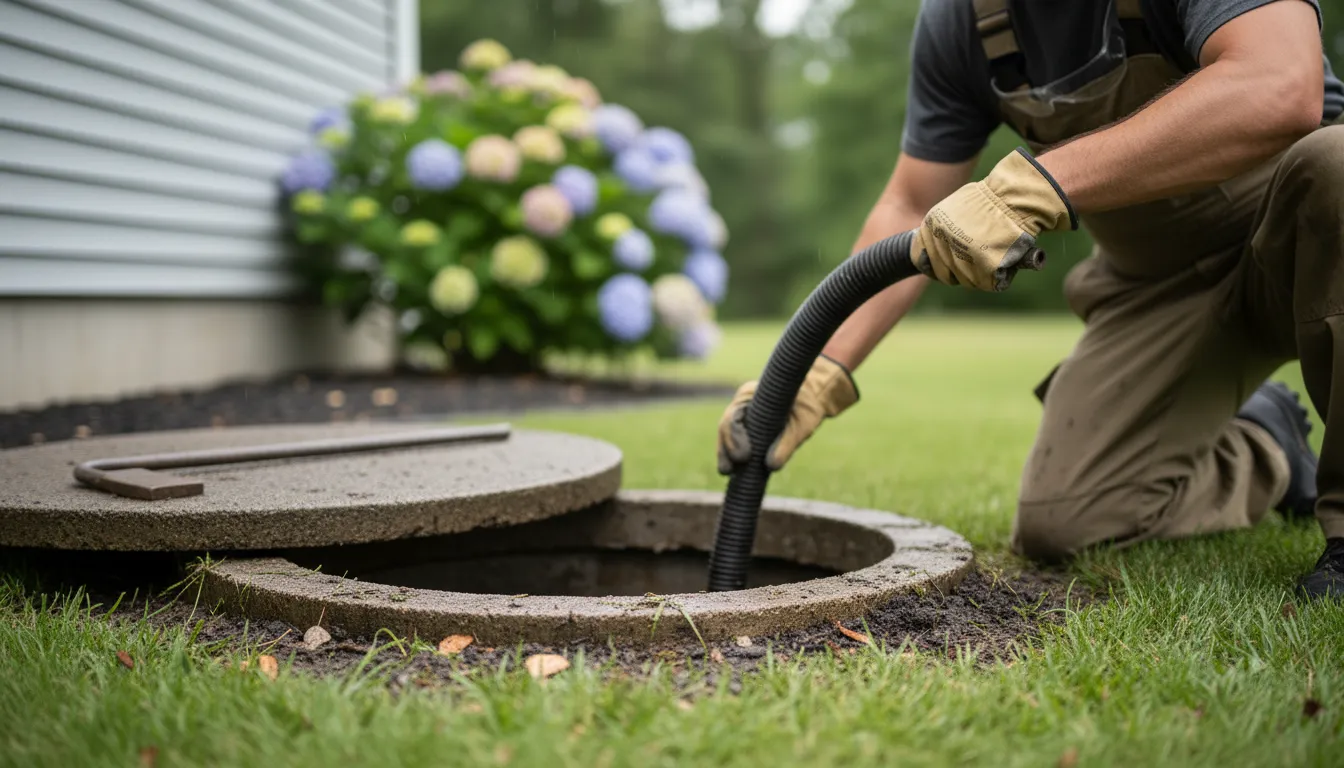
Find the Best Septic Tank Pumping Contractors for Your Business
No obligation • Fast responses • Nationwide coverage

Why you can trust Septic Spot
Septic Spot is a leading United States resource for understanding and comparing septic services. Our editors review providers using consistent criteria and verify key business details. Listings and scores are independent, and companies cannot pay to influence our content.
Search providers near you
Top Septic Tank Pumping Contractors in St Peters, Missouri Ranked
Maintaining your septic system is a crucial responsibility for any homeowner not connected to a municipal sewer line. Regular septic tank pumping is the most important preventative maintenance you can perform to avoid messy, costly, and environmentally hazardous system failures. This guide explains why this service matters for St. Peters residents, outlines local considerations, and helps you understand how to find qualified professionals to keep your system functioning smoothly for years to come.

Why Regular Septic Maintenance is Non-Negotiable
A septic system is an underground wastewater treatment structure, commonly used in rural and suburban areas like parts of St. Peters. When it works correctly, you hardly think about it. When it fails, it can lead to sewage backing up into your home, foul odors in your yard, and contamination of local groundwater. The core of system health is the septic tank, where solids settle and begin to decompose. Over time, however, sludge and scum accumulate. If these layers become too thick, they can flow into the drain field, clogging the soil and causing a complete system failure. Regular septic tank cleaning is the primary defense against this scenario, protecting your property, your health, and your investment.
Missouri state regulations, enforced by the Department of Health and Senior Services, require that onsite wastewater systems be managed to prevent the surfacing of sewage or odors. Proactive pumping is the most effective way to ensure compliance with these health standards and avoid potential violations.
How Often Should You Pump Your Septic Tank in St. Peters?
There is no one-size-fits-all answer, but a standard recommendation for a typical four-person household in St. Peters is to schedule septic tank pumping every 3 to 4 years. This interval is a starting point, but your specific situation may require more or less frequent service.
Your pumping schedule is primarily determined by two key factors:
- Tank Capacity: The size of your tank in gallons (common residential sizes are 1,000, 1,250, and 1,500 gallons).
- Household Size & Habits: The number of people living in the home and their water usage patterns.
Here's a more detailed breakdown to help you gauge your needs:
- Smaller Tanks or High Usage: If your tank is under 1,000 gallons or your household has more than four people, you may need to pump every 1 to 2 years 1.
- Average Households: For a standard 1,000-1,500 gallon tank with 3-4 residents, the 3-4 year guideline is appropriate 2.
- Large Tanks or Low Usage: A 2,000-gallon tank serving only 1-2 people may only require pumping every 5 to 10 years or more 3.
Frequent use of a garbage disposal significantly increases the amount of solids entering your tank, which can necessitate more frequent septic system servicing. The most reliable way to determine your optimal schedule is to have a professional inspect the sludge and scum levels in your tank.
Understanding the Cost of Septic Pumping Services
For homeowners in St. Peters, the average cost to pump a septic tank typically falls between $300 and $600 4 5. This is a general range, and your final price can vary based on several local factors:
- Tank Size: Larger tanks (e.g., 1,500 gallons) cost more to pump than smaller ones (e.g., 1,000 gallons) due to the increased volume of waste 6.
- Tank Accessibility: If the tank lids are buried and require excavation, or if the pump truck cannot get close to the tank site, labor costs will increase. Installing a riser (an access pipe to the surface) can make future service much easier and cheaper 7 8.
- Condition of the Tank: Excessive buildup of sludge and scum or the presence of non-biodegradable materials can increase the time and effort required for the job 9.
- Additional Services: Many companies offer bundled inspections or minor repairs. While this may increase the upfront cost, it provides greater value and system insight.
Find the perfect septic tank pumping contractors for your needs
Get personalized recommendations and expert advice
The Importance of Professional Inspection
While pumping removes accumulated waste, a thorough inspection is what diagnoses the health of your entire system. Missouri guidelines strongly recommend a professional inspection at least every three years 10. A good inspection during a pump-out will check for:
- Sludge and Scum Depth: Measuring these layers is the definitive way to know if you're on the right pumping schedule.
- Tank Integrity: Checking for cracks, leaks, or baffle failures in the tank itself.
- Component Function: Verifying that inlet and outlet pipes, tees, and filters (if present) are clear and functioning.
- Drain Field Indicators: Looking for signs of failure, such as overly saturated soil or surfacing effluent near the field.
Investing in an inspection can identify small problems before they become major, state-reportable malfunctions that require a full system repair or replacement 11 12.
Best Practices for Septic System Care
Proper daily use extends the life of your system and stretches the time between necessary pumpings. Follow these tips to be a responsible septic system owner in St. Peters:
- Conserve Water: Spread out laundry loads and fix leaky faucets to avoid overwhelming the tank's treatment capacity.
- Mind What You Flush: Only human waste and toilet paper should go down the drain. Never flush wipes (even "flushable" ones), feminine hygiene products, dental floss, or cooking grease.
- Use Garbage Disposals Sparingly: As noted, disposals add substantial solids. Compost food scraps when possible 13.
- Protect Your Drain Field: Never park vehicles or build structures over the drain field. Keep roof drains and sump pump discharges away from the area.
- Keep Records: Maintain a log of all pumping, inspections, and repairs. This is valuable for troubleshooting and is essential if you sell your home.
Finding a reliable local provider for septic tank maintenance is the first step toward a hassle-free system. Look for licensed, insured professionals with good local references who are willing to explain their findings and provide a detailed report after service.
Frequently asked questions
Sources
Footnotes
-
5 Factors for Septic Tank Pumping Frequency - https://www.wrenvironmental.com/blog/2025/november/5-key-factors-that-influence-septic-pumping-freq/ ↩
-
How Often Should You Pump Your Septic Tank: 3 Factors Solved - https://www.frasiers.com/blog/sewage-tank-pump-frequency/ ↩
-
HOW OFTEN SHOULD YOU BE PUMPING YOUR SEPTIC TANK? - https://www.sandiegocounty.gov/content/dam/sdc/dpw/WATERSHED_PROTECTION_PROGRAM/WatershedRebates/SRP/PDF/Chart-Septic-Large.pdf ↩
-
Understanding the Average Cost to Pump a Septic Tank - https://www.scorpionsepticservices.com/blog/understanding-the-average-cost-to-pump-a-septic-tank ↩
-
How Much Does It Cost to Pump a Septic Tank? - https://dillonseptic.com/how-much-does-it-cost-to-pump-a-septic-tank/ ↩
-
Septic Tank Pumping Cost Guide in the US - Bona Fide Plumbing - https://bonaplumbing.com/septic-tank-pumping-cost-guide-in-the-us/ ↩
-
Tank Cleaning - https://www.kingsepticservice.com/King_Tank%20Cleaning.html ↩
-
When to Pump Your Septic Tank - Roto-Rooter - https://www.rotorooter.com/blog/outdoor-plumbing/5-signs-its-time-to-call-your-septic-pumping-service/ ↩
-
Septic Tank Pumping Cost: Save with Our Tips - https://uneeksepticservices.com/septic-tank-pumping-cost-save-with-our-tips/ ↩
-
Septic Systems | Department of Environmental Protection - https://www.pa.gov/agencies/dep/residents/my-water/septic-systems ↩
-
An Onsite Wastewater Treatment System Owner's Manual - https://health.mo.gov/living/environment/onsite/pdf/SystemOwnersManual.pdf ↩
-
Septic Tank Pumping Frequency Guidelines - https://www.beckertwpsherburnecomn.gov/sites/g/files/vyhlif16406/files/media/services/file/426/septic_tank_pumping_frequency_guidelines.pdf ↩
-
How Often to Pump Your Septic Tank? Splash Plumbing's Guide - https://www.splashplumbing.com/how-often-should-septic-tank-be-pumped-for-optimal-maintenance-and-longevity/ ↩