Find the Best Septic Tank Pumping Contractors for Your Business
No obligation • Fast responses • Nationwide coverage

Why you can trust Septic Spot
Septic Spot is a leading United States resource for understanding and comparing septic services. Our editors review providers using consistent criteria and verify key business details. Listings and scores are independent, and companies cannot pay to influence our content.
Search providers near you
Top Septic Tank Pumping Contractors in Buffalo, New York Ranked
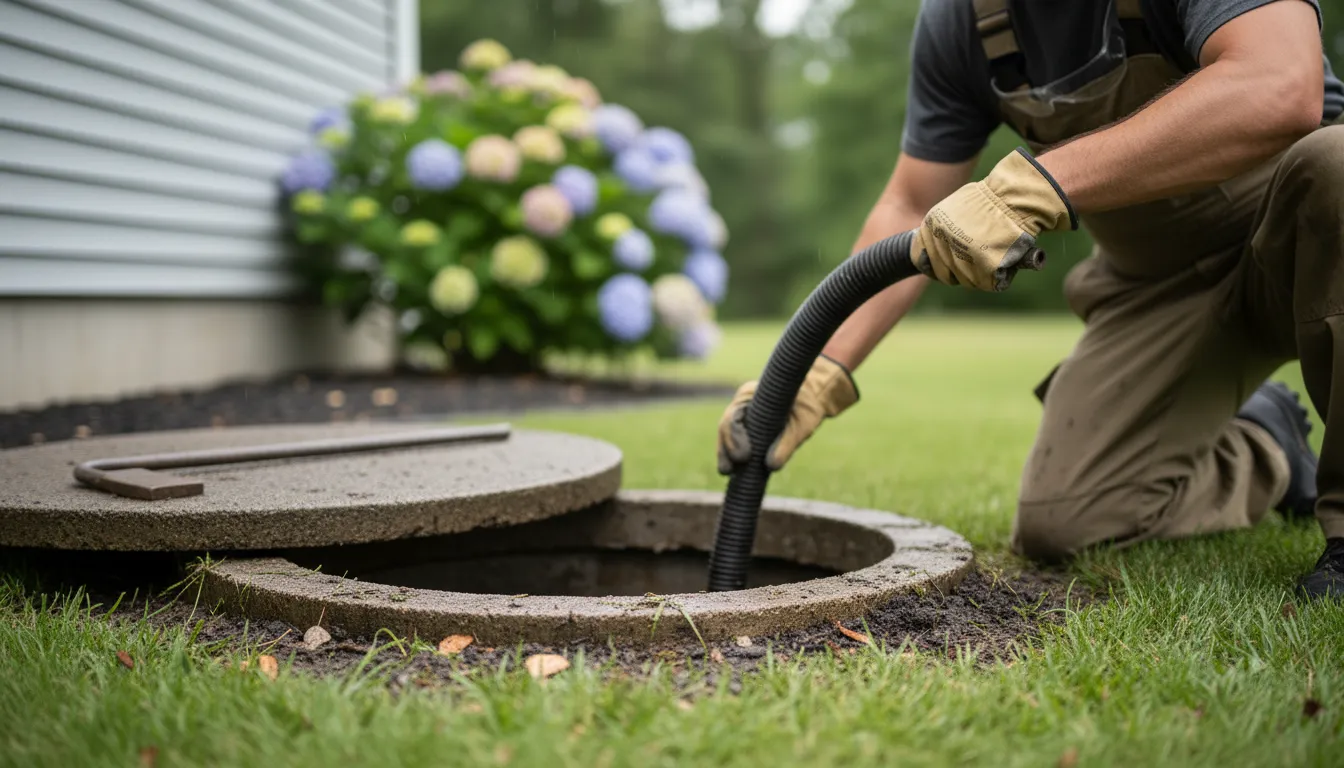
Maintaining your septic system is a crucial, yet often overlooked, responsibility of homeownership in Buffalo. Septic tank pumping, also known as septic cleaning or tank emptying, is the essential process of removing accumulated solids from your tank to prevent costly backups, environmental contamination, and system failure. This guide explains why regular maintenance matters for Western New York homes, outlines local recommendations and costs, and helps you understand how to find qualified, local professionals to keep your system functioning properly for years to come.
Understanding Your Septic System in Western New York
A septic system is an on-site wastewater treatment plant for properties not connected to a municipal sewer line. It consists of a large underground tank and a soil absorption field, often called a leach field or drainfield. Wastewater from your home flows into the tank, where solids settle to the bottom as "sludge" and fats float to the top as "scum." The liquid effluent in the middle layer then flows out to the leach field, where it is naturally filtered by the soil. Over time, the sludge and scum layers build up. If they aren't removed via professional septic pumping, they can overflow into the leach field, causing clogs, sewage backups into your home, and groundwater pollution.
For residents of Erie County, this is particularly important due to the region's proximity to the Great Lakes and local waterways. A failing system can contaminate drinking water sources and harm delicate ecosystems. Proactive maintenance through regular septic tank cleaning is the most effective way to protect your property value, your family's health, and the local environment.
How Often Should You Pump Your Septic Tank in Buffalo?
There is no one-size-fits-all answer, but local health authorities and industry professionals provide clear guidelines. For most households in Buffalo and Erie County, septic tanks should be pumped every 3 to 5 years. However, several factors can necessitate more frequent service, shortening that interval to every 2 or 3 years.
Key factors influencing pumping frequency include:
- Household Size and Water Usage: More people in a home generate more wastewater and solids, filling the tank faster.
- Tank Size: Older homes may have smaller tanks (e.g., 500-750 gallons) that require more frequent pumping than modern 1,000- or 1,500-gallon tanks.
- Garbage Disposal Use: Using a garbage disposal significantly increases the amount of solids entering the tank, accelerating sludge buildup.
- Volume of Solids: The type of waste matters. Excessive use of toilet paper, "flushable" wipes (which are not septic-safe), and non-biodegradable materials will fill the tank quicker.
The most reliable method to determine need is a professional inspection. A licensed technician can measure the sludge and scum layers through access ports. A common rule is that pumping is needed when the scum layer is within 3 inches of the outlet baffle or the sludge layer is within 12 inches of it. Scheduling an inspection every 3 years is a wise practice, even if pumping isn't immediately required.
Local Regulations and Inspections in Erie County
Unlike some states, New York does not have a universal state law mandating regular septic inspections for all homeowners 1. However, regulation often occurs at the county or township level. In Erie County, inspections by a licensed professional are strongly advised, and they may be legally required in specific situations, such as during a property transfer or if the system is under a maintenance agreement.
It is always recommended to check with the Erie County Department of Health for the most current local rules that apply to your property. Proactive inspections can identify minor issues like a broken baffle or early signs of drainfield failure before they become major, expensive repairs.
Find the perfect septic tank pumping contractors for your needs
Get personalized recommendations and expert advice
What Does Septic Tank Pumping Cost in Buffalo?
The cost for septic tank pumping in Buffalo typically ranges from $280 to $520, with an average around $400. This price can vary based on several conditions:
- Tank Size and Accessibility: Pumping a standard 1,000-gallon tank is standard. Larger tanks (1,500 gallons) cost more. If the tank's access lids are buried deep or obstructed, additional labor charges may apply.
- Condition of the Tank: A severely overdue tank (e.g., one not pumped for 7+ years) may require extra labor for backflushing or dealing with hardened solids, potentially adding $100 to $200 to the total bill.
- Additional Services: Most companies charge extra for initial lid excavation, inspection of the baffles and drainfield, or minor repairs. Always ask for a detailed quote.
While prices as low as $190 or as high as $890 are possible in the broader region for complex situations, the $280-$520 range is a reliable benchmark for standard residential pumping service in Erie County 2 3.
Best Practices for Septic System Care
Pumping is the cornerstone of maintenance, but daily habits determine how well your system functions between service visits.
Do:
- Conserve Water: Fix leaky faucets and toilets, and spread out laundry loads to avoid overwhelming the system.
- Use Septic-Safe Products: Choose toilet paper, cleaners, and detergents labeled as septic-safe.
- Keep Records: Maintain a log of all pumping, inspections, and repairs.
- Map Your System: Know the location of your tank and drainfield. Keep a sketch for future reference and to avoid damaging it during landscaping or construction 4 5.
- Divert Rainwater: Ensure roof drains and sump pumps discharge away from the drainfield to prevent saturation.
Don't:
- Drive or Park on the Drainfield: This compacts the soil, crushing the pipes and destroying its ability to absorb and treat effluent 6.
- Flush Non-Biodegradables: Never flush wipes (even "flushable" ones), feminine hygiene products, dental floss, diapers, or cigarette butts.
- Pour Harsh Chemicals Down the Drain: Avoid bleach, paint, pesticides, and motor oil, which can kill the beneficial bacteria in your tank.
- Use Septic Tank Additives: The New York State Department of Health advises against using commercial chemical or biological additives, as they are not a substitute for pumping and can sometimes harm the system 7 8.
- Plant Trees Near the System: Root intrusion is a leading cause of pipe and tank damage.
Signs Your Septic Tank Needs Immediate Attention
Don't wait for a scheduled inspection if you notice these warning signs:
- Slow Drains: Sinks, showers, and toilets that drain slowly, especially if gurgling sounds are present.
- Sewage Backups: Wastewater backing up into household drains.
- Bad Odors: Foul smells around the tank, drainfield, or inside the house.
- Lush, Green Grass: Spongy ground or unusually green and lush grass over the drainfield, indicating effluent is surfacing.
- Standing Water: Puddles or soggy soil in the yard near the septic system components.
If you observe any of these, contact a septic service professional immediately to assess the situation and prevent further damage or health hazards.
Choosing a Service Provider in Buffalo
When selecting a company for septic tank cleaning or inspection, look for licensed, insured, and locally experienced professionals. They should be familiar with Erie County's soil conditions and common system types. Ask about their process: a thorough service includes pumping all solids, inspecting tank components (baffles, tees, walls for cracks), and optionally inspecting the drainfield distribution box. Always request a written report detailing the work performed and the measured sludge/scum levels, which will help you plan for your next service.
Frequently asked questions
Sources
Footnotes
-
New York needs stronger laws to regulate septic systems - https://www.protectadks.org/new-york-needs-stronger-laws-to-regulate-septic-systems/ ↩
-
Septic Pumping in Buffalo, NY - Costs 02 / 2026 - Homeyou - https://www.homeyou.com/ny/septic-pumping-buffalo-costs ↩
-
Septic Pumping Cost by State: 2024 Complete Price Guide - https://wastedoor.com/article/septic-pumping-cost-by-state ↩
-
Septic and Onsite Wastewater Systems | Environmental Health - https://www3.erie.gov/envhealth/septic-and-onsite-wastewater-systems ↩
-
The Do's and Don'ts of Septic Tank Cleaning in Erie County, NY - https://mackenservices.com/2019/04/the-dos-and-donts-of-septic-tank-cleaning-in-erie-county-ny/ ↩
-
Septic Tank Pumping Frequency: How Often Should I Have My Tank Cleaned Out? - https://www.johnklineseptic.com/septic-tank-pumping-frequency-how-often-should-i-have-my-tank-cleaned-out ↩
-
Septic System - New York State Department of Health - https://www.health.ny.gov/publications/3208.pdf ↩
-
Septic System Operation and Maintenance - https://www.health.ny.gov/publications/3208/ ↩