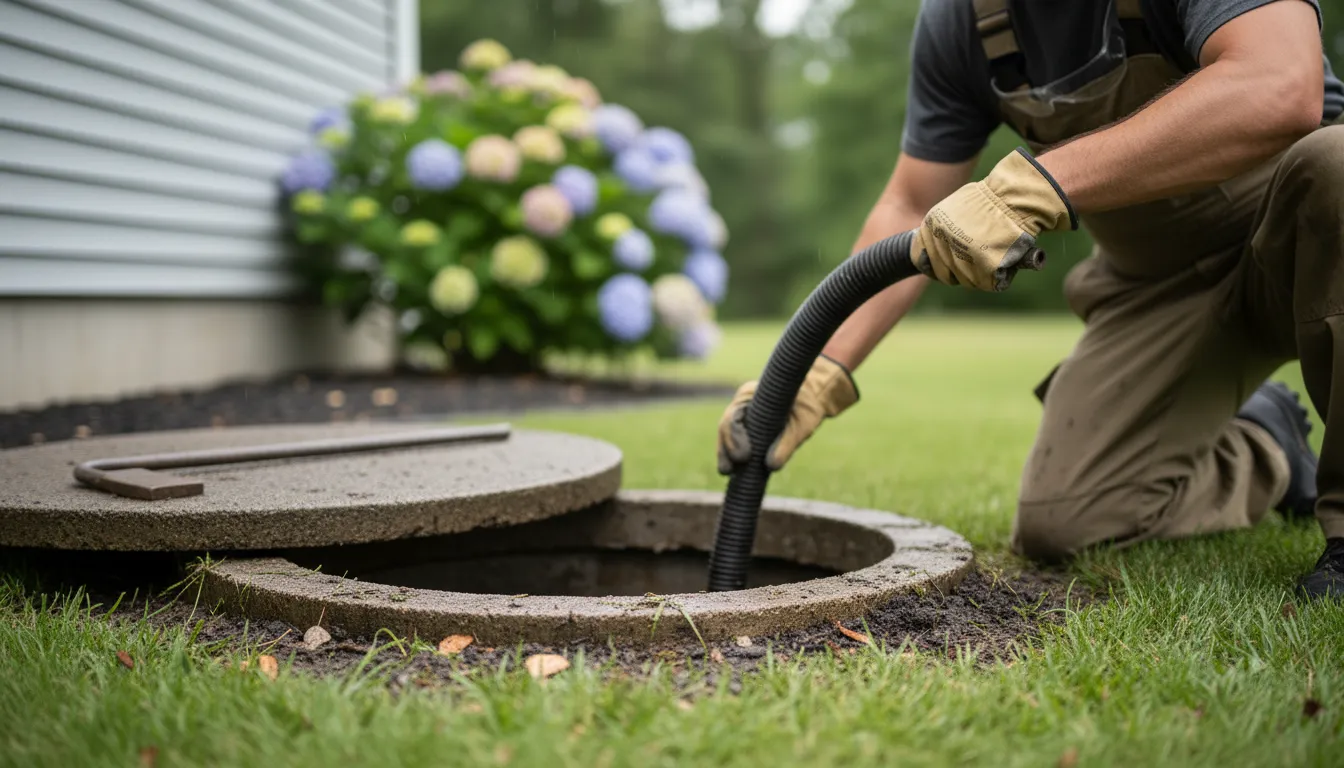
Find the Best Septic Tank Pumping Contractors for Your Business
No obligation • Fast responses • Nationwide coverage

Why you can trust Septic Spot
Septic Spot is a leading United States resource for understanding and comparing septic services. Our editors review providers using consistent criteria and verify key business details. Listings and scores are independent, and companies cannot pay to influence our content.
Search providers near you
Top Septic Tank Pumping Contractors in Rochester, New York Ranked
Maintaining a healthy septic system is a crucial, yet often overlooked, responsibility for homeowners in Rochester and Monroe County. Regular septic tank pumping is the cornerstone of this maintenance, preventing costly backups, environmental contamination, and complete system failure. This guide explains why this service is essential, how often you likely need it, what to expect during the process, and how to find qualified local professionals to handle the job.
Bianca Excavating
1548 Winterberry Ct, Walworth, NY 14568
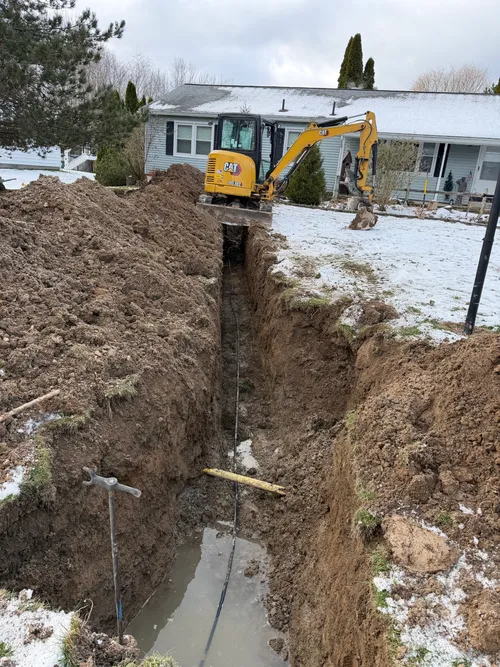
Bianca Excavating is a licensed and insured septic service provider based in Rochester, NY. The company offers a range of services including septic tank pumping, inspections, repairs, new system installations, and drain field replacements. Using advanced inspection tools and modern excavation equipment, Bianca Excavating works to diagnose and resolve septic system issues efficiently while minimizing disruption to properties. The business has a long-standing family-owned history serving Ontario and surrounding areas, providing reliable septic solutions tailored to residential and commercial needs. They also offer emergency services when needed.
Chamberlain Septic & Sewer
1835 Ridge Rd Jct, Webster, NY 14580
Chamberlain Septic & Sewer is a family-owned company serving Rochester, NY, and surrounding counties including Monroe, Wayne, and Ontario. With over 57 years of experience, they provide residential and commercial septic system services such as septic tank pumping, inspections, installations, and repairs. Their capabilities include hydro-flushing, power-snaking, and excavation work to address septic and sewer system needs. Founded in the 1960s from a dairy farm drainage operation, the company has grown into a full-service septic and sewer contractor.
Why Septic System Maintenance Matters in Rochester
A septic system is an on-site wastewater treatment plant for your home. When functioning correctly, it safely processes everything that goes down your drains. Solids settle in the tank, where bacteria break them down, while liquid effluent flows out to a drain field in your yard for further filtration. Over time, however, solids (sludge) accumulate faster than they decompose. If not removed through regular septic tank cleaning, this sludge can overflow into the drain field, clogging it irreparably. A failed drain field leads to sewage backing up into your home or surfacing in your yard-a hazardous and expensive problem to fix. In a region like Rochester with its varied soil types and weather, a well-maintained system is your best defense.
How Often Should You Pump Your Septic Tank?
The most common recommendation for Rochester-area homes is to schedule septic tank service every 3 to 5 years. However, this is a general guideline. Several factors specific to your household can necessitate more frequent septic tank emptying:
- Household Size: More people generate more wastewater and solid waste, filling the tank faster.
- Tank Size: Older homes may have smaller tanks that require more frequent attention.
- Usage Habits: Using a garbage disposal significantly increases the volume of solids. Frequent laundry loads or long showers add more water volume.
- Waste Type: Flushing non-biodegradable items (wipes, feminine products, etc.) or pouring grease and harsh chemicals down the drain can accelerate sludge buildup and harm the bacterial ecosystem.
For smaller tanks or larger families, pumping every 2-3 years may be necessary. The only way to know for sure is through regular inspections.
The Importance of Professional Inspections
Scheduling an inspection is a proactive step that can save you thousands. Experts recommend having your entire septic system inspected every 1-2 years, or at a minimum, every time the tank is pumped 1. A thorough inspection by a licensed professional involves:
- Measuring Sludge and Scum Levels: This determines if pumping is immediately needed.
- Checking the Effluent Filter: This component prevents solids from leaving the tank and is often cleaned during service.
- Examining the Drain Field: Looking for signs of failure like soggy soil, lush grass patches, or surfacing sewage.
- Inspecting All Components: Including the tank, pipes, and distribution box for cracks or damage.
These inspections provide peace of mind and create a maintenance history for your property.
What to Expect: The Septic Pumping Process
When you hire a professional for septic tank pumping or septic tank cleaning, here's a typical process:
- Locating and Accessing the Tank: The crew will find your tank's access lids, which may require some digging.
- Pumping Out Contents: Using a large vacuum truck, all liquid and solid waste is pumped from the tank.
- Inspecting the Tank: Once empty, the technician can inspect the tank's interior for cracks, baffle integrity, and the condition of the effluent filter.
- Cleaning the Filter: If your system has one, the filter will be rinsed and reinstalled.
- System Check: They may run water to check flow from the house to the tank and ensure the drain field is accepting effluent.
- Closing Up: The access lids are securely replaced, and any disturbed soil is leveled.
A reputable provider will leave you with a report of what was done and any observations or recommendations.
Understanding Costs for Septic Pumping in Rochester
The cost for septic tank service in the Rochester area varies based on several factors. On average, homeowners can expect to pay between $300 and $700 for a standard pumping job 2. The final price can be influenced by:
- Tank Size and Capacity: Larger tanks cost more to pump.
- Sludge Volume: A severely overdue tank with heavy sludge buildup requires more time and disposal costs.
- Accessibility: If the tank lids are buried deep or under hardscape, extra labor for digging will add to the cost.
- Additional Services: Inspections, filter cleaning, or minor repairs are typically extra.
For complex jobs or very large tanks, prices can reach $1,000 or more 3 4. It's always wise to get detailed estimates from a few licensed providers.
Find the perfect septic tank pumping contractors for your needs
Get personalized recommendations and expert advice
Choosing a Licensed Professional in Monroe County
This is not a job for a handyman. In New York State, companies that transport and dispose of septic waste must be licensed by the Department of Environmental Conservation (DEC) 5. Hiring a licensed professional ensures:
- Proper Disposal: Waste is taken to an approved treatment facility.
- Expertise: Technicians are trained in safe, effective procedures.
- Compliance: Your service meets all local and state regulations.
- Insurance: You are protected in case of accidents or damage.
Always verify a company's DEC license and ask for proof of insurance. You can also contact the Monroe County Department of Public Health for referrals to licensed providers.
Daily Habits for a Healthy Septic System
Professional pumping is essential, but what you do daily matters just as much. Protect your investment with these habits:
- Conserve Water: Fix leaks, install efficient fixtures, and spread out laundry loads to avoid overwhelming the system.
- Mind What You Flush: Only human waste and toilet paper. Never flush wipes (even "flushable" ones), feminine products, dental floss, diapers, or cigarettes.
- Use the Trash Can, Not the Drain: Avoid using the garbage disposal excessively. Never pour cooking grease, oil, coffee grounds, or harsh chemicals (paint, pesticides, solvents) down any drain.
- Protect the Drain Field: Never park or drive heavy vehicles over it. Plant only grass over the area; tree roots can cause severe damage.
Following these guidelines will extend the time between necessary pumpings and prolong the life of your entire system.
Local Resources and Regulations
Rochester and Monroe County homeowners have excellent resources available. The New York State Department of Health and Cornell University provide detailed guides on septic system care and operation 6 7. For questions about local codes, permits for repairs or new installations, or to file a complaint about a malfunctioning system, the Monroe County Department of Public Health is your primary contact 8. Staying informed helps you be a responsible homeowner and environmental steward.
Frequently asked questions
Sources
Footnotes
-
Septic Tanks - Preventative Routine Maintenance - https://des.sc.gov/permits-regulations/septic-tanks/homeowner-resources/septic-tanks-preventative-routine-maintenance ↩
-
How Often to Pump Septic Tank: 2026 Maintenance Guide - https://dandhsepticservices.com/how-often-to-pump-septic-tank/ ↩
-
How much does it cost to clean and pump a septic tank? - Quora - https://www.quora.com/How-much-does-it-cost-to-clean-and-pump-a-septic-tank ↩
-
Optimizing Septic Tank Pumping Frequency for Households - https://www.unitedsewerservice.com/frequency-of-septic-tank-pumping-for-different-household-sizes/ ↩
-
Septic Tank Pumping Guide - https://www.unitedsewerservice.com/locating-and-accessing-the-septic-tank-for-pumping/ ↩
-
Your Septic System - Cornell University - https://www.css.cornell.edu/cwmi/waterquality/septic/CCEWQ-YourSepticSystem-Print.pdf ↩
-
Septic System - New York State Department of Health - https://www.health.ny.gov/publications/3208.pdf ↩
-
Septic Tank Pumping Cost: Save with Our Tips - https://uneeksepticservices.com/septic-tank-pumping-cost-save-with-our-tips/ ↩