Find the Best Septic Tank Pumping Contractors for Your Business
No obligation • Fast responses • Nationwide coverage

Why you can trust Septic Spot
Septic Spot is a leading United States resource for understanding and comparing septic services. Our editors review providers using consistent criteria and verify key business details. Listings and scores are independent, and companies cannot pay to influence our content.
Search providers near you
Top Septic Tank Pumping Contractors in Waukesha, Wisconsin Ranked
Maintaining your septic system through regular pumping is a critical responsibility for homeowners in Waukesha. This essential service removes accumulated solids from your tank, preventing system failure, costly repairs, and environmental contamination. For residents on private wastewater treatment systems, staying on top of septic maintenance is not just a recommendation-it's a legal requirement under Wisconsin law. This guide will help you understand the local regulations, typical costs, and best practices for septic tank pumping and related services, empowering you to find qualified local professionals to keep your system functioning properly.

Rozga Plumbing Corp.
1529 S 113th St, West Allis, WI 53214
Rozga Plumbing Corp. is a plumbing and septic service provider located in Milwaukee, WI. Serving Milwaukee and Waukesha counties, they offer septic tank pumping, inspection, and repair services along with general plumbing and sewer solutions. Established in 1981, Rozga Plumbing Corp. has over four decades of experience and provides 24-hour emergency plumbing services. Their team uses modern equipment and techniques to handle a wide range of plumbing and septic system needs.

Walter Stanley Septic
S65W22175 W National Ave, Waukesha, WI 53189
Walter Stanley Septic is a family-owned septic tank pumping and repair company serving Milwaukee, WI, and Southeast Wisconsin. They provide residential, commercial, and municipal septic services, including septic tank and mound system pumping, holding tank pumping, and grease trap cleaning for commercial kitchens. The company uses high-pressure water jetting to clear clogged drain lines and sewers, ensuring proper system function. Established in 1953, Walter Stanley Septic has a long history of serving the community with licensed and bonded services.
Understanding Your Private Onsite Wastewater Treatment System (POWTS)
In Wisconsin, a septic system is formally known as a Private Onsite Wastewater Treatment System, or POWTS. This system is a self-contained wastewater treatment plant for your property, typically consisting of a septic tank and a soil absorption field (drainfield). The tank's primary job is to separate solids from the liquid wastewater. Solids settle as sludge at the bottom, while fats and oils float to the top as scum. The clarified liquid in the middle, called effluent, flows out to the drainfield for further treatment in the soil. Over time, the sludge and scum layers accumulate, reducing the tank's effective volume and efficiency. If not removed, these solids can eventually flow into and clog the drainfield, leading to system backup and failure.
Waukesha County Septic Pumping Regulations and Requirements
Waukesha County enforces Wisconsin state codes for septic system maintenance. A key requirement is that all POWTS must be inspected by a licensed maintenance provider at least once every three years. This inspection includes checking the tank's sludge and scum levels.
Pumping is legally mandated when the combined thickness of the sludge and scum layer equals or exceeds one-third of the tank's liquid depth. While the three-year inspection cycle is standard, the actual need for pumping depends on your household's usage. For an average household, septic tank pumping is typically recommended every three to five years 1. However, systems that see higher-than-average use, such as those in homes with garbage disposals, large families, or frequent guests, may require more frequent pumping-sometimes even annually 2.
What to Expect During a Septic Pumping Service
A standard septic service visit involves more than just pumping out the tank. A licensed professional will typically:
- Locate and uncover the tank access lids. If the tank is buried and its location is unknown, providers may charge a separate locating fee, which can range from $25 to over $100.
- Inspect the inlet and outlet tees to ensure they are not blocked.
- Measure the sludge and scum layers to determine if pumping is required and to document the system's condition for your maintenance record.
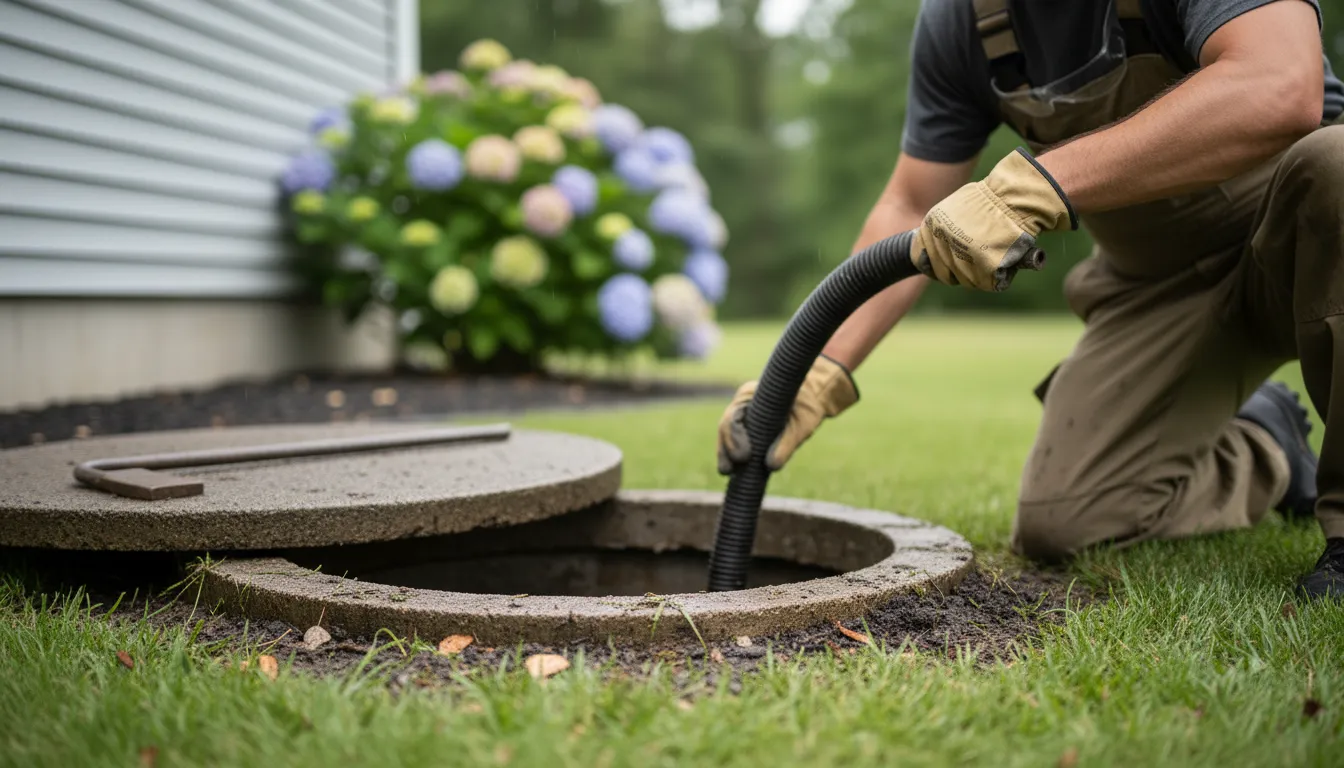
- Pump out all contents of the tank using a vacuum truck, removing the accumulated solids and scum.
- Inspect the tank's structure for cracks, leaks, or other damage.
- Clean the effluent filter, if your system is equipped with one. This filter should be cleaned every time the tank is serviced.
- Provide a report detailing the services performed, measurements taken, and any recommendations for repairs or future maintenance.
Find the perfect septic tank pumping contractors for your needs
Get personalized recommendations and expert advice
Cost of Septic Pumping and Inspection in Waukesha
The cost for septic services in Waukesha can vary based on tank size, accessibility, and the amount of solids present. For a routine pumping job, homeowners can generally expect to pay between $350 and $650. A basic inspection can start around $300 3.
However, total costs can reach up to $3,000 for complex situations. This higher price may apply if the tank is exceptionally large, requires extensive digging to access, is located far from where the service truck can park, or contains an unusually large volume of sludge that requires more time and effort to remove 4 5 6. Always request a detailed estimate before work begins.
Proactive System Care Beyond Pumping
Pumping is the cornerstone of septic maintenance, but a holistic approach to system care can extend its lifespan significantly. Key practices include:
- Conserve Water: Reducing the flow of water into the tank allows solids to settle properly and gives the drainfield time to absorb effluent. Fix leaky faucets and toilets promptly, install water-efficient fixtures, and spread out laundry loads over the week.
- Mind What You Flush: Your septic system is designed to handle human waste and toilet paper. Never flush items like baby wipes (even "flushable" ones), feminine hygiene products, dental floss, cigarette butts, cat litter, or heavy paper products like paper towels 7.
- Properly Dispose of Fats and Grease: Never pour cooking oils, grease, or fat down the drain. These substances solidify in the tank, contributing to scum buildup and potentially clogging pipes.
- Protect Your Drainfield: Never park vehicles or place heavy structures like sheds on your drainfield. Ensure that roof drains, sump pumps, and other surface water are directed away from the absorption area to prevent saturation 8 9. It is specifically prohibited to connect basement sump pumps or water softener backwash to the septic system 10.
- Landscape Carefully: Plant only grass over your drainfield. Tree and shrub roots can infiltrate and damage the pipes.
Signs Your Septic Tank Needs Immediate Attention
Don't wait for your scheduled inspection if you notice these warning signs:
- Slow drains or gurgling sounds from plumbing fixtures throughout the house.
- Sewage backups in toilets, showers, or sinks.
- Unpleasant odors around the septic tank or drainfield area.
- Unusually lush, green grass or soggy, wet spots over the drainfield, especially when it hasn't rained.
- Standing water or surfacing sewage in your yard.
If you observe any of these issues, contact a licensed septic service provider immediately to assess the situation before it escalates into a complete system failure.
Choosing a Licensed Septic Service Provider in Waukesha
When it's time for maintenance or repairs, selecting the right professional is crucial. Always verify that the company or individual is licensed by the Wisconsin Department of Safety and Professional Services (DSPS) to perform POWTS maintenance, pumping, or installation. Licensed providers understand local codes, will perform the required inspections, and can file necessary reports with the county. Ask for proof of insurance and references from local customers. A reputable provider will be happy to explain their process, provide a written estimate, and answer all your questions about your system's health.
Frequently asked questions
Sources
Footnotes
-
Septic Systems | Department of Environmental Protection - https://www.pa.gov/agencies/dep/residents/my-water/septic-systems ↩
-
How Often Should I Pump Out My Septic Tank? - https://cms2.revize.com/revize/westportma/Documents/Departments/Health/Forms%20And%20Resources/how_often_should_i_pump_out_my_septic_tank_2.pdf?t=202508080914340&t=202508080914340 ↩
-
Septic System Inspection Waukesha - https://associatessepticservices.com/Wisconsin/Waukesha-County/septic-system-inspection-services-Waukesha-wi.html ↩
-
Wisconsin Maintenance Program - DSPS - https://dsps.wi.gov/Documents/Programs/POWTS/POWTSMaintenanceProgramBrochure.pdf ↩
-
Septic Service in Waukesha, WI - Costs 01 / 2026 - Homeyou - https://www.homeyou.com/wi/septic-service-waukesha-costs ↩
-
How Much Does It Cost to Pump a Septic Tank? - https://dillonseptic.com/how-much-does-it-cost-to-pump-a-septic-tank/ ↩
-
SEPTIC SYSTEM GENERAL INFORMATION - https://www.woodcountywi.gov/departments/pz/Doc/Septic%20System%20Information%20for%20Homeowners.pdf ↩
-
Maintaining Your POWTS (Septic System) - DSPS - https://dsps.wi.gov/Documents/Programs/POWTS/POWTSMaintenanceBrochure.pdf ↩
-
Explore the Latest Waukesha Septic Pumping Requirements - https://sunsetseptic.com/waukesha-septic-pumping-requirements/ ↩
-
Septic Systems | Waukesha County - https://www.waukeshacounty.gov/parks-and-land-use/environmental-health/septic-systems/ ↩