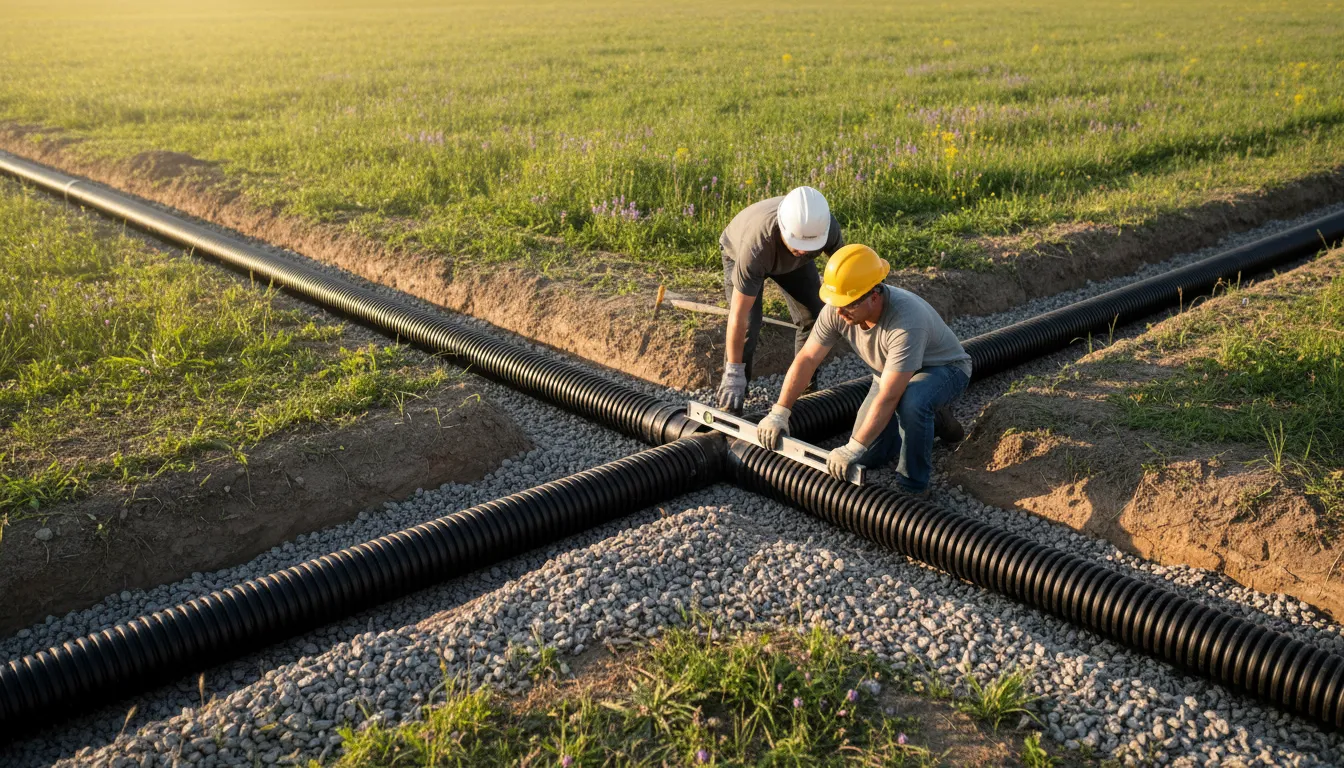
Find the Best Drain Field Repair Companies for Your Business
No obligation • Fast responses • Nationwide coverage

Why you can trust Septic Spot
Septic Spot is a leading United States resource for understanding and comparing septic services. Our editors review providers using consistent criteria and verify key business details. Listings and scores are independent, and companies cannot pay to influence our content.
Search providers near you
Best Drain Field Repair Companies in Alabama Ranked
A failing drain field is a serious issue for any Alabama homeowner with a septic system. This critical component, also known as a leach field or effluent disposal field, is responsible for safely filtering and dispersing treated wastewater into the soil. When it malfunctions, it can lead to sewage backups, environmental contamination, and costly property damage. Navigating the repair or replacement process requires understanding Alabama's specific regulations and working with qualified professionals. This guide provides the essential information you need to identify problems, understand your options, and connect with licensed specialists who can restore your system to proper function.
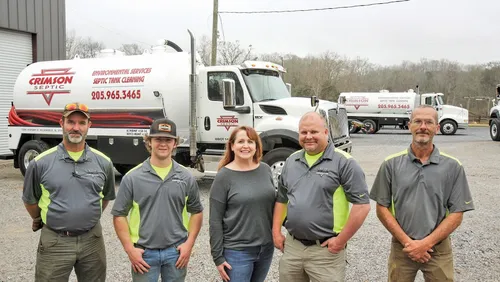
Crimson Septic & Construction, LLC
101 Hwy 47 #9, Columbiana, AL 35051
Crimson Septic & Construction, LLC is a family-owned septic system repair company serving Birmingham, AL. They provide comprehensive septic services including drain field repair and replacement. The company is licensed, bonded, and insured, with a skilled team experienced in handling both large and small septic issues. Crimson Septic & Construction offers same-day and 24/7 emergency services to address urgent septic problems promptly.
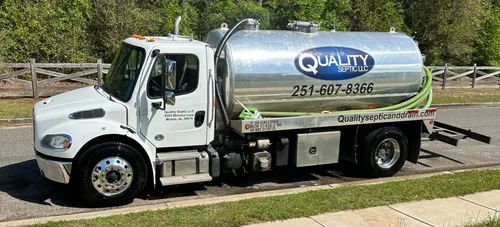
Quality Septic LLC
8503 Mimosa Ln, Mobile, AL 36619
Quality Septic LLC is a septic service provider based in Mobile, AL. Founded in 2017 with a focus on integrity, the company offers septic tank pumping, inspection, installation, and drain field repair services. They also provide septic pump replacement and grease trap pumping. Quality Septic LLC uses sewer jetting technology to clear clogs safely and effectively, ensuring thorough cleaning of pipes. The company serves residential customers in Mobile and surrounding areas.
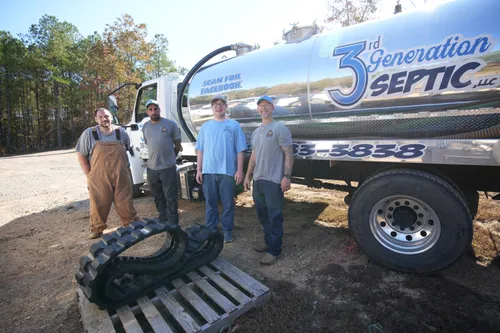
3rd Generation Septic
Birmingham, AL
3rd Generation Septic is a family-owned septic service provider based in Birmingham, AL. They offer a wide range of septic services including tank pumping, inspections, repairs, installations, and drain field maintenance. Serving Birmingham and surrounding areas, the company applies decades of combined expertise to ensure septic systems operate efficiently and comply with local regulations. Their skilled team handles both residential and commercial projects, using advanced equipment and proven methods to deliver reliable solutions. The company emphasizes transparency in communication and provides detailed assessments and itemized quotes. They also offer emergency septic services to address urgent system failures promptly.
Jones Septic & Plumbing
Birmingham, AL
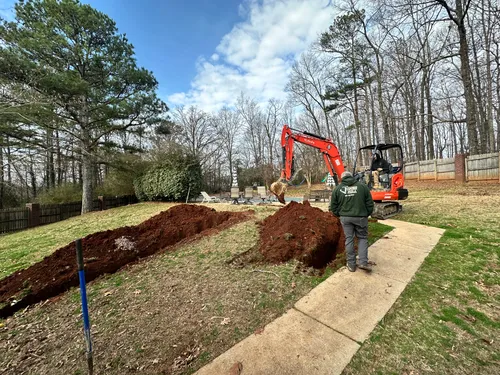
Jones Septic & Plumbing is a locally owned company based in Birmingham, AL, offering a range of septic and plumbing services. They provide septic tank installation, maintenance, repair, and troubleshooting, along with drain cleaning, leak detection, and pump system services. Their expertise includes designing and installing field lines to ensure efficient wastewater drainage and protect the environment. Since 1993, Jones Septic & Plumbing has served multiple counties around Birmingham with sustainable sanitation solutions tailored to individual needs.
Sep-Tek
Huntsville, AL
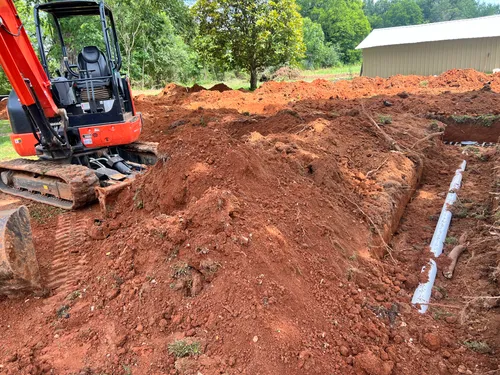
Sep-Tek is a veteran-owned septic service provider based in Huntsville, AL. They offer a full range of septic system services including installation for new and replacement systems, inspections, pumping, and repairs. Their team inspects tanks for leaks and sludge buildup, and they address issues such as clogged filters, damaged field lines, or plumbing leaks. Sep-Tek also provides emergency septic services to respond to urgent sewage problems.
Understanding Your Drain Field's Role
The drain field is the final stage of your onsite sewage disposal system (OSS). After solids settle in the septic tank, the liquid effluent flows into a network of perforated pipes buried in trenches filled with gravel or other aggregate. This effluent slowly percolates into the soil, where natural processes provide final treatment by removing harmful bacteria, viruses, and nutrients. A properly functioning drain field is essential for protecting both your home's plumbing and Alabama's groundwater.
Signs Your Alabama Drain Field Needs Attention
Recognizing early warning signs can prevent a complete system failure and more expensive repairs. Be alert for the following symptoms:
- Sewage Surfacing: Wet, soggy, or spongy areas, or standing effluent (gray water) pooling in your yard above the drain field.
- Slow Drains: Toilets, showers, and sinks that drain very slowly or back up, especially after heavy rain.
- Unpleasant Odors: The smell of sewage inside your home or around the drain field area.
- Unusually Lush Grass: Patches of grass over the drain field that are much greener and grow faster than the rest of the lawn.
- Gurgling Sounds: Audible gurgling in your home's plumbing lines.
If you notice any of these signs, it's crucial to act quickly. Continuing to use a failing system can cause environmental health hazards and may violate Alabama Department of Public Health (ADPH) regulations.
Alabama Regulations and Permit Requirements
All work on septic systems in Alabama is strictly regulated. The ADPH and the Alabama Onsite Wastewater Board (AOWB) set the standards, and your local county health department (LHD) is the primary permitting authority.
- Permit Required: State law mandates a permit from the LHD before installing, repairing, or altering any part of an OSS, including the drain field. For a full replacement, a site evaluation by a licensed professional (engineer, geologist, or soil classifier) is typically required to assess soil conditions and design an appropriate system 1 2.
- Waiver of Permit for Repairs: For certain minor repairs, a property owner and a licensed installer may submit a notarized "Waiver of a Permit to Repair" 3 4. This acknowledges that the LHD will not inspect the work, but the repair must still comply with all state rules. This option is generally for fixing a broken pipe or similar component, not for replacing the entire field.
- Licensed Professionals Only: All installation, repair, and pumping work must be performed by an AOWB-licensed installer or pumper 5. It is illegal for an unlicensed person to perform this work. Licensed pumpers are also required to report any observed system failures to the local health department 6.
Find the perfect drain field repair companies for your needs
Get personalized recommendations and expert advice
The Repair vs. Replacement Decision
A professional assessment is necessary to determine the best course of action. The choice depends on the extent of the damage and the condition of the soil.
When Repair is Possible: Minor issues like a crushed pipe due to soil compaction or a clogged section may be repairable. This involves excavating the affected area, replacing the damaged component, and restoring the soil. Costs for minor repairs in Alabama typically range from $500 to $1,500 or more, depending on accessibility and labor.
When Replacement is Necessary: A full drain field replacement is required when the soil is permanently saturated (clogged with a biomat), the entire field has failed, or the system is being upgraded. Alabama regulations often require a designated 100% expansion area for a new drain field 7. Replacement is a major project involving:
- A new site and soil evaluation.
- Securing a permit from the LHD, which includes a pre-installation inspection 8.
- Excavation and installation of a new trench system.
- Final inspection and certification by the licensed installer.
Cost Considerations for Alabama Homeowners
The cost of drain field work varies widely based on system size, soil type, topography, and local permitting fees. Below are general estimates:
- Minor Repair: $500 - $1,500+
- Conventional System Replacement: $3,000 - $10,000+
- Engineered/Advanced System Replacement: $10,000 - $20,000+ (Required for poor soils, small lots, or high water tables) 9 10 11
- Inspection & Pumping: $300 - $600 (A necessary first step for diagnosis)
These are approximate figures. The only way to get an accurate cost is to obtain quotes from multiple licensed installers after a site evaluation.
Proactive Maintenance to Extend Drain Field Life
Preventative care is the most cost-effective strategy. Follow these guidelines to protect your investment 12 13 14:
- Pump Regularly: Have the septic tank pumped by a licensed professional every 3 to 5 years to prevent solids from flowing into and clogging the drain field.
- Inspect Often: Schedule a professional system inspection every 1 to 3 years to check sludge levels and component health 15 16.
- Conserve Water: Spread out laundry loads, fix leaks promptly, and install water-efficient fixtures to avoid hydraulically overloading the field.
- Protect the Area: Never drive, park, or build structures (sheds, patios) over the drain field. Keep deep-rooted trees and shrubs away from the area.
- Mind What You Flush: Only human waste and toilet paper should go down the toilet. Avoid grease, chemicals, diapers, wipes, and coffee grounds.
- Divert Water: Ensure roof gutters, sump pumps, and surface runoff are directed away from the drain field to keep the soil from becoming saturated.
The Importance of Keeping Records
Maintain a file with all records related to your septic system: permits, site plans, inspection reports, pumping receipts, and repair documentation 17. This is invaluable for troubleshooting, scheduling maintenance, and is often required during real estate transactions.
Frequently asked questions
Sources
Footnotes
-
SELECTING A HOMESITE - https://www.alabamapublichealth.gov/onsite/assets/selectingahomesite.pdf ↩
-
Alabama Septic Tank Requirements - https://www.ntotank.com/blog/alabama-septic-tank-requirements ↩
-
ADPH Onsite Repair Procedures Property Owner/Installer Information - https://www.alabamapublichealth.gov/onsite/assets/waiverinfosheet.pdf ↩
-
WAIVER OF A PERMIT TO REPAIR A CONVENTIONAL ... - https://www.alabamapublichealth.gov/onsite/assets/cepawaiver.pdf ↩
-
Who Must Be Licensed? - Alabama Onsite Wastewater Board - https://aowb.alabama.gov/faq.aspx ↩
-
Rule 420-3-6-.23 - Sewage Tank Pumping Permit - https://admincode.legislature.state.al.us/administrative-code/420-3-6-.23 ↩
-
Onsite Sewage - Alabama Department of Public Health (ADPH) - https://www.alabamapublichealth.gov/houston/sewage.html ↩
-
Rule 420-3-1-.08 - OSS/EDS Installation - https://admincode.legislature.state.al.us/administrative-code/420-3-1-.08 ↩
-
Onsite Sewage Disposal | Alabama Department of Public Health ( ... - https://www.alabamapublichealth.gov/baldwin/sewage.html ↩
-
Pre-Sale Sewer Inspection Cape Coral: 2025 Guide - https://nfmplumbing.com/sewer-inspection-rules/ ↩
-
Septic System Basics for Realtors | Oklahoma State University - https://extension.okstate.edu/fact-sheets/septic-system-basics-for-realtors.html ↩
-
Septic Tank Maintenance | Alabama Department of Public ... - https://www.alabamapublichealth.gov/onsite/maintenance.html ↩
-
Household - Pelham, AL - https://pelhamalabama.gov/DocumentCenter/View/1907/Septic-Tanks---Alabama-Co-op-Extension ↩
-
Caring for Septic Systems - Alabama Extension - https://www.aces.edu/wp-content/uploads/2024/02/ANR-3051_CaringForSepticSystems_022024L-G.pdf ↩
-
Frequent Questions on Septic Systems | US EPA - https://www.epa.gov/septic/frequent-questions-septic-systems ↩
-
Onsite Sewage Disposal | Alabama Department of Public Health ( ... - https://www.alabamapublichealth.gov/montgomery/sewage.html ↩
-
MAINTAINING YOUR SEPTIC SYSTEM - https://www.alabamapublichealth.gov/onsite/assets/maintain-system-flyer.pdf ↩