Find the Best Drain Field Repair Companies for Your Business
No obligation • Fast responses • Nationwide coverage

Why you can trust Septic Spot
Septic Spot is a leading United States resource for understanding and comparing septic services. Our editors review providers using consistent criteria and verify key business details. Listings and scores are independent, and companies cannot pay to influence our content.
Search providers near you
Top Drain Field Repair Companies in Birmingham, Alabama Ranked
A failing septic system drain field can lead to soggy yards, foul odors, and even sewage backups in your home. Drain field repair and replacement is a critical process that restores your onsite wastewater system's ability to safely treat and disperse household effluent. In Birmingham, this work is strictly regulated to protect public health and the environment. This guide will help you understand the local requirements, process, and costs, empowering you to make informed decisions when seeking qualified professionals for your leach field or soil absorption system needs.

Crimson Septic & Construction, LLC
101 Hwy 47 #9, Columbiana, AL 35051
Crimson Septic & Construction, LLC is a family-owned septic system repair company serving Birmingham, AL. They provide comprehensive septic services including drain field repair and replacement. The company is licensed, bonded, and insured, with a skilled team experienced in handling both large and small septic issues. Crimson Septic & Construction offers same-day and 24/7 emergency services to address urgent septic problems promptly.
3rd Generation Septic
Birmingham, AL
3rd Generation Septic is a family-owned septic service provider based in Birmingham, AL. They offer a wide range of septic services including tank pumping, inspections, repairs, installations, and drain field maintenance. Serving Birmingham and surrounding areas, the company applies decades of combined expertise to ensure septic systems operate efficiently and comply with local regulations. Their skilled team handles both residential and commercial projects, using advanced equipment and proven methods to deliver reliable solutions. The company emphasizes transparency in communication and provides detailed assessments and itemized quotes. They also offer emergency septic services to address urgent system failures promptly.
Jones Septic & Plumbing
Birmingham, AL
Jones Septic & Plumbing is a locally owned company based in Birmingham, AL, offering a range of septic and plumbing services. They provide septic tank installation, maintenance, repair, and troubleshooting, along with drain cleaning, leak detection, and pump system services. Their expertise includes designing and installing field lines to ensure efficient wastewater drainage and protect the environment. Since 1993, Jones Septic & Plumbing has served multiple counties around Birmingham with sustainable sanitation solutions tailored to individual needs.
Caffee Environmental LLC
Birmingham, AL
Caffee Environmental LLC is a family-owned septic service company based in Birmingham, AL, offering a full range of septic system services including tank pumping, inspections, pump replacements, and drain field repairs. With 25 years of combined experience, their licensed and certified team serves residential customers across Tuscaloosa, Jefferson, and Bibb Counties. They use modern equipment and eco-friendly practices tailored to local soil conditions to maintain system health and prevent costly issues. The company also provides land clearing and excavation services, supporting property maintenance and preparation beyond septic care.
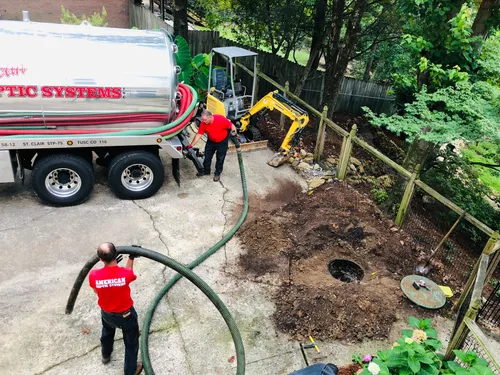
American Septic Systems
10650 Lock 17 Rd, Adger, AL 35006
American Septic Systems is a licensed septic service provider based near Birmingham, AL. They offer a wide range of septic services including tank pumping, inspections approved by county health departments, repairs, and new installations. Their capabilities include field line installation and repair, grease trap cleaning, and effluent pump replacement. The company emphasizes thorough septic system maintenance to prevent issues before they arise.
Understanding Your Septic System's Drain Field
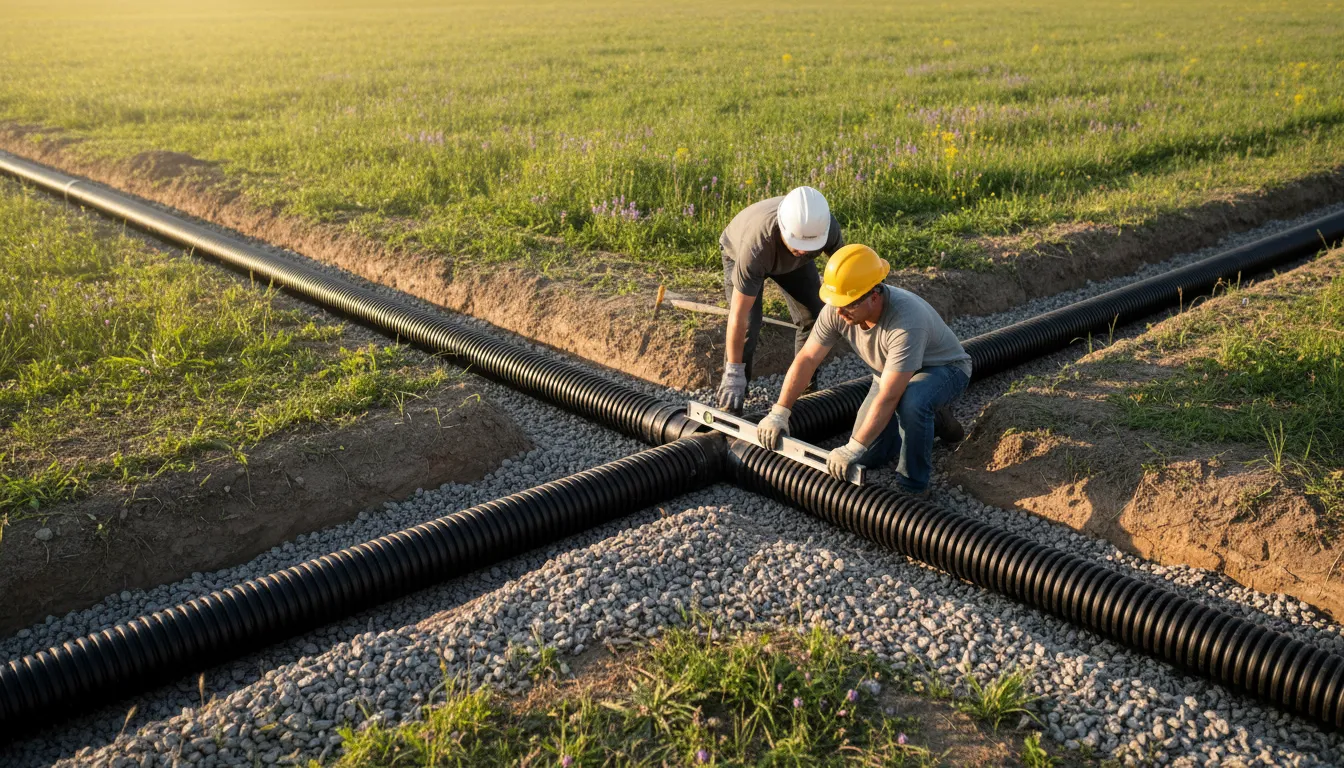
The drain field, also known as a leach field or absorption field, is the final and most crucial stage of a conventional septic system. After solids settle in the septic tank, the liquid wastewater (effluent) flows into a network of perforated pipes buried in trenches filled with gravel. This effluent slowly percolates into the soil, where natural processes remove harmful bacteria, viruses, and nutrients before the water rejoins the groundwater table. When this soil absorption area fails, the entire system is compromised, requiring prompt attention.
Birmingham and Alabama Regulatory Landscape
All septic system work in Birmingham and Jefferson County is governed by state and local health regulations. Understanding these rules is the first step in any repair or replacement project.
Permitting is Mandatory: Before any shovel hits the ground, you must obtain a permit from the Jefferson County Department of Health. This ensures the proposed work complies with all Alabama Department of Public Health (ADPH) guidelines. An unpermitted system can lead to fines, legal liability, and problems when selling your property.
Licensed Professionals Required: Alabama law mandates that all septic system installers and pumpers be licensed by the Alabama Onsite Wastewater Board (AOWB). Always verify a contractor's AOWB license. After installation, the health department must issue an "Approval for Use" certificate, confirming the system was installed according to the permitted design and is ready for operation.
Key Design and Siting Rules: The system's design is based on a site evaluation that includes soil type, household size, and estimated wastewater flow. Critical setbacks must be observed: drain fields must be at least 100 feet from drinking water wells and 50 feet from streams or waterways 1 2 3. Systems cannot be installed in areas with high water tables or steep slopes without significant engineering 4.
Signs You Need Drain Field Repair or Replacement
Recognizing early warning signs can prevent more extensive damage and costly emergencies. Contact a licensed professional if you notice:
- Surface Symptoms: Soggy, spongy ground or standing water over the drain field area, especially when it hasn't rained. Unusually lush, green grass growing over the field compared to the rest of the yard. Foul sewage odors emanating from the yard.
- Household Plumbing Issues: Slow-draining sinks, tubs, and toilets. Gurgling sounds in your drains. Frequent backups of sewage into household drains 5.
These symptoms indicate that the soil is saturated and can no longer absorb and treat effluent, often due to clogging, compaction, or system age.
The Process: From Inspection to Approval
A professional drain field project follows a structured sequence to ensure compliance and long-term functionality.
- System Evaluation & Site Assessment: A licensed technician will inspect your entire system. This may involve locating the tank and field lines, checking for tank issues, and using specialized cameras or pressure tests to diagnose the exact failure point in the leach field. A percolation (perc) test or detailed soil analysis is often required for a replacement to determine the soil's absorption rate.
- Design & Permit Application: Based on the evaluation, a repair plan or new system design is created. This design, factoring in soil conditions and household needs, is submitted to the health department for permit approval.
- Excavation & Installation: For a repair, only the damaged sections of pipe may be replaced. For a full replacement, the old absorption field is properly abandoned (which requires its own permit), and a new one is constructed in a suitable location. This involves excavating trenches, laying gravel and perforated pipe, and covering with soil 6.
- Final Inspection & Approval: Once installation is complete, the health department inspector visits the site to verify the work matches the permitted plans. Upon passing inspection, they issue the final "Approval for Use" document 7.
Find the perfect drain field repair companies for your needs
Get personalized recommendations and expert advice
Cost Factors for Drain Field Work in Birmingham
The cost of drain field repair or replacement varies widely based on the scope of work, soil conditions, and system type. Here's a breakdown of what to expect in the Birmingham area:
- Typical Drain Field Replacement: Costs generally range from $3,000 to over $10,000, with many complete projects averaging between $5,000 and $7,000 8 9.
- Birmingham-Specific Benchmark: For a conventional 3-bedroom system replacement in this region, you can expect an average cost of around $6,800 10.
- What Drives the Price?
- System Size: Larger homes requiring bigger drain fields cost more.
- Soil and Site Conditions: Poorly draining soil or challenging sites (rocky, steep, or high water table) may require an engineered alternative system, which can cost significantly more than a conventional gravel field 11.
- Extent of Failure: A simple repair of a single clogged line is far less expensive than a full field replacement.
- Additional Work: Remember to budget for related costs like the required permit fees, landscaping restoration, regrading the yard (which can cost $1,000-$3,300), or new sod ($1-$2 per square foot) 12 13.
Protecting Your New Drain Field
A new leach field is a major investment. Protect it by following these best practices:
- Avoid Compaction: Never drive or park vehicles, or place heavy structures like sheds or pools, over the drain field.
- Mind Your Planting: Do not plant trees or deep-rooted shrubs near the absorption area. Roots can infiltrate and clog pipes. Grass is the ideal cover.
- Conserve Water: Spread out laundry loads, fix leaky faucets, and use water-efficient fixtures. Overloading the system with too much water too quickly is a common cause of failure.
- Divert Runoff: Ensure roof gutters, sump pumps, and yard drainage are directed away from the drain field to prevent saturation.
- Watch What You Flush: Only human waste and toilet paper should go down the drain. Avoid chemicals, grease, wipes, and other non-biodegradables.
Frequently asked questions
Sources
Footnotes
-
Septic Tank System: Homeowner's Guide & Records Folder - Alabama Public Health ↩
-
Chapter 4 Site Evaluation and Requirements: Alabama Private ... - UpCodes ↩
-
The Ultimate Guide to Replacing a Septic Drain Field - RCI Septic ↩
-
Field Line Repairs and Replacements in Alabama - SFI Environmental ↩
-
How To Replace A Septic Drain Field Without Costly Mistakes - Miller Septic ↩
-
Drain Field Replacement Cost: Full 2026 Breakdown | SepticTankHub ↩
-
Birmingham Septic Systems Costs & Prices - ProMatcher Cost Report ↩
-
Septic Systems Reports, Regulations, Guidance, and Manuals - U.S. EPA ↩
-
Cost to Replace Septic Tank and Drain Field [2026 Data] | Angi ↩
-
Georgia Septic System Guide: Regulations & Maintenance Tips - Smart Septic Pros ↩