Find the Best Drain Field Repair Companies for Your Business
No obligation • Fast responses • Nationwide coverage

Why you can trust Septic Spot
Septic Spot is a leading United States resource for understanding and comparing septic services. Our editors review providers using consistent criteria and verify key business details. Listings and scores are independent, and companies cannot pay to influence our content.
Search providers near you
Top Drain Field Repair Companies in Buckeye, Arizona Ranked
A failing septic drain field, also known as a leach field or soil absorption system, is a serious issue for any homeowner. It's the final, critical stage where treated wastewater is dispersed into the soil. When it malfunctions, it can lead to sewage backups, soggy yards, and environmental health hazards. In Buckeye's unique desert environment, proper system function and compliance with local regulations are paramount. This guide explains the process, costs, and key considerations for drain field repair or replacement, helping you understand what to expect and how to connect with qualified local professionals who can assess your specific situation.

Eco Septic Tank Pumping Phoenix
Phoenix, AZ
Eco Septic Tank Pumping Phoenix provides a full range of septic services including pumping, inspection, repair, and installation in Phoenix, AZ. They handle routine septic system cleaning, emergency sewer cleaning, and biological treatments to maintain system health. Their process includes thorough tank inspection and safe waste disposal to licensed facilities. The company also offers septic system repairs and new installations, ensuring compliance with local regulations. Serving Phoenix and surrounding areas, Eco Septic Tank Pumping Phoenix emphasizes regular maintenance to prevent system failures and extend septic system lifespan.

Mesa Septic
Mesa, AZ
Mesa Septic is a family-owned septic service company based in Mesa, AZ, with over 50 years of experience serving the valley. They provide residential and commercial customers with septic tank pumping, inspection, repair, installation, and system design services. Their certified inspectors handle septic certifications required by Arizona regulations, and they offer specialized services such as grease trap pumping, drain field remediation, and sewer line hydrojetting. Mesa Septic also provides 24/7 plumbing and sewer assistance through licensed plumbers.
Arizona Septic Tank
Phoenix, AZ
Arizona Septic Tank is a family-owned and operated full-service septic contractor serving Phoenix, AZ, and surrounding areas. With over 40 years of experience, they provide septic system design, installation, pumping, inspection, repair, and maintenance for both residential and commercial properties. Their services cover standard and alternative septic systems, including excavation, leach field installation, and specialized septic leach drilling. Arizona Septic Tank also offers grease trap cleaning, enzyme and root treatments, and electronic location services. They are licensed and insured, focusing on environmentally friendly solutions and compliance with state regulations.
Understanding Your Septic System's Drain Field
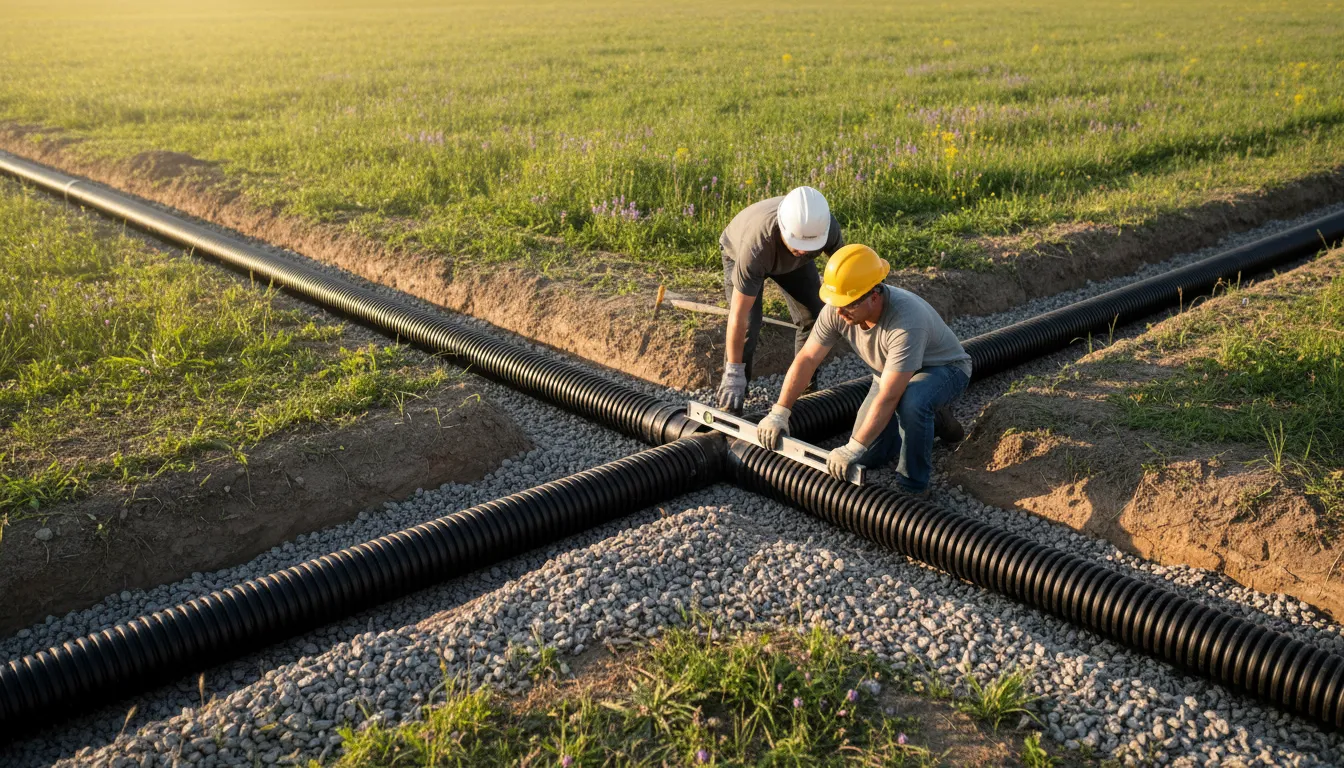
The drain field is a network of perforated pipes buried in trenches filled with gravel. After solids settle in the septic tank, the liquid effluent flows into a distribution box and is evenly channeled into these pipes, where it slowly seeps into the surrounding soil. The soil acts as a final natural filter, removing harmful bacteria and nutrients before the water rejoins the groundwater. In Buckeye, with its specific soil types and climate, the design and health of this leach field are especially important for long-term, trouble-free operation.
Signs You May Need Drain Field Repair or Replacement
Recognizing early warning signs can prevent a complete system failure and more extensive damage. Common indicators include:
- Soggy Ground or Surfacing Sewage: Persistent wet, spongy areas or standing effluent over the drain field area, especially when it hasn't rained.
- Slow Drains and Backups: Gurgling pipes, slow-draining sinks and toilets, or sewage backups in the house.
- Unpleasant Odors: Foul smells emanating from the yard near the drain field or septic tank.
- Unusually Lush Vegetation: Patches of grass or weeds over the soil treatment area that are greener and grow faster than the rest of the lawn, indicating a nutrient-rich sewage leak.
- Failed Inspection: A routine or real estate septic inspection that identifies a compromised drain field.
These symptoms often point to a clogged biomat (a layer that naturally forms but can become too thick), crushed pipes, root intrusion, or soil that has become saturated and can no longer absorb water 1.
The Inspection and Diagnosis Process
Before any repair or replacement can be planned, a thorough professional inspection is essential to diagnose the exact problem. A comprehensive evaluation typically includes 2 3 4:
- Initial Assessment: Reviewing the system's age, type, and maintenance history.
- Locating and Uncovering: Finding and accessing the septic tank and distribution box.
- Tank Inspection: Checking baffles, tees, and the tank's structural integrity for cracks or damage.
- Flow/Load Test: Running water to verify proper flow from the house into the drain field.
- Drain Field Evaluation: Visually inspecting the soil absorption system area for the signs of failure mentioned above.
The cost for a professional septic inspection in Arizona typically ranges from $200 to $650 or more, depending on the depth of the evaluation 5. This critical step provides the evidence needed to determine if a repair is possible or if a full replacement is necessary.
Key Regulations and Permitting in Maricopa County
All septic system work in Buckeye is governed by the Maricopa County Environmental Services Department (MCESD) and often must meet Arizona Department of Environmental Quality (ADEQ) standards 6. You cannot simply hire a contractor to dig a new field. The process is strictly regulated:
- Permit Requirement: A "Notice of Intent to Discharge" permit is required for replacing a drain field. Permit fees can range from $450 to $2,000.
- Site Evaluation: This must be performed by a qualified professional-a registered engineer, geologist, sanitarian, or licensed contractor-to design a system suitable for your property.
- Percolation Test: A mandatory soil test (perc test) determines the soil's absorption rate. This test, which costs approximately $1,300, is crucial for designing a properly sized system 7. Sandy soils common in some parts of Buckeye are ideal, while clay-heavy soils pose challenges.
- Setbacks: New systems must adhere to strict distance requirements from wells (often 50-100 feet), property lines, buildings, and water sources.
- Inspections: The City of Buckeye requires a 24-hour notice for mandatory inspections of septic work, including new trenching or repairs 8.
Find the perfect drain field repair companies for your needs
Get personalized recommendations and expert advice
Repair vs. Replacement: Understanding Your Options
The solution depends on the extent of the damage.
- Minor Repairs: Issues like a clogged distribution box, a single crushed pipe segment, or minor root intrusion may be repairable without a full replacement. This involves excavating the specific problem area, fixing or replacing the component, and restoring the site.
- Complete Replacement: Most often, a failing drain field requires a full replacement. This involves designing a new leach field based on the perc test, obtaining permits, excavating the old field (if necessary), and installing a new network of pipes and gravel in accordance with county code. In some cases, especially on smaller lots or with poor soil, an advanced treatment system may be required.
Cost Factors for Drain Field Work in Buckeye
Costs can vary widely based on soil conditions, system size, and the complexity of the installation. Key cost components include:
- Septic Tank Pumping: Often done before inspection or work, costing $150 to $1,000.
- Percolation Test: ~$1,300.
- Permit Fees: $450 to $2,000 9.
- Excavation and Installation: This is the major cost driver. For a full drain field replacement, the average cost is around $7,000, but projects frequently range from $3,000 to $10,000 or more for a complete system replacement 10 11. Data specific to Buckeye installation suggests a typical range of $4,100 to $5,900 for standard projects, with costs potentially running from $1,463 to over $10,00012.
Choosing a Qualified Professional
Given the regulatory and technical complexity, selecting the right contractor is critical. Look for a licensed septic professional with extensive experience in Maricopa County. They should be familiar with MCESD permitting, local soil conditions, and the inspection process. A reputable provider will handle the site evaluation, permit application, installation, and final inspections, ensuring your new system is both functional and legally compliant for years to come.
Maintaining Your New Drain Field
Protect your investment with proper care:
- Conserve Water: Spread out laundry and dishwasher use to avoid hydraulically overloading the system.
- Mind What You Flush: Only human waste and toilet paper should go down the drain. Avoid chemicals, grease, and non-biodegradable items.
- Keep Vehicles Off: Never drive or park over the drain field area.
- Divert Water: Ensure roof drains and yard runoff are directed away from the soil absorption area.
- Regular Pumping: Have your septic tank pumped every 3-5 years to prevent solids from escaping into and clogging the drain field.
Frequently asked questions
Sources
Footnotes
-
Leach Field Installation in Arizona: What Homeowners Need ... - https://www.grossseptic.com/blog/leach-field-installation-in-arizona-what-homeowners-need-to-know-before-replacing-a-drain-field/ ↩
-
Inspecting Your Household Septic System - https://www.extension.arizona.edu/sites/default/files/2024-09/az1159-2018_Inspecting%20Your%20Household%20Septic%20System.pdf ↩
-
Arizona Septic Tank Inspection Guide - Clickapro - https://www.clickapro.com/septic-tank-inspection-guide/ ↩
-
What Arizona Homebuyers Should Know About Septic Inspections - https://tucsonsepticsystems.com/septic/what-arizona-homebuyers-should-know-about-septic-inspections/ ↩
-
How Much Does a Septic Inspection Cost in Arizona? - https://www.advantageairmechanical.com/blog/septic-inspection-cost-arizona ↩
-
Frequently Asked Questions - CivicPlus.CMS.FAQ - https://www.maricopa.gov/m/faq ↩
-
Septic System Repairs: Guidelines and Limitations - https://www.graham.az.gov/DocumentCenter/View/763/Septic-System-Repairs---Guidelines-and-Limitations-PDF ↩
-
Inspections | City of Buckeye - https://www.buckeyeaz.gov/business/development-services/inspections ↩
-
Arizona Septic Tank Requirements - https://www.ntotank.com/blog/arizona-septic-tank-requirements ↩
-
Cost to Replace Septic Tank and Drain Field [2026 Data] | Angi - https://www.angi.com/articles/how-much-new-drain-fields-foot.htm ↩
-
Inspecting Your Household Septic System | UA Cooperative Extension - https://extension.arizona.edu/publication/inspecting-your-household-septic-system ↩
-
Septic Tank Installation in Buckeye, AZ - Costs 03 / 2026 - Homeyou - https://www.homeyou.com/az/septic-tank-installation-buckeye-costs ↩