Find the Best Drain Field Repair Companies for Your Business
No obligation • Fast responses • Nationwide coverage

Why you can trust Septic Spot
Septic Spot is a leading United States resource for understanding and comparing septic services. Our editors review providers using consistent criteria and verify key business details. Listings and scores are independent, and companies cannot pay to influence our content.
Search providers near you
Top Drain Field Repair Companies in Phoenix, Arizona Ranked
A failing septic drain field is a serious issue for any Phoenix homeowner, leading to soggy yards, foul odors, and potential environmental contamination. Drain field repair and replacement involves diagnosing and fixing the underground network of pipes and soil that treats and disperses wastewater from your home. This guide explains the critical steps, local regulations, and costs involved, helping you understand the process and connect with qualified professionals in the Phoenix area to restore your system's function.
Sewer Time Septic & Drain
33645 N Cave Creek Rd, Cave Creek, AZ 85331
Sewer Time Septic & Drain is a licensed septic and plumbing contractor serving the Phoenix, AZ area. They provide a range of services including septic tank pumping, inspections, system repairs, and full installations for residential and commercial properties. Their certified technicians handle soil and percolation testing, system design, permitting, grease trap cleaning, and lift station maintenance. Sewer Time offers same-day service and 24/7 plumbing support for emergencies and new construction projects.

Simply Rooter and Septic LLC
50741 W Papago Rd, Maricopa, AZ 85139
Simply Rooter and Septic LLC provides septic tank pumping, inspection, repair, installation, and drain field services in Phoenix, AZ. The company addresses common septic issues such as slow drains, sewage backups, and drain field failures, using professional inspections and repairs tailored to local soil and climate conditions. They ensure proper system installation and maintenance to prevent environmental contamination and costly damage. Licensed technicians handle tank and drain field repairs with knowledge of local regulations and soil characteristics to maintain system efficiency and compliance.

Eco Septic Tank Pumping Phoenix
Phoenix, AZ
Eco Septic Tank Pumping Phoenix provides a full range of septic services including pumping, inspection, repair, and installation in Phoenix, AZ. They handle routine septic system cleaning, emergency sewer cleaning, and biological treatments to maintain system health. Their process includes thorough tank inspection and safe waste disposal to licensed facilities. The company also offers septic system repairs and new installations, ensuring compliance with local regulations. Serving Phoenix and surrounding areas, Eco Septic Tank Pumping Phoenix emphasizes regular maintenance to prevent system failures and extend septic system lifespan.

Mesa Septic
Mesa, AZ
Mesa Septic is a family-owned septic service company based in Mesa, AZ, with over 50 years of experience serving the valley. They provide residential and commercial customers with septic tank pumping, inspection, repair, installation, and system design services. Their certified inspectors handle septic certifications required by Arizona regulations, and they offer specialized services such as grease trap pumping, drain field remediation, and sewer line hydrojetting. Mesa Septic also provides 24/7 plumbing and sewer assistance through licensed plumbers.
Arizona Septic Tank
Phoenix, AZ
Arizona Septic Tank is a family-owned and operated full-service septic contractor serving Phoenix, AZ, and surrounding areas. With over 40 years of experience, they provide septic system design, installation, pumping, inspection, repair, and maintenance for both residential and commercial properties. Their services cover standard and alternative septic systems, including excavation, leach field installation, and specialized septic leach drilling. Arizona Septic Tank also offers grease trap cleaning, enzyme and root treatments, and electronic location services. They are licensed and insured, focusing on environmentally friendly solutions and compliance with state regulations.
Understanding Your Septic Drain Field
Often called a leach field or absorption field, the drain field is the final and most crucial stage of a septic system. After solids settle in the tank, liquid effluent flows into a series of perforated pipes buried in trenches filled with gravel. This effluent slowly percolates into the surrounding soil, where natural processes provide final treatment. When this area fails, wastewater can no longer be absorbed, leading to backups and surface pooling.
In Phoenix's unique environment, factors like soil composition and high water usage can accelerate drain field problems. Recognizing early signs-such as unusually lush grass over the field, standing water, or sewage smells-can prevent more extensive and costly damage.
Signs You Need Drain Field Repair or Replacement
Ignoring the symptoms of a failing leach field only leads to higher repair bills and potential health hazards 1. Key indicators include:
- Soggy Ground or Surfacing Effluent: The most direct sign is wastewater pooling on your lawn, particularly over the drain field area, even during dry weather.
- Slow Drains and Sewage Backups: If toilets, showers, and sinks drain slowly or back up, especially after the septic tank has been pumped, the problem likely lies in the distribution box or drain field.
- Foul Odors: Persistent sewage smells in your yard or near the drain field indicate untreated wastewater is not being properly absorbed.
- Unusually Green Grass: While the rest of your lawn is dry, a strip of abnormally green, fast-growing grass directly over the drain lines can signal a nutrient-rich leak.
- Failed Inspection: A routine inspection or one required for a property sale may reveal saturated soil or broken components, mandating repairs 2 3.
The Phoenix-Specific Process: Permits, Soil, and Inspection
Repairing or replacing a septic drain field in Maricopa County is a regulated process designed to protect groundwater. Skipping proper steps can result in fines and an unusable system.
Step 1: Professional Inspection and Diagnosis
The first step is always a thorough inspection by a licensed septic professional. They will locate the tank and drain field, often using cameras or careful excavation, to identify the root cause-whether it's clogged pipes, crushed lines, or biomat buildup causing soil saturation 4. Pumping the septic tank is often done concurrently to rule it out as the issue and reduce pressure on the field.
Step 2: Critical Soil and Site Evaluation
Before any repair plan is approved, a new site and soils evaluation is typically required. This involves a percolation (perc) test, which measures how quickly water drains through your soil. Phoenix soil can vary dramatically; sandy soils drain well, while dense caliche (a hardened layer of calcium carbonate) is nearly impermeable and may require specialized breaking or an alternative system design 5 6. This test determines the size and type of replacement field needed.
Step 3: Securing the Required Permits
Maricopa County Environmental Services Department mandates permits for all drain field work. You will likely need a Notice of Intent to Discharge (NOID) and an Alteration Permit 7 8. If the repair modifies the system's capacity (like adding bedrooms), a completely new system design permit may be necessary. Permit fees generally range from $205 to over $1,050, depending on complexity.
Step 4: Repair or Replacement Execution
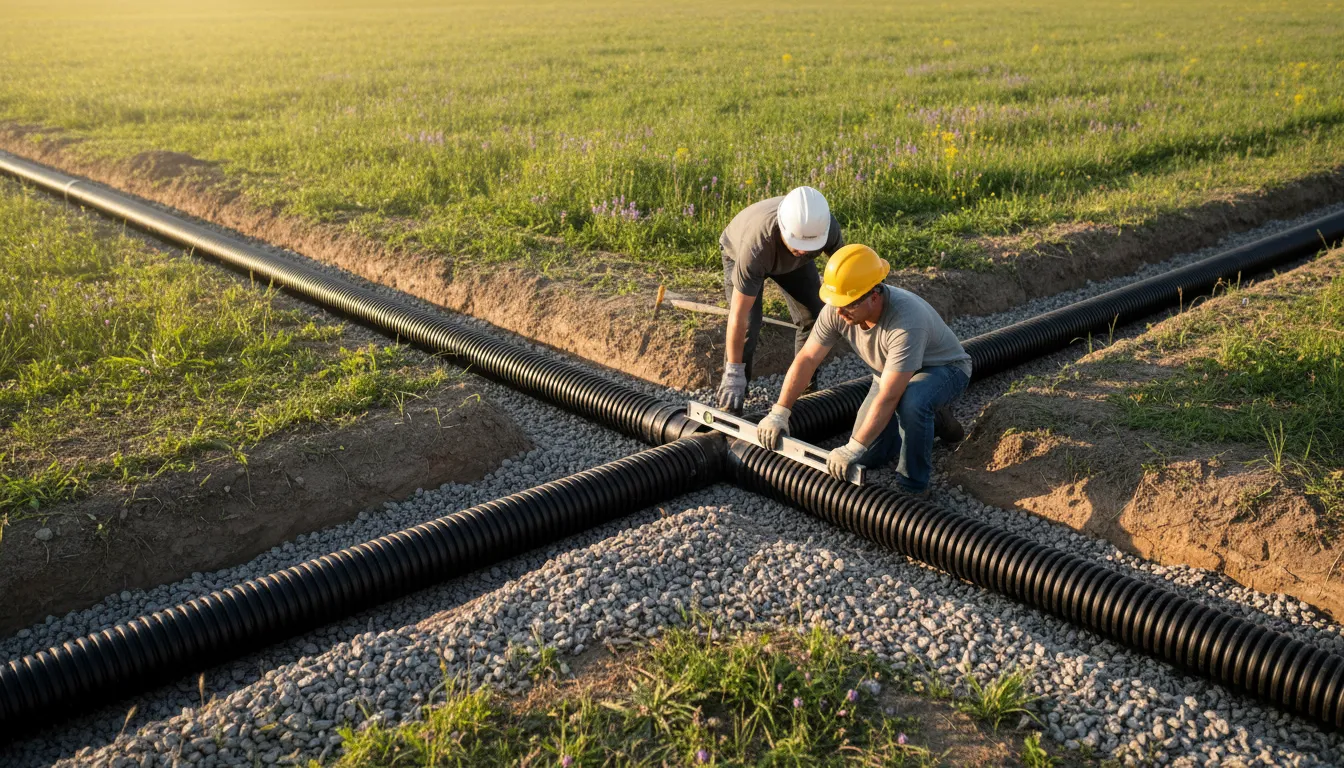
Once permitted, the work begins. For a full conventional replacement, this involves excavating the old field, installing new perforated pipes in gravel-filled trenches, and covering it with soil. The county specifies required setbacks from wells, property lines, and structures 9. For properties with poor soil, engineered alternative systems like mound systems or aerobic treatment units may be installed.
Step 5: Final County Inspection
Before the new drain field is covered, a final inspection by a county official is mandatory to ensure the work complies with all codes and the approved design.
Find the perfect drain field repair companies for your needs
Get personalized recommendations and expert advice
Understanding Costs for Drain Field Work in Phoenix
Costs can vary widely based on the extent of failure, soil conditions, and the system type required. Here's a general breakdown:
- Inspection & Tank Pumping: $150 - $1,000. This is the essential first diagnostic step 10.
- Permit Fees: $205 - $1,050+. A necessary cost for legal compliance.
- Conventional Drain Field Replacement: $3,000 - $10,000. This is the typical range for replacing a standard trench-style leach field in Phoenix 11.
- Engineered Alternative System Replacement: $10,000 - $20,000+. Systems like mounds, aerobic treatment units, or drip irrigation fields are more complex and costly but are necessary for challenging sites 12 13.
Maintaining Your New or Repaired Drain Field
Protecting your investment is key. Proper maintenance includes:
- Water Conservation: Spread out laundry and dishwasher use. Fix leaky fixtures promptly to avoid hydrating the field.
- Mind What You Flush: Only human waste and toilet paper should go down the drain. Avoid chemicals, grease, and non-biodegradable items.
- Protect the Area: Never drive or park heavy vehicles over the drain field. Keep roof drains and sump pumps directed away from it.
- Regular Tank Pumping: Have the septic tank pumped every 3-5 years by a professional to prevent solids from washing out and clogging the new field 14.
Special Considerations for Phoenix Homeowners
- Property Transfer: Selling a home with a septic system in Maricopa County requires an inspection, and the tank may need to be pumped if it's full of solids.
- Repair vs. Replacement: If only a portion of the drain field has failed, a repair under an alteration permit may be possible. A complete failure requires a full replacement 15.
- Water Table: In some areas, a high water table can compromise a drain field. Professional evaluation is critical to design a system that works year-round.
Frequently asked questions
Sources
Footnotes
-
How To Replace A Septic Drain Field Without Costly Mistakes - https://millersepticfl.com/how-to-replace-a-septic-drain-field-without-costly-mistakes/ ↩
-
Inspecting Your Household Septic System | UA Cooperative Extension - https://extension.arizona.edu/publication/inspecting-your-household-septic-system ↩
-
Inspecting Your Household Septic System - https://www.extension.arizona.edu/sites/default/files/2024-09/az1159-2018_Inspecting%20Your%20Household%20Septic%20System.pdf ↩
-
Arizona Septic Tank Requirements - https://www.ntotank.com/blog/arizona-septic-tank-requirements ↩
-
Leach Field 101: The Ultimate Guide to Understanding and Managing Your Septic System - https://www.nexgenseptics.com/leach-field-101-the-ultimate-guide-to-understanding-and-managing-your-septic-system/ ↩
-
Septic Drainfield Design 101: A Complete Guide - https://landperc.com/septic-drainfield-design-guide/ ↩
-
Soils & Perc Testing Phoenix AZ | Septic Site Evaluation | SewerTime - https://sewertime.com/septic-services/site-design/ ↩
-
Frequently Asked Questions - CivicPlus.CMS.FAQ - Maricopa County - https://www.maricopa.gov/2564/Onsite-Wastewater-Septic-Systems-FAQs ↩
-
How Much Does Sewer Line Replacement Cost in Phoenix, AZ? - https://www.angi.com/articles/how-much-does-sewer-line-replacement-or-repair-cost/az/phoenix ↩
-
SITE INVESTIGATION AND SOILS EVALUATION FOR AN ON - https://www.maricopa.gov/DocumentCenter/View/7427/Phase-I---Site-and-Soils-Evaluation-Instructions-PDF ↩
-
The Ultimate Guide to Replacing a Septic Drain Field - https://www.rciseptic.com/the-ultimate-guide-to-replacing-a-septic-drain-field ↩
-
Cost to Install a Septic System in Phoenix [2026 Data] - https://www.angi.com/articles/what-does-it-cost-install-septic-system/az/phoenix ↩
-
HOMEOWNER'S MANUAL Septic Systems 101 - Yavapai County - https://www.yavapaiaz.gov/files/sharedassets/public/development-and-permits/zoning-amp-planning/documents/homeownersepticmanual.pdf ↩
-
Operation & Maintenance Recommendations For ... - Maricopa County - https://www.maricopa.gov/DocumentCenter/View/7466/Operations-and-Maintenance-Recommendations-for-Septic-Systems-PDF ↩
-
Septic System Repairs: Guidelines and Limitations - Graham.az.gov - https://www.graham.az.gov/DocumentCenter/View/763/Septic-System-Repairs---Guidelines-and-Limitations-PDF ↩