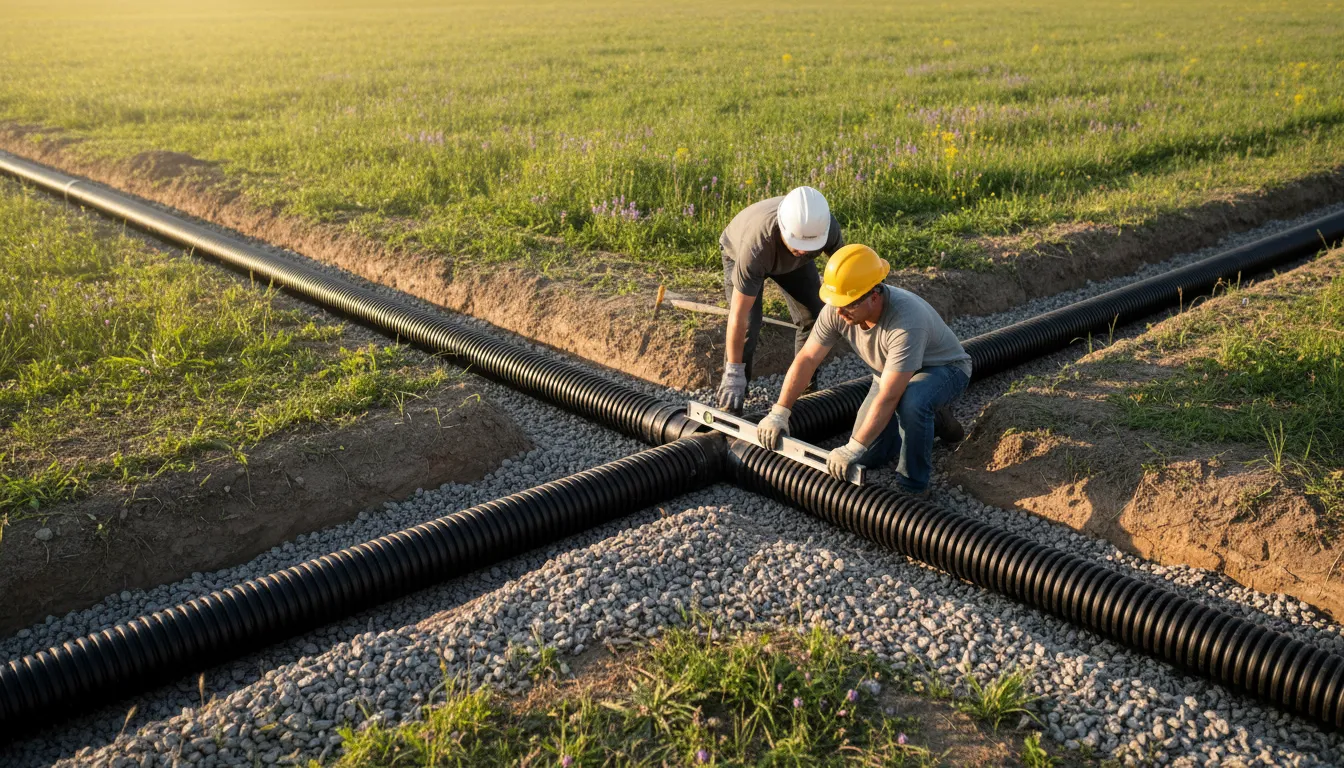
Find the Best Drain Field Repair Companies for Your Business
No obligation • Fast responses • Nationwide coverage

Why you can trust Septic Spot
Septic Spot is a leading United States resource for understanding and comparing septic services. Our editors review providers using consistent criteria and verify key business details. Listings and scores are independent, and companies cannot pay to influence our content.
Search providers near you
Top Drain Field Repair Companies in Tucson, Arizona Ranked
A failing drain field is a serious issue for any Tucson home with a septic system. This critical component, also known as a leach field or absorption field, is responsible for safely dispersing treated wastewater into the soil. When it fails, you may notice soggy ground, sewage odors, or slow-draining fixtures. Navigating drain field repair or replacement requires understanding local soil conditions, strict Pima County permitting, and finding a qualified professional. This guide explains the process, costs, and regulations to help you make informed decisions and connect with local experts for your property.
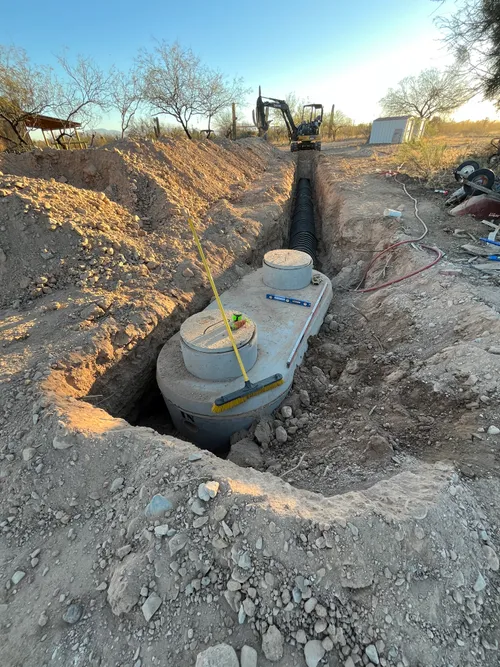
Fearless Contracting Inc. Septic Service
7502 S Placita De La Sombra, Tucson, AZ 85746
Fearless Contracting Inc. Septic Service is a family owned and operated business based in Tucson, AZ. They offer a wide range of septic system services including septic tank pumping, installation, inspection, and repair, as well as drain field repair and hydro jetting. The company serves Tucson and surrounding areas such as Catalina, Vail, Oro Valley, and Marana. With over 14 years of experience in the underground industry, Fearless Contracting provides 24/7 emergency service to meet various septic system needs.

88DRAIN
4377 S Sky High Pl a, Tucson, AZ 85730
88DRAIN is a septic tank and plumbing service provider based in Tucson, AZ. The company offers septic tank pumping, inspection, repair, installation, and drain field repair services. With over 44 years of experience serving Tucson and Pima County, 88DRAIN has recently joined the Rite Way family, expanding its service offerings to include heating, cooling, plumbing, and electrical work. This transition ensures continued comprehensive support for local customers with the same team and phone number.
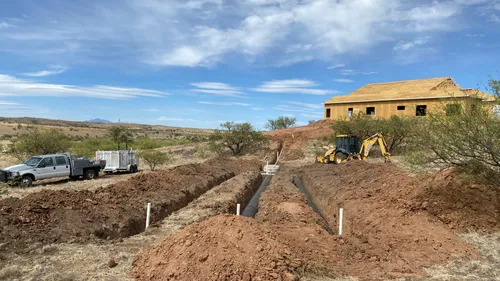
The Septic Surgeon Tucson
Tucson, AZ
The Septic Surgeon Tucson is a licensed contractor specializing in septic tank inspection, repair, installation, and drain field replacement in Tucson, AZ. The company has extensive experience performing thousands of leach field replacements and septic system repairs in Tucson and Pima County. Their services include septic tank replacement, leach field repair, and percolation testing for new installations. The Septic Surgeon also offers specialized tank enzymes to support septic system health.
Understanding Your Septic System's Drain Field
The drain field is the final stage of your onsite wastewater treatment system. After solids settle in the septic tank, the liquid effluent flows out into a network of perforated pipes buried in trenches filled with gravel. This effluent slowly percolates down through the soil, where natural processes provide final treatment. A properly functioning leach field is essential for protecting your health, your property value, and the local groundwater. In Tucson's unique environment, several factors can lead to premature failure, including soil composition, system age, and improper maintenance.
Signs You Need Drain Field Repair or Replacement
Recognizing early warning signs can save you from a complete system failure and more expensive repairs. Be alert for the following indicators:
- Soggy Ground or Standing Water: Puddles or persistently wet, spongy soil over the drain field area, especially when it hasn't rained.
- Sewage Odors: Unpleasant smells emanating from your yard, particularly near the septic tank or leach field.
- Slow Drains and Backups: Toilets, showers, and sinks that drain very slowly or back up, despite a recently pumped tank.
- Unusually Green Grass: Patches of grass over the drain field that are much lusher and greener than the rest of the lawn, indicating a nutrient surge from surfacing effluent.
- Gurgling Sounds: Audible gurgling in your plumbing fixtures.
If you observe any of these signs, it's crucial to stop using water extensively and contact a professional for an inspection immediately.
The Tucson and Pima County Regulatory Landscape
All work on septic systems in Pima County, including Tucson, is strictly regulated. You cannot simply hire a contractor to dig up and replace a leach field. The process is overseen by Pima County's Environmental Quality Department to ensure public and environmental health.
Key Permit Requirements: For any new installation or replacement of a septic system component, you must submit a Notice of Intent to Discharge through the Pima County Land Permitting Customer Portal 1. The approval process involves two critical authorizations:
- Construction Authorization (CA): This permit allows a licensed contractor to physically build or repair the system.
- Discharge Authorization (DA): Once construction is complete and passes a final county inspection, this permit allows you to legally use the system.
Major repairs or modifications, such as adding a bedroom to your home, typically require a completely new permit and system design that meets current code 2. Furthermore, if you are selling your home, Arizona law requires a Notice of Transfer and Inspection, which triggers a mandatory system inspection 3.
The Step-by-Step Process for Drain Field Work
1. Professional Inspection and Site Evaluation
The first step is always a comprehensive inspection by a certified professional. They will locate and pump the septic tank to inspect its condition, check for cracks or root intrusion, and measure sludge levels 4. Crucially, they will also perform a percolation test or soil analysis to evaluate the drain field's function and the soil's absorption capacity. In many parts of Tucson, this involves digging deep test pits to examine soil layers and identify constraints like caliche.
2. System Design and Permitting
Based on the site evaluation, a licensed designer or engineer will create a system plan. This design must account for:
- Soil Type: Tucson's clay-heavy soils and hard caliche layers significantly impact absorption rates and may require specialized system designs 5.
- Setbacks: Regulations mandate minimum distances from wells, property lines, buildings, and waterways 6.
- System Type: While conventional gravity-fed systems are common, poor percolation may necessitate an alternative system, such as an aerobic treatment unit (ATU) or pressurized drip irrigation field, which can be more expensive 7 8. This design plan is then submitted to Pima County to obtain the necessary Construction Authorization 9.
3. Construction and Final Approval
Once permitted, a licensed septic contractor will excavate and install the new or repaired leach field. This can be labor-intensive, especially if breaking through caliche is required. After installation, a county inspector must perform a final review. Upon passing this inspection, the county issues the Discharge Authorization, allowing you to use the system 10.
Find the perfect drain field repair companies for your needs
Get personalized recommendations and expert advice
Cost Factors for Drain Field Work in Tucson
Costs for leach field repair or replacement in Southern Arizona vary widely based on your specific site conditions and system requirements. The following estimates are based on regional data and typical project scopes 11.
- Professional Inspection & Pumping: $150 - $1,000. This initial cost depends on tank accessibility and sludge levels.
- Site Evaluation & Permitting: $500 - $2,000. This covers soil testing, design work, and county permit fees.
- Conventional Drain Field Replacement: $3,000 - $7,000+. This is for a standard gravity system replacement on a site without major complications.
- Alternative System Replacement: $10,000 - $20,000+. If your soil requires an aerobic treatment unit (ATU) or other advanced system, costs rise significantly 12.
- Excavation & Labor: $1,500 - $4,000. Labor is a major variable, as digging in compacted clay or caliche dramatically increases time and equipment needs 13.
Important Note: The most significant cost drivers in the Tucson area are soil conditions (caliche) and the potential need for an alternative system type. Always get multiple detailed quotes based on a completed site evaluation.
Maintaining Your New or Repaired Drain Field
Protecting your investment is key. Proper maintenance extends the life of your new absorption field for decades:
- Regular Pumping: Have your septic tank pumped every 3-5 years by a licensed professional to prevent solids from clogging the drain field.
- Water Conservation: Spread out water use. Fix leaks and consider installing water-efficient fixtures.
- Mind What You Flush: Only human waste and toilet paper should go down the drain. Avoid chemicals, grease, wipes, and feminine hygiene products.
- Protect the Area: Never drive or park vehicles over the drain field, and avoid planting trees with deep roots nearby.
Frequently asked questions
Sources
Footnotes
-
Onsite Wastewater Treatment Facilities - https://www.pima.gov/433/Onsite-Wastewater-Treatment-Facilities ↩
-
Septic System Repairs: Guidelines and Limitations - Graham.az.gov - https://www.graham.az.gov/DocumentCenter/View/763/Septic-System-Repairs---Guidelines-and-Limitations-PDF ↩
-
WQD | Onsite Wastewater | Notice of Transfer and Inspection - ADEQ - http://azdeq.gov/wqd-onsite-wastewater-notice-transfer-and-inspection ↩
-
Professional Septic Inspection in Southern Arizona: What to Expect - https://www.grossseptic.com/blog/professional-septic-inspection-in-southern-arizona/ ↩
-
HOMEOWNER'S MANUAL Septic Systems 101 - Yavapai County - https://www.yavapaiaz.gov/files/sharedassets/public/development-and-permits/zoning-amp-planning/documents/homeownersepticmanual.pdf ↩
-
Septic Systems | Cochise County, AZ - https://www.cochise.az.gov/898 ↩
-
Leach Field Installation in Arizona: What Homeowners Need ... - https://www.grossseptic.com/blog/leach-field-installation-in-arizona-what-homeowners-need-to-know-before-replacing-a-drain-field/ ↩
-
Septic Systems & Permits - Cochise Off-Grid - https://cochiseoffgrid.com/septic-systems-permits/ ↩
-
On-Site Wastewater Treatment Facilities | Pima County, AZ - https://www.pima.gov/1086/On-Site-Wastewater-Treatment-Facilities ↩
-
Understanding Septic System Permits in Pima County - https://tucsonsepticsystems.com/septic/understanding-septic-system-permits-in-pima-county/ ↩
-
Inspecting Your Household Septic System | UA Cooperative Extension - https://extension.arizona.edu/publication/inspecting-your-household-septic-system ↩
-
Cost to Replace Septic Tank and Drain Field [2026 Data] | Angi - https://www.angi.com/articles/how-much-new-drain-fields-foot.htm ↩
-
Get Drain Field Installation in Vail, AZ - Tucson Septic - https://tucsonsepticservice.com/drain-field-installation-vail-az ↩