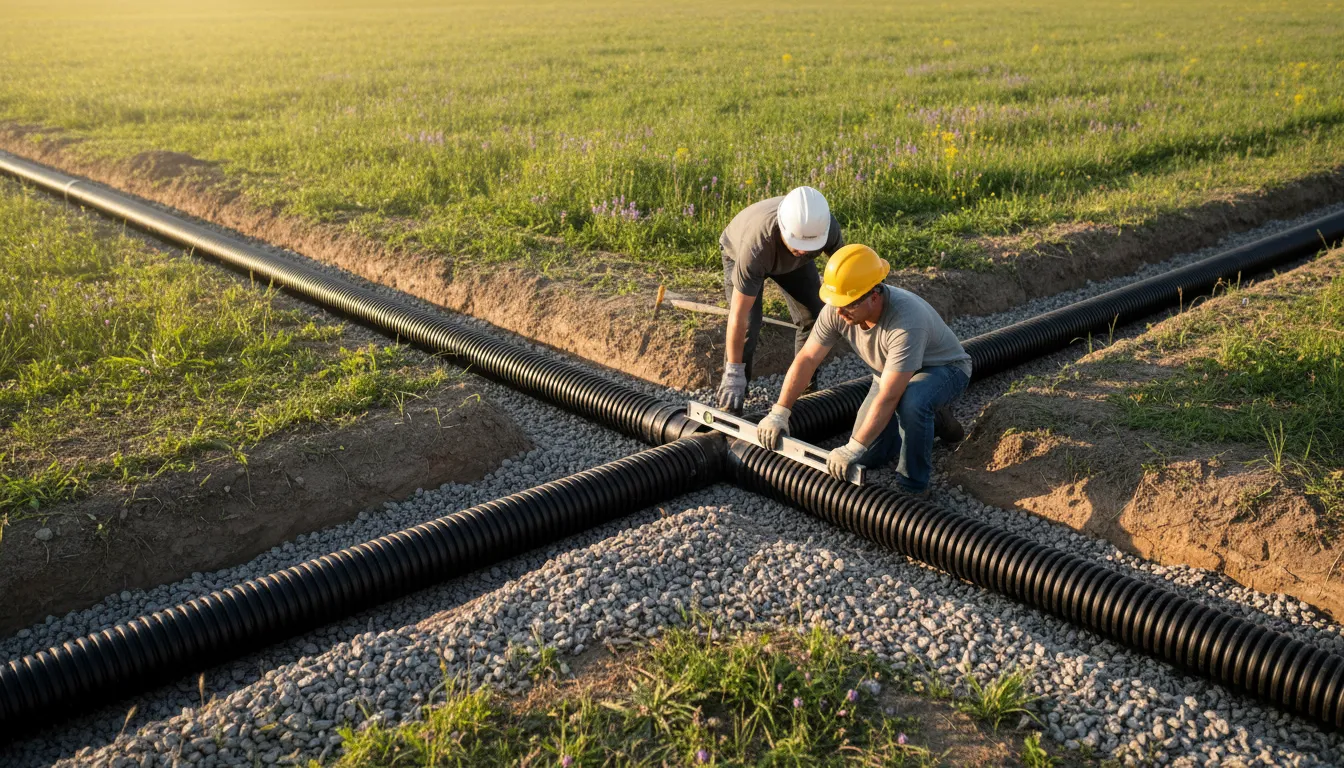
Find the Best Drain Field Repair Companies for Your Business
No obligation • Fast responses • Nationwide coverage

Why you can trust Septic Spot
Septic Spot is a leading United States resource for understanding and comparing septic services. Our editors review providers using consistent criteria and verify key business details. Listings and scores are independent, and companies cannot pay to influence our content.
Search providers near you
Top Drain Field Repair Companies in Marana, Arizona Ranked
A failing drain field, also known as a leach field, is a serious issue for any home with a septic system. This critical component is responsible for safely filtering and dispersing treated wastewater into the soil. When it malfunctions, it can lead to sewage backups, soggy yards, and environmental contamination. For Marana homeowners, navigating drain field issues requires understanding local soil conditions, Pima County regulations, and the repair process. This guide helps you identify problems, understand your options, and connect with qualified local professionals to restore your system's function.
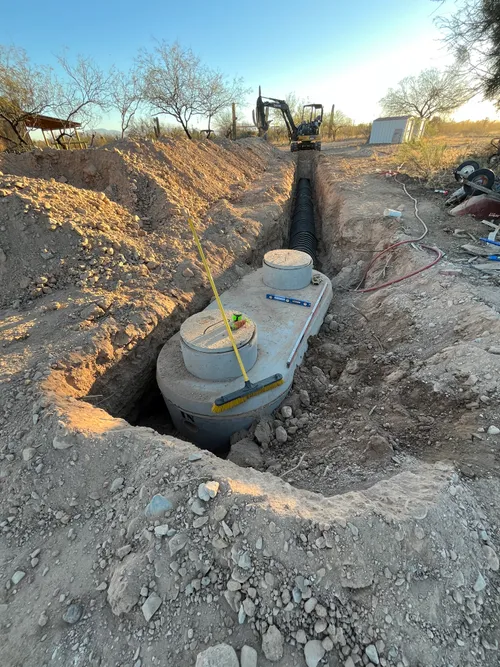
Fearless Contracting Inc. Septic Service
7502 S Placita De La Sombra, Tucson, AZ 85746
Fearless Contracting Inc. Septic Service is a family owned and operated business based in Tucson, AZ. They offer a wide range of septic system services including septic tank pumping, installation, inspection, and repair, as well as drain field repair and hydro jetting. The company serves Tucson and surrounding areas such as Catalina, Vail, Oro Valley, and Marana. With over 14 years of experience in the underground industry, Fearless Contracting provides 24/7 emergency service to meet various septic system needs.
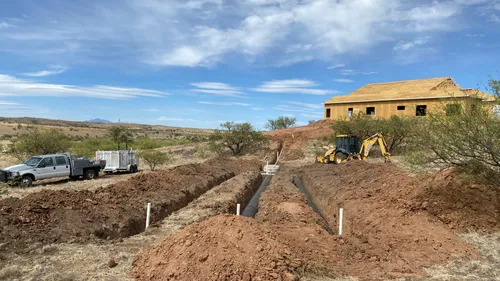
The Septic Surgeon Tucson
Tucson, AZ
The Septic Surgeon Tucson is a licensed contractor specializing in septic tank inspection, repair, installation, and drain field replacement in Tucson, AZ. The company has extensive experience performing thousands of leach field replacements and septic system repairs in Tucson and Pima County. Their services include septic tank replacement, leach field repair, and percolation testing for new installations. The Septic Surgeon also offers specialized tank enzymes to support septic system health.
Understanding Your Septic Drain Field
The drain field is the final stage of your onsite wastewater treatment system. After solids settle in the septic tank, liquid effluent flows out into a network of perforated pipes buried in trenches filled with gravel. This effluent slowly percolates through the soil, where natural processes provide final treatment. A properly functioning leach field is essential for protecting both your property and public health.
In Marana and across Southern Arizona, several environmental factors make drain fields particularly vulnerable. The region's soil often contains high clay content or a hard, cement-like layer called caliche 1. These soil types have very slow percolation rates, meaning water doesn't drain easily. This can cause effluent to pool and saturate the field, leading to premature failure. Furthermore, the arid climate can affect the bacterial activity necessary for breaking down waste, making consistent, proper maintenance even more critical 1.
Signs Your Drain Field Needs Attention
Catching problems early can mean the difference between a repair and a full, costly replacement. Be vigilant for these warning signs:
- Soggy Ground or Standing Water: Puddles or consistently wet, spongy soil over the drain field area, especially when it hasn't rained.
- Foul Odors: Unpleasant sewage smells emanating from your yard, particularly near the drain field.
- Unusually Lush Vegetation: Grass or plants over the leach field that are greener, thicker, and grow faster than the rest of the yard, indicating a nutrient-rich wastewater seepage.
- Slow Drains and Backups: Gurgling pipes, slow-draining sinks and toilets, or sewage backups in the home. This often indicates the entire system is overloaded because the drain field is not absorbing liquid.
- High Nitrate Levels in Well Water: If you have a private well, regular testing that shows elevated nitrate levels can signal a failing septic system is contaminating groundwater.
If you notice any of these issues, it's time to call a professional for an inspection.
The Professional Inspection Process
A thorough inspection by a state-approved professional is the first step to diagnosing drain field problems. In Arizona, a formal septic inspection is required within six months prior to a property transfer, but it's a wise step for any homeowner troubleshooting issues. During an inspection for drain field performance, the professional will:
- Pump and Inspect the Tank: They will open the septic tank to check for structural integrity, ensure inlet and outlet baffles are intact, and note the sludge and scum levels 2.
- Assess the Drain Field: The inspector will walk the leach field area looking for visual clues of failure, such as standing water or overly lush vegetation 3.
- Check Distribution Components: If your system has a distribution box or pump, they will verify it is functioning correctly to ensure even wastewater flow to all field lines 4.
- Provide a Detailed Report: You will receive a state-mandated inspection report outlining the system's condition and any necessary repairs 5. The cost for a basic septic inspection in the area typically ranges from $55 to $150.
Find the perfect drain field repair companies for your needs
Get personalized recommendations and expert advice
Repair vs. Replacement: Making the Right Choice
The inspection will determine whether a repair or a full replacement is necessary. The choice depends on the extent and nature of the damage.
When Repair is Possible: Partial repairs may be an option for localized problems. This can include:
- Cleaning or Jetting Lines: Removing minor clogs or biomat buildup in a section of the field lines.
- Replacing a Single Failed Line: Excavating and replacing one clogged or crushed pipe while leaving the rest of the field intact.
- Fixing the Distribution Box: Repairing or leveling a damaged box that is causing uneven effluent distribution.
Costs for these smaller leach line repairs in Marana can range from $250 to $1,500, depending on the scope of work 6.
When Replacement is Necessary: A full drain field replacement is required when the entire soil absorption area has failed. Common reasons include:
- Complete Saturation: The soil is permanently clogged with a thick biomat (a layer of organic matter) and can no longer absorb liquid.
- Irreparable Pipe Damage: Multiple field lines are crushed, broken, or extensively clogged.
- System Age and Wear: The original field has simply reached the end of its lifespan, often 20-30 years.
A complete drain field replacement is a major project. In Marana, homeowners can expect costs to generally fall between $3,000 and $7,000 or more7 8. The final price depends on the size of the field, soil conditions, and the depth of excavation required to get through caliche layers.
Navigating Pima County Permits and Regulations
Any significant repair that constitutes a "major modification" or a full drain field replacement in Marana requires a permit from Pima County's On-Site Wastewater Treatment program. Working with a licensed installer is crucial, as they will handle this process. Key regulatory steps include:
- Notice of Intent (NOI): Your installer will submit a septic system application, known as a Notice of Intent to Discharge, detailing the proposed work 9.
- Site and Soil Evaluation: New or replacement fields must be sized based on a percolation (perc) test and the number of bedrooms in the home, not the old system's size 10.
- Setback Requirements: The new field must be located a specific distance from property lines, wells, buildings, and other protected features 11.
- Online Portal: Permits are managed through the Pima County Land Permitting Customer Portal 12.
- Notice of Transfer (NTO): If you are selling your home, a completed inspection report must be submitted to the county via a Notice of Transfer within 15 days of the sale closing 13.
Adhering to these regulations ensures your system is safe, effective, and legally compliant, protecting your investment and the local environment.
Maintaining Your New or Repaired Drain Field
Protecting your investment in a new or repaired leach field starts with proper maintenance. Key practices include:
- Regular Pumping: Have your septic tank pumped every 3-5 years to prevent solids from washing out into the field.
- Conserve Water: Spread out laundry loads, fix leaks, and use water-efficient fixtures to avoid hydraulically overloading the system.
- Mind What You Flush: Only human waste and toilet paper should go down the drain. Avoid chemicals, grease, wipes, and feminine hygiene products.
- Protect the Area: Never drive or park vehicles over the drain field, and avoid planting trees with deep roots nearby.
Frequently asked questions
Sources
Footnotes
-
Leach Field Installation in Arizona: What Homeowners Need ... - https://www.grossseptic.com/blog/leach-field-installation-in-arizona-what-homeowners-need-to-know-before-replacing-a-drain-field/ ↩ ↩2
-
Inspecting Your Household Septic System - https://www.extension.arizona.edu/sites/default/files/2024-09/az1159-2018_Inspecting%20Your%20Household%20Septic%20System.pdf ↩
-
Affordable Field Lines Replacement - Marana Septic - https://maranaseptic.com/marana-field-lines-replacement ↩
-
The Importance Of Your Septic System Drainfield Leach Field Repairs: What You Need To Know BioMicrobics | Septic System Drainfield Leach Field Repair - https://biomicrobics.com/articles/importance-septic-system-drainfield-leach-field-repair/ ↩
-
What You Should Know When You're Having Your Septic System ... - https://extension.arizona.edu/sites/extension.arizona.edu/files/attachment/az1554-12-12-11_TransferOfOwnershipInspection_revised_2-24-12.pdf ↩
-
Leach Line Repair Services in Marana, AZ | Expert Solutions - https://maranaseptic.com/get-leach-line-repair ↩
-
Inspecting Your Household Septic System | UA Cooperative Extension - https://extension.arizona.edu/publication/inspecting-your-household-septic-system ↩
-
Leach Field Repair Services in Marana, AZ | Expert Solutions - https://maranaseptic.com/get-leach-field-repair ↩
-
Understanding Septic System Permits in Pima County - https://tucsonsepticsystems.com/septic/understanding-septic-system-permits-in-pima-county/ ↩
-
Septic Drainfield Design 101: A Complete Guide - https://landperc.com/septic-drainfield-design-guide/ ↩
-
Septic Tank Plans: A Complete Homeowner's Guide - https://landperc.com/septic-tank-plans-guide/ ↩
-
On-Site Wastewater Treatment Facilities | Pima County, AZ - https://www.pima.gov/1086/On-Site-Wastewater-Treatment-Facilities ↩
-
Arizona Septic Tank Requirements | Onsite Wastewater Management System - https://www.ntotank.com/blog/arizona-septic-tank-requirements ↩