Find the Best Drain Field Repair Companies for Your Business
No obligation • Fast responses • Nationwide coverage

Why you can trust Septic Spot
Septic Spot is a leading United States resource for understanding and comparing septic services. Our editors review providers using consistent criteria and verify key business details. Listings and scores are independent, and companies cannot pay to influence our content.
Search providers near you
Top Drain Field Repair Companies in Maricopa, Arizona Ranked
A failing drain field is a serious issue for any home with a septic system, leading to soggy yards, foul odors, and potential health hazards. Drain field repair and replacement involves diagnosing and fixing the underground network of pipes and soil that treats and disperses wastewater from your septic tank. This guide provides essential information on the process, local regulations, and costs to help you navigate finding qualified professionals for this critical septic system work in Maricopa.

Eco Septic Tank Pumping Phoenix
Phoenix, AZ
Eco Septic Tank Pumping Phoenix provides a full range of septic services including pumping, inspection, repair, and installation in Phoenix, AZ. They handle routine septic system cleaning, emergency sewer cleaning, and biological treatments to maintain system health. Their process includes thorough tank inspection and safe waste disposal to licensed facilities. The company also offers septic system repairs and new installations, ensuring compliance with local regulations. Serving Phoenix and surrounding areas, Eco Septic Tank Pumping Phoenix emphasizes regular maintenance to prevent system failures and extend septic system lifespan.

Mesa Septic
Mesa, AZ
Mesa Septic is a family-owned septic service company based in Mesa, AZ, with over 50 years of experience serving the valley. They provide residential and commercial customers with septic tank pumping, inspection, repair, installation, and system design services. Their certified inspectors handle septic certifications required by Arizona regulations, and they offer specialized services such as grease trap pumping, drain field remediation, and sewer line hydrojetting. Mesa Septic also provides 24/7 plumbing and sewer assistance through licensed plumbers.
Arizona Septic Tank
Phoenix, AZ
Arizona Septic Tank is a family-owned and operated full-service septic contractor serving Phoenix, AZ, and surrounding areas. With over 40 years of experience, they provide septic system design, installation, pumping, inspection, repair, and maintenance for both residential and commercial properties. Their services cover standard and alternative septic systems, including excavation, leach field installation, and specialized septic leach drilling. Arizona Septic Tank also offers grease trap cleaning, enzyme and root treatments, and electronic location services. They are licensed and insured, focusing on environmentally friendly solutions and compliance with state regulations.
Understanding Your Drain Field's Role
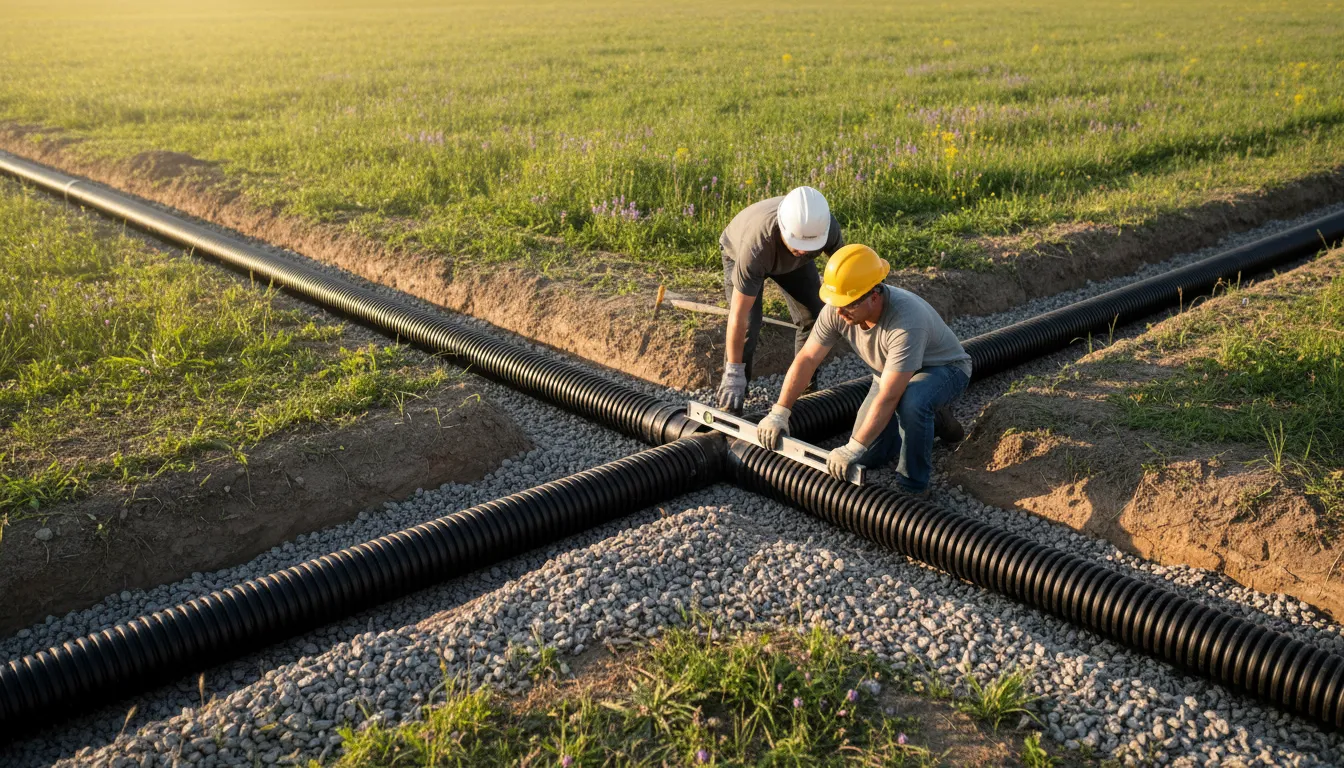
Often called a leach field or absorption field, the drain field is the final and most crucial stage of your onsite wastewater treatment system. After solids settle in the septic tank, the liquid effluent flows into a series of perforated pipes buried in trenches filled with gravel. This effluent slowly percolates through the soil, where natural biological processes filter and purify it before it rejoins the groundwater. When this area becomes saturated, clogged, or damaged, the entire system fails.
Signs You Need Drain Field Attention
Recognizing early warning signs can prevent a complete system failure and more expensive repairs. Look for these common indicators in Maricopa:
- Soggy Ground or Surfacing Effluent: Puddles, overly lush grass, or sewage odors in the yard, especially near the drain field area.
- Slow Drains and Backups: Gurgling pipes, slow-draining sinks and toilets, or sewage backups inside the home.
- Nitrate Contamination: Test results from your well showing elevated nitrate levels, which can indicate a failing system is polluting groundwater 1.
- Failed Inspection: A routine septic inspection reveals high liquid levels in the tank or signs of drain field failure.
The Maricopa County Regulatory Process
Any significant repair or full replacement of a septic drain field in Maricopa County requires interaction with the Maricopa County Environmental Services Department (MCESD). Skipping permits can result in violation fees of $250-$500 or more, and you may be forced to redo the work.
Step 1: Records Search and Site Evaluation
Before any design work, a licensed professional should request a records search from MCESD to locate the original, approved system design 2. Next, a Phase I site and soils evaluation is almost always required. This involves soil tests (like perc tests) to determine the soil's absorption rate and suitability, which dictates the design of the replacement system. The cost for this evaluation typically ranges from $300 to over $3,000.
Step 2: Permit Application
Based on the evaluation, your contractor will determine the needed permit:
- Minor Plan Review/Alteration Permit: For modifications or repairs to an existing system. If the system is too damaged, a full replacement application is required instead.
- New System Permit (NOID): For a completely new drain field. Permit fees for alterations start around $205-$400.
Step 3: Design and Installation
The new design must adhere to strict county setback distances from property lines, wells, and structures 3 4. Once permitted, installation can begin, which must be followed by a mandatory final inspection from MCESD 3.
Common Drain Field Repair & Replacement Methods
The right solution depends on the cause of failure, soil conditions, and local regulations.
- Pipe and Gravel Replacement: The traditional method involves excavating the old trenches, removing clogged soil and pipe, and installing new perforated pipe in clean gravel.
- Chamber System Installation: A modern alternative that uses plastic leaching chambers instead of gravel, providing more storage volume and easier installation.
- Soil Restoration (Aeration/Biomat Removal): For minor clogs, a process to break down the biomat layer clogging the soil, though this is often a temporary fix.
- System Expansion or Relocation: If the original site is unsuitable, a new drain field may need to be installed in a different part of the yard.
Cost Factors for Maricopa Homeowners
Drain field work is a significant investment. In Maricopa County, total costs for repair or replacement commonly range from $3,000 to over $10,000 5. Several factors influence the final price:
- Extent of Damage: A small section repair costs far less than a full field replacement.
- Soil and Site Conditions: Sandy, well-draining soil is ideal. Tight, clay-heavy soil may require more extensive excavation or a specially engineered system, increasing costs 6.
- System Size and Type: Larger homes need larger fields. Chamber systems may have different material costs than traditional gravel fields.
- Permitting and Design: Include fees for soil testing ($300-$3,000+), permit applications ($205-$400+), and professional design work 7 8 9.
- Labor and Excavation: Accessibility and the depth of excavation greatly affect labor costs.
Find the perfect drain field repair companies for your needs
Get personalized recommendations and expert advice
Choosing a Licensed Professional in Maricopa
This is not a DIY project. Selecting the right contractor is critical for a compliant and long-lasting solution.
- Verify Licensing: Ensure the company is licensed by the Arizona Registrar of Contractors for septic system work.
- Check County Familiarity: Choose a provider with proven experience navigating MCESD permits, soil evaluations, and inspections in Maricopa County.
- Get Detailed Quotes: Obtain written estimates that break down costs for investigation, design, permitting, materials, labor, and county fees.
- Ask for References: Request and contact local references to ask about their experience with the contractor's work and professionalism.
- Review the Process: A reputable professional will explain the entire process, from records search to final inspection, and handle the permit paperwork on your behalf.
Long-Term Health of Your New Drain Field
A new drain field is a major investment worth protecting. Practice good septic habits: conserve water, avoid pouring grease or chemicals down drains, and do not drive or build over the field. Have your septic tank pumped regularly (typically every 3-5 years) to prevent solids from washing out and clogging the new field. A well-maintained system can last for decades.
Frequently asked questions
Sources
Footnotes
-
Inspecting Your Household Septic System | UA Cooperative Extension - https://extension.arizona.edu/publication/inspecting-your-household-septic-system ↩
-
Frequently Asked Questions - CivicPlus.CMS.FAQ - Maricopa County - https://www.maricopa.gov/2564/Onsite-Wastewater-Septic-Systems-FAQs ↩
-
MINOR PLAN REVIEW OF AN EXISTING ON-SITE WASTEWATER ... - https://www.maricopa.gov/DocumentCenter/View/7432/Minor-Plan-Review-Instructions-PDF ↩ ↩2
-
Septic Tank Plans: A Complete Homeowner's Guide - https://landperc.com/septic-tank-plans-guide/ ↩
-
How Much Does It Cost to Replace a Septic System? - https://alphaenvironmental.net/blog/how-much-cost-replace-septic-system/ ↩
-
Septic Drain Field Replacement Costs Vs. Long-Term Savings - https://www.theseptictankman.com/blog/septic-drain-field-replacement-costs-vs-long-term-savings ↩
-
SITE INVESTIGATION AND SOILS EVALUATION FOR AN ON - https://www.maricopa.gov/DocumentCenter/View/7427/Phase-I---Site-and-Soils-Evaluation-Instructions-PDF ↩
-
DRAINAGE REGULATIONS FOR MARICOPA COUNTY - https://www.maricopa.gov/6640/DRAINAGE-REGULATIONS-FOR-MARICOPA-COUNTY ↩
-
How Much Does a Septic Soil Test Cost in 2026? - Land Perc - https://landperc.com/septic-soil-test-cost/ ↩