Find the Best Drain Field Repair Companies for Your Business
No obligation • Fast responses • Nationwide coverage

Why you can trust Septic Spot
Septic Spot is a leading United States resource for understanding and comparing septic services. Our editors review providers using consistent criteria and verify key business details. Listings and scores are independent, and companies cannot pay to influence our content.
Search providers near you
Top Drain Field Repair Companies in Surprise, Arizona Ranked
A failing drain field is a serious issue for any home with a septic system, leading to soggy yards, unpleasant odors, and potential environmental hazards. Drain field repair and replacement involves diagnosing and fixing the underground network of perforated pipes and soil that treats wastewater from your home. This work is critical for protecting your property value and public health. This guide helps you understand the local process, regulations, and costs, empowering you to find qualified professionals in Surprise to assess and resolve your system's issues.
Sewer Time Septic & Drain
33645 N Cave Creek Rd, Cave Creek, AZ 85331
Sewer Time Septic & Drain is a licensed septic and plumbing contractor serving the Phoenix, AZ area. They provide a range of services including septic tank pumping, inspections, system repairs, and full installations for residential and commercial properties. Their certified technicians handle soil and percolation testing, system design, permitting, grease trap cleaning, and lift station maintenance. Sewer Time offers same-day service and 24/7 plumbing support for emergencies and new construction projects.

Eco Septic Tank Pumping Phoenix
Phoenix, AZ
Eco Septic Tank Pumping Phoenix provides a full range of septic services including pumping, inspection, repair, and installation in Phoenix, AZ. They handle routine septic system cleaning, emergency sewer cleaning, and biological treatments to maintain system health. Their process includes thorough tank inspection and safe waste disposal to licensed facilities. The company also offers septic system repairs and new installations, ensuring compliance with local regulations. Serving Phoenix and surrounding areas, Eco Septic Tank Pumping Phoenix emphasizes regular maintenance to prevent system failures and extend septic system lifespan.

Mesa Septic
Mesa, AZ
Mesa Septic is a family-owned septic service company based in Mesa, AZ, with over 50 years of experience serving the valley. They provide residential and commercial customers with septic tank pumping, inspection, repair, installation, and system design services. Their certified inspectors handle septic certifications required by Arizona regulations, and they offer specialized services such as grease trap pumping, drain field remediation, and sewer line hydrojetting. Mesa Septic also provides 24/7 plumbing and sewer assistance through licensed plumbers.
Arizona Septic Tank
Phoenix, AZ
Arizona Septic Tank is a family-owned and operated full-service septic contractor serving Phoenix, AZ, and surrounding areas. With over 40 years of experience, they provide septic system design, installation, pumping, inspection, repair, and maintenance for both residential and commercial properties. Their services cover standard and alternative septic systems, including excavation, leach field installation, and specialized septic leach drilling. Arizona Septic Tank also offers grease trap cleaning, enzyme and root treatments, and electronic location services. They are licensed and insured, focusing on environmentally friendly solutions and compliance with state regulations.
Understanding Your Septic Drain Field
The drain field, also known as a leach field or absorption field, is the final and most crucial stage of your onsite wastewater treatment system. After solids settle in the septic tank, the clarified liquid effluent flows into the drain field, where it percolates through the soil. The soil acts as a natural filter, removing harmful bacteria, viruses, and nutrients before the water rejoins the groundwater table. A properly functioning leach field is essential for a healthy septic system.
Signs You Need Drain Field Service
Recognizing early warning signs can prevent a minor issue from becoming a costly full replacement. Common indicators of a failing absorption field in Surprise include:
- Soggy Ground or Standing Water: Unexplained wet spots, lush green grass, or pooling water over the drain field area, especially when it hasn't rained.
- Sewage Odors: Foul smells emanating from the yard or backing up into the home through drains.
- Slow Drains: Gurgling sounds, slow-draining sinks, tubs, and toilets throughout the house.
- Sewage Backups: The most severe sign, where wastewater backs up into household drains.
If you notice any of these signs, it's time to contact a professional for an inspection.
The Inspection and Diagnosis Process
Before any repair or replacement can be planned, a thorough inspection is required to diagnose the problem's root cause. A licensed inspector will typically evaluate several components 1:
- Visual Survey: Checking the drain field area for surface symptoms like standing water or unusually lush vegetation.
- Tank Evaluation: Inspecting the septic tank's inlet and outlet baffles, structural integrity, and sludge/scum levels to rule out tank issues.
- Loading Test: Running a significant amount of water into the system to see if the drain field accepts it without backing up or surfacing.
- Distribution Check: Ensuring the distribution box (if present) is level and functioning to evenly disperse effluent across the field.
In Arizona, a formal Report of Inspection is required for property transfers and must be completed by a licensed inspector within six months prior to the sale 2 3. Inspection fees in Surprise typically range from $200 to over $650 for a comprehensive report.
Local Regulations and Permit Requirements in Maricopa County
All major septic system work in Surprise is governed by Maricopa County Environmental Services. Understanding these rules is the first step in any project.
- Permits Are Mandatory: A Notice of Intent to Discharge (the septic system application) must be filed and approved by the county before any installation, repair, or modification begins.
- The 50% Rule: Arizona guidelines state that if the cost of repairs exceeds 50% of the cost of a new system, or if the repairs will not correct the failure, a full system replacement is required 4.
- Post-Repair Inspection: All repairs must be inspected by the county to ensure compliance with the Arizona Administrative Code.
Find the perfect drain field repair companies for your needs
Get personalized recommendations and expert advice
Key Factors Influencing Repair vs. Replacement
The decision to repair a portion of your leach field or replace it entirely depends on several site-specific factors that a professional will assess.
Soil Conditions in Surprise
Soil type is the most critical factor. The ideal soil for a conventional drain field is sandy loam that allows for proper percolation. Problems arise with:
- High Clay Content: Clay soils absorb water slowly and can easily become saturated, causing effluent to surface.
- Pre-existing Saturation: Over-irrigation or high groundwater can saturate the soil, rendering it unable to absorb more liquid.
- Percolation Test: A "perc test" is a vital part of the site evaluation to determine the soil's absorption rate. Poor results may necessitate an alternative, engineered system 5.
System Age and Failure Cause
- Age: Older systems (20+ years) are more likely to need full replacement due to overall deterioration.
- Clogging: If the failure is due to a localized clog or a single compromised pipe, a targeted repair may be possible.
- Complete Saturation: When the entire soil absorption area is failed, replacement is usually the only option.
Setback Requirements
Maricopa County enforces strict setbacks from wells, property lines, waterways, and structures. If your existing drain field doesn't meet current codes (often due to new construction or code updates), a repair-in-place may not be allowed, forcing a relocation and full replacement 6 7.
Cost of Drain Field Work in Surprise
Costs can vary widely based on system size, soil conditions, and the technology required. Below are general estimates for the Surprise area:
- Inspection: $200 - $650+ 8
- Repair Permit/Review Fee: Approximately $400 9
- Conventional Drain Field Replacement: $4,000 - $9,000 for a standard system. ProMatcher data for Surprise suggests an average range of $6,800 - $8,100 for a new conventional system installation.
- Alternative System Replacement: For properties with poor soil, high groundwater, or space constraints, engineered systems like aerobic treatment units (ATUs) or mound systems can cost $10,000 - $20,000 or more 10 11.
These figures typically include the site evaluation, permit processing, excavation, new piping, gravel, and soil cover. They do not usually include costs for repairing landscaping after the work is complete.
The Repair and Replacement Process
Once a plan is approved, the process follows these general steps:
- Site Preparation: The area is marked, and any landscaping is carefully removed.
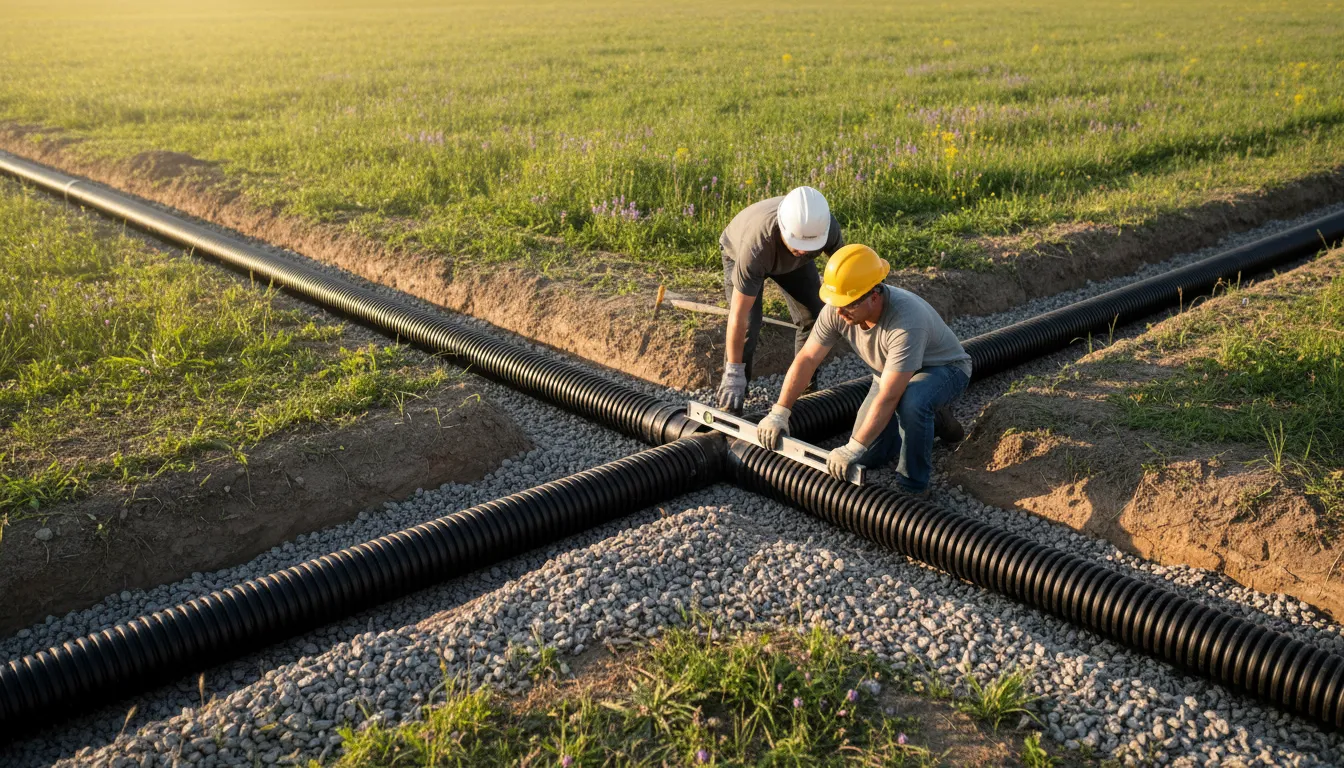
- Excavation: Heavy equipment digs trenches for the new leach field according to the engineered plan.
- Pipe and Gravel Installation: Perforated pipes are laid in the trenches on a bed of gravel, which helps distribute effluent.
- Covering and Final Inspection: The pipes are covered with more gravel and a protective fabric, then buried with soil. A county inspector will visit to approve the work before backfilling is complete.
- Restoration: The contractor will grade the soil and often restore basic landscaping like sod or seed.
Preventing Future Drain Field Failure
Protecting your new or repaired leach field is essential for its longevity.
- Regular Pumping: Have your septic tank pumped every 3-5 years to prevent solids from escaping and clogging the field 12 13.
- Water Conservation: Spread out laundry loads, fix leaky fixtures, and avoid draining large volumes of water at once to prevent saturation.
- Mind What You Flush: Only human waste and toilet paper should go down the drain. Avoid chemicals, grease, wipes, and other non-biodegradables.
- Protect the Area: Never drive or park over the drain field, and avoid planting trees with deep roots nearby.
Frequently asked questions
Sources
Footnotes
-
Inspecting Your Household Septic System - https://www.extension.arizona.edu/sites/default/files/2024-09/az1159-2018_Inspecting%20Your%20Household%20Septic%20System.pdf ↩
-
ADEQ Septic Inspections:15 FAQ'S - HomeField East Valley - https://www.homefieldonsite.com/east-valley/adeq-septic-inspections15-faqs/ ↩
-
REPORT OF INSPECTION - ADEQ - https://static.azdeq.gov/forms/septic_system_insp.pdf ↩
-
Septic System Repairs: Guidelines and Limitations - https://www.graham.az.gov/DocumentCenter/View/763/Septic-System-Repairs---Guidelines-and-Limitations-PDF ↩
-
How To Replace A Septic Drain Field Without Costly Mistakes - https://millersepticfl.com/how-to-replace-a-septic-drain-field-without-costly-mistakes/ ↩
-
Septic Drain Field Replacement Cost - https://dillonseptic.com/septic-drain-field-replacement-cost/ ↩
-
Septic System Planning Guide: Pre-Building Factors - https://www.lanikseptic.com/how-to-plan-a-septic-system/ ↩
-
How Much Does a Septic Inspection Cost in Arizona? - https://www.advantageairmechanical.com/blog/septic-inspection-cost-arizona ↩
-
HOMEOWNER'S MANUAL Septic Systems 101 - https://www.yavapaiaz.gov/files/sharedassets/public/development-and-permits/zoning-amp-planning/documents/homeownersepticmanual.pdf ↩
-
SITE INVESTIGATION AND SOILS EVALUATION FOR AN ON - https://www.maricopa.gov/DocumentCenter/View/7427/Phase-I---Site-and-Soils-Evaluation-Instructions-PDF ↩
-
Surprise Septic Systems Costs & Prices - ProMatcher Cost Report - https://septic-systems.promatcher.com/cost/surprise-az-septic-systems-costs-prices.aspx ↩
-
Leach Field Installation in Arizona: What Homeowners Need ... - https://www.grossseptic.com/blog/leach-field-installation-in-arizona-what-homeowners-need-to-know-before-replacing-a-drain-field/ ↩
-
Soil evaluations a vital step when installing a septic system - https://www.farmanddairy.com/columns/soil-evaluations-a-vital-step-when-installing-a-septic-system/650716.html ↩