Find the Best Drain Field Repair Companies for Your Business
No obligation • Fast responses • Nationwide coverage

Why you can trust Septic Spot
Septic Spot is a leading United States resource for understanding and comparing septic services. Our editors review providers using consistent criteria and verify key business details. Listings and scores are independent, and companies cannot pay to influence our content.
Search providers near you
Top Drain Field Repair Companies in Boulder, Colorado Ranked
A failing drain field is a serious issue for any home with a septic system, leading to soggy yards, foul odors, and potential environmental contamination. In Boulder, addressing problems with your leach field or soil absorption system requires navigating specific local regulations and challenging soil conditions. This guide helps you understand the process, costs, and key considerations for septic drain field work, connecting you with the information needed to find qualified local professionals for your repair or replacement project.
Understanding Drain Field Problems in Boulder
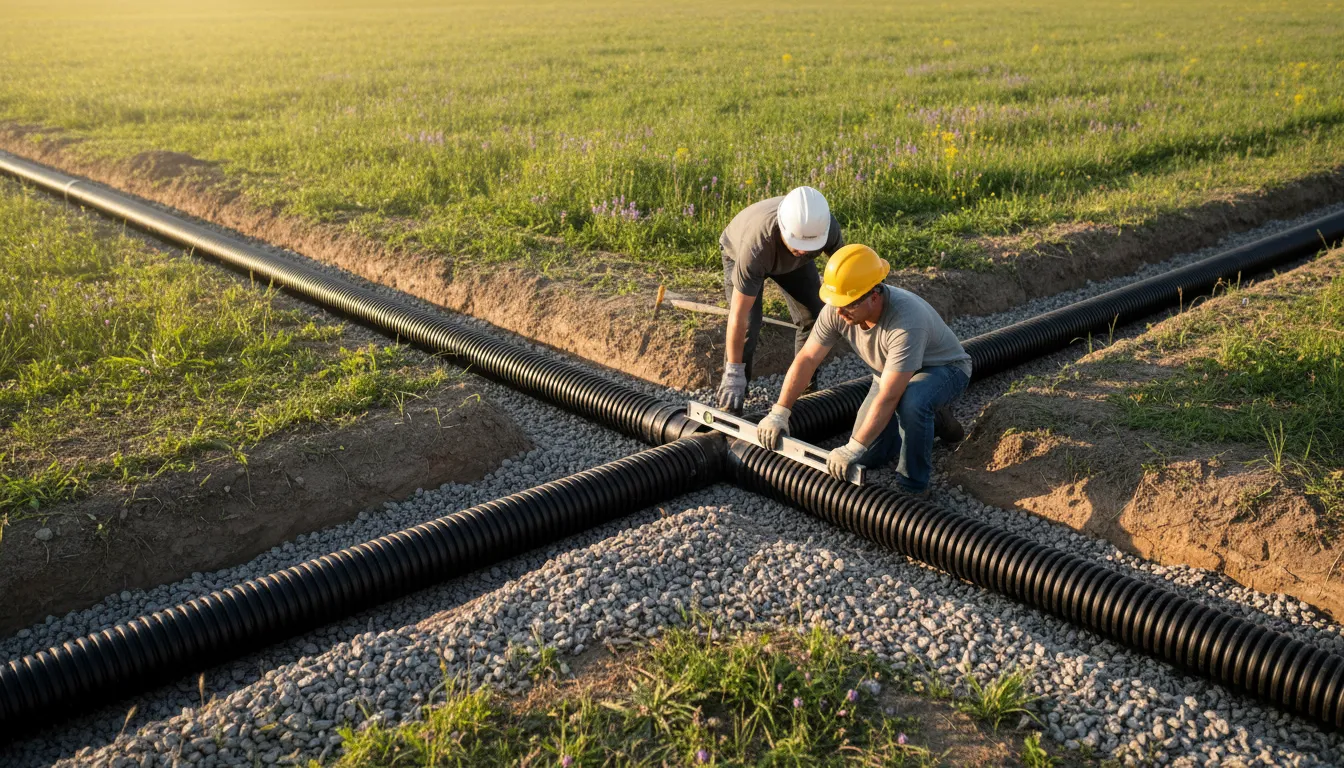
A drain field, also known as a leach field or soil absorption area, is the final and most critical stage of a septic system. After solids settle in the tank, liquid effluent flows into a network of perforated pipes buried in trenches filled with gravel. This effluent slowly percolates into the soil, where natural processes filter and treat it before it rejoins the groundwater.
In Boulder, several common issues can cause a drain field to fail:
- Soil Saturation: The most frequent sign of failure is surfacing effluent-water pooling in your yard or a persistently soggy area above the field.
- Slow Drains: Backups in household drains or gurgling plumbing fixtures can indicate that the entire system, including the absorption area, is clogged and not accepting water.
- Foul Odors: Unpleasant smells emanating from the yard or near the tank are a clear red flag.
- Unusually Green Grass: While sometimes a sign of a healthy lawn, a strip of grass that is conspicuously greener and lusher than the rest of your yard could indicate a leak from the drain field pipes.
Boulder County's Regulatory Landscape
Any work on a septic system in Boulder County is strictly regulated. You must obtain a permit from Boulder County Public Health (BCPH) for any repair, alteration, or replacement of an Onsite Wastewater Treatment System (OWTS), which includes drain fields. The regulations are designed to protect public health and local water quality, especially given the region's unique environmental sensitivities.
Key regulatory steps include:
- Record Review: The first step is often a review of existing permits and system history with the county to understand what was originally installed.
- Professional Engineering: For a full drain field replacement, Colorado Regulation 43 typically requires a design prepared by a licensed Professional Engineer (PE). This ensures the new system is sized correctly and designed for your specific property conditions.
- Setback Requirements: Systems must comply with strict minimum distances from property lines, structures, wells (100 feet), and waterways 1 2. These setbacks can significantly impact where a new leach field can be placed.
- Property Transfer Inspections: If you are buying or selling a home, a mandatory septic inspection is required, and the report must be submitted to BCPH. This process often uncovers drain field issues that need to be addressed before a sale can proceed.
The Impact of Boulder's Soil and Site Conditions
Local geology is a primary driver of both drain field failures and replacement costs. Boulder's prevalent clay soils and variable groundwater present distinct challenges.
- Clay Soils: Clay particles are tiny and tightly packed, leaving very little space for water to flow through. This slow permeability, or percolation rate, is often insufficient for a conventional gravity-fed trench system. When the soil won't absorb the effluent fast enough, the drain field becomes saturated and fails.
- High Water Tables: Seasonal snowmelt and spring rains can raise the groundwater level significantly. A drain field must be placed within a specific depth range-far enough above the water table to allow for treatment but not so deep that it doesn't function. High groundwater is a common cause of system failure and necessitates specialized designs 3 4.
- Site Constraints: Many properties in and around Boulder have steep slopes, mature trees with extensive root systems, or limited space due to lot size. These constraints can make finding a suitable area for a new, compliant soil absorption system difficult and expensive.
The Repair vs. Replacement Decision
Not all drain field problems require a full, ground-up replacement. A certified septic professional can help diagnose the issue and recommend the appropriate course of action.
Potential Repair Options:
- Jet Cleaning: High-pressure water jetting can sometimes clear minor blockages in the distribution pipes.
- Adding a New Trench: If there is sufficient space within the existing field area, adding an additional trench (a "repair trench") can provide more absorption capacity. This still requires a county permit and often a soil evaluation.
- System Additives: While some products claim to rejuvenate a field, their effectiveness is debated, and they are not a substitute for physical repair or proper maintenance. Boulder County recommends against relying on additives.
When Replacement is Necessary: A full leach field replacement is typically required when the soil itself is permanently clogged (a condition called "biomat" over-saturation), when the original system is undersized, or when it was improperly installed. Replacement involves:
- Site & Soil Evaluation: A licensed professional must perform a deep hole test to determine soil characteristics and seasonal groundwater levels, and often a percolation test.
- Engineered Design: Based on the soil data, bedroom count, and site constraints, a Professional Engineer designs a system that will work. For poor soils, this is often an engineered system.
- Permitting: The engineered design is submitted to BCPH for permit approval, a process that can take up to 30 business days.
- Installation: The old field is decommissioned, and the new one is installed according to the approved plans.
- Final Inspection: A BCPH inspector must approve the installation before the trenches are backfilled 5.
Engineered System Solutions for Challenging Sites
When conventional in-ground trenches are not viable due to soil or site limitations, an engineered alternative system is the solution. These are common in Boulder County.
- Mound Systems: This is a frequently used engineered system for clay soils or high water tables. A large sand bed is constructed above the natural grade, and the drain field is built into it. Effluent is pumped from the septic tank up into the mound, where it filters through the sand before reaching the native soil 6. Mounds require significant space and are a visible landscape feature.
- Raised Bed (At-Grade) Systems: Similar to a mound but less elevated, these involve importing suitable sand and creating an absorption area at or slightly above the original ground level.
- Other Alternatives: For the most constrained sites, advanced treatment systems that provide a higher level of effluent treatment before it reaches the drain field can be an option, sometimes allowing for a smaller absorption area.
Find the perfect drain field repair companies for your needs
Get personalized recommendations and expert advice
Understanding the Costs of Drain Field Work
Costs for drain field projects in Boulder are highly variable, driven by the need for engineering, permitting, and specialized construction. Simple repairs are less costly, while full replacements with engineered systems represent a major investment.
- Drain Field Replacement: For a conventional system replacement, homeowners can expect costs to generally range from $22,000 to $29,000 7. This includes design, permitting, excavation, materials, and installation.
- Engineered/Mound Systems: Due to the need for extensive sand, pumps, and more complex construction, mound system costs often start around $15,000 and can exceed $40,000 for larger or more complex installations 8 9 10.
- Permit Fees: Boulder County charges permit fees based on the project. These fees cover plan review, inspections, and administrative costs. The fee schedule should be reviewed on the BCPH website or discussed with your contractor.
- Additional Costs: Remember to budget for the required soil evaluation (several hundred dollars), septic tank pumping and inspection (typically $400-$600), and potential landscaping restoration after the construction is complete.
The Importance of Proper Maintenance
Preventive maintenance is the most effective way to extend the life of your drain field and avoid a premature, costly replacement.
- Regular Pumping: Have your septic tank pumped every 3-5 years by a licensed pumper. This prevents solids from escaping the tank and clogging the drain field.
- Water Conservation: Spread out water use and fix leaks. Overloading the system with too much water at once is a common cause of failure.
- Mind What You Flush: Only human waste and toilet paper should go down the drain. Never flush chemicals, grease, wipes (even "flushable" ones), feminine hygiene products, or medications 11 12.
- Protect the Area: Never drive or park vehicles over the drain field, and avoid planting trees or deep-rooted shrubs near it. Keep roof drains and sump pump discharges away from the absorption area.
Frequently asked questions
Sources
Footnotes
-
Septic & Leach Field Construction In Boulder, Nederland, and ... - https://www.highperformanceearthworks.com/landscaping-septic-excavation-boulder-county/2017/7/12/what-you-should-know-about-leach-field-construction-in-boulder-nederland-and-jefferson-county-z6e94 ↩
-
Clean water: On-site wastewater treatment systems - https://cdphe.colorado.gov/OWTS ↩
-
SepticSmart - Property Transfer - Boulder County - https://bouldercounty.gov/environment/water/septicsmart/property-transfer/ ↩
-
Homeowner Resources - https://www.cpow.net/resources/homeowner-resources/ ↩
-
ONSITE WASTEWATER TREATMENT SYSTEM (OWTS) - https://bouldercounty.gov/wp-content/uploads/2022/03/owts-permit-and-procedure-and-application.pdf ↩
-
Before a Septic System Installation in Boulder, CO: Key Tips - https://www.sullivanseptic.net/blog/before-septic-system-installation-boulder-co ↩
-
OWTS Permits and Fees - Boulder County - https://bouldercounty.gov/environment/water/septicsmart/permit-and-fee-schedule/ ↩
-
The True Cost of a 4-Bedroom Septic System in Colorado - https://www.soiltestandseptic.com/post/the-true-cost-of-a-4-bedroom-septic-system-in-colorado-why-prices-range-from-the-low-20ks-to-the ↩
-
Septic System Replacement Costs, Repair & Pumping in Northern CO - https://boonstraexcavation.com/septic-systems/ ↩
-
Untitled - https://dolocnty.colorado.gov/sites/dolocnty/files/documents/2023-Septic-Permit-Application.pdf ↩
-
Homeowners Guide to Septic Systems Brochure - Elbert County - https://www.elbertcounty-co.gov/DocumentCenter/View/1394/Septic-Smart--Homeowners-guide ↩
-
Maintenance - Boulder County - https://bouldercounty.gov/environment/water/septicsmart/maintenance/ ↩