Find the Best Drain Field Repair Companies for Your Business
No obligation • Fast responses • Nationwide coverage

Why you can trust Septic Spot
Septic Spot is a leading United States resource for understanding and comparing septic services. Our editors review providers using consistent criteria and verify key business details. Listings and scores are independent, and companies cannot pay to influence our content.
Search providers near you
Top Drain Field Repair Companies in Greeley, Colorado Ranked
A failing septic drain field is a serious issue for any homeowner, leading to soggy yards, foul odors, and potential environmental contamination. Drain field repair or replacement is a major project that requires navigating local regulations, understanding complex soil conditions, and hiring qualified professionals. This guide explains the critical steps, costs, and local considerations for septic leach field work in Greeley, Weld County, helping you make informed decisions to restore your wastewater system's function.

Understanding Your Septic System's Leach Field
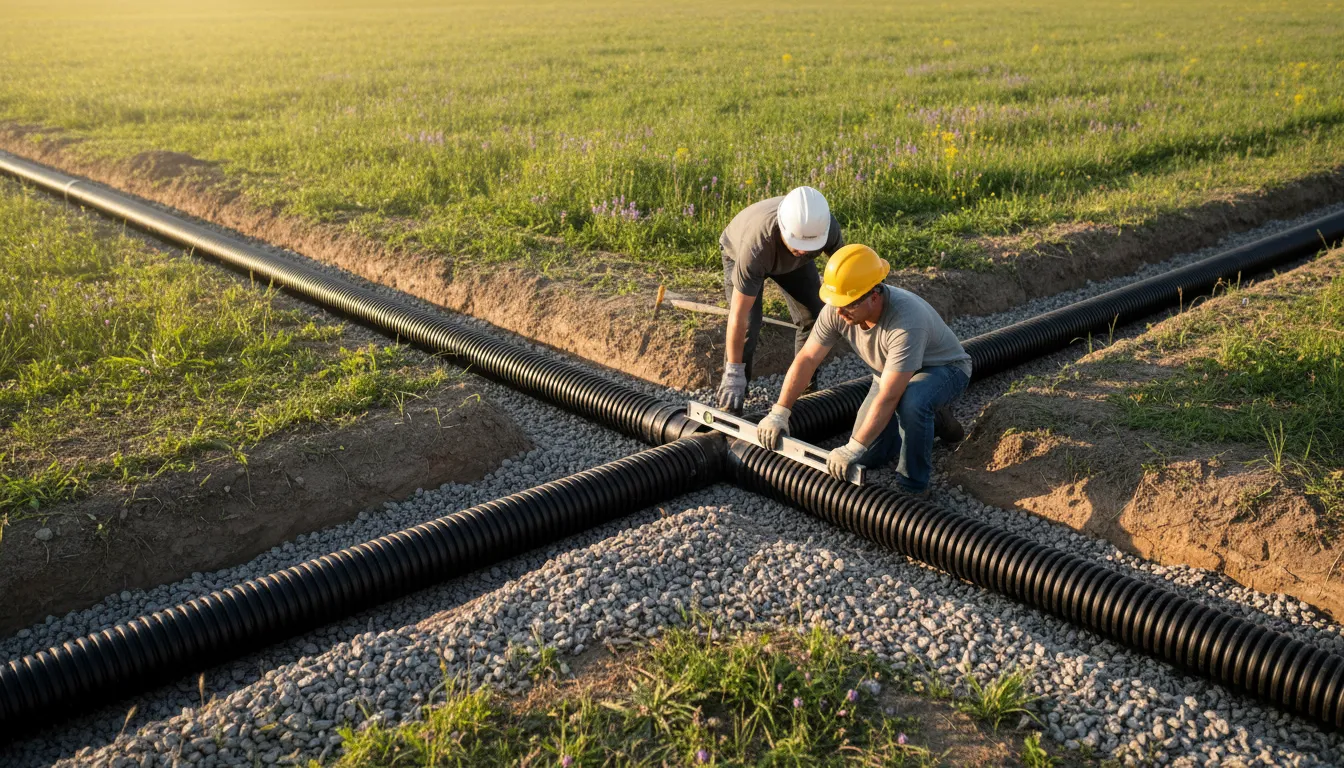
The drain field, also known as a leach field or absorption field, is the final and most crucial stage of a conventional septic system. After solids settle in the tank, liquid effluent flows into a network of perforated pipes buried in trenches filled with gravel. This effluent slowly percolates down through the soil, where natural processes filter and treat it before it rejoins the groundwater. When this area fails, it means the soil can no longer absorb and treat the water, causing backups and surface pooling.
Why Drain Fields Fail in Greeley
Several factors common to the Greeley area contribute to leach field failure. Understanding these can help diagnose problems and plan an effective solution.
- Soil Composition: Greeley and much of Weld County are known for heavy clay soils. Clay has very small pores, which severely slows the percolation rate of water. Over time, this can lead to premature clogging of the soil biomat-a layer that forms naturally but, if too thick, halts drainage.
- High Water Tables: Properties with a seasonally or permanently high groundwater table present a major challenge. If the water level rises into the drain field trenches, there is no space for the effluent to drain, causing immediate system failure.
- Age and Overload: Like any component, drain fields have a finite lifespan, typically 20-30 years. Additionally, increasing water usage in the home (more residents, new appliances) or physical damage from vehicles or root intrusion can overload or crush the field.
The Regulatory Landscape: Weld County Permits
Any repair, alteration, or replacement of an On-site Wastewater Treatment System (OWTS) in Weld County requires a permit from the Weld County Department of Public Health and Environment. You cannot legally begin work without county approval. Key regulations include:
- Professional Design: Due to the prevalent soil and site challenges, new system designs often require the work of a professional engineer or state-approved system designer 1. A standard replacement may not be approved if the original field failed due to unsuitable conditions.
- Strict Setbacks: The county enforces mandatory distances (setbacks) between the septic system and property lines, wells, water bodies, and buildings 2. Your replacement field must comply with these, which may dictate its placement on your lot.
- Code Compliance: All work must adhere to the current Weld County OWTS regulations, which are designed to protect public health and groundwater 3 4.
The Step-by-Step Process for Replacement
Replacing a drain field is a multi-stage process that involves several professionals.
- Initial Assessment and Soil Testing: A licensed septic professional or soil scientist must perform a mandatory soil profile analysis and percolation (perc) test. This determines the soil's absorption rate at the depth of the proposed field and is the single most important factor in system design.
- System Design and Engineering: Based on the soil test results, your home's size (number of bedrooms), and site constraints, a designer will create a plan. For challenging sites, this often means an engineered system like a mound, sand filter, or pressurized drip system 5. The design is submitted to the county for review.
- Permit Application: Once the design is approved, a formal permit application is submitted to Weld County. As of recent data, permit fees are approximately $1,500. This fee is typically separate from design and installation costs.
- Installation: A licensed excavation and septic contractor performs the work. This involves carefully removing the old drain field material (if necessary), excavating new trenches or building a mound, installing new piping and distribution components, and covering the system.
- Final Inspection: Before the new field is finally covered with topsoil, a county health department inspector must visit the site to approve the installation 6 7. Only after this approval can work be completed.
Find the perfect drain field repair companies for your needs
Get personalized recommendations and expert advice
Cost Breakdown for Drain Field Work in Greeley
Costs for septic leach field work are highly variable and site-specific. The figures below are estimates based on recent data for the Northern Colorado region and should be used as a guideline for a 3-5 bedroom home.
- Complete System Replacement (Drain Field & Tank): $28,000 - $35,000+. This is the most likely scenario for a full failure and includes a new tank and a completely new absorption field.
- Engineered or Alternative System (e.g., Mound): $15,000 - $40,000+. Given Greeley's clay soils and potential for high water tables, an engineered solution is frequently required, which can significantly impact the total cost 8 9 10.
- Septic Tank Replacement Only: $9,500 - $11,500. If only the tank needs replacement and the drain field is still functional.
- Permit and Design Fees: The Weld County permit fee is an additional ~$1,500 11. Fees for professional site engineering and design are also typically separate from installation costs 12.
Important Note: These are estimates. The final price depends entirely on your soil conditions, the required system type, the size of your home, and the accessibility of your yard.
Repair vs. Replacement: Knowing Your Options
Not all drain field problems require a full, costly replacement. A professional assessment is essential to explore potential repairs.
- Jetting/Cleaning: Hydro-jetting the drain field pipes can sometimes clear minor blockages caused by roots or sludge overflow.
- Septic System Additives: While controversial, some bio-augmentation products claim to break down biomat. Their effectiveness is debated, and they are not a substitute for mechanical failure.
- Partial Replacement: If only one section of the field has failed, it may be possible to replace just that segment, though county approval is still needed.
- Full Replacement: This is necessary when the soil is completely saturated and clogged, the field is old and collapsed, or site conditions preclude a simple repair. In Greeley's difficult soils, full replacement with an updated design is often the only viable long-term solution.
Choosing a Contractor in Greeley
Selecting the right professional is critical for a project that must meet strict health codes and last for decades.
- Verify Licensing: Ensure the contractor is licensed to install septic systems in Weld County and carries appropriate insurance.
- Check Experience with Local Soils: Ask specifically about their experience installing systems in Greeley's clay soils and with engineered alternatives like mound systems.
- Get Detailed Quotes: Obtain written, itemized estimates from at least three contractors. The quote should detail costs for design, permitting, excavation, materials, installation, and county fees.
- Ask for References: A reputable contractor should be able to provide references from recent projects in the area.
Maintaining Your New Drain Field
Protect your investment with proper care. Practice water conservation, avoid pouring harsh chemicals or grease down drains, never drive or park on the field, and have your septic tank pumped regularly (every 3-5 years) to prevent solids from washing out and clogging the new field.
Frequently asked questions
Sources
Footnotes
-
Colorado Septic Tank Requirements | On-site Wastewater ... - https://www.ntotank.com/blog/colorado-septic-tank-requirements ↩
-
On-Site Wastewater Treatment System Frequently Asked Questions - https://county.pueblo.org/public-health/owts-faqs ↩
-
Septic Systems (On-site Wastewater Treatment Systems) - https://www.weld.gov/Government/Departments/Health-and-Environment/Environmental-Health-Services/Septic-Systems ↩
-
Residential Onsite Wastewater Treatment: Conducting a Soil Percolation Test - https://extensionpubs.unl.edu/publication/g1472/2011/html/view ↩
-
Cost to Install a Septic System in Denver [2026 Data] - Angi - https://www.angi.com/articles/what-does-it-cost-install-septic-system/co/denver ↩
-
The Ultimate Guide to Replacing a Septic Drain Field - https://www.rciseptic.com/the-ultimate-guide-to-replacing-a-septic-drain-field ↩
-
Realtors Guide to Septic Inspections in Southern Colorado - https://saveurseptic.com/wp-content/uploads/2025/02/Realtors-Guide-to-Septic-Inspections-Final.pdf ↩
-
Septic System Replacement Costs, Repair & Pumping in Northern CO - https://boonstraexcavation.com/septic-systems/ ↩
-
What is the best septic system if your land fails a perc test? - https://www.premiertechaqua.com/en-us/blog/best-septic-system-failed-perc-test ↩
-
Septic System Installation & Repair in Weld County | Greeley, Eaton, Mead, Severance - https://aceexcavationco.com/weld-county/septic/ ↩
-
Weld County Septic Systems - Colorado Soil Test | Perc Testing - https://www.soiltestandseptic.com/weld-county-septic-systems ↩
-
The True Cost of a 4-Bedroom Septic System in Colorado - https://www.soiltestandseptic.com/post/the-true-cost-of-a-4-bedroom-septic-system-in-colorado-why-prices-range-from-the-low-20ks-to-the ↩