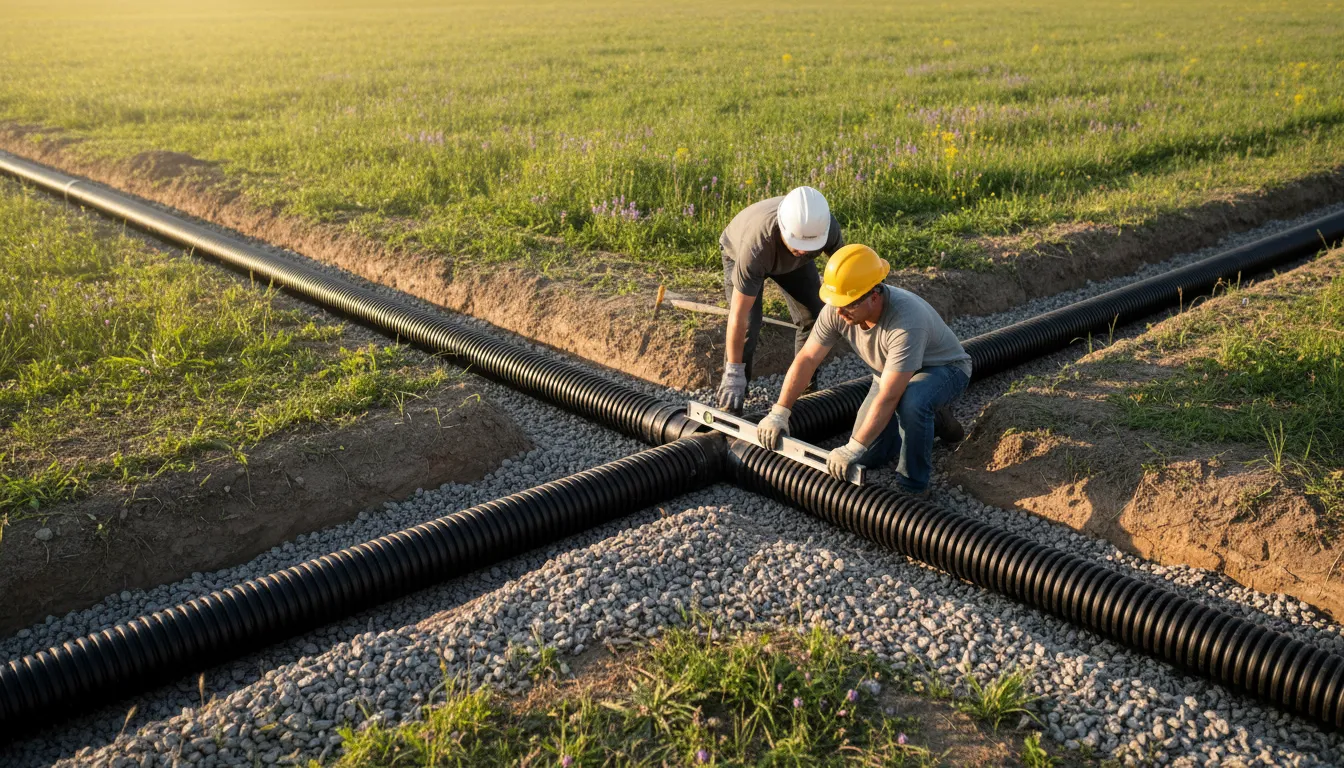
Find the Best Drain Field Repair Companies for Your Business
No obligation • Fast responses • Nationwide coverage

Why you can trust Septic Spot
Septic Spot is a leading United States resource for understanding and comparing septic services. Our editors review providers using consistent criteria and verify key business details. Listings and scores are independent, and companies cannot pay to influence our content.
Search providers near you
Top Drain Field Repair Companies in Littleton, Colorado Ranked
A failing drain field is a serious issue for any home with a septic system. This critical component, also known as a leach field or absorption field, is responsible for safely dispersing and filtering treated wastewater into the soil. When it malfunctions, it can lead to soggy yards, foul odors, and even sewage backups into your home. For Littleton homeowners, navigating the repair or replacement of a septic drain field involves specific local regulations, soil evaluations, and professional engineering. This guide explains the process, costs, and key considerations to help you understand your options and connect with qualified local specialists for your leach field project.
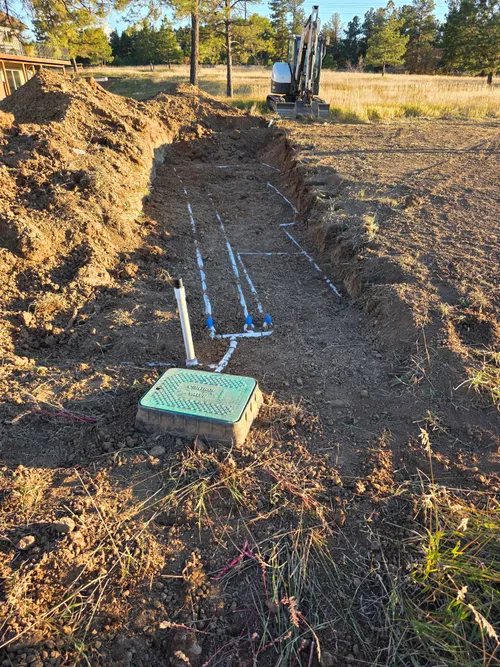
Absolute Diversified Services, LLC
Centennial, CO
Absolute Diversified Services, LLC is a family-owned septic solutions company serving Centennial, CO, and surrounding counties since 2012. They offer a full range of septic services including pumping, inspections, system installation, repairs, and excavation. Their expertise covers septic tank replacements, leach field repairs, and sewer line work, ensuring systems meet local codes and regulations. With nearly two decades of experience in excavation and septic systems, they also provide land clearing and concrete removal services. The company serves Douglas, Arapahoe, Adams, and Elbert counties, including nearby communities such as Castle Rock and Aurora.

John Todd Co
7623 N, Lavaun Dr, Louviers, CO 80131
John Todd Co is a family-owned septic service company based in Denver, CO, with a history dating back to 1945. They provide a full range of septic system services including pumping, inspection, repair, and installation for both residential and commercial clients. Their expertise covers soil testing, system design, permit processing, and drain field replacement, serving the Denver Metro Area and the Colorado front range.
Septic Daddy
1991 Co Rd 132, Elizabeth, CO 80107
Septic Daddy is a family-owned septic service company based near Denver, CO, offering comprehensive septic system solutions. They provide services including septic tank installation, inspection, repair, and drain field replacement, handling projects from design and permits to full system installation and diagnostics. With over 25 years of combined experience, Septic Daddy is licensed and insured to serve customers in Elbert, Douglas, Arapahoe, El Paso, and surrounding areas.
Understanding Your Drain Field System
Your septic system is a two-part wastewater treatment plant. The septic tank holds solids and begins the breakdown process, while the drain field performs the final treatment. Effluent from the tank flows into a network of perforated pipes buried in trenches filled with gravel. This effluent then slowly percolates through the soil, where natural processes remove harmful bacteria and nutrients before the water rejoins the groundwater. A healthy leach field is essential for protecting both your property and public health.
Common signs of a failing absorption field include:
- Sewage odors in the yard or home.
- Standing water or soggy, spongy ground over the field, especially when it hasn't rained.
- Slow-draining toilets and sinks.
- Unusually green, lush grass over the drain field area.
- Sewage backing up into household drains.
If you notice any of these issues, it's crucial to act quickly. Ignoring them can lead to more extensive environmental contamination and significantly higher repair costs.
Littleton's Regulatory Landscape: Permits and Regulation 43
Before any shovel hits the ground for drain field repair in Littleton, you must navigate local and state regulations. All work on on-site wastewater systems is governed by Colorado's Regulation 43, which sets strict standards for design, construction, repair, and maintenance to protect water quality 1.
Key Permit Requirements:
- Local Approval: Property owners must obtain written permission from the Littleton City Engineer or director before beginning any work on a septic system 2.
- Building Codes: All installations and repairs must adhere to the city's building codes, which incorporate state health regulations 3.
- Mandatory Inspections: The city requires inspections for new, repaired, or replaced systems. Be aware that a fee (e.g., $80) may be applied for multiple failed inspections 4.
- Professional Design: In most cases, especially for full replacements, a system design must be prepared by a licensed professional engineer or a qualified soil consultant.
These regulations ensure that any new or repaired leach field is safe, effective, and won't contaminate groundwater-a vital concern in Colorado.
The Step-by-Step Process for Repair or Replacement
Addressing a failed drain field is a multi-stage project that requires professional expertise from start to finish.
1. System Evaluation and Soil Testing
The first step is a thorough diagnosis. A specialist will inspect your entire septic system, including checking the tank's integrity and using cameras to inspect distribution pipes for blockages or damage 5. The most critical part of this phase is the soil evaluation. A soil engineer or specialist will conduct a percolation ("perc") test to determine how quickly water absorbs into your soil 6 7. This test directly determines the size and type of drain field needed.
2. Site Assessment and Design
Colorado's diverse terrain presents unique challenges. Your property may have high groundwater, shallow bedrock, or steep slopes. These site constraints often necessitate advanced engineered systems, such as mound systems or sand filters, which are more common in challenging areas than traditional gravity-fed fields 8 9. The design must also account for mandatory setbacks-legal separation distances from wells, buildings, property lines, and waterways 10.
3. Professional Installation
Once permits are secured and a design is approved, excavation begins. For a full leach field replacement, the old, failed material is removed. New trenches are dug, and a bed of gravel is laid. Perforated distribution pipes are carefully placed and connected to the septic tank via a distribution box. The type of pipe and gravel, along with the inclusion of specific sand or fabric layers, will follow the engineered design 11.
4. Final Inspection and Restoration
Before the trenches are backfilled, a final inspection by the city or county official is required to confirm all components are installed correctly according to the approved plan 12 13. After passing inspection, the site is backfilled. A reputable contractor will include site restoration in their bid, which involves compacting the soil and replacing topsoil to allow for revegetation and return your yard to a usable state 14.
Find the perfect drain field repair companies for your needs
Get personalized recommendations and expert advice
Cost Considerations for Littleton Homeowners
Drain field replacement is a significant investment, largely due to the engineering, permitting, and extensive excavation required. Costs can vary widely based on soil conditions, system size, and site accessibility.
Based on local data, homeowners in Littleton can expect the following cost ranges 15 16:
- Drain Field/Leach Field Replacement Only: $22,000 - $29,000
- Full Septic System Replacement (tank and field): $28,000 - $35,000+
These are major project estimates. Additional required costs include:
- Engineering & Design Fees: $500 - $2,000
- Permit Fees: $100 - $250
- Soil Percolation Test: Cost varies by site.
- System Inspection Fees: Paid to the local health department.
It's important to note that while some minor repairs to distribution lines or a clogged pipe may be less expensive, most complete failures require a full replacement of the absorption field. Always get detailed, written bids from multiple licensed contractors that break down all anticipated costs.
Choosing the Right Professional for the Job
Given the complexity and regulatory hurdles, selecting the right contractor is paramount. Look for a licensed septic system installer with extensive experience in the Littleton area and Arapahoe County. They should be intimately familiar with Regulation 43 and local permit processes. A quality provider will handle or coordinate the necessary soil testing, engineering design, and permit applications on your behalf. Don't hesitate to ask for references and proof of insurance. Remember, the lowest bid may not account for all necessary steps, potentially leading to failed inspections and costly delays.
Maintaining Your New Drain Field
Once your new leach field is installed, proper maintenance is key to ensuring its longevity, which can be 20-30 years or more. This includes regular septic tank pumping (typically every 3-5 years), conserving water to avoid overloading the system, and never planting trees or driving heavy vehicles over the field. Protecting this investment starts with the quality of the installation and continues with responsible daily use.
Frequently asked questions
Sources
Footnotes
-
Colorado Septic Tank Requirements | On-site Wastewater ... - https://www.ntotank.com/blog/colorado-septic-tank-requirements ↩
-
Document Viewer | Littleton, CO City Code and Charter - enCodePlus - https://online.encodeplus.com/regs/littleton-co-cc/doc-viewer.aspx?secid=1381 ↩
-
Permits, Review Guides, and Requirements - Littleton CO - https://www.littletonco.gov/Building-Development/Permits-Review-Guides-and-Requirements ↩
-
Document Viewer | Littleton, CO City Code and Charter - https://online.encodeplus.com/regs/littleton-co-cc/doc-viewer.aspx?secid=857 ↩
-
What to Expect During a Septic System Replacement - Townes Septic Service - https://www.townesseptic.com/blog/what-to-expect-during-a-septic-system-replacement ↩
-
Realtors Guide to Septic Inspections in Southern Colorado - https://saveurseptic.com/wp-content/uploads/2025/02/Realtors-Guide-to-Septic-Inspections-Final.pdf ↩
-
Septic Tank - Understanding Septic Tank Permits and Regulations - https://westcoastsanitationinc.com/understanding-septic-tank-permits-and-regulations/ ↩
-
The True Cost of a 4-Bedroom Septic System in Colorado - https://www.soiltestandseptic.com/post/the-true-cost-of-a-4-bedroom-septic-system-in-colorado-why-prices-range-from-the-low-20ks-to-the ↩
-
How Can I Install a Septic Tank and Leach Field on My Property? - https://www.kysepticservice.com/helpful-info/how-can-i-install-a-septic-tank-and-leach-field-on-my-property.html ↩
-
Septic Tank Plans: A Complete Homeowner's Guide - https://landperc.com/septic-tank-plans-guide/ ↩
-
Septic System Installation - BEGINNERS Guide to Gravity ... - https://www.youtube.com/watch?v=KTGNFh9o8N8 ↩
-
Regulation 43 - Colorado Secretary of State - https://www.sos.state.co.us/CCR/GenerateRulePdf.do?ruleVersionId=5317 ↩
-
Septic Inspections Made Easy: What Every Contractor Needs to Know Before Breaking Ground (2025) - https://flengineeringllc.com/septic-inspections-guide-contractors-2025/ ↩
-
Septic System Installation & Repair - High Performance Earthworks - https://www.highperformanceearthworks.com/septic-system-installation-repair ↩
-
Septic System Replacement Costs, Repair & Pumping in Northern CO - https://boonstraexcavation.com/septic-systems/ ↩
-
Cost to Replace Septic Tank and Drain Field [2026 Data] | Angi - https://www.angi.com/articles/how-much-new-drain-fields-foot.htm ↩