Find the Best Drain Field Repair Companies for Your Business
No obligation • Fast responses • Nationwide coverage

Why you can trust Septic Spot
Septic Spot is a leading United States resource for understanding and comparing septic services. Our editors review providers using consistent criteria and verify key business details. Listings and scores are independent, and companies cannot pay to influence our content.
Search providers near you
Top Drain Field Repair Companies in Loveland, Colorado Ranked
A failing drain field is a serious issue for any home with a septic system, often signaled by soggy ground, foul odors, or sewage backing up into the house. In Loveland, managing this critical component of your on-site wastewater treatment system involves navigating specific local regulations and the unique challenges of Colorado's Front Range soil. This guide explains the process, costs, and key considerations for drain field repair or replacement, helping you connect with qualified local professionals who understand Larimer County's requirements.

Understanding Your Drain Field and Signs of Failure
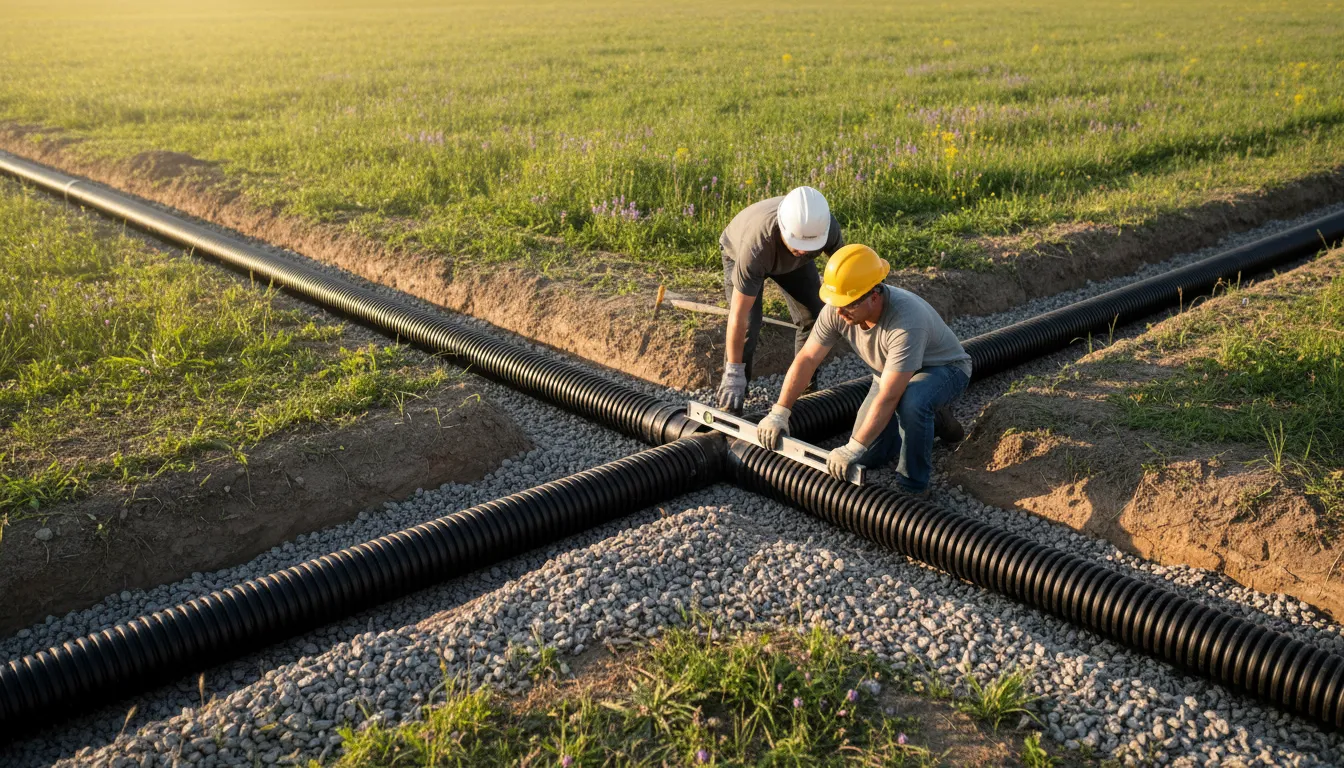
The drain field, also known as a leach field or absorption area, is the final stage of your septic system. After solids settle in the tank, liquid effluent flows into a network of perforated pipes buried in trenches filled with gravel. This effluent slowly percolates through the soil, where natural processes filter and treat it before it rejoins the groundwater.
A system fails when the soil can no longer absorb the liquid. Common warning signs include:
- Sewage odors around the yard or inside the home.
- Soggy, spongy, or standing water over the drain field area, especially when it hasn't rained.
- Unusually lush, green grass growing over the field.
- Slow drains, gurgling pipes, or sewage backups in toilets and sinks.
If you notice these issues, the first step is a professional evaluation by a licensed septic inspector 1. They will assess the tank's condition and probe the drain field to diagnose the problem's extent.
Larimer County Regulations and Permit Requirements
Any repair, replacement, or modification to an On-site Wastewater Treatment System (OWTS) in Loveland requires a permit from Larimer County Department of Health and Environment. This is not a mere formality; it's a crucial step to ensure public and environmental health.
A key regulation, effective since June 2018, mandates a soil evaluation for all new or replacement systems. This involves digging two soil test pits within the proposed absorption area. These pits must typically be 40-50 feet apart and excavated to a depth of 8 feet to evaluate soil characteristics and check for constraints like a high seasonal water table or bedrock 2. The pits must remain open for inspection by a county official for at least five business days, so scheduling is important.
Site Constraints and Soil Challenges in Loveland
The soil composition and landscape of Northern Colorado present specific challenges for conventional drain fields. Heavy clay soils are common in the region, which have very slow permeability. If a standard "perc test" fails, indicating the soil does not absorb water quickly enough, a conventional gravel trench system cannot be installed.
Other critical site constraints include:
- High Groundwater: The 8-foot test pit helps identify the seasonal high-water table. Systems must be placed sufficiently above it.
- Bedrock: Shallow bedrock limits the depth of trenches.
- Limited Space: Older properties or those with wells, streams, or property lines nearby must adhere to strict setback distances 3.
- Slope: Steeply sloped lots require specialized design.
When these constraints exist, the county will require an alternative or engineered system, such as a mound system or other advanced treatment technology 4. These systems are designed to overcome site limitations but come with higher installation costs.
The Repair vs. Replacement Decision
Not all drain field problems require a full, costly replacement. A professional assessment will determine the best path forward.
Repairs may be possible for localized issues. This could involve cleaning or jetting clogged pipes, replacing a damaged section of line, or addressing problems caused by surface water drainage or root intrusion. Repairs are generally more economical than a full replacement but are only a solution if the overall soil absorption capacity is still functional.
Full Replacement becomes necessary when the soil is permanently saturated (a condition called "biomat" failure) or the entire field has exceeded its lifespan. Replacement involves designing a completely new absorption area, often in a different location on your property if space allows. The old field must be properly abandoned, which also requires a county permit.
Find the perfect drain field repair companies for your needs
Get personalized recommendations and expert advice
The Cost of Drain Field Work in Northern Colorado
Costs for drain field projects vary significantly based on system size, soil conditions, and the type of system required. It's essential to get multiple detailed quotes from licensed installers.
- Drain Field Replacement: For a full system replacement for a 3-5 bedroom home, costs in the region typically range from $20,000 to $40,000 5 6. In Loveland, total replacement costs are often cited between $28,000 and $35,000 when including all county requirements and engineering 7.
- Septic Tank Replacement: If the tank also needs to be replaced, add approximately $9,500 to $11,500 to the project 8.
- Repair Costs: These vary widely but are typically a fraction of replacement cost. The final price depends on the repair's complexity and accessibility.
- Alternative Systems: Mound or other engineered systems to handle difficult soils (like heavy clay) or high groundwater can increase the total project cost substantially compared to a conventional field.
- Permit & Engineering Fees: Don't forget to factor in county permit fees, which vary by project, and potential costs for a professional engineer's design if an alternative system is needed.
The Step-by-Step Process for Replacement
- Professional Inspection: Hire a licensed inspector to confirm drain field failure and evaluate the septic tank's integrity.
- Site Evaluation & Design: A septic designer or engineer will visit your property to identify a suitable new location. They will coordinate the digging of the two required 8-foot soil test pits for county inspection 9.
- Permit Application: Your contractor will submit a detailed system design and the soil evaluation report to Larimer County for permit approval.
- Installation: Once permitted, the contractor will excavate the new field, install the distribution pipes and gravel, and connect it to the existing or new septic tank.
- Final Inspection: The county performs a final inspection before the new field is covered with soil.
- Abandonment: The old, failed drain field must be properly abandoned (often filled with clean gravel or soil) under county guidance 10.
Maintaining Your New Drain Field
Protect your investment with proper care:
- Pump Regularly: Have your septic tank pumped every 3-5 years to prevent solids from washing out into the new field 11.
- Conserve Water: Use water-efficient fixtures and spread out laundry loads to avoid hydraulically overloading the system.
- Mind What You Flush: Only human waste and toilet paper should go down the drain. Avoid chemicals, grease, wipes, and feminine products.
- Protect the Area: Never drive or park vehicles over the drain field. Keep roof drains, sump pumps, and landscaping irrigation away from the area.
Frequently asked questions
Sources
Footnotes
-
Homeowner Resources - https://www.cpow.net/resources/homeowner-resources/ ↩
-
On-site Sewage Disposal System | Pueblo West, CO - http://www.pueblowestmetro.us/188/On-site-Sewage-Disposal-System ↩
-
Regulation 43 - Colorado Secretary of State - https://www.sos.state.co.us/CCR/GenerateRulePdf.do?ruleVersionId=5317 ↩
-
What is the best septic system if your land fails a perc test? - https://www.premiertechaqua.com/en-us/blog/best-septic-system-failed-perc-test ↩
-
The True Cost of a 4-Bedroom Septic System in Colorado - https://www.soiltestandseptic.com/post/the-true-cost-of-a-4-bedroom-septic-system-in-colorado-why-prices-range-from-the-low-20ks-to-the ↩
-
The Ultimate Guide to Replacing a Septic Drain Field - https://www.rciseptic.com/the-ultimate-guide-to-replacing-a-septic-drain-field ↩
-
Septic System Replacement Costs, Repair & Pumping in Northern CO - https://boonstraexcavation.com/septic-systems/ ↩
-
Colorado Septic Systems Costs & Prices - ProMatcher Cost Report - https://septic-systems.promatcher.com/cost/colorado.aspx ↩
-
Septic Systems (OWTS) - | Larimer County - https://www.larimer.gov/health/environmental-health/septic-systems/septic-systems-owts ↩
-
Cost to Replace Septic Tank and Drain Field [2026 Data] | Angi - https://www.angi.com/articles/how-much-new-drain-fields-foot.htm ↩
-
Realtors Guide to Septic Inspections in Southern Colorado - https://saveurseptic.com/wp-content/uploads/2025/02/Realtors-Guide-to-Septic-Inspections-Final.pdf ↩