Find the Best Drain Field Repair Companies for Your Business
No obligation • Fast responses • Nationwide coverage

Why you can trust Septic Spot
Septic Spot is a leading United States resource for understanding and comparing septic services. Our editors review providers using consistent criteria and verify key business details. Listings and scores are independent, and companies cannot pay to influence our content.
Search providers near you
Best Drain Field Repair Companies in Indiana Ranked
A failing drain field is a serious issue for any Indiana homeowner with a septic system. This critical component, also known as a leach field or absorption field, is responsible for safely filtering and dispersing treated wastewater into the soil. When it fails, it can lead to sewage backups, soggy yards, and environmental contamination. Understanding the repair and replacement process, including state and local regulations, is essential for protecting your property, your health, and your investment. This guide provides the practical information you need to navigate finding qualified professionals and managing a drain field project in Indiana.
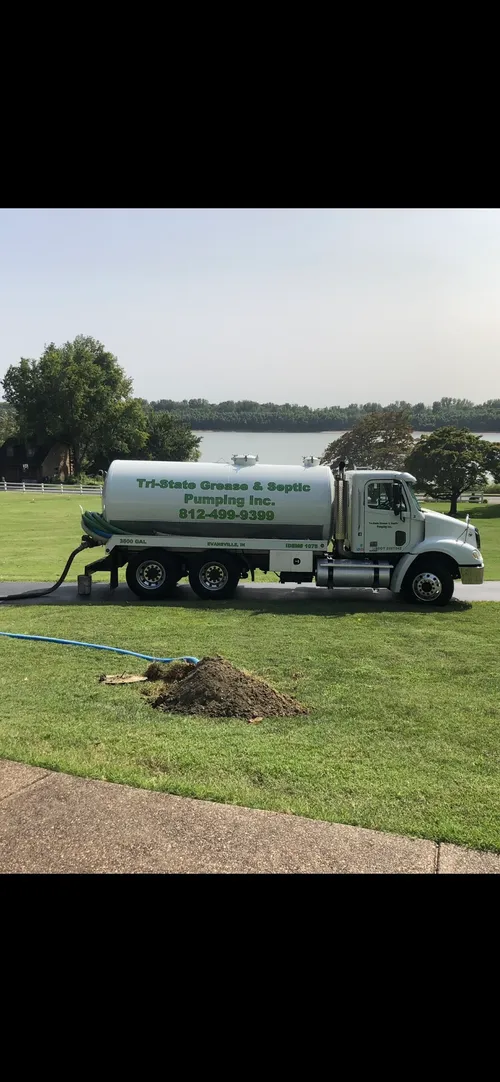
Tri-State Grease and Septic Pumping Inc.
11335 Boberg Rd, Evansville, IN 47712
Tri-State Grease and Septic Pumping Inc. is a locally owned company based in Evansville, IN, offering a range of septic services including septic tank pumping, inspection, repair, and installation. They also provide drain cleaning, hydro jetting, grease trap pumping, and septic system diagnostics. The company has experience diagnosing septic system failures and emphasizes regular maintenance to extend the life of septic drainfields, which are a critical and costly component of septic systems. Tri-State also handles pump replacements, baffle replacements, and riser installations.
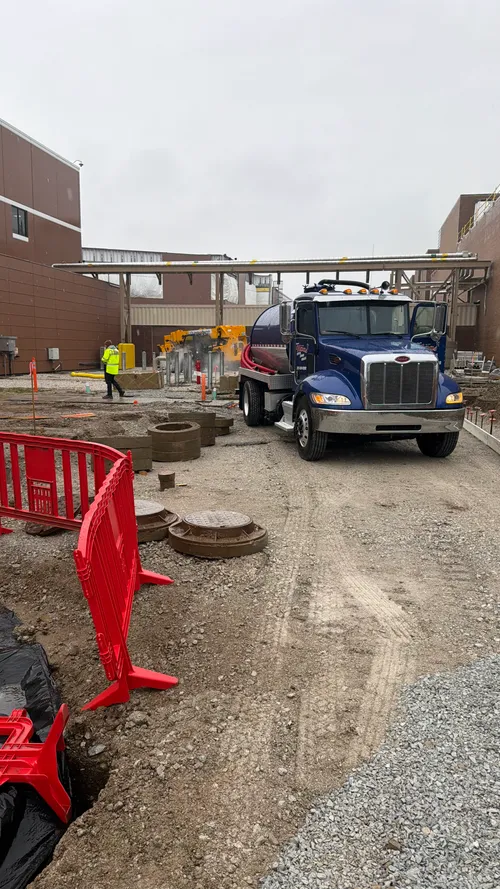
Max Haas Septic Service
7514 E 39th St, Indianapolis, IN 46226
Max Haas Septic Service has been providing septic system services in Indianapolis, IN, and Central Indiana since 1923. They offer a full range of residential and commercial septic solutions including tank pumping, inspections, system installations, drain field replacements, sewer repairs, and drainage system design. With over 100 years of experience, the company handles everything from routine maintenance to complex system installations, ensuring compliance with local codes and long-term system performance. Their organized team uses modern equipment to deliver efficient service across multiple counties in the region.
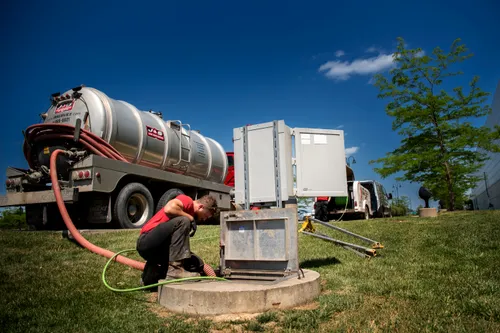
J & S Liquid Waste Services Inc.
4030 Option Pass Unit A, Fort Wayne, IN 46818
J & S Liquid Waste Services Inc. is a septic and sewer service provider based in Fort Wayne, IN. They offer a range of services including septic tank pumping, grease trap cleaning, oil water separator cleaning, and bypass pumping for residential, commercial, and industrial clients. The company also handles lift station and pump repairs, as well as drain line clogs using jetting and augering techniques. They are equipped to manage complex excavation projects such as broken pipes, septic system repairs, and distribution box replacements. J & S Liquid Waste Services provides emergency response services during evenings and weekends, ensuring support beyond regular business hours.
Zimmerman Septic Services
7305 Lewis Rd, Fort Wayne, IN 46818
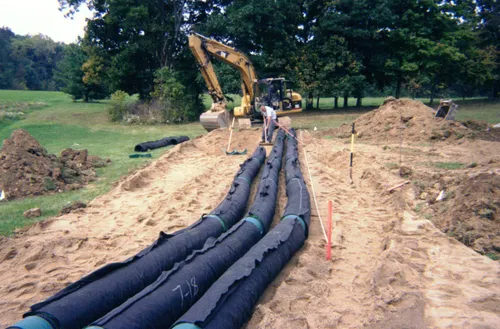
Zimmerman Septic Services is a septic tank inspection, repair, and installation company based in Fort Wayne, IN. They provide a range of septic system services including installation of various systems such as shallow trench, mound, and discharge systems, as well as drain field repair and septic pump replacement. The company is capable of septic system recovery through jetting, cleaning, and adding bacteria to rejuvenate systems. Zimmerman Septic Services has been a member of IOWPA for over 20 years, indicating extensive experience in the field.
Understanding Your Drain Field and Signs of Failure
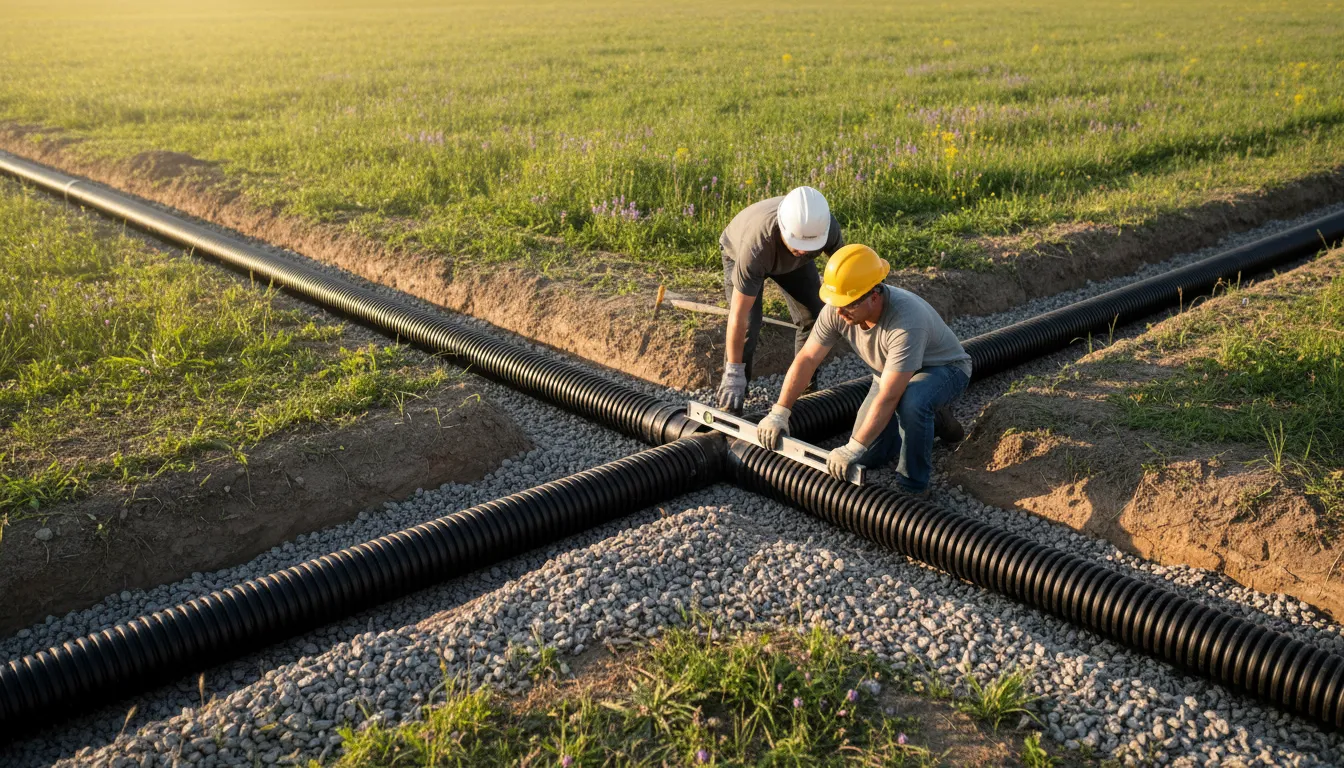
The drain field is the final stage of your onsite wastewater system. After solids settle in the septic tank, liquid effluent flows through a network of perforated pipes buried in trenches filled with gravel. This effluent slowly seeps into the soil, where natural processes provide final treatment. A system fails when the soil can no longer absorb the water.
Common signs of drain field trouble in Indiana include:
- Sewage odors in the yard or home.
- Slow drains and gurgling plumbing fixtures.
- Soggy, spongy, or standing water over the drain field area, especially when it hasn't rained.
- Unusually lush, green grass over the field compared to the rest of the lawn.
- Sewage backing up into the home.
If you notice any of these signs, it's crucial to act quickly. Continuing to use a failing system can cause more extensive damage and increase environmental health risks.
Indiana Regulations and Permit Requirements
All septic system work in Indiana, including drain field repair and full replacement, is regulated at the county level by local health departments. These departments enforce the state's sanitary code (410 IAC 6-8.3). You cannot begin any excavation or construction without first obtaining the proper permit.
Key Permit Requirements:
- Application: You or your licensed contractor must submit a permit application to your county health department.
- Site Plan: A detailed drawing of your property showing the proposed system location, well, property lines, and any water bodies.
- Soil Evaluation: A certified soil scientist must conduct a deep-hole soil analysis (typically 5-6 feet deep) to determine the soil's absorption rate, texture, and seasonal water table level 1 2. This is the most critical factor in designing a functional system.
- Design Plans: A registered septic system installer or designer must prepare technical plans for the new or repaired field, which must be submitted with the permit application.
System Standards and Setbacks: Indiana has strict rules governing system materials and placement. Tanks must be watertight (concrete, fiberglass, or plastic). The code mandates minimum setback distances from wells, lakes, streams, property lines, and buildings. For example, a septic tank must often be at least 50 feet from a well, and the drain field even farther 3. Your local health department will verify all setbacks.
The Repair vs. Replacement Decision
Not all drain field problems require a complete overhaul. A professional inspection is the first step to diagnosing the issue.
Potential Repairs: Some issues can be resolved with less invasive work. This might include:
- Jet cleaning clogged distribution pipes.
- Replacing damaged sections of pipe or a malfunctioning distribution box.
- Installing a new septic tank baffle or effluent filter.
- Adding a curtain drain to divert groundwater away from the field.
When Replacement is Necessary: If the soil is permanently saturated or clogged (a condition called "biomat" failure), or if the system is old and undersized, a full drain field replacement is usually the only solution. In many cases, especially with older conventional systems, a modern mound system or pressure-dosed system may be required to meet current code and function properly in the site's soil conditions.
Find the perfect drain field repair companies for your needs
Get personalized recommendations and expert advice
The Installation and Inspection Process
Once you have your permit and a licensed contractor, the project will follow a structured process with mandatory checkpoints.
- Pre-Construction Inspection: A health department official will often visit the site to stake out the approved system location and verify the design matches the permit before digging begins.
- Excavation and Installation: Your contractor will excavate the area, install the new tank (if needed) and drain field piping according to the engineered plans. For mound systems, specific sand and gravel materials are used.
- Final Inspection: This is a critical step. Before the new drain field is covered with soil, a health department inspector must visit the site to verify the installation matches the permitted design in all details-materials, layout, depths, and connections 4. Do not backfill the trenches until this inspection is passed.
- System Covering and Restoration: After passing inspection, the contractor will cover the system with soil and restore the landscaping.
Understanding Costs for Drain Field Work in Indiana
Costs for drain field repair and replacement in Indiana vary widely based on system type, soil conditions, property accessibility, and local labor rates. The need for a complex alternative system like a mound is a major cost driver.
- Minor Repairs: Fixing a clog, replacing a pipe, or similar targeted work can range from $1,500 to $5,000.
- Partial or Full Leach Field Replacement: For a conventional in-ground field replacement, homeowners can expect costs between $5,000 and $15,000 or more 5.
- Complete System Replacement with a Mound: When soil conditions require an above-ground sand mound system, costs typically start around $20,000 and can exceed $50,000 for large or complex installations 6 7.
These estimates generally include design, permits, excavation, materials, installation, and restoration. Always get detailed, written estimates from multiple licensed contractors.
Homeowner Responsibilities and Maintenance
As a property owner in Indiana, you are legally responsible for the operation and maintenance of your entire septic system, including the tank, pumps, and drain field 8. Proper care can prevent premature failure and costly replacements.
- Regular Pumping: Have your septic tank pumped by a licensed professional every 3 to 5 years. This prevents solids from washing out into the drain field and clogging it 9.
- Water Conservation: Spread out laundry loads and fix leaky fixtures to avoid overwhelming the drain field.
- Protect the Area: Never drive or park vehicles, build structures, or plant trees and shrubs over the drain field. The roots and weight can crush pipes and compact soil.
- Divert Water: Ensure roof gutters, sump pumps, and surface runoff are directed away from the drain field area.
- Mind What You Flush: Only human waste and toilet paper should go down the drain. Avoid chemicals, grease, wipes, and other non-biodegradable items.
Important Note: If a public sewer line becomes available to your property, local ordinances may require you to abandon your septic system and connect to the municipal sewer, rather than investing in a major repair or replacement 10.
Frequently asked questions
Sources
Footnotes
-
St. Joseph County: Septic Systems - https://www.in.gov/localhealth/stjosephcounty/environmental-health/septic-systems/ ↩
-
Indiana Septic System Installation and Permit Procedure Guide - https://www.septicdesign.com/homeowners/the-septic-system-installation-processs-for-indiana/ ↩
-
Untitled - https://www.in.gov/counties/carroll/files/ORDINANCE-2024-07.pdf ↩
-
New or Repair Septic System Permits - Randolph County - IN.gov - https://www.in.gov/counties/randolph/departments/health-department/new-or-repair-septic-system-permits/ ↩
-
CHAPTER 51: SEWAGE AND SEPTIC SYSTEMS REGULATIONS - https://www.in.gov/localhealth/stjosephcounty/files/County-Code-Septic-Ordinance.pdf ↩
-
How Much Does a Septic System & Septic Tank Cost - https://www.nexgenseptics.com/septic-system-cost/ ↩
-
How Much Does Septic System Replacement Cost? - https://proguardplans.com/how-much-does-septic-system-replacement-cost/ ↩
-
Who is Responsible for Maintaining My Drain Field? - https://qualitysepticincorporated.com/who-is-responsible-for-maintaining-my-drain-field/ ↩
-
Homeowner's Guide to Septic Systems - http://indiana.clearchoicescleanwater.org/resources/epa-homeowners-guide-to-septic-systems/ ↩
-
Indiana Septic Tank Requirements | On-Site Sewage Systems - https://www.ntotank.com/blog/indiana-septic-tank-requirements ↩