Find the Best Drain Field Repair Companies for Your Business
No obligation • Fast responses • Nationwide coverage

Why you can trust Septic Spot
Septic Spot is a leading United States resource for understanding and comparing septic services. Our editors review providers using consistent criteria and verify key business details. Listings and scores are independent, and companies cannot pay to influence our content.
Search providers near you
Top Drain Field Repair Companies in Evansville, Indiana Ranked
A failing septic system drain field is a serious issue for any Evansville homeowner, leading to soggy yards, foul odors, and potential environmental contamination. Drain field repair and replacement involves diagnosing and fixing the soil absorption area, which is a critical component for safely dispersing treated wastewater. This guide explains the local regulations, processes, and considerations for addressing leach field problems in Vanderburgh County, helping you understand the steps to take and how to find qualified local professionals for your soil absorption system needs.
Understanding Your Drain Field's Role
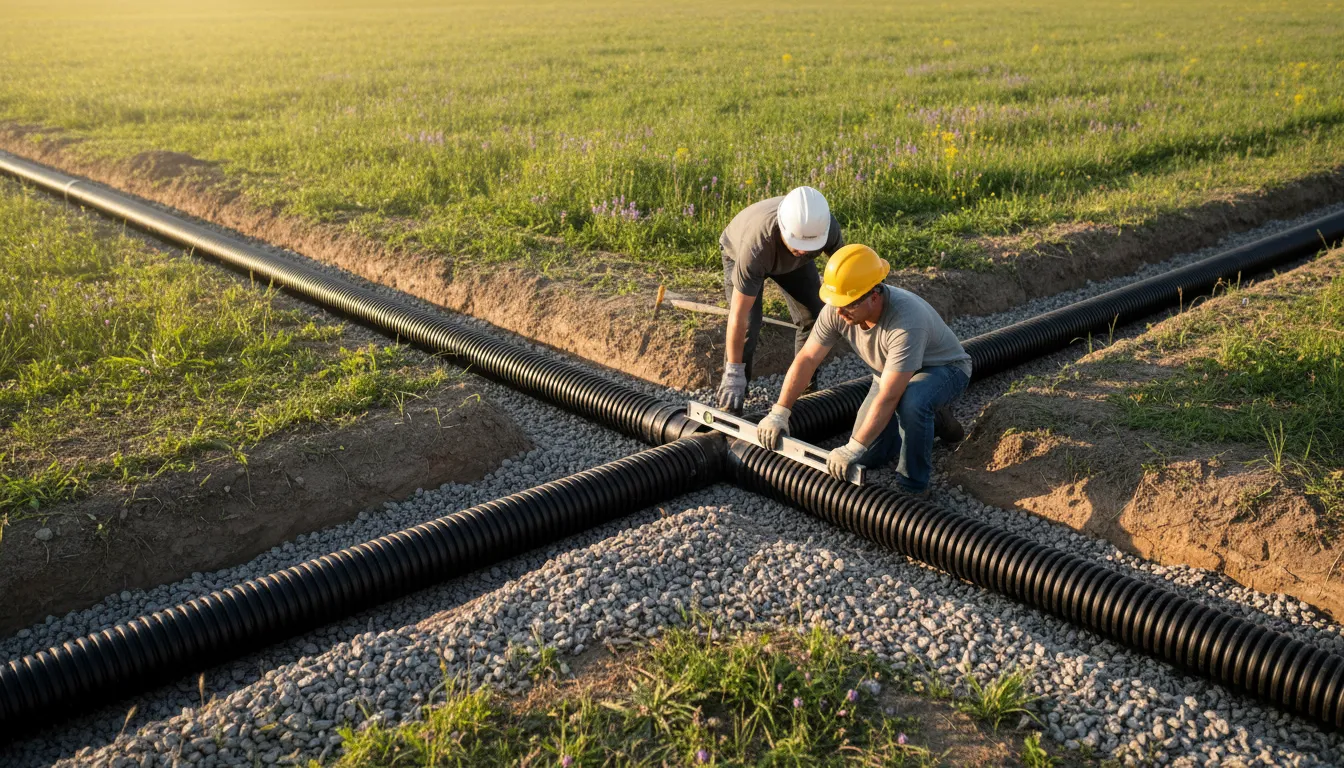
Often called a leach field or soil absorption field, the drain field is the final stage of a conventional septic system. After solids settle in the tank, liquid effluent flows into a network of perforated pipes buried in trenches filled with gravel. This effluent slowly percolates into the soil, where natural processes provide final treatment. When this area fails, it's often due to soil compaction, hydraulic overload, biomat clogging, or root intrusion. Symptoms include standing water or lush grass over the field, sewage backups in the home, and persistent damp, foul-smelling areas in your yard.
Vanderburgh County Regulations: What You Must Know
All work on septic system components in Evansville and Vanderburgh County is strictly regulated by the Vanderburgh County Health Department (VCHD) Environmental Division. Compliance with state (410 IAC 6-8.3) and local codes is mandatory for any repair or replacement 1. A key rule is that if a public sanitary sewer line is available within a reasonable distance, the county typically prohibits septic system repairs and requires you to connect to the municipal sewer2. For properties that must use septic, the process is tightly controlled.
The Permit is Step One
Before any shovel hits the ground, you must obtain a construction permit from the VCHD. The permit fee for repairing or replacing an existing system or component is currently $803 4. It is illegal to proceed without this permit. The application requires detailed information, and approval is contingent on meeting all current code requirements, which often means a completely new soil absorption field design is necessary for a failing system5 6.
Who Can Do the Work?
Contractor Licensing: All installers performing drain field work must be registered with the VCHD. This registration process involves passing an examination, paying a fee, and in some cases, providing a bond. Always verify a contractor's VCHD registration before hiring. Homeowner Installation: While homeowners are sometimes allowed to install their own systems, they must sign a formal "Homeowner Agreement" with the Health Department, assuming full responsibility for code-compliant installation7.
The Critical Process: From Evaluation to Final Inspection
Addressing a failed leach field is not a simple dig-and-replace job. It's a multi-step engineering process governed by soil science and health codes.
1. Professional Soil Evaluation
You cannot repair or replace a drain field without first understanding your property's soil. A licensed and registered Indiana Registered Soil Scientist (IRSS) must perform an on-site evaluation8. This involves digging at least three soil borings or test pits to determine critical characteristics:
- Percolation Rate: How quickly water moves through the soil.
- Seasonal High Water Table Depth: The highest level the groundwater reaches.
- Soil Texture and Structure: The type of soil layers present. This evaluation, which typically costs between $400 and $800, determines if the soil is suitable for a conventional gravity system or if an alternative system like an elevated sand mound is required9 10.
2. Site Plan and Design
A detailed, drawn-to-scale site plan must be submitted with your permit application11. This plan must show the house, proposed septic system components, wells, property lines, and any other relevant features. Setback distances from property lines, wells, homes, and streams must comply with current state rules (410 IAC 6-8.3)12 13. Furthermore, all new or significantly expanded systems in Vanderburgh County often require a minimum lot size of one acre.
3. Pre-Installation and Open Inspections
The VCHD may conduct a pre-installation inspection to verify soil conditions and the proposed location. The most critical inspection is the "open inspection." After the drain field trenches, pipes, and sand or gravel are placed but before they are covered with soil, the installer must notify the VCHD at least 24 hours in advance. An inspector will visit to ensure the installation matches the approved design.
4. Final Approval
Only after the system passes the open inspection can it be covered. If the installation is correct, the permit is officially closed, providing you with documentation that the work is compliant.
Find the perfect drain field repair companies for your needs
Get personalized recommendations and expert advice
Cost Considerations for Drain Field Work in Evansville
Costs can vary widely based on the type of system, soil conditions, and the extent of the problem. Below is a general breakdown of potential costs for drain field projects in the Evansville area 14.
- Permit Fee: ~$80 - $100
- Soil Scientist (IRSS) Evaluation: ~$400 - $800
- System Design & Site Plan: ~$300 - $600 (often included by the installer in their total quote)
- Minor Drain Field Repair: ~$1,500 - $5,000
- Example: Replacing a damaged distribution box, jet-cleaning clogged lateral lines, or addressing a small saturated area.
- Complete Drain Field Replacement: ~$5,000 - $15,000+
- This is for a full new soil absorption field. Cost depends heavily on whether a conventional gravity system, pressure-dosed system, or a more complex sand mound system is required. Mound systems are generally the most expensive due to the need for specialized sand and more construction.
Types of Drain Field Systems Used in the Region
The soil evaluation will dictate which type of absorption system is suitable for your property.
- Conventional Gravity System: The most common type if soil conditions allow. Effluent flows by gravity from the septic tank into level trenches.
- Pressure-Dosed System: Uses a pump chamber to evenly distribute effluent across the entire drain field. This can improve efficiency and longevity, especially in soils with variable percolation.
- Elevated Sand Mound System: Required when the soil has a high water table or slow percolation. A large mound of specific sand is constructed above the natural grade to provide adequate treatment depth.
- Alternative/Advanced Treatment Systems: May include aerobic treatment units (ATUs) or other technologies for challenging sites with strict environmental protections.
Maintaining a New or Repaired Drain Field
Protecting your investment is crucial. Proper maintenance includes:
- Regular Septic Tank Pumping: Every 3-5 years to prevent solids from escaping into and clogging the drain field.
- Water Conservation: Spreading out laundry loads and fixing leaks reduces hydraulic load.
- Avoiding Chemicals: Minimize use of bleach, antibacterial soaps, and harsh cleaners that can kill beneficial bacteria.
- Keeping it Clear: Never drive or park vehicles over the drain field, and plant only grass over it (no trees or deep-rooted shrubs).
Frequently asked questions
Sources
Footnotes
-
Onsite Sewage Systems Program - IN.gov - https://www.in.gov/health/eph/onsite-sewage-systems-program/ ↩
-
FAQ Onsite Sewage Disposal - VCHD - https://vanderburghhealth.org/faq-onsite-sewage-disposal/ ↩
-
Vanderburgh County Health Department Environmental Division - https://vanderburghhealth.org/wp-content/uploads/2019/07/COMPLETE-Application-with-letterhead-18.pdf ↩
-
ordinance no. co.09-24-012 - Granicus - https://evansville.granicus.com/MetaViewer.php?view_id=12&clip_id=6812&meta_id=384149 ↩
-
Chapter 8.20 ON-SITE SEWAGE SYSTEMS ORDINANCE - https://www.codepublishing.com/IN/VanderburghCounty/html/VanderburghCounty08/VanderburghCounty0820.html ↩
-
CHAPTER 51: SEWAGE AND SEPTIC SYSTEMS REGULATIONS - https://www.in.gov/localhealth/stjosephcounty/files/County-Code-Septic-Ordinance.pdf ↩
-
County On-site Sewage Systems Ordinance This ... - IN.gov - https://www.in.gov/health/eph/files/Recommended-Ordinance-Sections-2024-05-28.pdf ↩
-
Septic System Repairs and Installation | Evansville, IN - https://www.joebolinplumbing.com/septic-system-service ↩
-
Complete Septic Tank and Leach Field Install with COST!! - https://www.youtube.com/watch?v=4jsJIVc6Aa4 ↩
-
Onsite Sewage Disposal System Permit Application Progress ... - https://vanderburghhealth.org/wp-content/uploads/2020/02/Application-for-Onsite-Sewage-System-WEBSITE.pdf ↩
-
Septic Information - Gibson County - IN.gov - https://www.in.gov/localhealth/gibsoncounty/environmental/septic-information/ ↩
-
Indiana Septic Tank Requirements | On-Site Sewage Systems - https://www.ntotank.com/blog/indiana-septic-tank-requirements ↩
-
The Ultimate Guide to Replacing a Septic Drain Field - https://www.rciseptic.com/the-ultimate-guide-to-replacing-a-septic-drain-field ↩