Find the Best Drain Field Repair Companies for Your Business
No obligation • Fast responses • Nationwide coverage

Why you can trust Septic Spot
Septic Spot is a leading United States resource for understanding and comparing septic services. Our editors review providers using consistent criteria and verify key business details. Listings and scores are independent, and companies cannot pay to influence our content.
Search providers near you
Top Drain Field Repair Companies in Indianapolis, Indiana Ranked
A failing septic system drain field is a serious issue for any Indianapolis homeowner, leading to soggy yards, foul odors, and potential environmental contamination. Drain field repair or replacement is a complex, regulated process that restores your property's wastewater absorption area. This guide explains the critical steps, local regulations, and costs involved, helping you understand what to expect and how to connect with qualified local professionals for your septic leach field or soil absorption system needs.
Understanding Your Drain Field and Signs of Failure
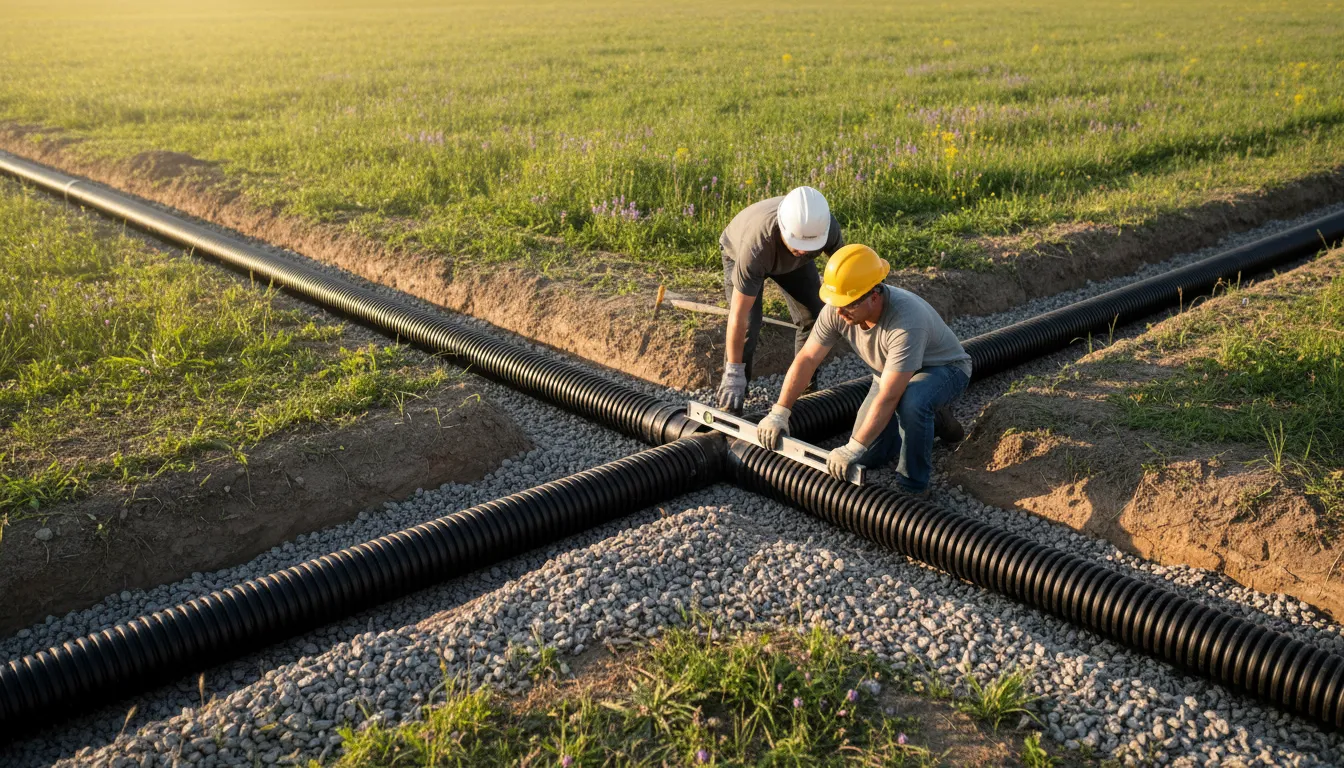
The drain field, also known as a leach field or absorption field, is the final and most crucial stage of a septic system. After solids settle in the tank, liquid effluent flows into a network of perforated pipes buried in trenches filled with gravel. This effluent slowly percolates into the soil, where natural processes filter and purify it before it rejoins the groundwater. When this area fails, untreated wastewater can surface, creating health hazards and property damage.
Common signs you may need drain field repair or replacement include:
- Sewage odors in the yard, especially near the drain field area.
- Persistently soggy or spongy grass over the leach field, even in dry weather.
- Slow draining or backing up of household toilets and drains.
- Unusually lush, green grass growing over the drain field compared to the rest of the lawn.
- Standing water or surfacing sewage in your yard.
If you notice any of these signs, it's time to consult a professional for an evaluation. Ignoring the problem will only lead to more extensive and costly repairs, and potential violations of local health codes 1.
The Indianapolis Permit and Regulatory Process
All septic system work in Marion County, including drain field rehabilitation, is strictly regulated by the Marion County Public Health Department (MCPHD). You must obtain a permit before any repair or replacement work begins. The process is designed to protect public health and groundwater quality, and it involves several key steps and requirements.
1. Certified Soil Evaluation: The first technical step is a site evaluation by a certified professional soil scientist. This expert must perform a minimum of three soil borings or test pits in the proposed repair or replacement area to analyze the soil profile 2. They are determining the soil's loading rate (how quickly it can absorb water), identifying limiting layers like bedrock or high clay content, and assessing the overall site suitability. This report is foundational; a site with excessive fill, compaction, or unsuitable soil may be rejected, requiring a completely new system location 2.
2. System Design and Sizing: Using the soil scientist's report, a system designer (often the installing contractor) will create a plan that meets all code requirements. In Indiana, septic tank and drain field sizing is primarily based on the number of bedrooms in the home. Common baseline tank sizes are 750 gallons for a 1-2 bedroom home, 1,000 gallons for 3 bedrooms, 1,250 gallons for 4 bedrooms, and 1,500 gallons for 5 bedrooms 3. The drain field size is then calculated based on the soil's percolation rate and daily wastewater flow.
3. Permit Application: The soil evaluation report and the complete system design plan are submitted to the MCPHD for review as part of the permit application. The system must comply with Indiana's 410 IAC 6-8.3 rules and Chapter 14 of the local Marion County health code. Authorities will also verify that the proposed system meets all required separation distances, such as being at least 10 feet from property lines and much farther from wells, water lines, and buildings 4 5.
4. Installation by Certified Professionals: Indiana law requires that the actual installation or major repair of a septic system be performed by a contractor certified by the Indiana Onsite Wastewater Professional Association (IOWPA) 6. Hiring a certified installer ensures the work is done correctly and will pass inspection.
5. Final Inspection: Once the new drain field or repair is complete, but before it is covered with soil, a final inspection must be scheduled with the MCPHD. Only after the inspector approves the installation can the system be backfilled and put into service 7.
Find the perfect drain field repair companies for your needs
Get personalized recommendations and expert advice
Repair vs. Replacement: Understanding Your Options
Not all drain field problems require a full, costly replacement. A professional assessment will determine the best course of action.
Potential Repair Solutions:
- Jet Cleaning: High-pressure water jetting can sometimes clear minor blockages in the distribution pipes.
- Septic System Additives: While controversial and not a fix for physical failure, some bio-augmentation products claim to help break down biomat (the clogging layer that forms in the drain field). Their effectiveness varies and they are not a substitute for proper maintenance or repair.
- Partial Replacement: If only a section of the leach field has failed, it may be possible to replace just that portion, though this depends on soil conditions and local code approval.
Full Drain Field Replacement: This is the most common and definitive solution for a completely failed absorption field. It involves excavating the old, clogged system and installing a entirely new network of trenches and pipes in a new location on your property (or a significantly renovated existing location). The process follows the full permitting, soil evaluation, and installation sequence outlined above.
Cost of Drain Field Work in Indianapolis
The cost for drain field repair or replacement in Indianapolis is significant, reflecting the labor, materials, and technical expertise required. According to industry estimates, a full drain field replacement typically ranges from $5,000 to $12,000 or more 8 9.
Several key factors influence the final price:
- System Type: A standard gravity-fed trench system is generally less expensive than more complex systems like pressurized distribution, sand filters, or above-ground mound systems, which are required for sites with poor soil or high water tables.
- Site Constraints: Difficult access for machinery, rocky soil, trees that need removal, or the need for extensive grading can all increase costs.
- Amount of Repair: A simple pipe repair or small section replacement will cost far less than a full leach field rebuild.
- Soil Modification: If the native soil needs amendment with sand or other materials to function properly, this adds to the material and labor expense.
It's crucial to get detailed, written estimates from multiple IOWPA-certified contractors. The estimate should break down costs for permits, soil evaluation, excavation, materials, installation, and landscaping restoration.
Maintaining Your New or Repaired Drain Field
Protecting your investment is key. Proper maintenance can extend the life of your new absorption field for decades.
- Regular Pumping: Have your septic tank pumped by a professional every 3 to 5 years to prevent solids from escaping into and clogging the drain field.
- Conserve Water: Spread out laundry loads and fix leaky faucets to avoid overwhelming the system.
- Mind What You Flush: Only human waste and toilet paper should go down the drain. Avoid chemicals, grease, wipes (even "flushable" ones), and feminine hygiene products.
- Protect the Area: Never drive, park, or build heavy structures (like sheds or patios) over your drain field. The weight compacts the soil and can crush pipes.
- Divert Water: Ensure roof gutters, sump pumps, and yard drainage are directed away from the leach field area to prevent saturation.
Frequently asked questions
Sources
Footnotes
-
Septic Systems | Indiana State Department of Health - IN.gov - https://www.in.gov/localhealth/miamicounty/files/In-Your-Own-Backyard-Septic-Systems-ADunn.pdf ↩
-
410 13-350 | IARP - https://iar.iga.in.gov/register/20131023-IR-410130350PRA ↩ ↩2
-
Indiana Septic Tank Requirements | On-Site Sewage Systems - https://www.ntotank.com/blog/indiana-septic-tank-requirements ↩
-
County On-site Sewage Systems Ordinance This ... - IN.gov - https://www.in.gov/health/eph/files/Recommended-Ordinance-Sections-2024-05-28.pdf ↩
-
RESIDENTIAL ONSITE SEPTIC PERMIT PROCESS - https://rushcounty.in.gov/wp-content/uploads/2021/07/RESIDENTIAL-ONSITE-SEPTIC-PERMIT-PROCESS-1.pdf ↩
-
Onsite Sewage (Septic) Systems Program - https://marionhealth.org/onsite-sewage-septic-systems-program/ ↩
-
410 12-156 | IARP - Indiana Administrative Code - https://iar.iga.in.gov/register/20121114-IR-410120156FRA ↩
-
Cost to Replace Septic Tank and Drain Field [2026 Data] | Angi - https://www.angi.com/articles/how-much-new-drain-fields-foot.htm ↩
-
Cost to Install a Septic System in Indianapolis [2026 Data] - https://www.angi.com/articles/what-does-it-cost-install-septic-system/in/indianapolis ↩